
Disabled workers often face a difficult choice: manage mounting debt on limited income or explore bankruptcy protection. Chapter 7 bankruptcy can eliminate unsecured debts like credit cards and medical bills while protecting your disability benefits.
At Harnage Law, PLLC, we help disabled workers in Florida understand whether filing makes sense for their situation. This guide walks through the timing, protections, and steps forward after discharge.
Why Disability Income Leaves You Vulnerable to Debt
The Income Gap That Creates Debt
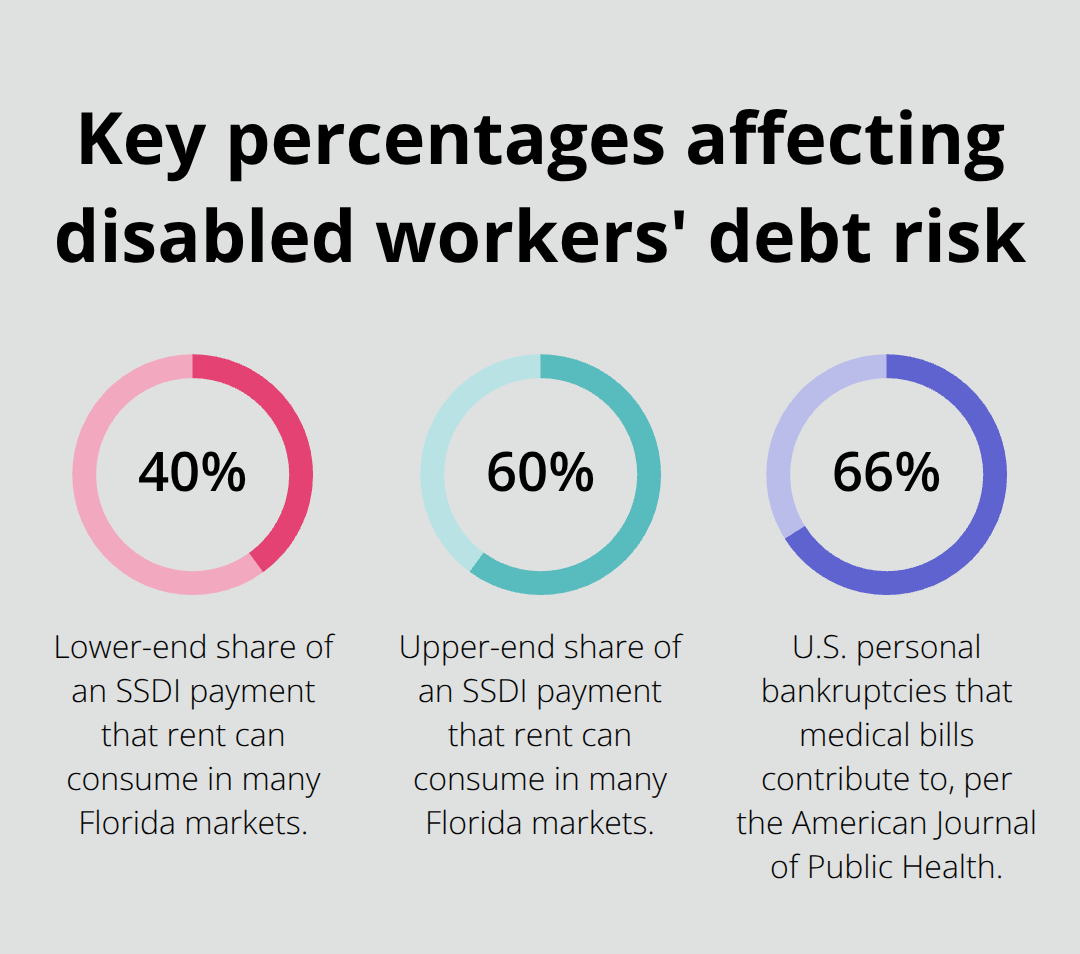
SSDI and SSI payments represent the primary income source for millions of disabled Americans, but these benefits fall far short of covering actual living expenses. The average SSDI payment in 2024 sits around $1,550 per month, while SSI averages approximately $943 monthly according to the Social Security Administration. A single disabled worker receiving SSDI faces a harsh reality: rent alone consumes 40 to 60 percent of that monthly payment in most Florida markets, leaving virtually nothing for utilities, food, medications, or transportation.
SSI recipients fare even worse, with benefits designed only for the poorest Americans and often insufficient to cover basic necessities without additional assistance.
Medical Expenses Accelerate Debt Accumulation
Medical expenses compound this vulnerability significantly. Disabled workers typically face higher healthcare costs than the general population, yet their limited income offers no buffer for unexpected medical bills. A single hospitalization, specialist visit, or prescription medication triggers a cascade of debt that no disability check can absorb. Credit card companies and medical debt collectors exploit this desperation, offering credit to people they know cannot repay it.
Survival Spending, Not Reckless Spending
Many disabled workers accumulate debt not through reckless spending but through survival-choosing between medication and groceries, between paying rent and managing health conditions. This debt burden creates constant stress that worsens health outcomes, a cycle Chapter 7 bankruptcy can interrupt. The median age of disabled workers filing bankruptcy in federal courts is rising, reflecting decades of inadequate benefits meeting the rising costs of housing, healthcare, and basic living.
Why Chapter 7 Offers Relief
Disabled workers facing mounting debt are not irresponsible with money; they are caught between insufficient income and unavoidable expenses that grow faster than any benefit adjustment. Chapter 7 bankruptcy eliminates unsecured debts like credit cards and medical bills while protecting your disability income, allowing you to redirect those limited funds toward actual living expenses rather than creditors who exploited your vulnerability. Bankruptcy offers better protection than credit counseling alone against garnishments, court judgments, and creditor harassment.
When Chapter 7 Makes Sense for Disabled Workers in Florida
Medical Debt Drives Disabled Workers to Bankruptcy
Medical debt pushes disabled workers toward bankruptcy faster than any other factor. According to the American Journal of Public Health, medical bills contribute to approximately 66 percent of personal bankruptcies in the United States, and disabled workers face medical expenses at rates far exceeding the general population. A disabled worker in Florida paying $200 monthly for prescriptions, $150 for medical equipment, and occasional specialist copays quickly exhausts their SSDI or SSI income before rent is paid.
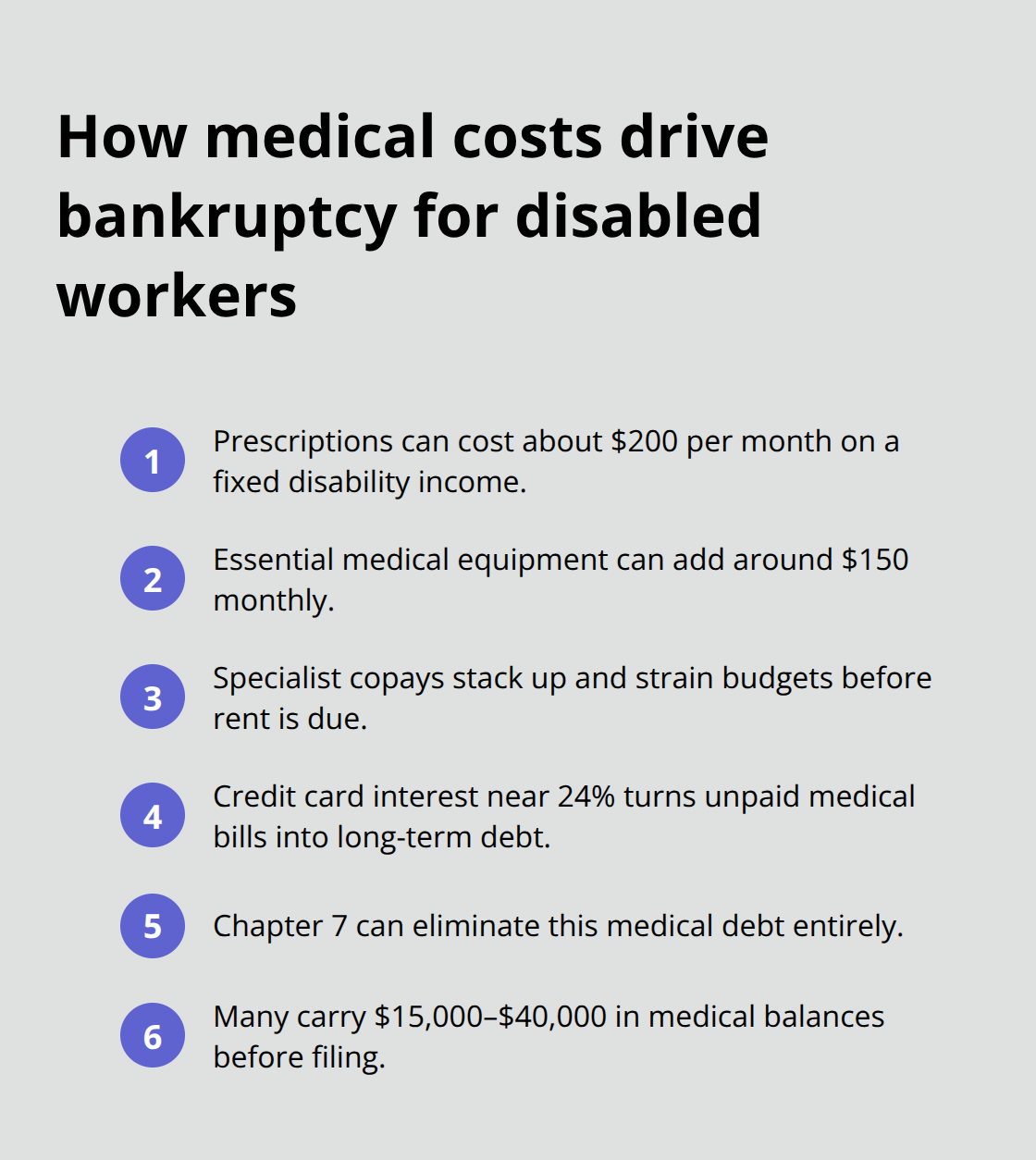
Chapter 7 eliminates this medical debt entirely, meaning those monthly prescription costs stop being financed through credit cards at 24 percent interest rates. The typical disabled worker carries between $15,000 and $40,000 in accumulated medical debt that Chapter 7 discharge wipes away completely.
Unsecured Debt Masks Survival Spending
Beyond medical bills, unsecured debts like credit cards represent survival spending disguised as consumer debt. A disabled worker with an $8,000 credit card balance did not accumulate that debt buying luxury goods; they used the card to cover rent shortfalls, utility bills, and transportation costs while waiting for benefit payments. Credit card companies charge disabled workers the same 18 to 29 percent interest rates as anyone else, meaning a $5,000 balance requires $100 to $145 monthly just to cover interest without reducing principal. Chapter 7 eliminates this interest trap entirely, freeing that $100 to $145 monthly for actual living expenses.
The Automatic Stay Stops Creditor Action Immediately
The strongest protection Chapter 7 provides is the automatic stay, which immediately halts wage garnishment and creditor calls the moment your petition is filed. Federal law shields SSDI and SSI payments from creditor seizure, meaning your disability income remains untouchable during bankruptcy and after discharge. Florida law further protects your homestead if you own one, and Chapter 7 allows you to keep your home while discharging the debts secured against it if you qualify for exemptions. The Social Security Administration confirms that filing Chapter 7 does not affect your eligibility for SSDI, SSI, or any other need-based assistance programs.
Your Monthly Budget Transforms After Discharge
What changes after discharge is your monthly budget: instead of sending $400 monthly toward minimum credit card payments on debt you cannot discharge through any other means, that $400 stays in your account for food, transportation, and medical care. Disabled workers who file Chapter 7 typically report that the stress reduction alone improves their health outcomes within months of discharge. Disability income does not count toward the means test threshold in Florida, making qualification significantly easier than for working-age filers. This advantage means disabled workers often qualify for Chapter 7 when their income alone would disqualify other applicants.
Understanding whether Chapter 7 fits your situation requires examining your specific income, expenses, and debt composition-factors that determine both your eligibility and the financial relief you will receive.
What Stays Protected When You File Chapter 7 in Florida
Your Disability Income Remains Completely Untouchable
Disabled workers often fear that filing Chapter 7 means losing everything they own or that creditors will seize their disability payments. Neither concern reflects how bankruptcy actually works in Florida. Your SSDI and SSI income stays completely protected throughout the filing process and after discharge because federal law prohibits creditors from touching these payments under any circumstance. The Social Security Administration confirms that filing bankruptcy does not affect your eligibility for SSDI, SSI, or other need-based assistance programs, meaning your benefits continue uninterrupted.
Your Home and Personal Property Receive Strong Protections
If you own a home in Florida, the homestead exemption shields up to $275,000 in home equity from creditor claims, a protection that applies equally to disabled workers and working-age filers. This exemption allows you to discharge all your unsecured debts while keeping your home, provided you stay current on your mortgage payments. Florida also exempts certain personal property from seizure, including your vehicle up to $4,000 in equity, household furnishings, and tools necessary for employment if you work part-time while receiving disability benefits.
The Automatic Stay Stops Creditor Actions Immediately
The automatic stay that activates the moment you file Chapter 7 stops creditor collection actions immediately. While this protection matters less for disabled workers since creditors cannot legally garnish SSDI or SSI anyway, it prevents creditor lawsuits that could result in judgments against you. Many disabled workers keep their disability payments in checking accounts alongside other funds, and creditors sometimes attempt to freeze these accounts despite the federal protections on Social Security income. Once you file Chapter 7, the automatic stay prevents these freezes entirely, and banks release frozen accounts quickly when you document which funds represent protected Social Security income.
Disability Income Receives Special Treatment in the Means Test
The means test used to determine Chapter 7 eligibility treats disability income differently than earned income, meaning your SSDI or SSI does not count toward the income threshold that would otherwise disqualify you. This advantage exists because Congress recognizes that disability benefits represent survival income, not discretionary money available for debt repayment. Disabled workers often qualify for Chapter 7 when their income alone would disqualify other applicants, making the filing process significantly more accessible for those on fixed disability payments.
Your Monthly Budget Transforms After Discharge
After discharge, your monthly budget transforms because creditors can no longer call, send collection letters, or pursue legal action against you for the discharged debts. This freedom redirects mental and emotional energy that many disabled workers report improves their overall health within months. Instead of sending $400 monthly toward minimum credit card payments on debt you cannot discharge through any other means, that $400 stays in your account for food, transportation, and medical care.
Your Fresh Start After Chapter 7
Life after Chapter 7 discharge transforms your financial reality because your disability income now flows directly to living expenses instead of creditor payments, and the constant stress of collection calls vanishes entirely. Your credit score will drop 130 to 200 points depending on your starting score, but this decline reflects the truth that you eliminated debts you could not repay. Secured credit cards designed for people rebuilding credit offer a practical starting point, requiring a cash deposit that becomes your credit limit and demonstrating responsible borrowing to credit bureaus over 12 to 18 months.
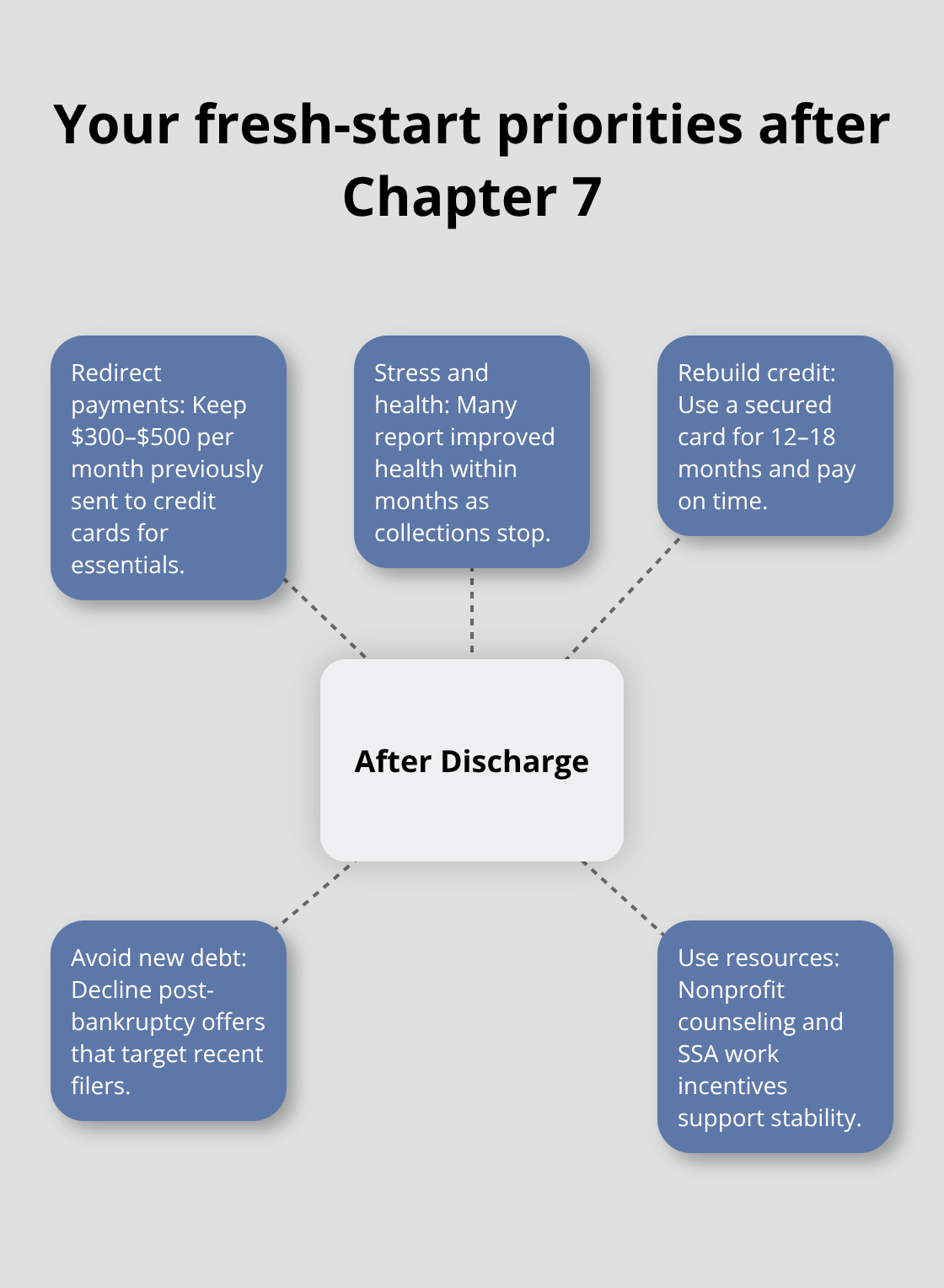
Creating a sustainable budget on disability income means treating your SSDI or SSI payment as your complete financial picture and listing every monthly expense: rent, utilities, food, medications, transportation, and insurance. Many disabled workers discover that eliminating credit card payments frees $300 to $500 monthly that can finally cover medical expenses or build a small emergency fund. Avoid taking on new debt when creditors begin offering credit cards within months of discharge, since these offers target bankruptcy filers specifically because lenders know you cannot file again for eight years.
Resources available to disabled workers post-bankruptcy include nonprofit credit counseling agencies that help you understand budgeting without pushing you toward new debt, and the Social Security Administration offers work incentive programs that allow you to earn income without losing benefits. We at Harnage Law, PLLC guide clients through the entire Chapter 7 bankruptcy process and help you understand your fresh start. Contact our firm to discuss your situation and learn how Chapter 7 can transform your financial future while protecting your disability income.