When you file Chapter 7 bankruptcy in Florida, an automatic stay kicks in immediately. This legal protection stops creditors from calling, suing, or seizing your assets the moment your case is filed.
At Harnage Law, PLLC, we help clients understand exactly how long the automatic stay Florida length lasts and what happens when it ends. Knowing these timelines helps you plan your financial recovery with confidence.
What the Automatic Stay Actually Does
How the Automatic Stay Activates Immediately
The automatic stay is a court order that activates the moment your Chapter 7 bankruptcy petition is filed with the U.S. Bankruptcy Court for the Middle District of Florida. Under 11 U.S.C. § 362, this order freezes most collection actions against you and your property immediately, without requiring a separate hearing or court approval. Creditors cannot call you, sue you, garnish your wages, seize your bank accounts, or repossess your car once the stay takes effect. The stop happens fast-notice to creditors can take one to two days to propagate through their systems, but the legal protection applies from the filing date itself. If a creditor calls demanding payment on the day you file, they violate federal law.
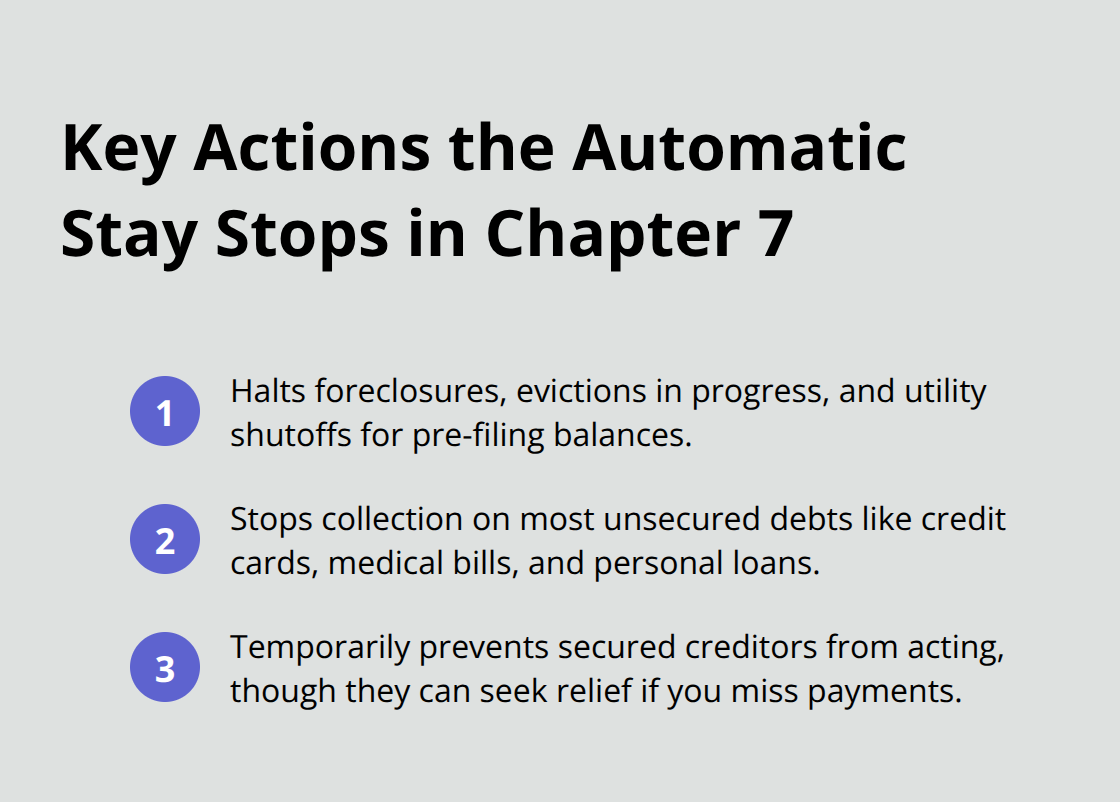
What the Automatic Stay Stops
Foreclosure proceedings halt, eviction actions pause, and utility companies cannot disconnect essential services for pre-filing balances. The automatic stay covers nearly all unsecured debts, including credit card balances, medical bills, personal loans, and collection accounts. Secured creditors like mortgage lenders and auto finance companies also face the stay, though they have more options to request relief if you fall behind on payments during the bankruptcy.
What the Automatic Stay Does Not Protect
The automatic stay has significant limitations that catch many debtors off guard. Child support and alimony obligations continue despite the stay, as do criminal prosecutions and most tax proceedings by the IRS. Pension plan loans receive no protection, and public benefit overpayments can still be collected. In Florida, if a landlord obtained a possession judgment before you filed, the stay provides only minimal protection and eviction may proceed.
How Repeat Filings Limit the Automatic Stay
Repeat filers face harsh restrictions under the automatic stay rules. If you filed bankruptcy within the past 12 months and it was dismissed, the stay lasts only 30 days instead of the full bankruptcy period. Two or more prior dismissals mean the stay may not activate at all unless you prove to the court through clear and convincing evidence that you did not file in bad faith.
When Creditors Can Challenge the Automatic Stay
Creditors can file motions to lift the stay under 11 U.S.C. § 362(d) if they lack adequate protection of their collateral or if the stay fails to achieve its purpose. The Southern District of Florida follows specific procedures for these motions, including Local Rule 4001-1, which requires proper service and compliance with court guidelines. Understanding which debts the stay protects and which ones it does not is essential for realistic financial planning during your bankruptcy case-and these distinctions directly affect how long your protection actually lasts.
How Long the Automatic Stay Actually Lasts in Florida Chapter 7
The Full Duration of Your Automatic Stay Protection
Once your case is filed, the court issues an automatic stay that remains active throughout your entire Chapter 7 bankruptcy case, which typically lasts three to four months from filing to discharge. You receive continuous protection from creditors during the entire process-while the trustee evaluates your assets, you complete required financial management courses, and the court reviews your case for any objections. The stay ends when your case closes, which happens after the court issues your discharge and the trustee completes all duties. Most debtors enjoy uninterrupted creditor protection from the filing date until roughly four months later, assuming you comply with all bankruptcy requirements and no complications arise.
How Prior Filings Drastically Shorten Your Stay
The timeline shifts dramatically if you have prior bankruptcy filings. If your previous Chapter 7 case was dismissed within the last 12 months, the automatic stay in your new filing lasts only 30 days instead of the full case duration, according to 11 U.S.C. § 362(c)(3). Two or more dismissed cases within the past year mean the stay may not activate at all unless you file an affidavit with the court proving you did not file in bad faith and explaining what changed in your financial situation.
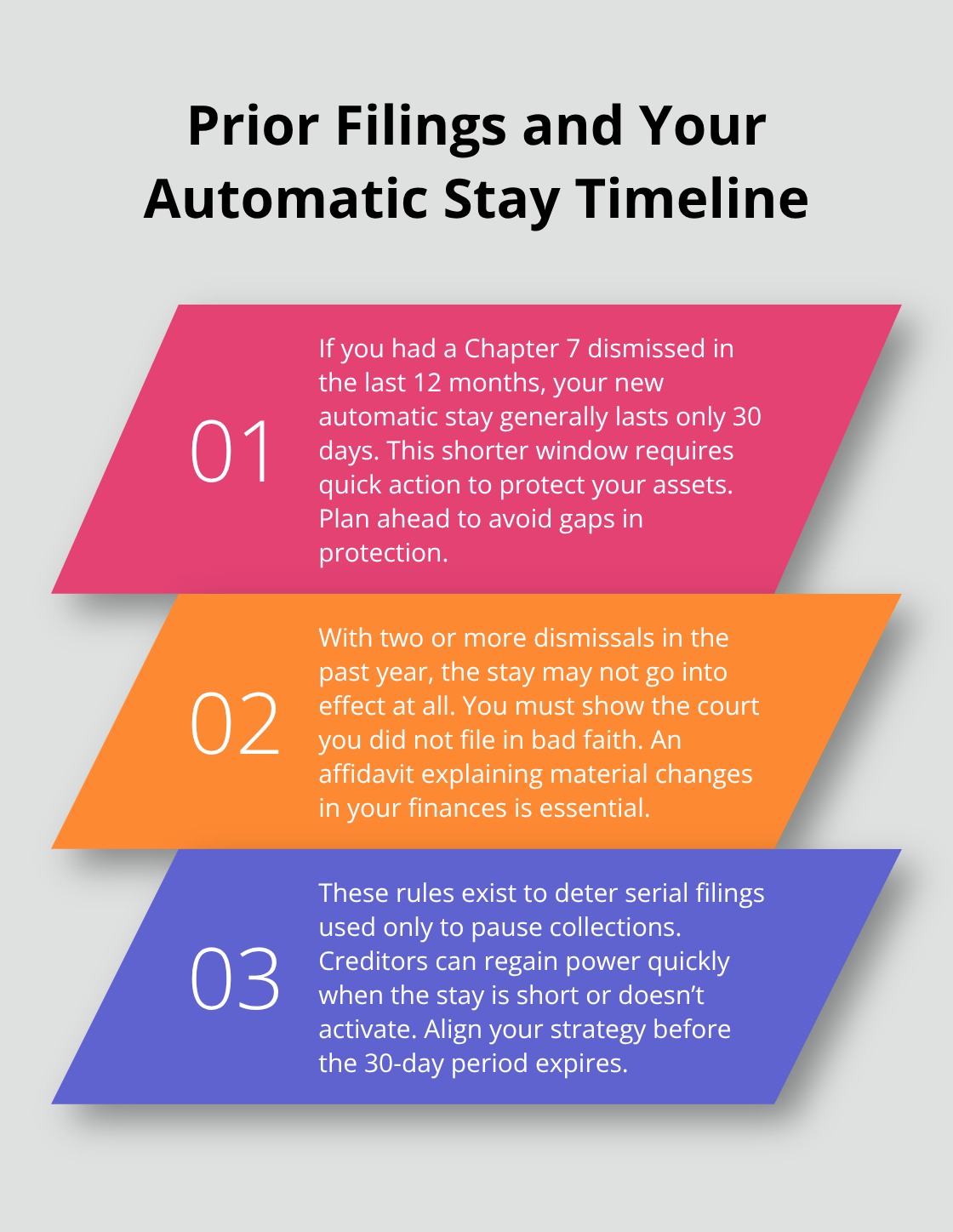
This restriction prevents serial filers from using bankruptcy as a permanent harassment shield. If you fall into this category, your creditors regain collection power quickly, making it essential to have a solid repayment plan or discharge strategy in place before the 30-day window closes.
When Creditors File Motions to Lift the Stay
Creditors can shorten the stay by filing motions to lift it under 11 U.S.C. § 362(d), claiming inadequate protection of their collateral or that the stay fails to achieve its bankruptcy purpose. The Southern District of Florida requires these motions to follow Local Rule 4001-1 procedures, including proper service on you, your attorney, the trustee, and any other interested parties. You have 14 days to respond and object once a creditor files such a motion, and the court will hold a hearing to decide whether to grant relief. Creditors most commonly seek lift-stay relief when mortgage or car loan payments stop after filing, when insurance lapses on collateral, or when property values drop significantly below the loan balance (situations that leave creditors without adequate protection).
What Triggers Creditor Relief Motions
Understanding these timelines and triggers helps you anticipate when creditor actions might resume and plan accordingly. Secured creditors like mortgage lenders and auto finance companies file the majority of lift-stay motions because they have collateral at stake. Unsecured creditors rarely pursue this option since they have no specific property to protect. The court examines whether the creditor faces genuine risk of loss before granting relief, so simply missing one payment does not automatically result in stay relief. However, multiple missed payments or a significant drop in collateral value strengthens a creditor’s case considerably.
Moving Forward With Your Stay Protection
Knowing how long your automatic stay lasts in your specific situation allows you to plan your financial recovery with realistic expectations. The differences between a full four-month stay and a 30-day stay create vastly different strategies for addressing your debts and protecting your assets. Your next step involves understanding which debts the stay actually covers and which ones creditors can pursue regardless of your bankruptcy filing.
Exceptions and Limitations to Florida Chapter 7 Automatic Stay
Debts the Automatic Stay Does Not Cover
The automatic stay provides broad protection, but it has hard boundaries that many Florida debtors discover too late. Child support and alimony obligations continue uninterrupted regardless of your bankruptcy filing, meaning a former spouse can still pursue wage garnishment or contempt proceedings while your case is active. Criminal prosecutions move forward without pause, and the IRS can still conduct audits, assess tax liabilities, and pursue certain collection actions even after the stay takes effect.
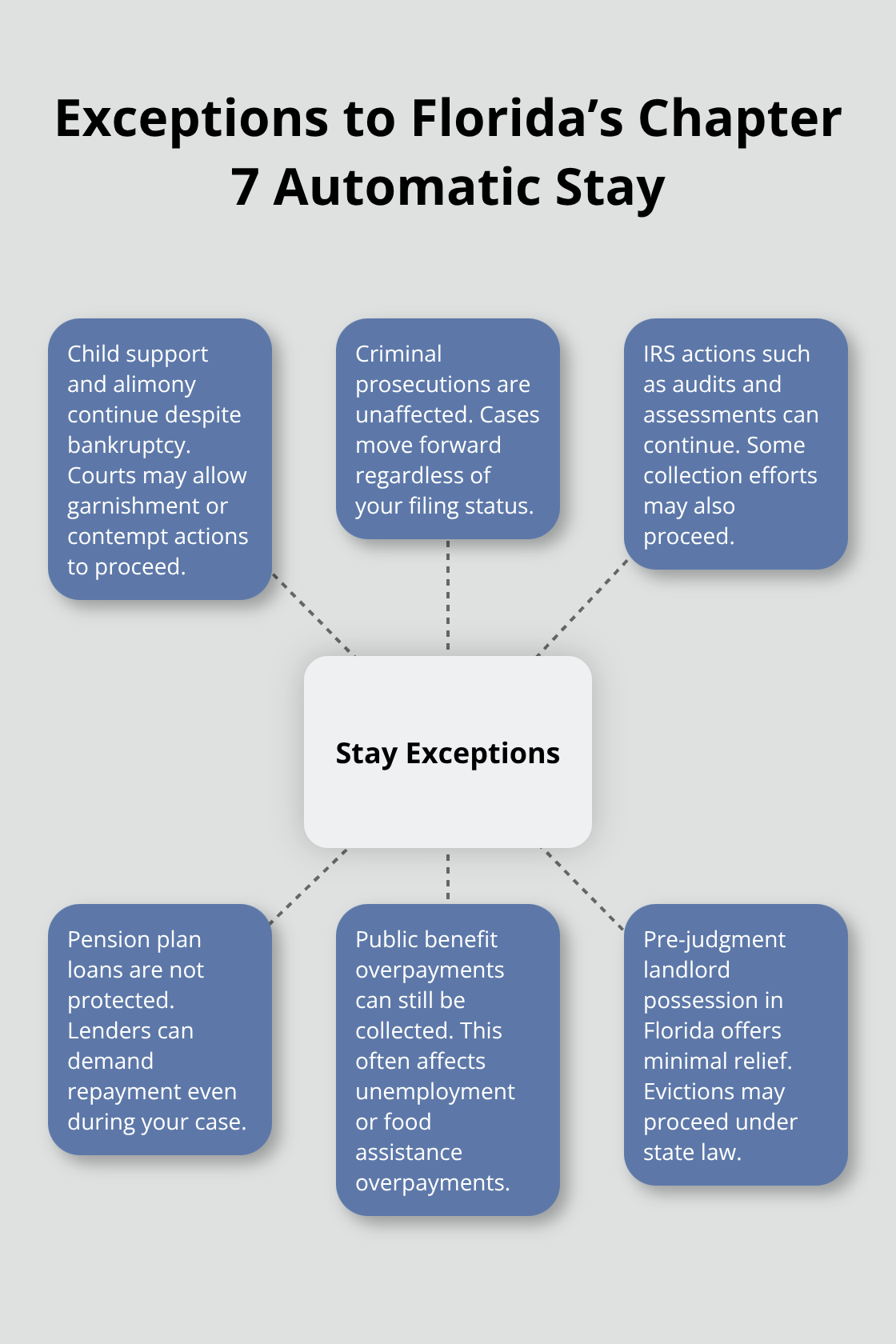
Pension plan loans fall outside the stay’s reach entirely, so creditors holding these obligations can demand repayment. Public benefit overpayments represent another significant gap in protection, particularly for those receiving unemployment insurance or food assistance benefits that were issued in error.
In Florida specifically, if a landlord obtained a possession judgment before your filing date, the automatic stay offers minimal relief and eviction proceedings typically continue under state law. These exceptions create real financial exposure that extends beyond your Chapter 7 case, so understanding which debts remain collectible helps you prioritize which obligations to address during your bankruptcy and which ones will follow you after discharge.
How Secured Creditors Challenge the Stay
Secured creditors like mortgage lenders and auto finance companies operate under different rules than unsecured creditors, giving them faster pathways to lift the stay and resume collection actions. A creditor can file a motion under 11 U.S.C. § 362(d) claiming lack of adequate protection or that the stay fails to achieve bankruptcy’s purpose, and the Southern District of Florida follows Local Rule 4001-1 procedures requiring proper service on you, your attorney, the trustee, and interested parties. You then have 14 days to file a response objecting to the motion, and the court schedules a hearing where both sides present evidence about the collateral’s condition, the loan balance, and whether you are making current payments.
When Creditors Succeed in Lifting the Stay
Creditors succeed most often when collateral value has dropped significantly below the loan balance, insurance has lapsed on the property, or you have missed multiple payments after filing. The court examines whether the creditor faces genuine risk of loss before granting relief, so simply missing one payment does not automatically result in stay relief. However, multiple missed payments or a significant drop in collateral value strengthens a creditor’s case considerably.
How Prior Filings Eliminate Your Protection
If you filed previously and your case was dismissed within the past year, your new automatic stay lasts only 30 days under 11 U.S.C. § 362(c)(3), meaning creditors regain collection power rapidly unless you file an affidavit with the court proving you did not file in bad faith and demonstrating material changes in your financial circumstances. Two or more dismissed cases within the prior year may prevent the stay from activating entirely unless you meet this clear and convincing evidence standard, essentially eliminating your protection window altogether. These restrictions exist to prevent serial filers from abusing bankruptcy as a permanent shield, so debtors with prior filings must move quickly to resolve debts or restructure finances before creditor actions resume.
Final Thoughts
The automatic stay Florida length determines how long you receive protection from creditors, and this timeline varies significantly based on your specific situation. For most Florida debtors filing Chapter 7, the stay remains active throughout the entire bankruptcy process, typically lasting three to four months from filing until discharge. However, prior dismissals can drastically reduce this protection to just 30 days, and creditors can file motions to lift the stay if they lack adequate protection of their collateral.
The automatic stay stops foreclosures, wage garnishments, lawsuits, and creditor calls immediately upon filing, yet this protection has real boundaries that affect your financial recovery strategy. Child support obligations, criminal prosecutions, and certain tax actions continue regardless of your stay, while secured creditors like mortgage lenders can challenge the stay relatively quickly if you fall behind on payments. These limitations mean you cannot rely on the stay alone to solve all your financial problems, but rather as breathing room to reorganize your finances and address debts strategically.
If creditors are calling, threatening lawsuits, or pursuing wage garnishment, filing immediately activates the stay and stops these actions in their tracks. If you have prior bankruptcy filings, understanding how those dismissals affect your current stay duration becomes critical for planning your timeline. We at Harnage Law, PLLC help Florida residents navigate these complexities by providing personalized guidance through every stage of Chapter 7 bankruptcy, so contact us to discuss how the automatic stay applies to your debts and what protection timeline you can expect in your case.