
Filing for Chapter 7 bankruptcy in Florida is a major financial decision that affects your future. Understanding the Florida Chapter 7 basics before you file can help you make informed choices about your debt and assets.
At Harnage Law, PLLC, we’ve guided countless Floridians through this process. This guide walks you through what happens, which debts disappear, and how to rebuild after discharge.
How Chapter 7 Works in Florida
The Core Mechanism
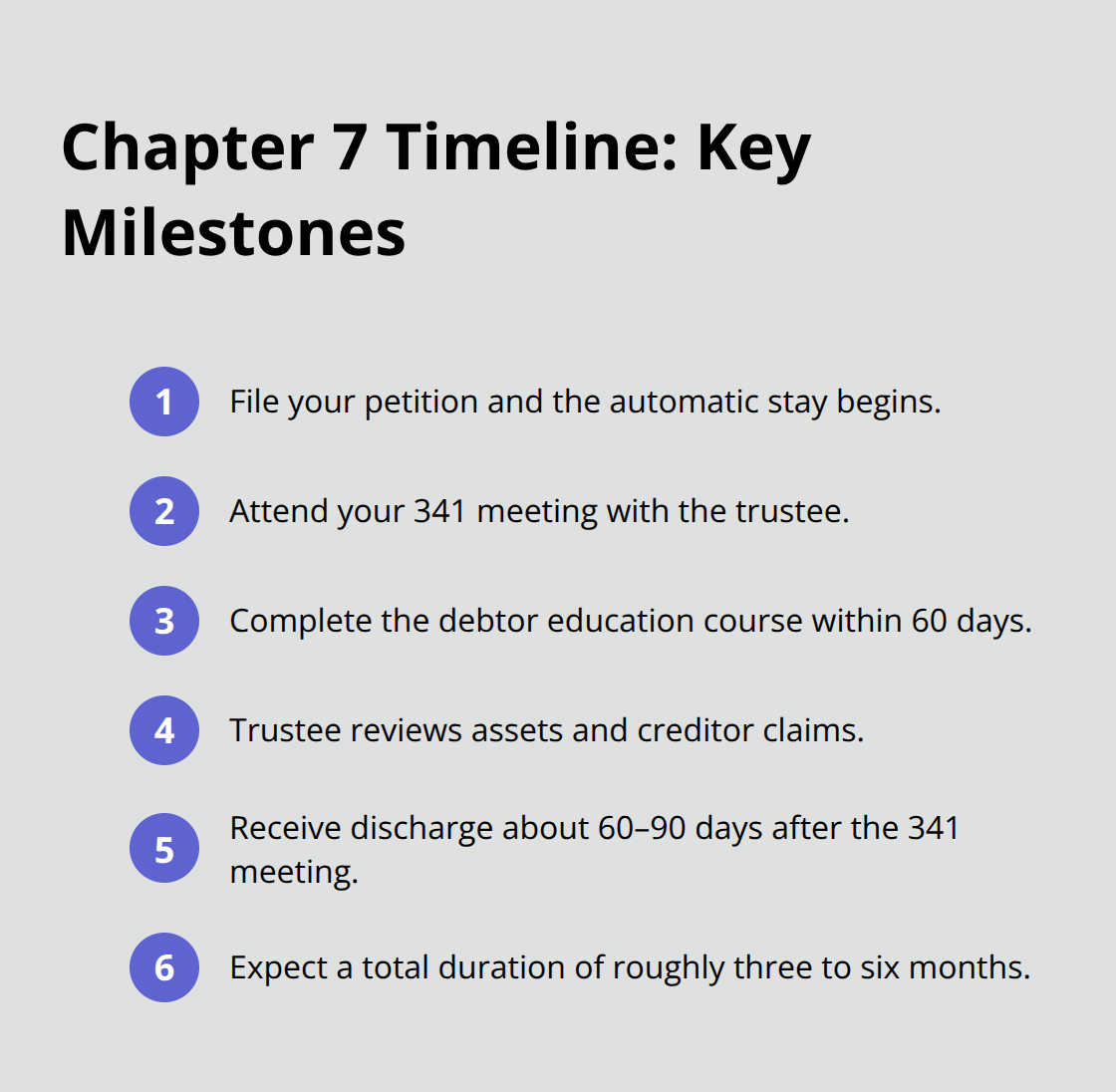
Chapter 7 bankruptcy operates on a straightforward principle: you surrender nonexempt assets to a court-appointed trustee, who sells them and distributes proceeds to creditors, while you receive a discharge that eliminates most of your remaining debts. This process typically takes three to six months from filing to discharge. The automatic stay activates the moment you file, immediately halting collection calls, wage garnishments, lawsuits, and foreclosure proceedings. This protection applies to nearly all creditors, though some exceptions exist for recent child support claims, criminal restitution, and certain tax cases. The stay provides breathing room to work through the bankruptcy process without constant pressure from collection efforts.
Florida’s Asset Protection Framework
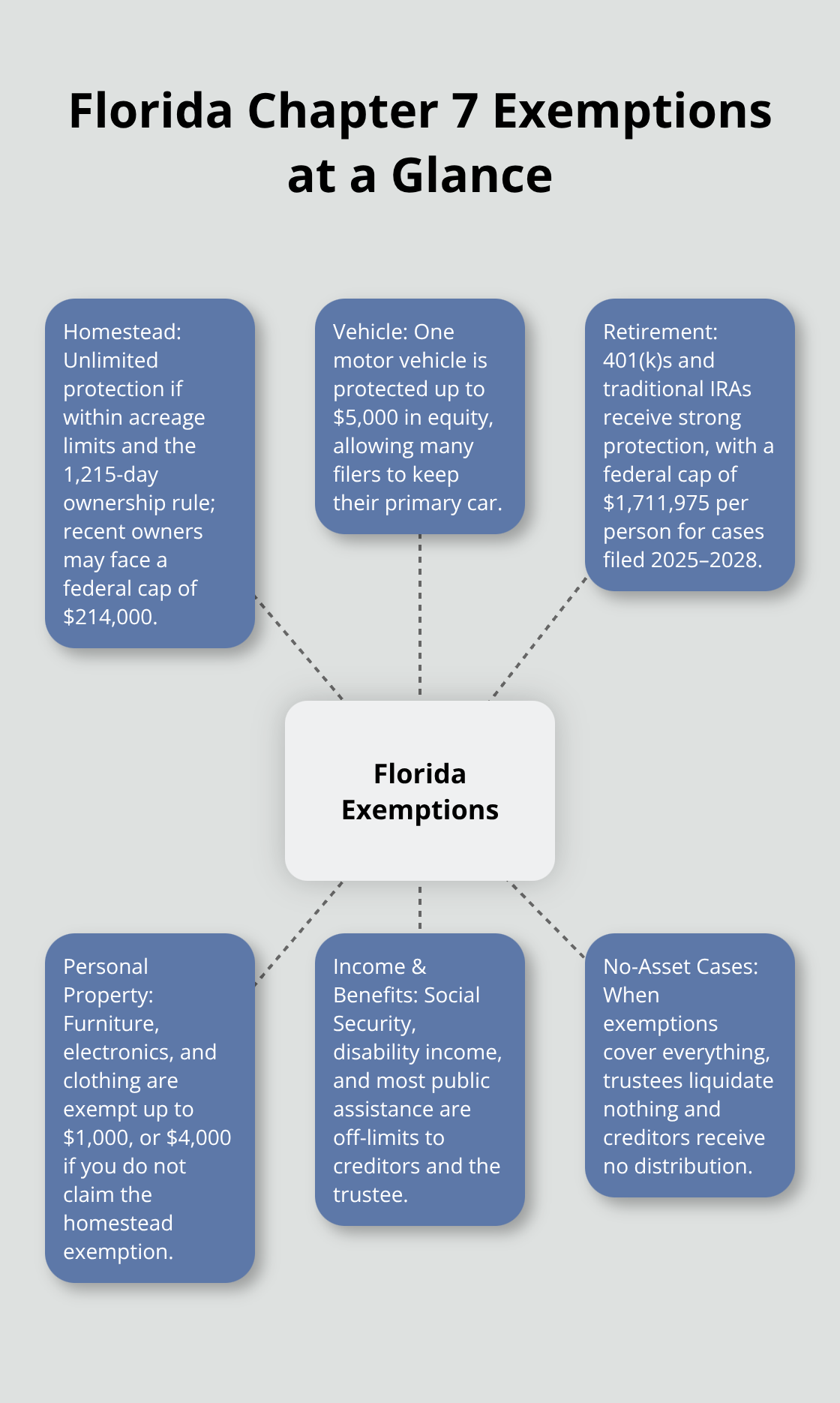
Florida law protects substantial assets through exemptions that allow you to keep what matters most. Your primary residence receives unlimited protection under Florida’s homestead exemption if you own half an acre or less in a city or 160 acres elsewhere, provided you’ve owned it for at least 1,215 days before filing (or face a federal cap of $214,000). A single vehicle stays protected up to $5,000 in equity-if you owe $15,000 on a car worth $18,000, you keep it. Retirement accounts like 401(k)s and traditional IRAs receive substantial protection, with federal caps reaching $1,711,975 per person for cases filed between April 1, 2025 and March 31, 2028. Personal property including furniture and electronics remains with you up to $1,000, or $4,000 if you don’t claim the homestead exemption. Social Security benefits, disability income, and most public assistance payments cannot be touched by creditors. Any assets exceeding these exemptions become nonexempt property that the trustee liquidates, though many Chapter 7 cases become no-asset cases where creditors receive nothing because everything qualifies for protection.
Debts That Disappear Through Discharge
The discharge eliminates your personal liability for most debts, typically issued 60 to 90 days after your meeting with creditors. Credit card balances, medical bills, personal loans, and most other unsecured debts disappear completely. However, certain obligations survive discharge and remain your responsibility: student loans unless you prove undue hardship, child support and alimony obligations, recent income tax debts, court fines, and debts incurred through fraud or willful injury. If you own a financed vehicle or home, you can reaffirm the debt to keep the property, meaning you agree to remain liable for that specific obligation while discharging everything else. This selective approach lets you maintain essential assets while eliminating the majority of your financial burden.
What Happens Next in Your Case
The path forward depends on your specific circumstances and what you want to protect. If you plan to keep your home or vehicle, reaffirmation agreements lock in your obligation to those creditors while releasing you from everything else. If you have no assets to liquidate, your case moves quickly through the system with minimal trustee involvement. The trustee’s role focuses on identifying and selling nonexempt property, but in many Florida cases, exemptions cover everything, resulting in no distributions to creditors. Understanding which debts discharge and which survive helps you plan your financial recovery and determine whether Chapter 7 truly fits your situation or whether Chapter 13 might serve you better.
Getting Ready: What Happens Before and During Your Florida Chapter 7 Filing
Credit Counseling and Your Filing Certificate
Florida bankruptcy law requires you to complete credit counseling from an agency approved by the U.S. Trustee before you file. You cannot file without a certificate proving completion. The counseling takes roughly one to two hours and costs between $50 and $300 depending on your income level. Many approved agencies offer sliding scale fees or waive costs entirely if you qualify. Once you complete counseling, you receive a certificate valid for 180 days, giving you a window to file your petition. The Southern District of Florida maintains a current list of approved agencies on the U.S. Trustee’s website, so verify any provider before paying. Some people rush this step or use outdated agency lists, which delays filing and forces them to repeat counseling. Start here first-it’s the gate you must pass before anything else happens.
Assembling Your Filing Documents and Fees
Your filing packet includes the Voluntary Petition, your Certificate of Credit Counseling, the Creditor Matrix with names and addresses only, a legible photo ID, pay stubs from the last 60 days, and completed schedules detailing your income, expenses, assets, and debts. If you own a home facing foreclosure, include the Initial Eviction Judgment. The filing fee totals $338, payable by cashier’s check, money order, or electronically. If you cannot afford the full amount upfront, file the Local Form Application for Individuals to Pay the Filing Fee in Installments-the minimum first payment is half the fee, both spouses must sign if filing jointly, and any previous unpaid court fees may block your filing entirely. Filing electronically accelerates processing, and payment of the filing fee must accompany electronically transmitted petitions within 14 days if not paid upfront.
Passing the Means Test for Chapter 7 Eligibility
The means test determines whether you qualify for Chapter 7 or must consider Chapter 13 instead. Calculate your average monthly income over the last six calendar months, then multiply by 12 to find your annual figure. Compare this to Florida’s median income thresholds: $41,334 for one person, $51,839 for two, $53,952 for three, $63,196 for four, and $71,296 for five, with additional amounts for larger households. If your annual income falls below the median for your household size, you pass the means test automatically and can proceed with Chapter 7. If your income exceeds the median, you must complete the full means test calculation, subtracting allowable expenses from your income to determine disposable income over 60 months. Allowable expenses include secured debt payments, taxes, health insurance, childcare, court-ordered support, and caregiver costs for disabled family members-these figures come from IRS and Census Bureau standards rather than your actual spending. If your five-year disposable income totals less than $7,475, you pass. Between $7,475 and $12,475 requires additional analysis. Over $12,475 disqualifies you from Chapter 7. Some filers qualify for exemptions: disabled veterans with at least 30% disability rating who incurred debts during active duty or homeland defense activities, or those whose debts are primarily business-related rather than consumer debts.
The 341 Meeting of Creditors
After filing, the U.S. Trustee schedules your meeting of creditors, also called the 341 meeting, within 21 to 60 days. You appear before the trustee and answer questions under oath about your finances, assets, and debts. Creditors may attend but rarely do unless significant assets are involved. The trustee asks straightforward questions: Do you own property? Have you hidden assets? Are your schedules accurate? This meeting typically lasts 5 to 15 minutes. In Florida, many 341 meetings now occur via Zoom, so check with the Clerk or U.S. Trustee for your specific location and access details.
From Filing to Discharge
Within 60 days after your 341 meeting, you must file a Certificate of Completion from an approved personal financial management course-different from the pre-filing credit counseling. Failure to complete this second course blocks your discharge. Once the trustee reviews your case, sells any nonexempt assets, and creditors file proofs of claim, the discharge typically issues 60 to 90 days after your 341 meeting. From filing to final discharge usually takes three to six months. If complications arise (disputed exemptions, significant assets, or creditor objections), the timeline extends.
Understanding this sequence prepares you for what comes next: rebuilding your financial foundation after the court releases you from qualifying debts and you begin life with a fresh start.
Which Debts Vanish and Which Ones Stay
Debts That Discharge in Chapter 7
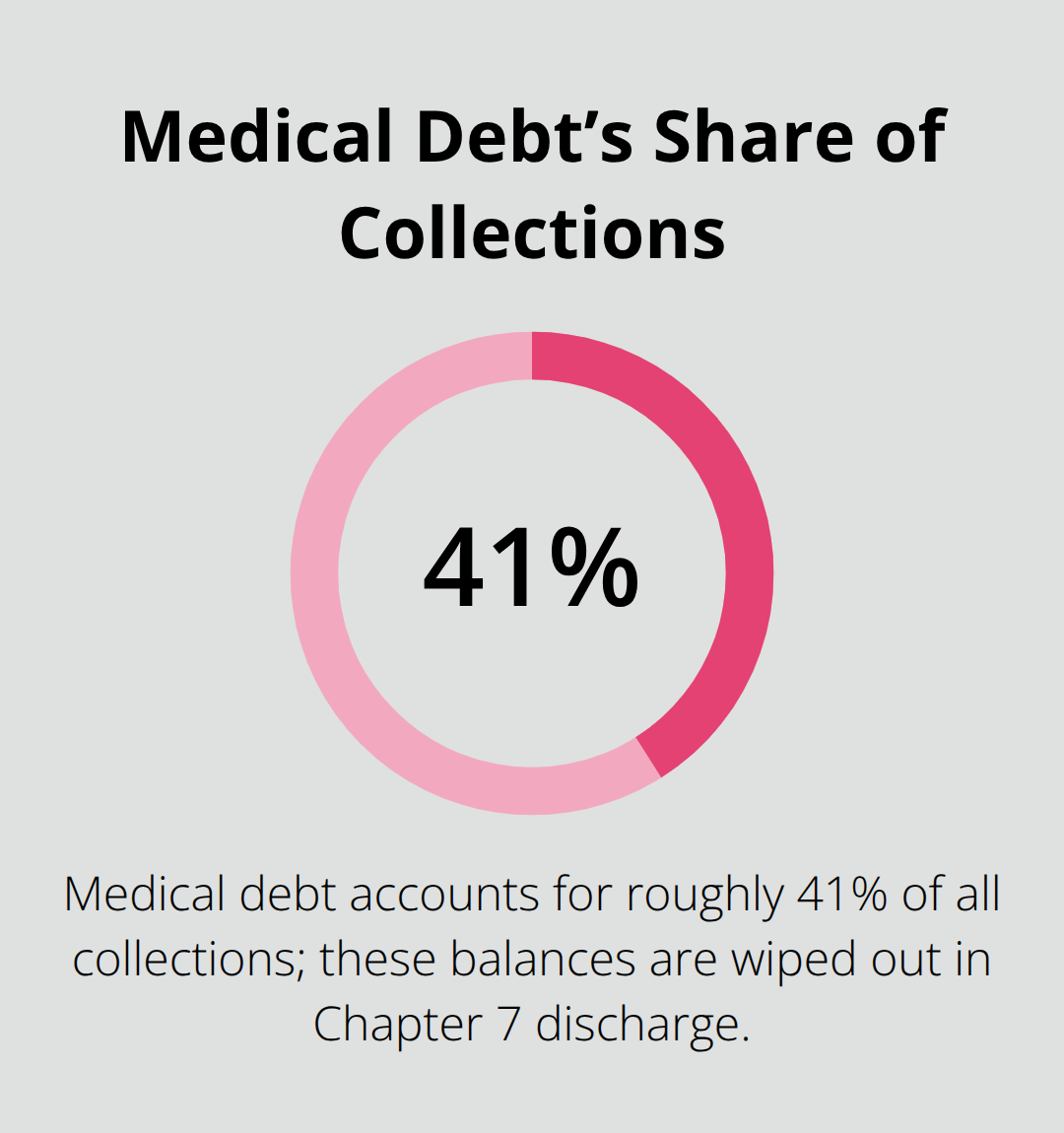
Chapter 7 discharge eliminates most unsecured debts, but the bankruptcy code explicitly protects certain obligations that survive the process. Understanding the difference determines whether filing actually solves your financial crisis or leaves you with significant remaining liability. Credit cards, medical bills, personal loans, and payday loans disappear through discharge in nearly all cases, assuming no fraud occurred during the transaction. Utility bills, rent arrears, and deficiency judgments from repossessed vehicles also discharge. The Federal Trade Commission reports that the average American carries $6,376 in credit card debt across multiple accounts, and Chapter 7 wipes all of it clean. Medical debt accounts for roughly 41% of all collections according to recent credit bureau data, and those bills vanish upon discharge.
If you owe money on multiple credit cards, personal loans from banks or online lenders, and accumulated medical expenses, Chapter 7 eliminates the entire burden.
Debts That Survive Chapter 7
Student loans present the harshest reality for Chapter 7 filers. Federal and private student loans survive discharge unless you prove undue hardship, a legal standard courts rarely grant. The Department of Education reports over 43 million Americans carry federal student loan debt totaling approximately $1.7 trillion, yet bankruptcy provides no relief for most borrowers. Child support and alimony obligations never discharge under any circumstance; family court orders remain enforceable after bankruptcy. Income tax debts from the past three years typically survive discharge, though older tax debts may qualify for elimination. Recent tax liens filed within 120 days before filing also remain. Criminal fines, restitution orders, and court-ordered penalties survive discharge. Debts incurred through fraud or willful injury stay with you. If you obtained a loan through intentional misrepresentation or caused someone harm through your deliberate actions, the bankruptcy court refuses to eliminate that obligation. Florida courts take these determinations seriously, and trustees actively investigate claims of fraud on credit applications or misrepresented income.
Florida’s Homestead and Vehicle Protections
Your asset protection strategy within Chapter 7 hinges on understanding Florida’s exemption framework, which differs significantly from federal bankruptcy exemptions. Florida opted out of federal exemptions entirely, meaning you must apply Florida state exemptions exclusively. Your home receives unlimited protection if you own half an acre or less within city limits or 160 acres outside municipalities, provided you held title for at least 1,215 days before filing. Homeowners who purchased property within the past 3.3 years face a federal cap of $214,000 regardless of the home’s actual value. A single motor vehicle keeps up to $5,000 in equity, so if you owe $12,000 on a car worth $16,000, you retain it.
Retirement Accounts and Income Protections
Retirement accounts including 401(k)s, 403(b)s, and traditional IRAs receive broad protection with federal limits of $1,711,975 per person for cases filed between April 1, 2025 and March 31, 2028. Social Security income, disability benefits, and veterans benefits cannot be seized by creditors or the bankruptcy trustee. Personal property such as furniture, electronics, and clothing stays protected up to $1,000, or $4,000 if you forgo homestead protection. Jewelry, artwork, and collectibles fall within personal property limits. Life insurance proceeds payable to named beneficiaries remain exempt from the bankruptcy estate. Annuity proceeds and disability income also stay protected. These Florida-specific exemptions mean that in many cases, everything you own qualifies for protection, resulting in a no-asset Chapter 7 where the trustee finds nothing to liquidate and creditors receive zero distribution.
Rebuilding After Your Florida Chapter 7 Discharge
Your discharge marks a turning point, not an ending. The moment the court releases you from qualifying debts, your credit score drops 130 to 200 points initially, but recovery accelerates faster than most people expect. Secured credit cards allow you to deposit $500 to $2,500 as collateral and use that amount as your credit limit, with on-time payments rebuilding your score to 650 to 700 range within two to three years.
A realistic budget prevents the spending patterns that led to bankruptcy from repeating. Track every expense for one month to identify where money actually goes, then allocate 50% of income to necessities, 30% to wants, and 20% to savings and debt repayment. An emergency fund of $1,000 to $2,500 stops unexpected expenses from forcing you back into debt, and automating transfers to savings immediately after payday removes temptation to spend.
We at Harnage Law, PLLC understand that the Florida Chapter 7 basics extend beyond the courtroom into your post-discharge life. If you need guidance on rebuilding after discharge or want to discuss whether Chapter 7 fits your situation, contact our team for a consultation.
