Florida offers some of the strongest bankruptcy protections in the United States. The state’s generous homestead exemptions and wage garnishment shields make it an ideal place for debt relief.
Many people wonder why should you file bankruptcy when facing overwhelming financial burdens. We at Harnage Law, PLLC see how Florida’s laws provide significant advantages that other states simply cannot match.
What Makes Florida’s Bankruptcy Laws Different
Florida’s Unlimited Homestead Protection
Florida’s homestead exemption stands as the most powerful asset protection tool in American bankruptcy law. Unlike the federal homestead exemption that caps at $170,350, Florida offers unlimited protection for primary residences. This means a debtor can protect a million-dollar home from creditors as long as they meet the state’s residency requirements. The catch: you must establish Florida residency at least 1,215 days before filing bankruptcy to access the full unlimited exemption. Recent transplants get protection up to $170,350, which still beats most other states.
Wage Protection That Actually Works
Florida’s wage garnishment laws provide the strongest worker protections in the Southeast. The state shields 100% of wages for heads of household who earn less than $750 weekly, while federal law only protects 75% of disposable income. Non-head-of-household workers still get federal protections, but Florida goes further by completely exempting wages deposited in bank accounts for heads of household.
The number 100% seems to be not appropriate for this chart. Please use a different chart type. This protection applies even after bankruptcy discharge and creates a permanent shield against future creditor actions.
Asset Protection Beyond Your Home
Florida’s wildcard exemption allows debtors to protect an additional $4,000 in any property they choose. This covers family heirlooms, valuable collections, or extra vehicle equity that other exemptions miss. The state also fully protects retirement accounts (including 401k plans and IRAs) without dollar limits. Social Security benefits, unemployment compensation, and disability payments remain completely exempt from creditor reach. These protections work together to create a comprehensive safety net that preserves your financial foundation while Chapter 7 bankruptcy eliminates overwhelming debt.
These robust protections set the stage for understanding how Florida residents can achieve immediate financial relief through the bankruptcy process.
Financial Relief Through Chapter 7 Bankruptcy in Florida
Immediate Protection From Day One
The moment you file Chapter 7 bankruptcy in Florida, an automatic stay takes effect that stops all creditor collection activities. Phone calls from debt collectors must cease immediately, wage garnishments halt within days, and pending lawsuits freeze in their tracks. This federal protection applies to credit card companies, medical debt collectors, and most other unsecured creditors. The automatic stay also prevents utility disconnections and gives you room to reorganize your finances.
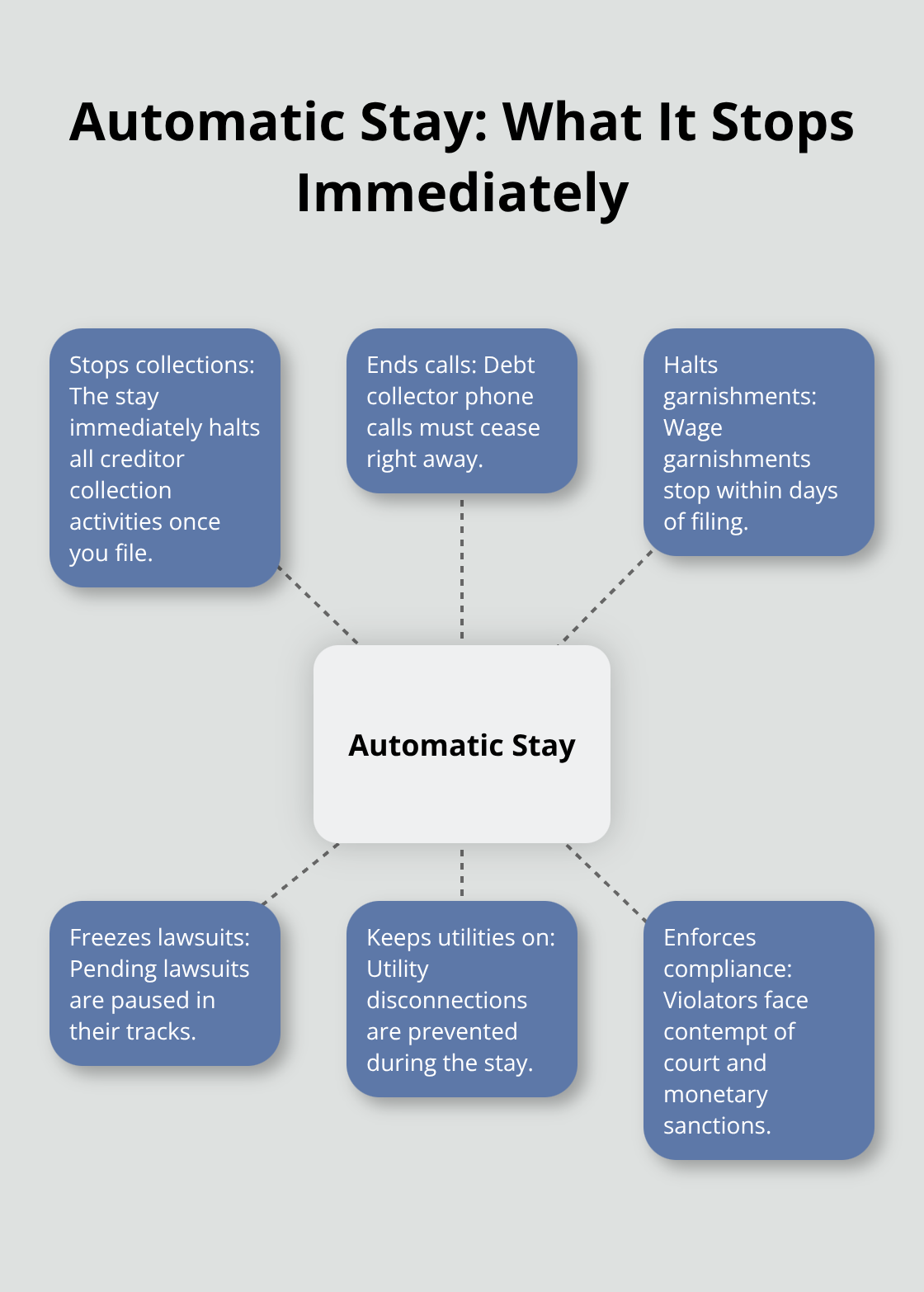
Creditors who violate the automatic stay face contempt of court charges and potential monetary sanctions.
Complete Debt Elimination Within Four Months
Chapter 7 bankruptcy in Florida typically completes within 90 to 120 days from the initial petition to discharge. This timeline makes it the fastest debt relief option available under federal law. The process includes a mandatory meeting of creditors approximately 30 days after you file, where you answer questions about your financial situation under oath. Most meetings last less than 10 minutes when proper documentation is prepared.
What Happens After Your Creditors Meeting
After the meeting, creditors have 60 days to object to your discharge (though objections occur in fewer than 1% of consumer cases according to the Administrative Office of the US Courts). Once discharged, debts like credit cards, medical bills, personal loans, and utility bills disappear permanently. Your future income cannot be claimed by these former creditors, which gives you complete financial freedom to rebuild.
Types of Debt You Can Eliminate
Chapter 7 bankruptcy discharges most unsecured debts that burden Florida families. Credit card balances, medical expenses, personal loans, and old utility bills all qualify for elimination. The discharge also covers deficiency balances from repossessed vehicles and foreclosed homes. However, certain debts like child support, recent taxes, and student loans typically survive the bankruptcy process.
While Chapter 7 provides powerful debt relief, many Florida residents worry about common myths that prevent them from seeking help when they need it most.
Common Misconceptions About Filing Bankruptcy in Florida
Credit Recovery Happens Faster Than Most People Think
Florida residents avoid bankruptcy because they fear permanent credit damage, but the data tells a different story. The Federal Reserve Bank of Philadelphia found that Chapter 7 filers see their credit scores improve to pre-bankruptcy levels within 18 to 24 months after discharge. The key lies in immediate action after discharge: secured credit cards rebuild payment history fast, while low debt-to-income ratios accelerate score recovery. Many bankruptcy filers qualify for car loans within six months and mortgages within two years of their discharge date.
Florida Law Protects Your Essential Property
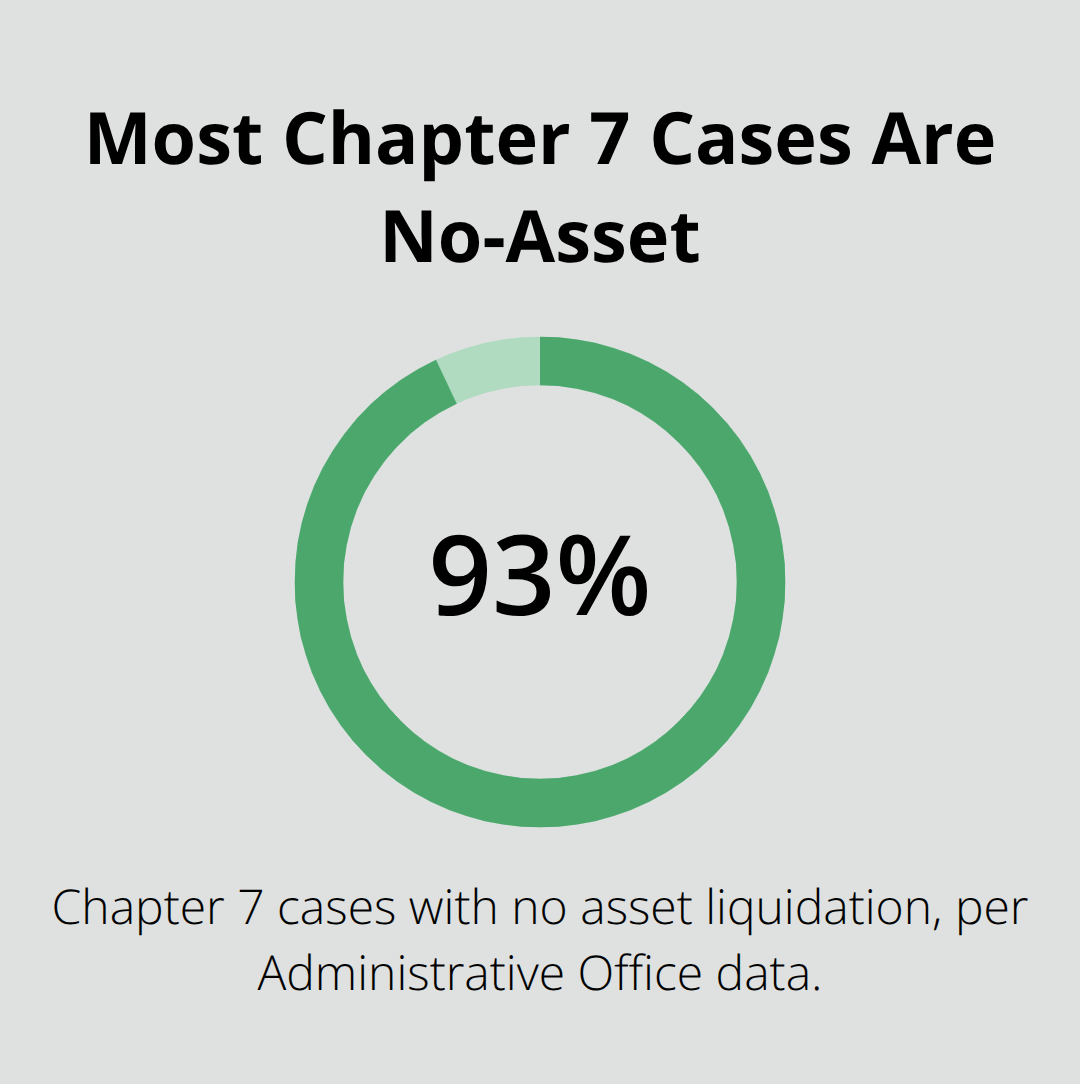
The biggest bankruptcy myth claims you lose everything you own, but Florida’s exemption laws prove otherwise. Administrative Office data shows that 93% of Chapter 7 cases involve no asset liquidation whatsoever. Florida residents keep their primary homes through unlimited homestead protection, one vehicle worth up to $1,000, and $4,000 in personal property through the wildcard exemption.
Your retirement accounts, work tools worth up to $1,000, and household goods remain completely protected. The state’s generous exemptions mean most people keep every item they need for daily life while they eliminate debt burdens.
Asset Protection Exceeds Other States
Florida bankruptcy filers retain more property than residents of almost any other state. While Texas offers similar homestead protection, Florida combines unlimited home equity protection with stronger wage garnishment shields and broader personal property exemptions. The state protects 100% of wages for heads of household who earn under $750 weekly (compared to the federal standard of 75% protection regardless of family status). These combined protections create the strongest debtor-friendly environment in the Southeast, which makes Florida an ideal place to file Chapter 7 bankruptcy when debt becomes unmanageable.
Final Thoughts
Florida’s bankruptcy laws create the most debtor-friendly environment in the nation. The unlimited homestead exemption protects your primary residence regardless of value, while wage garnishment shields preserve 100% of income for heads of household who earn under $750 weekly. These laws allow most filers to keep all essential property while they eliminate debt burdens completely.
Chapter 7 bankruptcy provides immediate relief through the automatic stay, which stops creditor harassment and wage garnishments within days of your petition. The entire process completes in just four months and permanently discharges credit cards, medical bills, and personal loans. Your credit score typically recovers to pre-bankruptcy levels within two years (making this the fastest path to financial recovery).
Why should you file bankruptcy when you face unmanageable debt? Florida residents gain access to the strongest asset protections while they achieve complete debt elimination in record time. We at Harnage Law, PLLC guide Florida families through every step of the Chapter 7 process.