
Many Florida residents wonder how many times can you file for Chapter 7 bankruptcy when facing repeated financial hardships. Federal law sets clear restrictions on consecutive filings.
The eight-year waiting period between Chapter 7 discharges creates significant planning considerations. We at Harnage Law, PLLC help clients understand these complex timing requirements and develop effective strategies for financial recovery.
What Are Florida’s Chapter 7 Filing Limits?
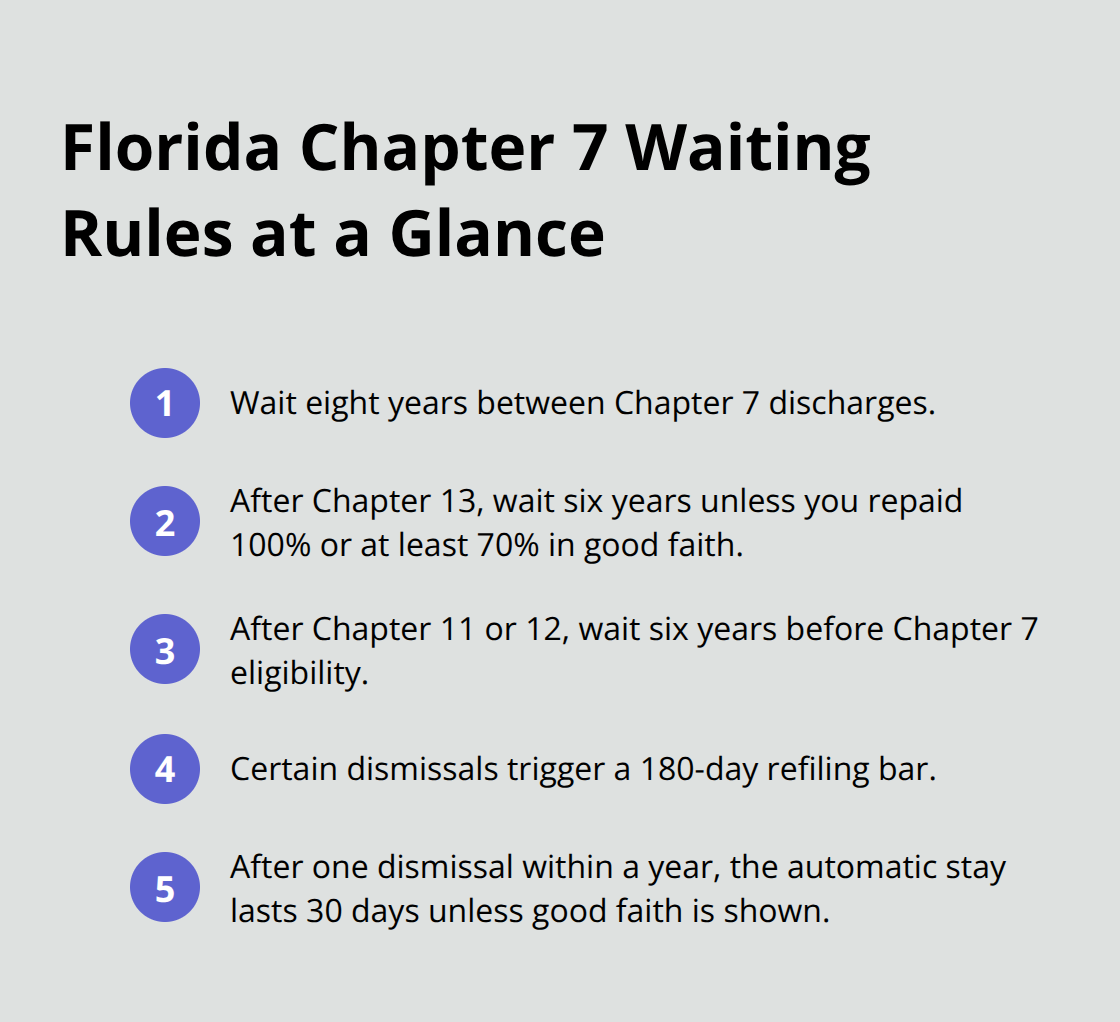
Federal bankruptcy law places strict time limits on Chapter 7 filings that Florida residents must follow. The most important restriction is the eight-year wait period between Chapter 7 discharges. This means if you received a Chapter 7 discharge on January 1, 2020, you cannot file for Chapter 7 again and receive another discharge until January 1, 2028. The clock starts from the date of your previous filing, not the discharge date.
Previous Bankruptcy Types Create Different Wait Periods
Your previous bankruptcy type directly impacts when you can file Chapter 7 again. After a Chapter 13 discharge, you must wait six years before you file Chapter 7, unless you paid back 100% of your unsecured creditors or at least 70% while you met good faith requirements. After Chapter 11 or Chapter 12, you face a six-year wait period before Chapter 7 eligibility. However, if your previous case was dismissed without a discharge, no wait period applies.
Dismissed Cases Follow Different Rules
Cases dismissed within 180 days create immediate restrictions. If you willfully disobeyed court orders, failed to appear in court, or requested dismissal after a creditor sought relief from the automatic stay, you cannot refile for 180 days. Courts also limit the automatic stay protection in subsequent filings. After one dismissal within a year, the automatic stay only lasts 30 days in your new case (unless you prove the filing was in good faith).
Strategic Considerations for Refiling
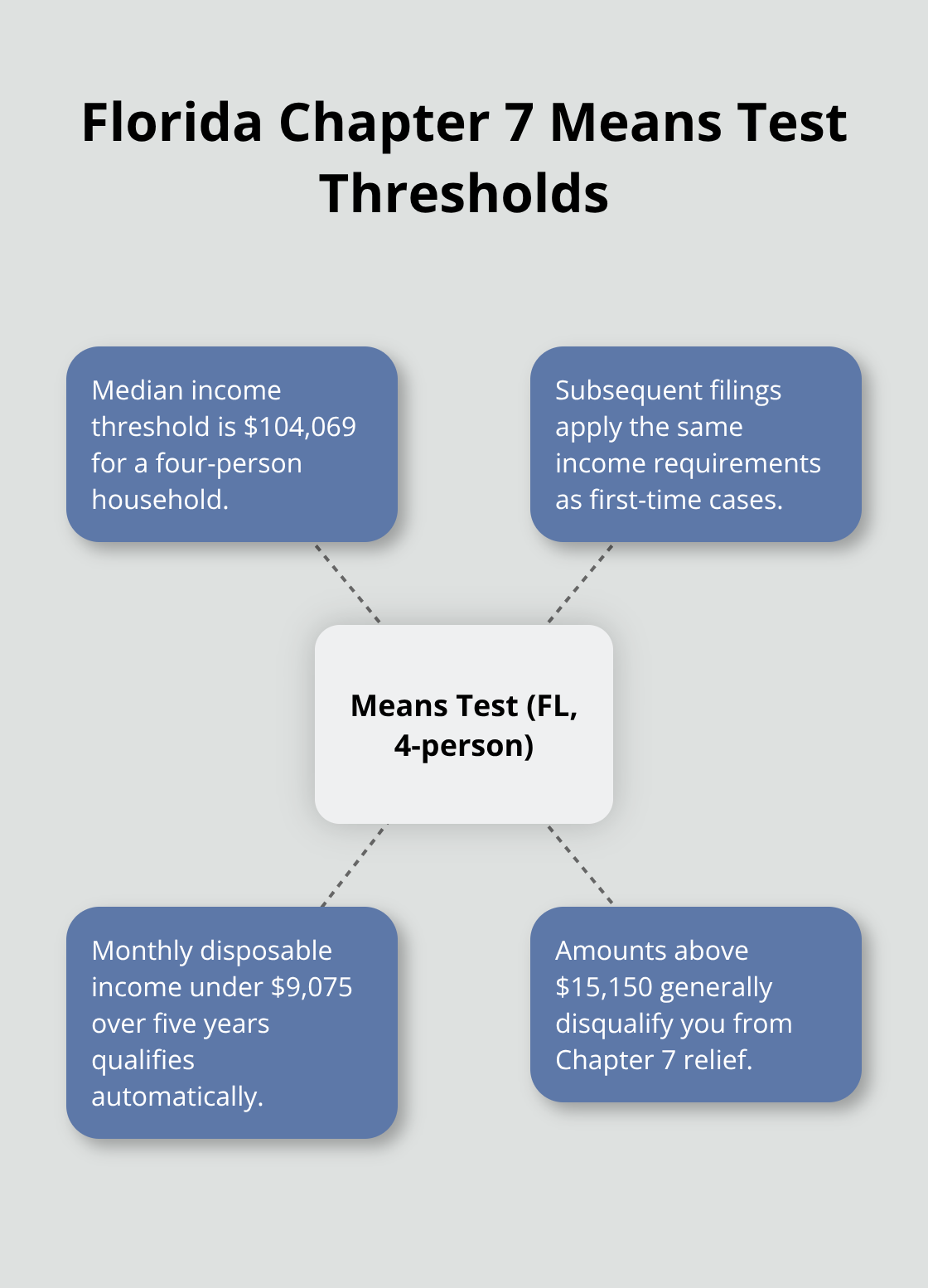
Multiple bankruptcy filings raise red flags with courts and trustees. Filing repeatedly without you address underlying financial problems can lead to fraud accusations or abuse findings. Courts examine your payment history, asset transfers, and whether you completed required financial management courses. The means test still applies to subsequent Chapter 7 filings, so your income must remain below Florida’s median levels (currently $104,069 for a four-person household) or pass the detailed expense calculations.
These timing restrictions and court scrutiny make proper planning essential when you consider multiple Chapter 7 filings. Several factors beyond basic wait periods can significantly impact your ability to successfully refile and receive debt relief. Understanding how to qualify for Chapter 7 bankruptcy requirements becomes crucial for subsequent filings.
What Affects Your Ability to Refile Chapter 7
Your path to refiling Chapter 7 bankruptcy depends heavily on how your previous case ended and your compliance with court requirements. Courts treat dismissed cases differently from discharged cases, which creates distinct pathways for future filings. A dismissed case means your bankruptcy ended without debt relief, while a discharged case successfully eliminated your qualifying debts. The distinction matters significantly for the timing of your next filing.
Previous Case Outcomes Shape Your Timeline
Dismissed cases within 180 days trigger immediate restrictions that can block your ability to refile. Courts dismiss cases for willful disobedience of orders, failure to appear at hearings, or requests for dismissal after creditors seek relief from automatic stay protection. These dismissals create a 180-day wait period before you can file again. Additionally, if you had one dismissal within the previous year, your new case receives only 30 days of automatic stay protection instead of the full protection period.
Court-Imposed Restrictions Limit Future Filings
Courts can impose specific orders that prohibit you from filing again for extended periods. These restrictions typically arise when judges find patterns of abuse or bad faith in previous filings. The shortened automatic stay protection (reduced from indefinite to 30 days) gives creditors more leverage to pursue collection activities during your bankruptcy process. Courts also examine whether you made good faith efforts to resolve debts outside of bankruptcy before granting relief.
Financial Education Requirements Apply to All Filings
Courts require completion of credit counseling before filing and financial management courses before discharge in every Chapter 7 case. These educational requirements apply to all subsequent filings regardless of your previous bankruptcy experience. The courses must come from approved providers, and certificates must be filed with specific deadlines. Missing these requirements leads to case dismissal and potential restrictions on future filings.
Multiple Filings Face Increased Scrutiny
Courts scrutinize repeat filers more closely for good faith efforts to resolve debt problems outside of bankruptcy. Filing multiple cases without you address underlying financial issues can result in fraud accusations or findings of system abuse. Trustees examine your payment history, asset transfers, and whether you completed all required courses from previous cases. This heightened review process affects not only your eligibility but also the strategic timing considerations for your next filing.
When Should You Refile Chapter 7 in Florida
Strategic timing for multiple Chapter 7 filings requires careful analysis of your current financial position versus the eight-year wait period restrictions. Refiling makes financial sense when new debts substantially exceed your protected assets and income remains below Florida’s median levels. The optimal timing occurs when you face overwhelming medical bills, job loss, or business failure that creates debt loads similar to your original bankruptcy situation.
Income and Means Test Considerations
Income stability becomes the primary factor since you must still pass the means test with Florida’s median income threshold of $104,069 for a four-person household (as of April 2024). Courts apply the same income requirements to subsequent filings as they do to first-time cases. Your monthly disposable income over five years must fall below $9,075 to qualify automatically, while amounts above $15,150 generally disqualify you from Chapter 7 relief.
Asset Protection Strategy Before Subsequent Filings
Florida’s generous homestead exemption protects unlimited home equity if you owned the property for at least 1,215 days, which makes timing calculations important for real estate acquisitions. The $1,000 vehicle exemption plus $4,000 wildcard exemption requires strategic planning to maximize protection of personal property. Retirement accounts remain fully protected under ERISA qualifications, but timing matters for contributions made close to filing dates.
Income Protection and Employment Changes
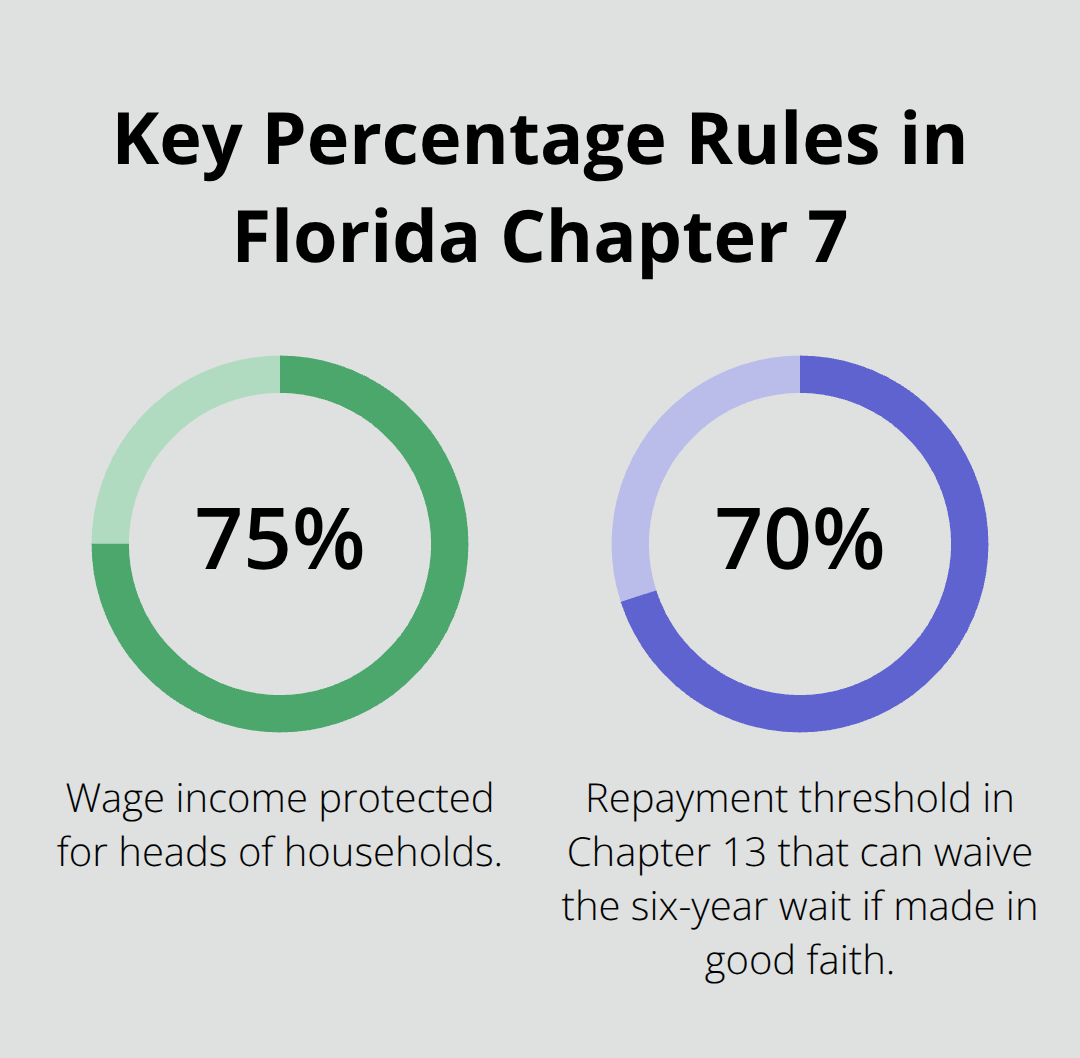
Income from wages receives protection up to 75% for heads of households, which influences the decision to file before or after employment changes. Courts examine your employment history and income patterns more closely in subsequent filings. Sudden income increases or decreases near your filing date trigger additional scrutiny from trustees who review repeat filers for potential abuse.
Legal Counsel for Timing Optimization
Attorneys help structure the 30-day automatic stay period effectively when previous dismissals limit protection time. They also coordinate filing dates to maximize the eight-year wait period while addressing immediate creditor threats like foreclosure or wage garnishment. Proper legal guidance prevents premature filings that waste the limited opportunities available under federal bankruptcy law and helps navigate the heightened review process that repeat filers face from trustees and courts.
Final Thoughts
Federal law provides clear answers to how many times you can file for Chapter 7 bankruptcy, but the eight-year wait period between discharges creates significant challenges for Florida residents. Courts examine repeat filers with increased scrutiny and impose stricter requirements on subsequent cases. The shortened automatic stay periods (reduced to 30 days after one dismissal) limit your protection from creditors during the process.
Multiple bankruptcy filings must address genuine financial hardships rather than serve as routine debt management strategies. Income requirements remain the same for all filings, with Florida’s median income threshold of $104,069 for four-person households still applying to repeat cases. Asset protection timing becomes more complex when you plan multiple filings over several years.
We at Harnage Law, PLLC help Florida residents understand the complex requirements for repeat Chapter 7 filings. Our team provides legal guidance through every step of the bankruptcy process and helps clients develop effective strategies for their financial recovery. Contact us today to discuss your specific situation and explore your options for debt relief.