Filing for Chapter 7 bankruptcy in Florida can feel overwhelming when you’re drowning in debt. The Chapter 7 process in Florida offers a legitimate path to eliminate unsecured debts and get a fresh financial start.
We at Harnage Law, PLLC understand the confusion surrounding bankruptcy options. This roadmap walks you through each step so you know exactly what to expect.
Understanding Chapter 7 Bankruptcy in Florida
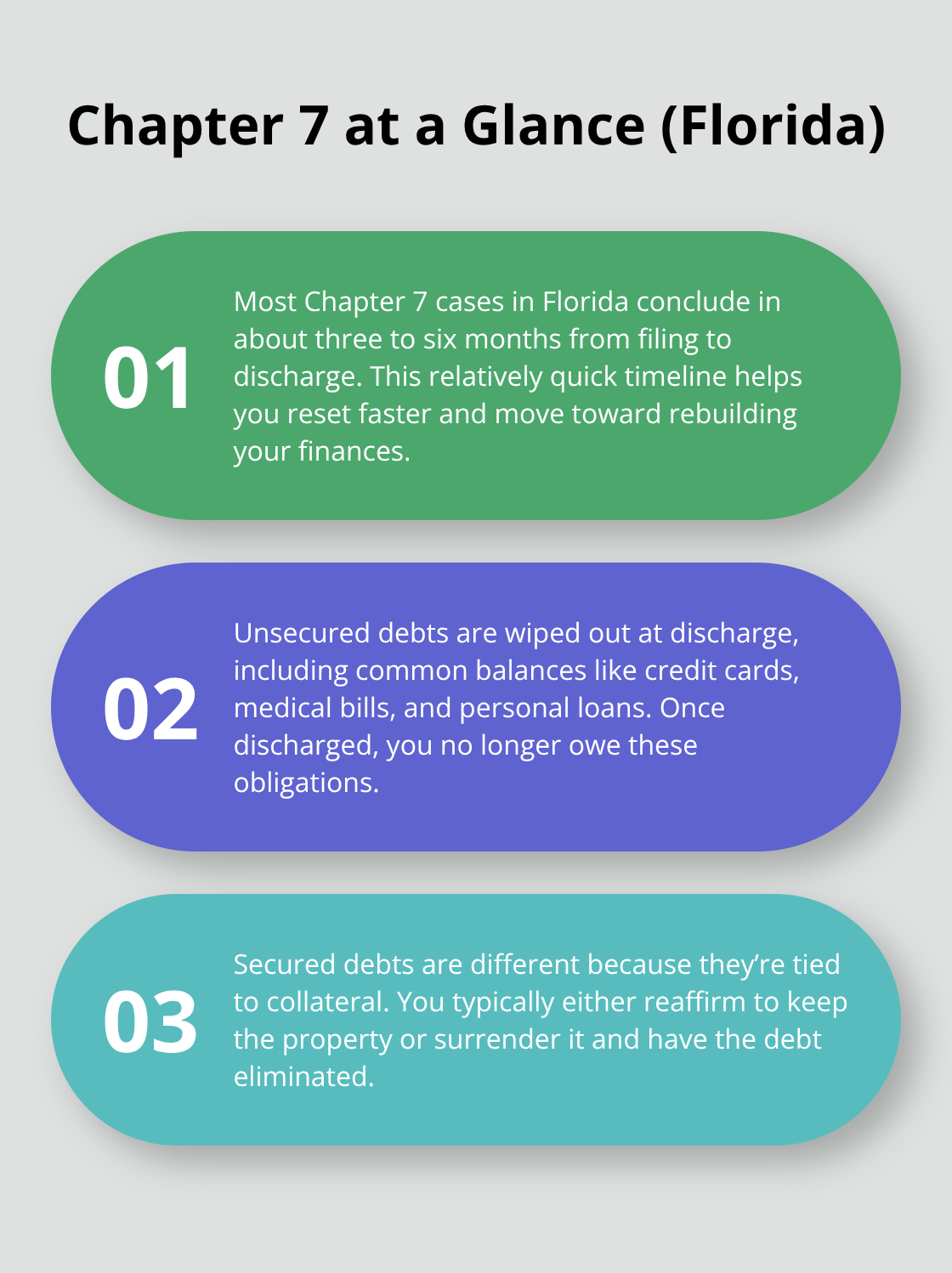
Chapter 7 bankruptcy in Florida is a federal legal process that eliminates most unsecured debts through liquidation. When you file, you list your assets and debts to the court, and a trustee may sell non-exempt property to pay creditors. The process typically takes three to six months from filing to discharge. Unsecured debts like credit card balances, medical bills, and personal loans disappear after discharge, meaning you no longer owe them legally. Secured debts such as mortgages and car loans work differently-you either reaffirm them to keep the collateral or let the lender repossess the property.
Florida law protects certain assets through exemptions, so you often keep your home, vehicle, and essential belongings even after filing. The automatic stay takes effect immediately upon filing, halting wage garnishments, collection calls, lawsuits, and repossession attempts. This breathing room allows you to stabilize your finances while the process moves forward.
Who Actually Qualifies for Chapter 7 in Florida
Not everyone qualifies for Chapter 7. The means test determines eligibility by comparing your income against Florida’s state median. If your household income falls below the median, you pass automatically and can file Chapter 7. If your income exceeds the median, the test calculates disposable income by subtracting allowable living expenses from your current monthly income. High disposable income disqualifies you from Chapter 7, forcing you toward Chapter 13 instead, which requires a three to five year repayment plan. You must be an individual to file Chapter 7; couples can file jointly, but both spouses’ credit reports and debts are affected.
Filing Fees and Pre-Filing Requirements
Filing fees in Florida total three hundred thirty-eight dollars, though fee waivers apply if you earn under one hundred fifty percent of the poverty level. Before filing, you must complete credit counseling with an approved agency within one hundred eighty days, or the court will dismiss your case. This counseling requirement protects you by ensuring you understand your options before committing to bankruptcy. After filing, you must attend the meeting of creditors roughly three to six weeks later and complete a financial management course before receiving discharge. These steps form the foundation of your path forward toward financial recovery.
How Chapter 7 Filing Works in Florida
Gathering Documents and Meeting Pre-Filing Requirements
The filing process starts with collecting your financial documents. You’ll need pay stubs from the last sixty days, tax returns for the past two years, bank statements, mortgage or lease agreements, and a complete list of all creditors with their addresses and outstanding balances. The court requires these documents in specific formats using official bankruptcy forms-using outdated or incorrect forms will delay your case. Before submitting anything to the court, you must complete credit counseling with an agency approved by the U.S. Trustee Program and obtain a certificate proving completion. This counseling must happen within one hundred eighty days before filing, or the court will dismiss your petition entirely.
Understanding Filing Fees and Payment Options
Florida’s filing fee is three hundred thirty-eight dollars. You can request a waiver if your household income falls below one hundred fifty percent of the federal poverty line, or you can pay in installments with at least half the fee due at filing. This flexibility helps individuals who lack immediate funds to cover the full amount upfront.
The Means Test: Your Eligibility Checkpoint
The means test calculation forms the backbone of your eligibility determination and requires accurate current monthly income figures along with itemized expense deductions based on IRS standards, not your actual spending. If your income exceeds Florida’s state median household income, the court scrutinizes your disposable income after allowable expenses. This calculation determines whether you can file Chapter 7 or must pursue Chapter 13 instead.
The 341 Meeting and What Happens Next
Your meeting of creditors, officially called the 341 meeting, occurs between twenty-one and forty days after filing and lasts roughly ten to fifteen minutes for most cases. The bankruptcy trustee assigned to your case will ask you questions under oath about your finances, assets, and the accuracy of your filed documents (creditors rarely attend these meetings despite the name).
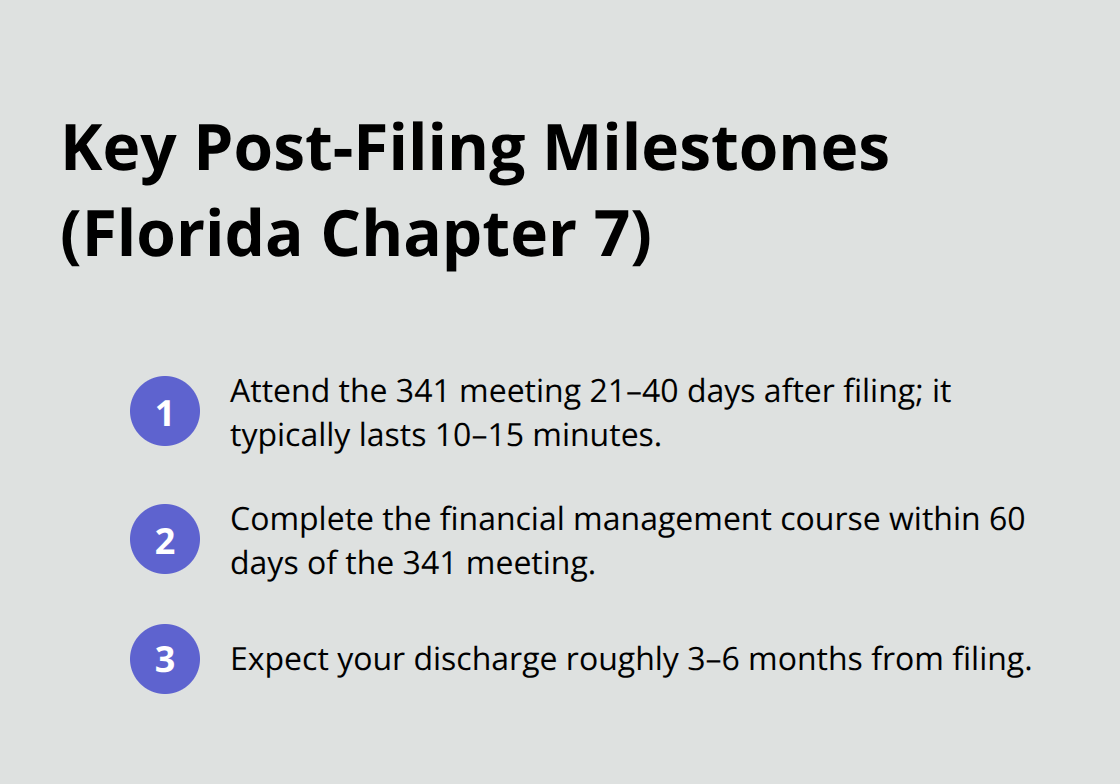
After the meeting concludes, you must complete a financial management course from another approved provider and file proof of completion within sixty days of the 341 meeting, or you won’t receive your discharge. The discharge itself is the court order that eliminates your qualifying debts, typically issued within three to six months from filing. Once discharged, you no longer owe the eliminated debts legally, and creditors must stop collection efforts.
The Automatic Stay: Immediate Protection
The automatic stay takes effect immediately upon filing and halts wage garnishments, collection lawsuits, foreclosure proceedings, and creditor phone calls during this entire process. This protection gives you breathing room to move forward without constant pressure from creditors. Understanding these specific timelines and document requirements prevents costly delays and positions you to move toward the next phase of your financial recovery-learning which debts disappear and which assets you protect through Florida’s exemption laws.
Debts Discharged and Assets Protected Under Chapter 7 in Florida
Unsecured Debts That Disappear
Chapter 7 discharge eliminates unsecured debts that have no collateral attached. Credit card balances, medical bills, personal loans, payday loans, and utility arrears vanish after the court issues your discharge order. According to the FTC, these debts typically drop off your credit report about seven years after discharge, though the bankruptcy itself remains for ten years. Unsecured debts account for the majority of what people owe, so this elimination provides genuine financial breathing room.
Secured Debts and Collateral
Secured debts work entirely differently because a creditor holds collateral. Your mortgage, car loan, or home equity line of credit cannot be discharged through Chapter 7. You must either reaffirm these debts to keep the property or surrender the collateral and have the debt eliminated. This distinction shapes which obligations you continue to pay after discharge.
Debts That Survive Chapter 7
Certain debts never disappear regardless of Chapter 7 filing. Child support and alimony obligations remain your legal responsibility, and most student loans survive bankruptcy except in extremely limited undue-hardship situations. Recent tax debts also typically survive, though older tax debts may be dischargeable if they meet specific age requirements. Court fines, criminal restitution, and DUI-related damages also persist after discharge.
Florida’s Asset Protection Through Exemptions
Florida exemptions protect specific property categories from trustee liquidation, allowing you to retain essential assets even though Chapter 7 is technically a liquidation process. Your primary residence receives unlimited protection under Florida’s homestead exemption as long as the property value and acreage stay within legal limits, meaning you keep your home and the equity within it. Your vehicle qualifies for protection up to fifteen hundred dollars in equity, which covers most people’s cars outright since many carry loan balances exceeding the vehicle’s actual value. Household furnishings, clothing, and personal items receive protection up to five hundred dollars per item or fifteen hundred dollars total, protecting everyday belongings from sale.
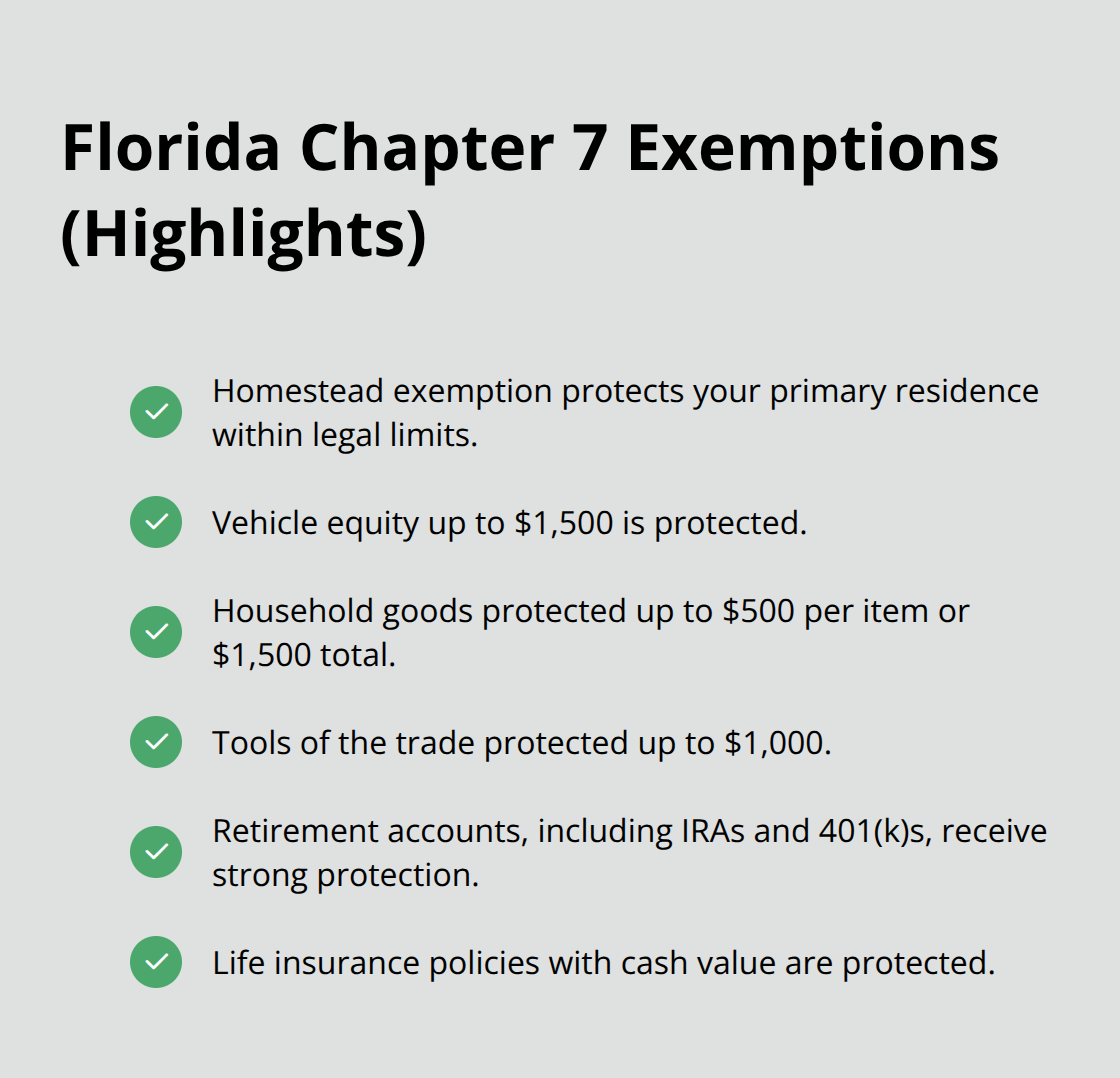
Florida also exempts up to one thousand dollars in tools of your trade, retirement accounts (including IRAs and 401(k)s) receive substantial protection, and life insurance policies with cash values stay protected. The key advantage is that Florida allows you to keep far more property than many states, making Chapter 7 genuinely viable for individuals concerned about losing assets.
Final Thoughts
Chapter 7 bankruptcy in Florida eliminates unsecured debts within three to six months and stops creditor harassment immediately through the automatic stay. Florida’s generous exemptions protect your home, vehicle, and essential belongings while the Chapter 7 process Florida follows clear timelines and requirements that lead to debt elimination and a fresh financial start. Understanding which debts disappear, which assets you keep, and how the means test affects your eligibility removes much of the uncertainty surrounding bankruptcy.
We at Harnage Law, PLLC help individuals and families navigate every stage of Chapter 7 bankruptcy by stopping creditor harassment, preventing wage garnishments, and halting lawsuits while protecting your assets. Our role involves providing personalized legal guidance tailored to your specific financial situation so you understand each step and what comes next. We ensure you move through the filing process, the 341 meeting, and the financial management course requirement with clarity and confidence.
Contact Harnage Law, PLLC today to discuss your financial situation with someone who understands Florida bankruptcy law. A consultation clarifies whether Chapter 7 fits your circumstances, answers your specific questions, and outlines your path forward. Financial recovery starts when you take action today.