Chapter 7 bankruptcy gives you a genuine opportunity to rebuild your financial life. The discharge eliminates most unsecured debts, but your credit score takes an immediate hit.
We at Harnage Law, PLLC know that chapter seven rebuilding credit requires a strategic approach. This guide walks you through concrete steps to recover your credit score and regain financial stability in Florida.
How Chapter 7 Discharge Affects Your Credit Score
Understanding Your Credit Score Drop After Discharge
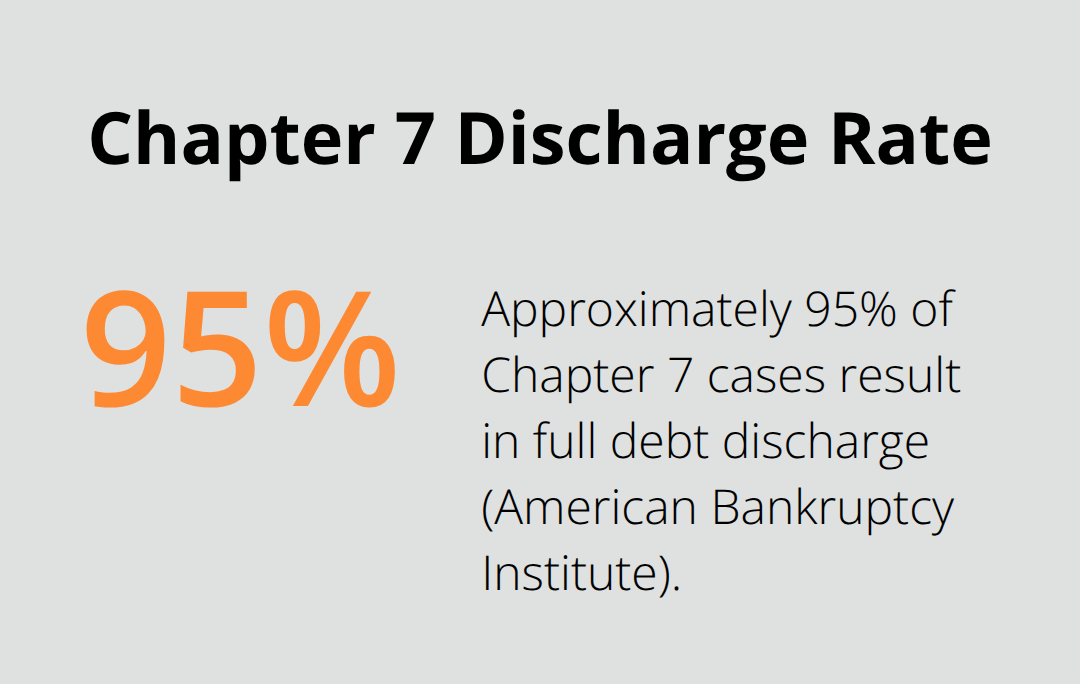
Your credit score will drop immediately after filing Chapter 7 bankruptcy, typically falling between 130 and 200 points according to Federal Trade Commission data. If you filed with a score around 680, expect to land somewhere between 480 and 550. This decline feels severe, but it reflects the court’s formal record of debt relief, not a permanent financial sentence. The good news is that your score can begin recovering within months if you take the right actions. In Florida, where housing costs and insurance premiums rank among the highest in the nation, rebuilding credit quickly matters because better scores unlock lower interest rates on future mortgages and auto loans. The American Bankruptcy Institute reports that approximately 95 percent of Chapter 7 cases result in full debt discharge, meaning you stand in the majority position to move forward cleanly.
How Long Chapter 7 Stays on Your Credit Report
Your credit report will carry the Chapter 7 filing for ten years from the filing date, not your discharge date, according to Federal Trade Commission guidance. However, the real impact weakens significantly after the first two years when consistent on-time payments start offsetting the bankruptcy notation. Individual accounts included in your bankruptcy disappear from your report seven years from their original delinquency dates, which means older negative items fall away faster than the bankruptcy itself, creating natural score improvement over time.
Timeline for Credit Recovery in Florida
The timeline for credit recovery in Florida mirrors national patterns but depends entirely on your actions post-discharge. Experian reports that the average recovery takes about three years, though disciplined borrowers reach 650 to 700 credit scores within that window. The first 24 months after discharge represent your fastest recovery period because lenders actively monitor recent behavior, not historical bankruptcy.
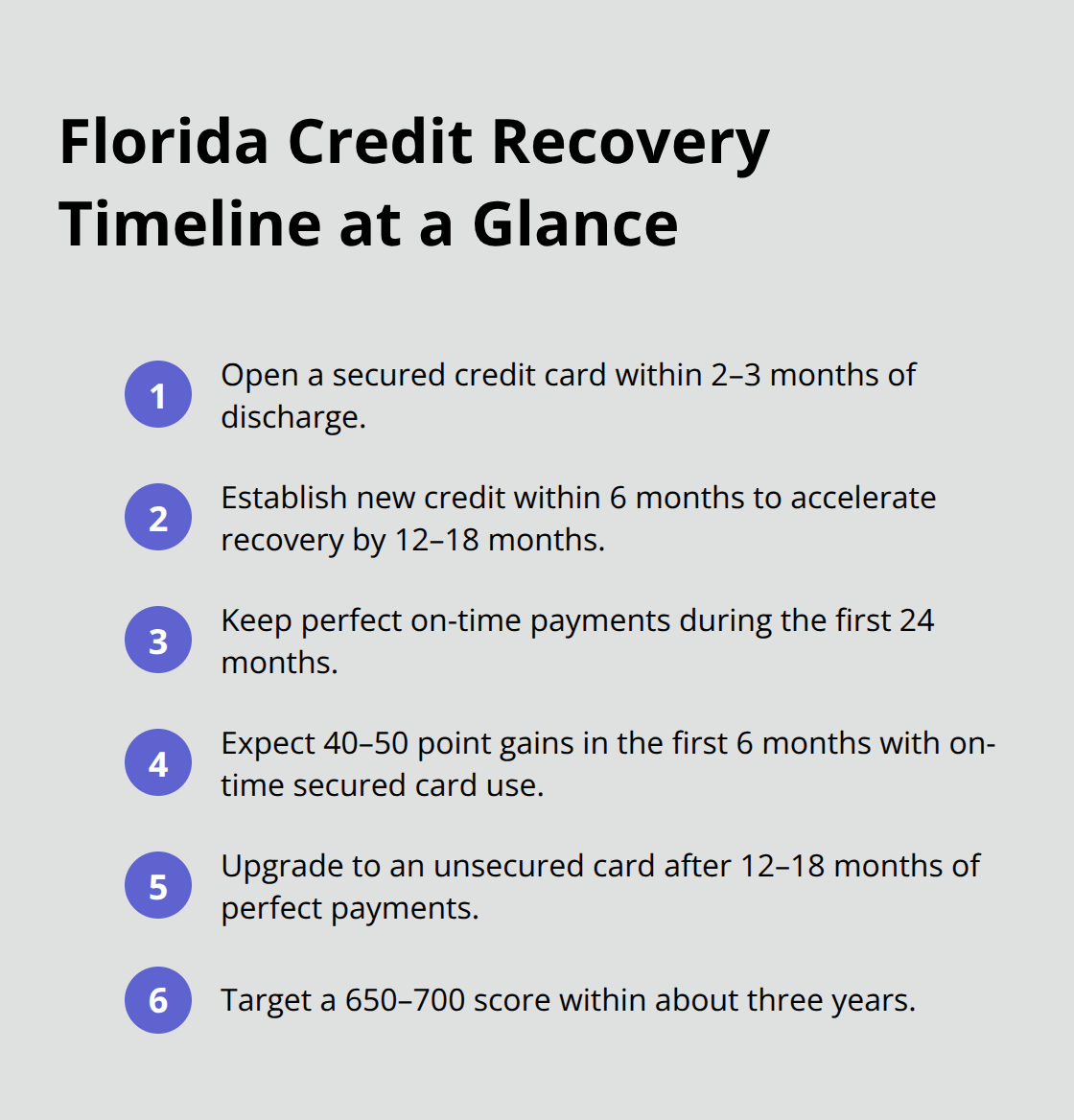
Federal Reserve data shows that establishing new credit within six months of discharge accelerates recovery by 12 to 18 months compared to waiting longer. Secured credit cards from issuers like Capital One, Discover, and U.S. Bank report to all three bureaus and can generate 40 to 50 point improvements within your first six months of on-time payments. Opening a secured card within two to three months of discharge stands as the single most powerful move you can make because it demonstrates immediate creditworthiness despite bankruptcy. After 12 to 18 months of perfect payments on a secured card, most issuers upgrade you to an unsecured card and return your deposit.
Chapter 7 Versus Chapter 13: Credit Recovery Differences
Chapter 7 differs from Chapter 13 in a critical way for credit recovery: Chapter 7 eliminates debt quickly and allows immediate rebuilding, while Chapter 13 requires a three to five year repayment plan that shows on your report during that entire period. Lenders often view Chapter 7 discharge more favorably for credit purposes because the debt relief is complete, whereas Chapter 13 signals ongoing obligations. In Florida, mortgage lenders typically require at least four years of post-discharge history before approving a conventional loan, though FHA loans may become available sooner with proper documentation and score recovery.
Understanding these timelines and differences positions you to take action immediately after discharge. The next section outlines the specific steps you need to take right now to accelerate your credit recovery and start rebuilding your financial foundation.
Rebuild Your Credit Fast After Discharge
Open a Secured Credit Card Within Months of Discharge
Your secured credit card acts as your most powerful tool in the months immediately following discharge, and the sooner you open one, the faster your score recovers. Within two to three months of discharge, apply for a secured card from Capital One, Discover, or U.S. Bank-all three report to all three credit bureaus, which matters because lenders check multiple sources. You deposit between $200 and $500 as collateral, and that amount becomes your credit limit. This is not a gimmick; the Federal Trade Commission confirms that secured cards generate 40 to 50 point improvements within six months when you pay on time. Charge a small purchase each month (say, $20 to $30 on a $500 limit), then pay the full balance immediately. Never carry a balance or miss a payment because even one late payment erases months of progress. After 12 to 18 months of perfect payments, the issuer upgrades you to an unsecured card and returns your deposit, so view this as a temporary stepping stone, not a permanent condition.
Review Your Credit Reports and Dispute Errors
Pull your free credit reports from AnnualCreditReport.com and review all three bureaus for errors-about 25 percent of credit reports contain mistakes according to Federal Trade Commission data. Look for discharged accounts still showing active balances, duplicate entries, or incorrect personal information. Dispute inaccuracies within 30 days to the respective bureau because errors can delay recovery by months. If a creditor reports a discharged debt as still owed, dispute it immediately; fixing this single error can add 20 to 40 points to your score.
Pay Every Bill on Time Without Exception
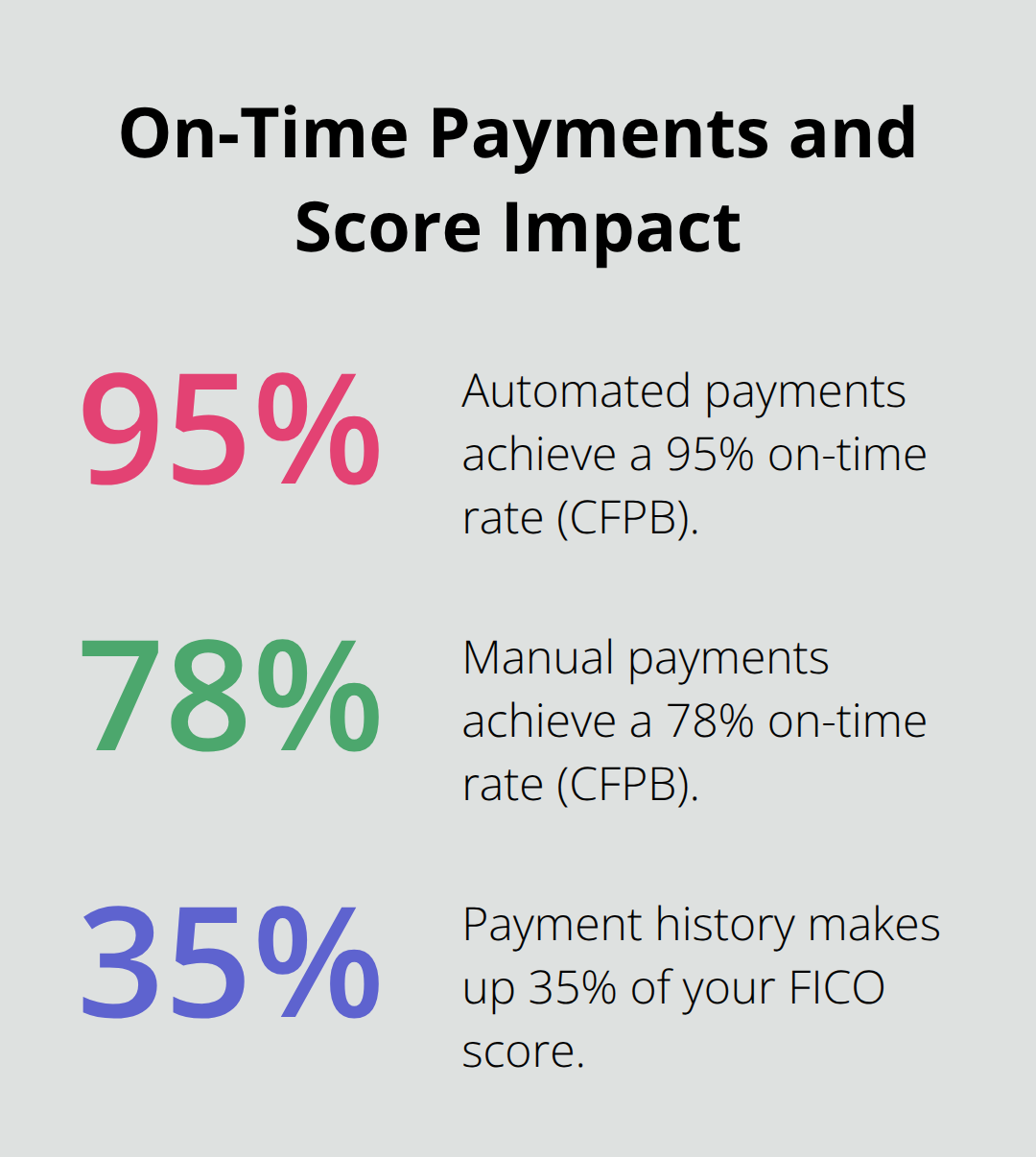
Every bill outside bankruptcy must receive payment on time without exception-rent, utilities, phone, insurance, everything. The Consumer Financial Protection Bureau reports that automated payments achieve a 95 percent on-time rate compared to 78 percent for manual payments, so set up autopay for every recurring bill today. Payment history accounts for 35 percent of your FICO score, making this non-negotiable.
On your secured card, keep spending below 10 percent of your limit; if your limit is $500, never charge more than $50 in any month. Credit utilization below 10 percent signals disciplined credit management and generates 5 to 10 points of monthly improvement during your first recovery year according to Consumer Financial Protection Bureau analysis.
Budget Strategically and Manage Credit Applications
In Florida, where housing and insurance costs strain budgets, use free budgeting apps like EveryDollar or Goodbudget to track every dollar and prevent overspending that might tempt credit card use. After 12 months of perfect payment history, request a credit limit increase on your secured card; most issuers grant increases without hard inquiries, and higher limits make it easier to maintain low utilization as you rebuild. Avoid opening multiple new accounts simultaneously because each application triggers a hard inquiry that temporarily lowers your score, and multiple inquiries signal financial desperation to lenders. Space new credit applications 12 to 18 months apart unless you have a specific need like a car loan, and even then, shop with multiple lenders within 45 days so those inquiries count as one inquiry for scoring purposes.
Build Your Emergency Fund and Prepare for the Next Phase
Start an emergency fund of $500 to $1,000 immediately after discharge to cover unexpected costs without relying on credit. Set automatic transfers of $50 to $100 weekly into a separate savings account to reach this goal within six months. Federal Reserve data from 2023 shows that 37 percent of American households cannot cover a $400 emergency, so this fund protects your rebuilding progress from derailment. As your secured card history strengthens and your emergency fund grows, you’ll soon qualify for additional credit products and better terms. Chapter 7 can offer a fresh start and an opportunity to rebuild your financial life as you move forward.
Tools That Actually Work for Credit Recovery in Florida
Free Credit Monitoring Beats Paid Services Every Time
Credit monitoring services matter far less than you think if you skip the paid versions and use free alternatives strategically. AnnualCreditReport.com gives you three free credit reports per year from Equifax, Experian, and TransUnion, and you should pull all three reports immediately after discharge, then check them quarterly during your first two years of rebuilding. Experian Boost allows you to add on-time utility and telecom payments to your Experian score at no cost, which can generate meaningful points when you need them most in those early months post-discharge. Avoid paid credit monitoring services that charge $10 to $20 monthly because they simply track data you can access free; instead, use free tools like Equifax Core Credit or Capital One’s CreditWise to monitor progress without recurring fees draining your emergency fund.
The Consumer Financial Protection Bureau confirms that quarterly report reviews catch errors before they compound, and disputing inaccuracies within 30 days prevents months of delayed recovery. Set phone reminders to check reports on the same date every quarter so the habit sticks without relying on memory.
Nonprofit Credit Counseling Accelerates Your Recovery
Financial counseling through nonprofit organizations approved by the Department of Justice costs far less than most Floridians expect and accelerates rebuilding substantially. The National Foundation for Credit Counseling operates throughout Florida and charges sliding-scale fees based on income, typically $50 to $150 for comprehensive debt management planning that addresses the root causes of your financial struggles. Credit counseling is often required before or after Chapter 7 filing anyway, so use it strategically to build a personalized budget that accounts for Florida’s high housing and insurance costs rather than generic national averages.
GMFEC research shows significant average score improvements after counseling because advisors help you prioritize bills, negotiate with remaining creditors, and avoid predatory lending traps that snare desperate borrowers. These organizations provide real guidance tailored to your situation, not generic templates.
Build Your Emergency Fund With Automatic Transfers
Start your emergency fund through automatic transfers of $50 weekly into a separate savings account immediately after discharge; most Florida credit unions offer free savings accounts with no minimum balance, so open one today and set up the transfer right away. Reach $500 to $1,000 within three to four months, then accelerate to three to six months of living expenses as your secured card history strengthens.
Federal Reserve data shows that households with even modest emergency funds avoid new debt when unexpected costs arise, protecting your rebuilding momentum from derailment by medical bills, car repairs, or home emergencies that plague Florida residents (who face high property maintenance needs and hurricane-related expenses). This fund acts as your financial buffer against the very circumstances that led to bankruptcy in the first place.
Final Thoughts on Your Chapter 7 Recovery
Chapter 7 stays on your credit report for ten years from your filing date, but the bankruptcy’s impact fades meaningfully after 24 months of consistent on-time payments, and lenders focus on recent behavior, not historical bankruptcy. Real borrowers in Florida have rebuilt credit scores from the 480 to 550 range into the 650 to 700 range within three years through Chapter Seven rebuilding credit with discipline and consistency-they opened secured cards within months of discharge, maintained perfect payment histories, kept utilization below 10 percent, and built emergency funds to prevent new debt. Your actions today matter far more than the filing itself, and after approximately two years of disciplined rebuilding, you become eligible for unsecured credit cards, auto loans, and eventually mortgages (FHA loans often become available within two to three years post-discharge with proper documentation and score recovery).
The path forward requires patience, but the destination rewards your effort with genuine financial stability. Your fresh start begins the moment your discharge is finalized, and the steps outlined in this guide provide a roadmap to reach 650 to 700 credit scores within three years. If you need personalized guidance on rebuilding after Chapter 7 or want to explore whether bankruptcy is the right option for your situation, we at Harnage Law, PLLC can help.