
Filing Chapter 7 bankruptcy doesn’t automatically mean losing your vehicle. Florida law provides specific protections that allow many debtors to keep their cars during the bankruptcy process.
Understanding how to file for bankruptcy and keep your car requires knowing Florida’s exemption laws and available strategies. We at Harnage Law, PLLC see clients successfully retain their vehicles by following the right steps and avoiding common pitfalls.
What Car Exemptions Apply in Florida Chapter 7?
Florida’s motor vehicle exemption increased to $5,000 in July 2024 under Senate Bill 158, which replaced the outdated $1,000 limit that had remained unchanged since 1993. This exemption protects the equity in your vehicle, which you calculate when you subtract your loan balance from the car’s current market value. If your vehicle has $5,000 or less in equity, you can keep it without payment to the bankruptcy trustee. The exemption applies to one vehicle per debtor, though documentation that shows work necessity can sometimes justify protection of multiple vehicles.
How Vehicle Equity Determines Your Options
Vehicle equity calculation determines whether you can keep your car without complications. A car worth $12,000 with an $8,000 loan has $4,000 in equity, which falls within Florida’s $5,000 exemption. However, a vehicle worth $15,000 with a $5,000 loan creates $10,000 in equity (which exceeds the exemption by $5,000). In this scenario, you must either pay the trustee $5,000 to keep the car or risk having it sold.
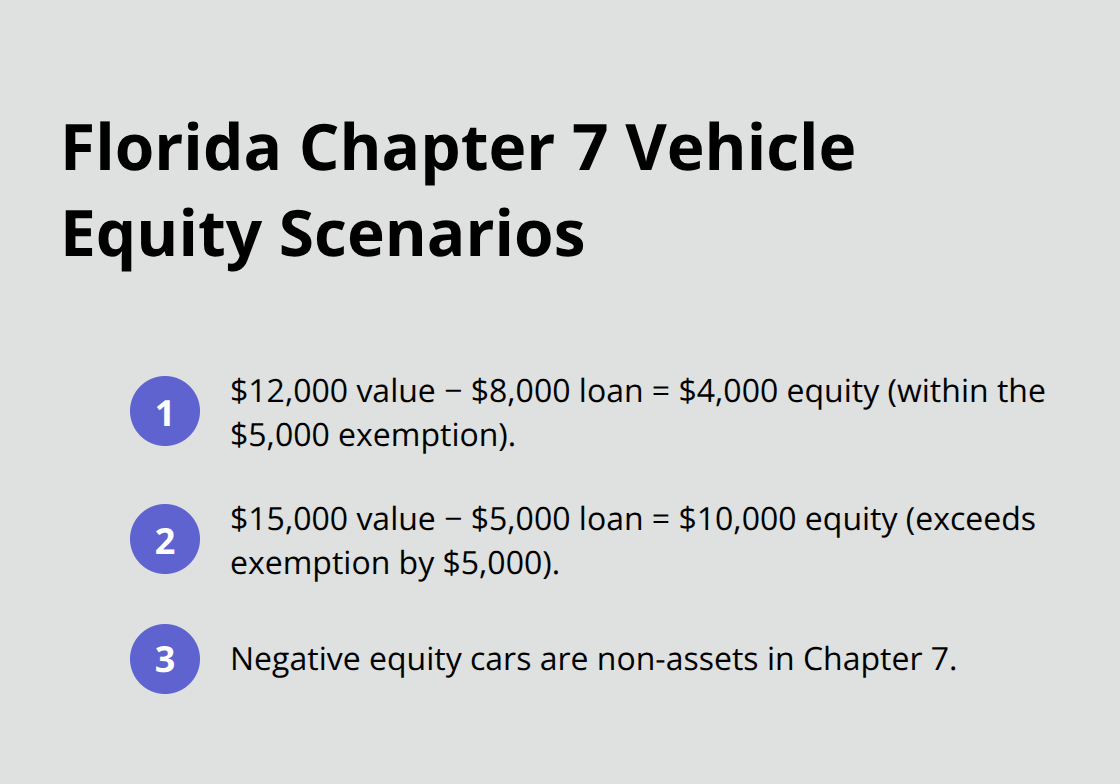
Cars with loan balances that exceed their value become non-assets in bankruptcy, which simplifies the process significantly.
Secured vs Unsecured Auto Loans Impact Your Case
Secured auto loans create liens against your vehicle, which means the lender can repossess if payments stop. These loans survive bankruptcy discharge unless you reaffirm the debt or surrender the vehicle. Unsecured auto loans (typically personal loans used for car purchases) get discharged in Chapter 7 without effect on vehicle ownership. The distinction affects your payment obligations post-bankruptcy and determines whether you need a reaffirmation agreement to keep payments current.
Wildcard Exemptions Provide Additional Protection
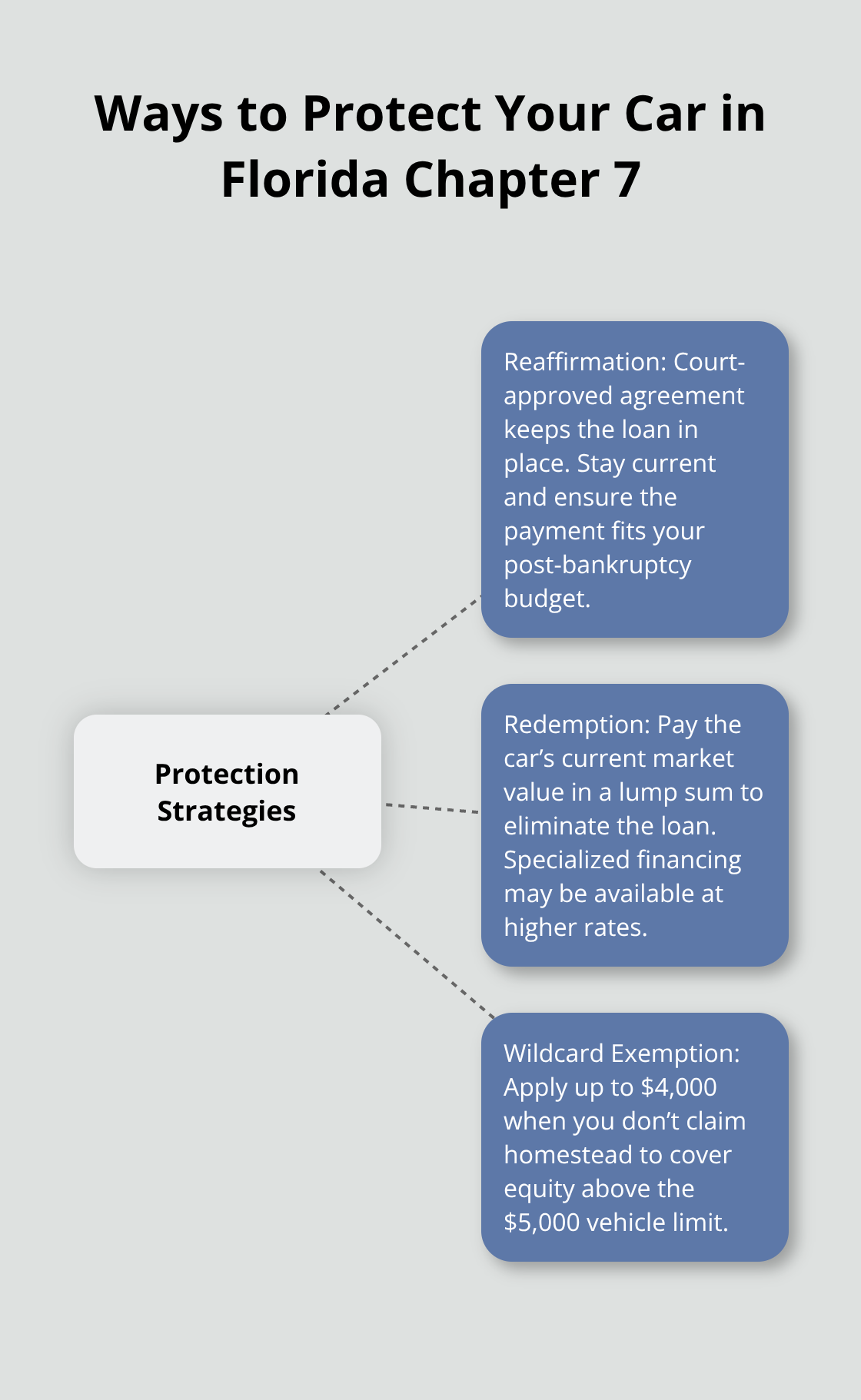
Florida offers a wildcard exemption of up to $4,000 that you can apply to any property, including vehicle equity that exceeds the motor vehicle exemption. You can only use this wildcard if you don’t claim the homestead exemption on your primary residence. This strategy works well for renters or those with minimal home equity who need extra protection for their vehicle. The wildcard exemption can bridge the gap when your car’s equity slightly exceeds the $5,000 motor vehicle limit.
These exemption strategies form the foundation for keeping your vehicle, but successful implementation requires specific actions during the bankruptcy process.
How Do You Actively Protect Your Car in Chapter 7?
Reaffirmation Agreements Lock In Your Vehicle
A reaffirmation agreement creates a new contract with your lender that survives bankruptcy discharge. This legal agreement requires court approval and commits you to continue payments under the original loan terms. The process involves specific paperwork that you must file with the bankruptcy court within 60 days of your 341 meeting.
Florida courts require a hearing if you lack attorney representation to confirm you understand the financial commitment. Reaffirmation works best when your payments are current and the monthly obligation fits comfortably within your post-bankruptcy budget.
The downside hits hard: if you default after reaffirmation, you cannot discharge this debt in another bankruptcy for eight years. The lender can repossess your vehicle and pursue you for any deficiency balance.
Redemption Offers Immediate Ownership
Vehicle redemption allows you to pay your lender the car’s current market value in one lump sum, which eliminates the loan entirely. This strategy works particularly well when you owe significantly more than the vehicle’s worth.
A car worth $8,000 with a $15,000 loan balance can be redeemed for the $8,000 market value (which saves you $7,000). The challenge lies in securing the lump sum payment, as most debtors who file Chapter 7 lack available cash.
Some specialized lenders offer redemption financing, though interest rates typically run higher than traditional auto loans. Redemption must occur within the bankruptcy case timeline, which makes quick action necessary once you decide on this approach.
Wildcard Exemptions Bridge Equity Gaps
Florida’s $4,000 wildcard exemption becomes available when you don’t claim the unlimited homestead exemption on your primary residence. This exemption can protect vehicle equity that exceeds the $5,000 motor vehicle limit.
A car with $7,500 in equity uses the full $5,000 motor vehicle exemption plus $2,500 of wildcard protection, which keeps the vehicle completely exempt. Renters and those with minimal home equity benefit most from this strategy.
The wildcard exemption requires careful planning because you must choose between protection for your home equity or use of the wildcard for other assets like vehicles or personal property. However, even the best protection strategies can fail if you make critical errors during the bankruptcy process.
What Mistakes Destroy Your Car Protection
Documentation Errors Create the Most Dangerous Threat
Schedule A/B demands precise vehicle information including year, make, model, mileage, and current market value. The bankruptcy trustee uses Kelley Blue Book or similar resources to verify your stated values, and significant discrepancies trigger additional scrutiny.
Undervaluation by more than 10% can result in accusations of bankruptcy fraud, while overvaluation creates unnecessary complications with exemption planning. Florida courts have dismissed cases where debtors failed to disclose vehicle modifications, aftermarket additions, or recent repairs that affect market value.
Payment Defaults Eliminate Automatic Stay Protection
Car payments that fall behind during the 341 meeting period eliminate your automatic stay protection for that specific debt. Lenders can file motions for relief from automatic stay within 30 days of payment default, and Florida bankruptcy courts typically grant these motions when payments are 30 days overdue.
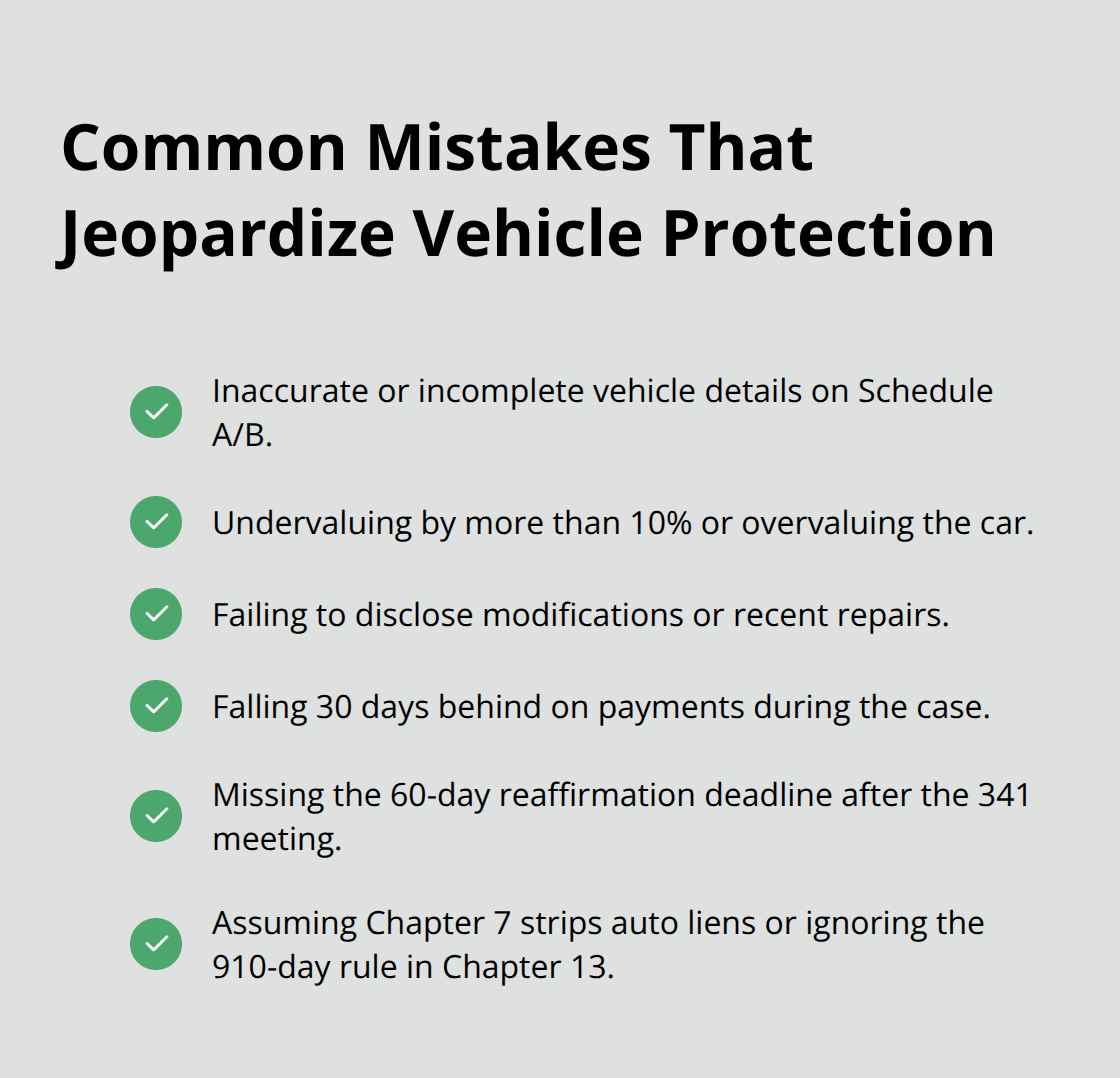
The reaffirmation agreement deadline falls 60 days after your 341 meeting, but lenders often demand current payments before they consider reaffirmation. Debtors lose vehicles because they assume bankruptcy stops all payment obligations, when secured debts require continued payments to maintain possession.
Lien Strip Misconceptions Lead to Vehicle Loss
Chapter 7 bankruptcy cannot strip liens from vehicles regardless of the loan balance versus vehicle value relationship. Debtors who owe $20,000 on a car worth $8,000 still face repossession if payments stop (even though the debt exceeds the collateral value).
Only Chapter 13 bankruptcy allows lien modification through cramdown provisions, and only for vehicles purchased more than 910 days before filing. Florida debtors who file Chapter 7 and expect lien elimination often surrender vehicles unnecessarily when redemption or continued payments would preserve ownership.
Final Thoughts
Chapter 7 bankruptcy allows you to keep your car when you use Florida’s $5,000 vehicle exemption correctly and maintain current payments on secured debts. You must calculate your vehicle’s equity accurately and choose between reaffirmation, redemption, or surrender based on your specific financial circumstances. Professional legal guidance becomes necessary when your vehicle equity exceeds available exemptions or when lenders refuse reaffirmation agreements.
We at Harnage Law, PLLC help Florida residents navigate Chapter 7 bankruptcy while they protect their vehicles and other assets. Our firm stops creditor harassment, prevents wage garnishments, and guides clients through every step of the bankruptcy process. Complex situations that involve multiple vehicles, modified loans, or disputed valuations require attorney intervention to prevent costly mistakes.
Post-bankruptcy success means you maintain current payments on reaffirmed debts and rebuild your credit responsibly. The vehicle protection strategies you implement during bankruptcy create the foundation for your financial recovery and future transportation security. Understanding how to file for bankruptcy and keep your car provides the knowledge you need to make informed decisions about your financial future.