Filing Chapter 7 bankruptcy raises immediate concerns about losing your home. Florida homeowners face unique protections and challenges that differ significantly from other states.
If you file bankruptcy, what happens to your house depends largely on Florida’s homestead exemption laws and your mortgage status. We at Harnage Law, PLLC see many clients successfully protect their primary residence through proper planning and understanding of available options.
How Chapter 7 Bankruptcy Affects Your Primary Residence in Florida
Florida Homestead Exemption Protection
Florida’s homestead exemption provides unlimited protection for your primary residence during Chapter 7 bankruptcy, which makes it one of the most generous protections in the United States. You must own your home for at least 1,215 days before you file and use it as your primary residence to qualify for this protection. This exemption covers all equity in your home, regardless of value, which means the bankruptcy trustee cannot sell your property to pay creditors.
This protection only applies to properties within specific acreage limits: half an acre in municipalities or 160 acres in rural areas. The exemption protects homeowners who meet these requirements from losing their most valuable asset during financial distress.
Mortgage Payment Requirements During Bankruptcy
Chapter 7 bankruptcy eliminates your personal liability for mortgage debt, but it does not remove the lender’s lien on your property. You must continue to make mortgage payments throughout the bankruptcy process to keep your home. The automatic stay temporarily halts foreclosure proceedings and gives you time to catch up on missed payments.
Your lender can still foreclose on the property if you fall behind on payments after you file. Most Florida homeowners who stay current on their mortgage payments successfully retain their homes through Chapter 7 proceedings (even when they have substantial equity protected by the homestead exemption).
Reaffirmation Agreements with Mortgage Lenders
Reaffirmation agreements allow you to formally agree to continue payment of your mortgage debt even after bankruptcy discharge. These agreements provide certainty about retention of your home, but they also restore your personal liability for the mortgage debt. Many bankruptcy attorneys advise against reaffirmation agreements because Florida law already protects your ability to keep your home through continued payments without additional agreements.
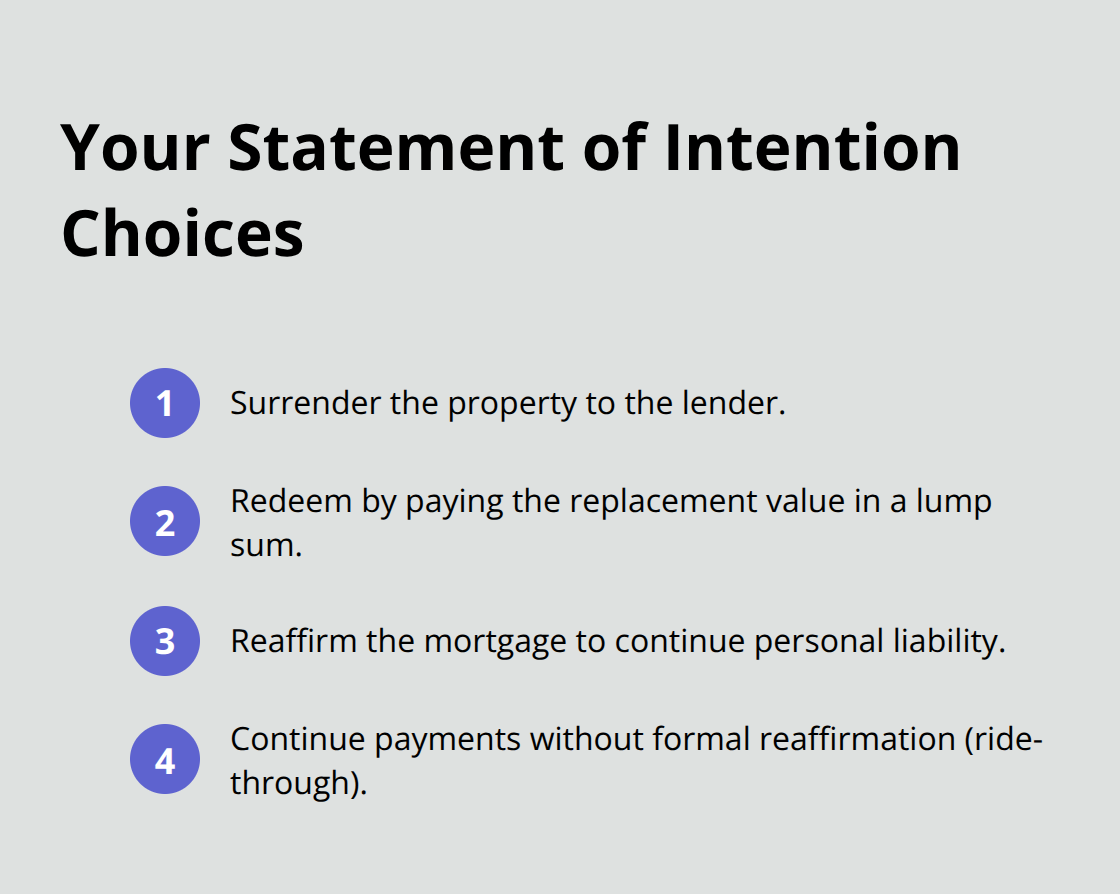
The ride-through option lets you keep your home when you simply continue payments without formal reaffirmation. This approach maintains the benefit of discharged personal liability while you keep your property. Understanding these options becomes particularly important when you consider the various ways to structure your post-bankruptcy relationship with mortgage lenders.
Options for Keeping Your Home During Chapter 7 Bankruptcy in Florida
Statement of Intention Requirements
Federal bankruptcy law requires you to file a Statement of Intention within 30 days of your Chapter 7 petition date. This document tells the court and your mortgage lender exactly what you plan to do with secured property like your home. You must choose between surrender, redemption, or reaffirmation for each secured debt. Most Florida homeowners select reaffirmation or indicate their intent to continue payments without formal reaffirmation.
You must file this statement on time to prevent automatic dismissal of your bankruptcy case and protect your right to keep your home.
The Statement of Intention becomes legally binding once you file it, so you must follow through on your declared intentions within 45 days of the first meeting of creditors. Courts take these deadlines seriously, and missing them can result in automatic relief from stay for your mortgage lender.
Ride-Through Option Availability
The ride-through option allows Florida homeowners to keep their homes by continuing mortgage payments without signing a reaffirmation agreement. This approach maintains the discharge of your personal liability while you retain possession of the property through continued payments. Unlike reaffirmation agreements, ride-through protects you from deficiency judgments if you later face foreclosure (which provides significant financial protection). Most bankruptcy attorneys recommend this strategy because it provides maximum protection while preserving homeownership.
Florida courts generally support the ride-through approach when homeowners demonstrate consistent payment ability. Lenders cannot accelerate your loan or foreclose solely because you filed bankruptcy if you maintain current payments.
Working with Lenders on Modified Payment Plans
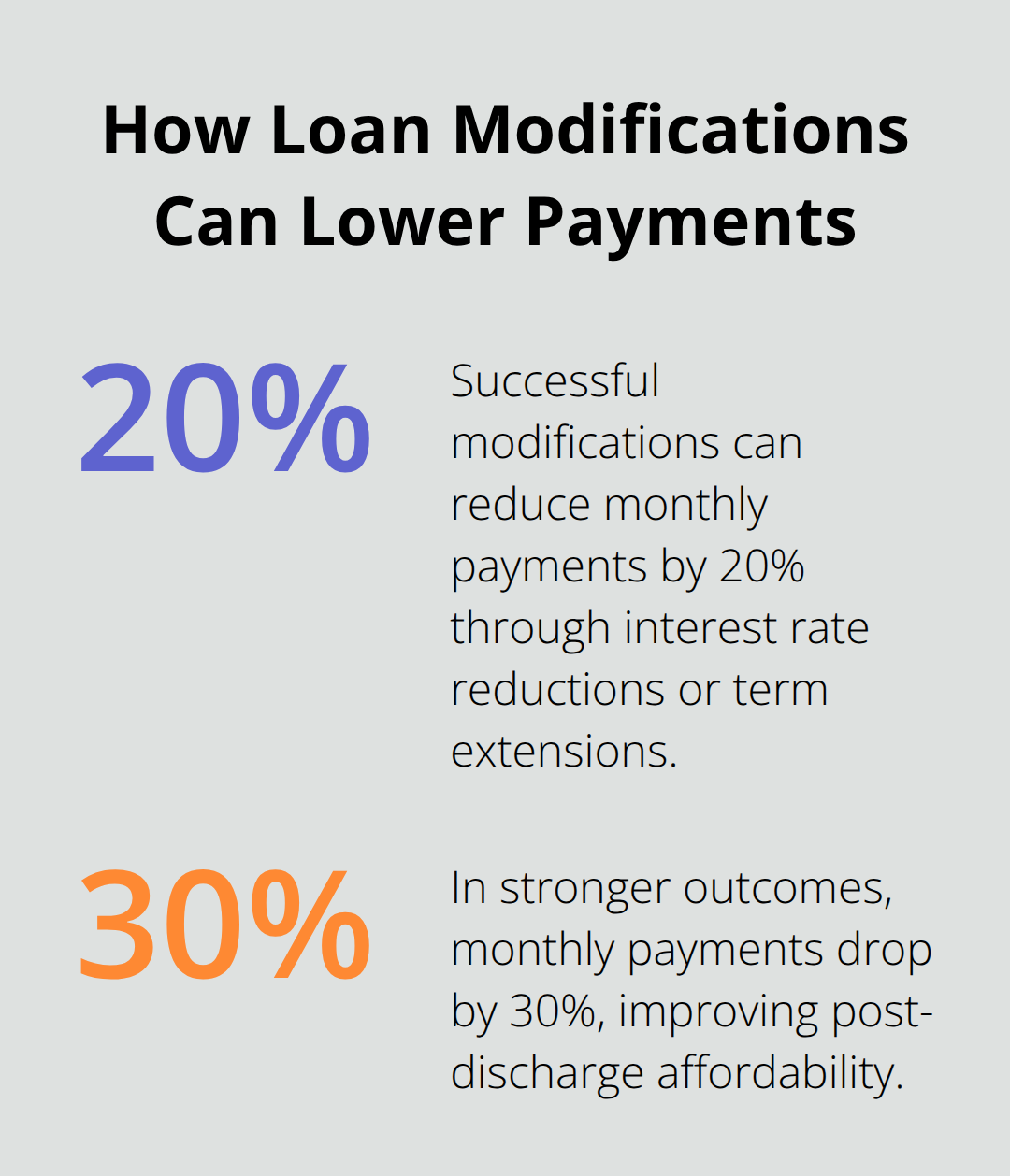
Working with lenders on modified payment plans during Chapter 7 proceedings requires court approval through a motion to assume the modified agreement. The automatic stay initially prevents lenders from processing modification applications, but you can request court permission to negotiate new terms. Many major lenders including Wells Fargo and Bank of America have established bankruptcy departments specifically to handle these requests (streamlining the process for borrowers). Successful modifications often reduce monthly payments by 20-30% through interest rate reductions or term extensions, making homeownership more sustainable post-discharge.
These modification options work best when combined with Florida’s protective homestead laws, which leads directly to understanding how your home’s equity value affects your overall bankruptcy strategy.
What Happens to Home Equity and Second Mortgages in Florida Bankruptcy
How Home Equity Affects Your Case
Florida’s unlimited homestead exemption completely shields your primary residence equity from Chapter 7 bankruptcy trustees, regardless of your home’s value. You can own a $2 million home with $1.5 million in equity and still protect it entirely if you meet the 1,215-day ownership requirement. The trustee cannot force a sale of your home to pay unsecured creditors like credit card companies or medical providers.
This protection only applies to your primary residence within the specified acreage limits of half an acre in cities or 160 acres in rural areas. The exemption works automatically once you qualify, and creditors cannot challenge it based on the property’s value.
Treatment of Second Mortgages and Home Equity Lines
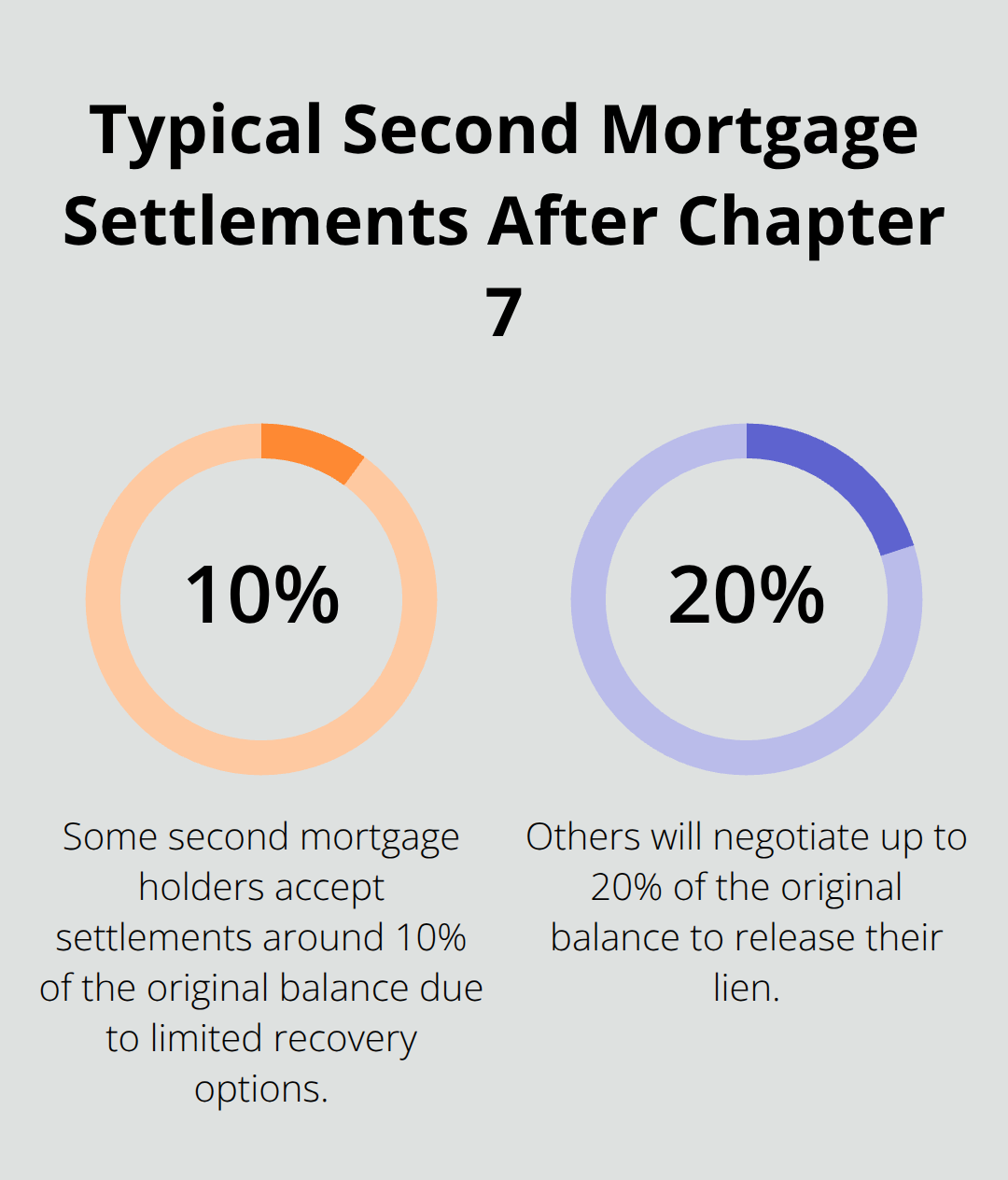
Second mortgages and home equity lines of credit receive different treatment than primary mortgages in Florida Chapter 7 cases. These liens remain attached to your property even after bankruptcy discharge, but your personal liability for the debt disappears. Many second mortgage holders will negotiate settlement amounts of 10-20% of the original balance because they understand their limited recovery options.
Home equity lines of credit typically freeze during bankruptcy proceedings, which prevents additional borrowing until the case concludes. Second lien holders often accept minimal payments to release their claims rather than maintain worthless liens when you have substantial equity protection through the homestead exemption.
Impact on Investment Properties and Rental Homes
Investment properties and rental homes receive no homestead protection in Florida Chapter 7 bankruptcy, which makes them vulnerable to trustee liquidation. The trustee will sell these properties if they contain non-exempt equity after deducting costs and outstanding mortgages. Florida allows only $1,000 in personal property exemptions, which cannot protect investment real estate equity.
Rental income generated during the bankruptcy case belongs to the bankruptcy estate, not the debtor. Properties held in LLCs or corporations also lose homestead protection even if you live in them (because the exemption requires individual ownership). Many attorneys recommend Chapter 13 bankruptcy when clients own valuable investment properties they want to retain.
Final Thoughts
Florida’s homestead exemption provides unmatched protection for homeowners who face Chapter 7 bankruptcy. If you file bankruptcy, what happens to your house depends on whether you meet the 1,215-day ownership requirement and maintain mortgage payments throughout the process. The unlimited equity protection makes Florida one of the most favorable states for homeowners who want to preserve their property during financial distress.
You should gather all mortgage documents and calculate your home equity before you file to understand your protection level. Complete mandatory credit counseling and review your payment history to determine the best approach for your situation. Consider whether ride-through or reaffirmation agreements better serve your long-term financial goals (both options offer distinct advantages depending on your circumstances).
We at Harnage Law, PLLC guide clients through every step of the process to protect their homes during Chapter 7 proceedings. Our firm focuses on debt relief solutions that maximize your homestead exemption benefits while stopping creditor harassment. Contact us today to learn how we can help protect your most valuable asset during bankruptcy.