Chapter 7 bankruptcy doesn’t mean homeownership is out of reach forever. Many Florida residents successfully purchase homes within 2-4 years after their discharge.
We at Harnage Law, PLLC see clients regularly achieve their goal of buying a house after Chapter 7 bankruptcy. The key lies in understanding waiting periods, rebuilding credit strategically, and working with the right lenders who welcome post-bankruptcy borrowers.
What Happens to Your Credit After Chapter 7 Bankruptcy in Florida
Chapter 7 bankruptcy drops your credit score by 130-200 points immediately, with scores typically falling to the 400-550 range according to FICO data. The bankruptcy filing remains on your credit report for 10 years from the discharge date, but its impact decreases significantly after the first two years. Most Florida residents see their scores climb back to 620-650 within 24 months when they follow strategic credit repair steps.
Your Credit Score Recovery Timeline
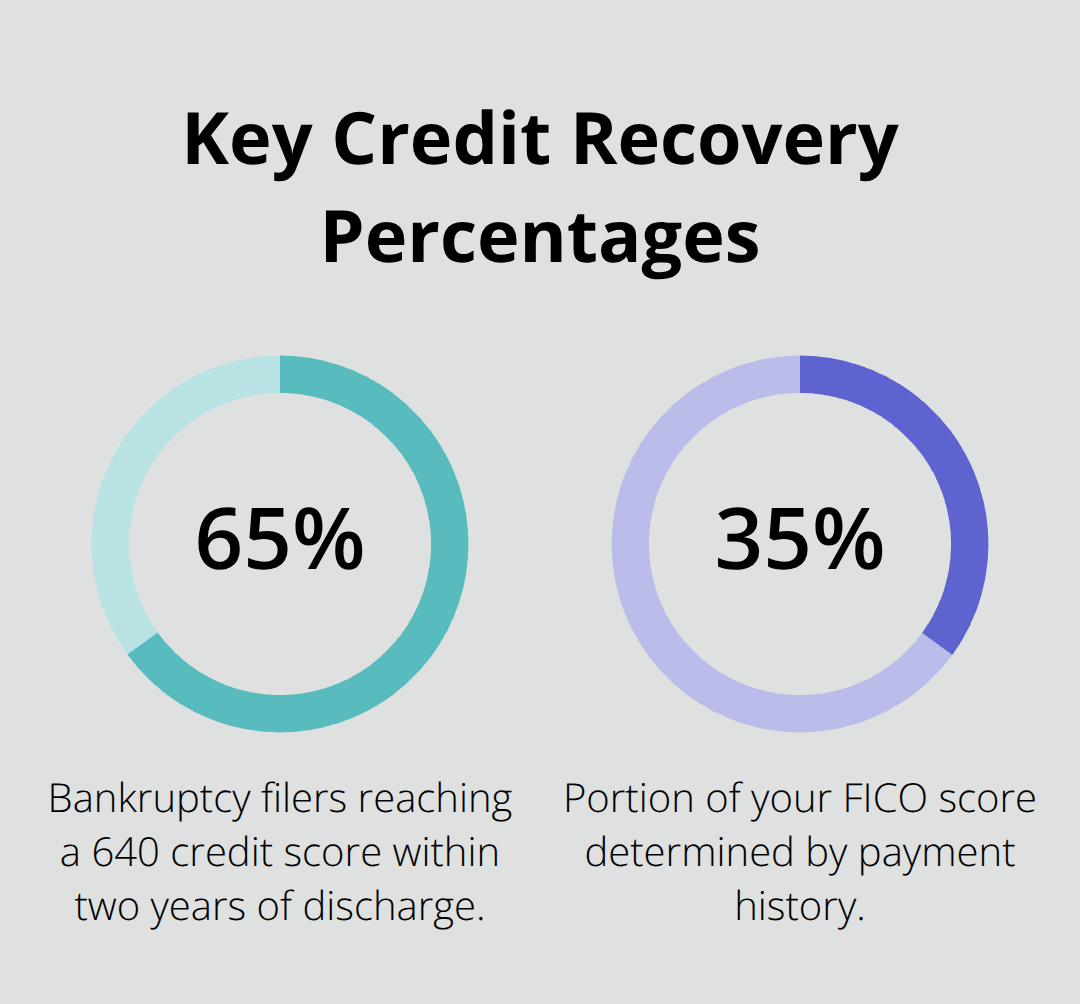
Credit recovery follows a predictable pattern after Chapter 7 discharge. Scores often jump 50-80 points within the first six months as old debts disappear from your report. The 18-month mark typically brings another 40-60 point increase when consistent payment history takes effect. TransUnion reports that 65% of bankruptcy filers reach a 640 credit score within two years of discharge (a threshold many lenders accept for mortgage applications). Payment history accounts for 35% of your FICO score calculation, making it your top priority.
How to Rebuild Your Credit Profile Quickly
Secured credit cards work better than traditional credit applications after bankruptcy. Capital One and Discover offer secured cards that graduate to unsecured status within 8-12 months of on-time payments. Keep your credit utilization below 10% rather than the commonly suggested 30% threshold for faster score improvements. Credit-builder loans from local credit unions report to all three bureaus and cost less than $20 monthly.
Additional Credit Repair Strategies
Add utility and phone payments to your credit file through Experian Boost, which can increase scores by 13 points immediately. Never close your oldest credit account once you rebuild it, as 15% of your score depends on credit history length. Monitor all three credit reports monthly for errors that could slow your recovery process.
Once you understand how credit recovery works after Chapter 7, you need to know exactly when different mortgage programs will accept your application and what requirements each one has.
When You Can Apply for Each Mortgage Type After Chapter 7 in Florida
The wait times for mortgage applications after Chapter 7 bankruptcy differ dramatically by loan type. Knowledge of these exact timeframes prevents premature rejections that damage your credit further. FHA loans accept applications just two years after your discharge date, which makes them the fastest path to homeownership for most Florida bankruptcy filers. These loans require only 580 credit scores for 3.5% down payments, or 500-579 scores with 10% down.
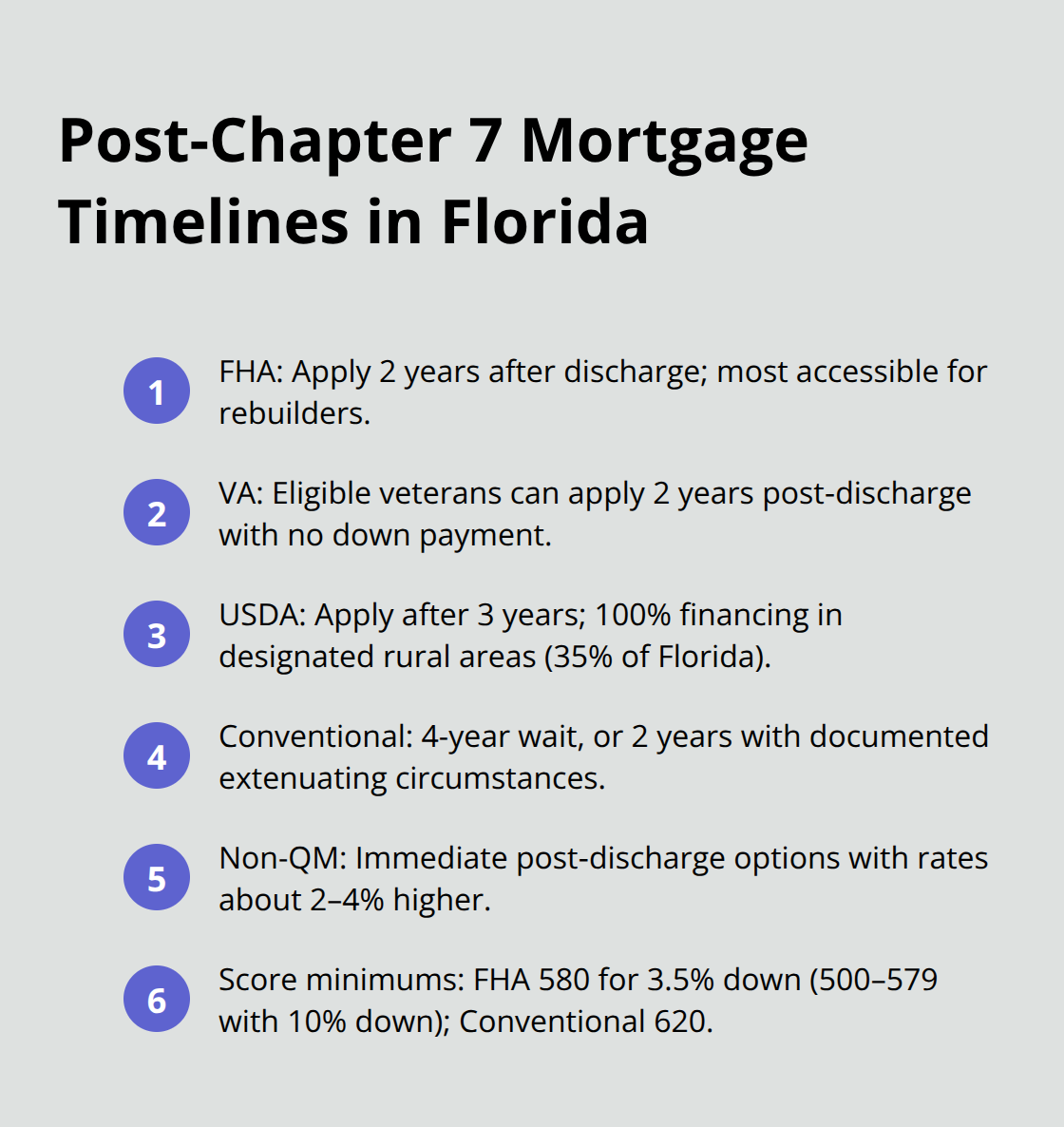
Conventional loans demand a four-year wait period but can reduce to two years if you prove extenuating circumstances like medical emergencies or job loss caused your bankruptcy.
FHA Loans Provide the Fastest Route to Homeownership
FHA loans dominate the post-bankruptcy mortgage market because their guidelines favor borrowers who rebuild credit. The Department of Housing and Urban Development reports that 83% of FHA borrowers have credit scores below 740, which makes these loans ideal for bankruptcy recovery. Florida FHA loan limits reach $498,257 in most counties and $766,550 in high-cost areas like Miami-Dade. Your debt-to-income ratio cannot exceed 57% for FHA approval, though most lenders prefer 43% or lower. The required mortgage insurance premium costs 0.85% annually but disappears automatically when you reach 78% loan-to-value ratio.
VA Loans Match FHA Speed for Veterans
VA loans match FHA wait periods at two years post-discharge for eligible veterans. These loans offer zero down payment requirements and no mortgage insurance costs (which saves veterans thousands annually). Veterans must obtain a Certificate of Eligibility and meet service requirements, but credit score minimums stay flexible around 620. VA loans also allow 100% debt-to-income ratios in some cases, though most lenders cap this at 41%.
USDA and Conventional Options Take Longer
USDA rural development loans require three-year wait periods but offer 100% financing for properties in designated rural areas that cover 35% of Florida. Conventional loans provide the most flexibility after the four-year mark, accept credit scores as low as 620, and offer better interest rates than government programs. Non-QM lenders approve borrowers immediately after discharge but charge 2-4% higher rates than traditional mortgages.
Success with any of these loan programs depends heavily on your preparation before you apply, from building your down payment fund to gathering the right documentation that lenders demand.
Steps to Prepare for Home Buying After Bankruptcy
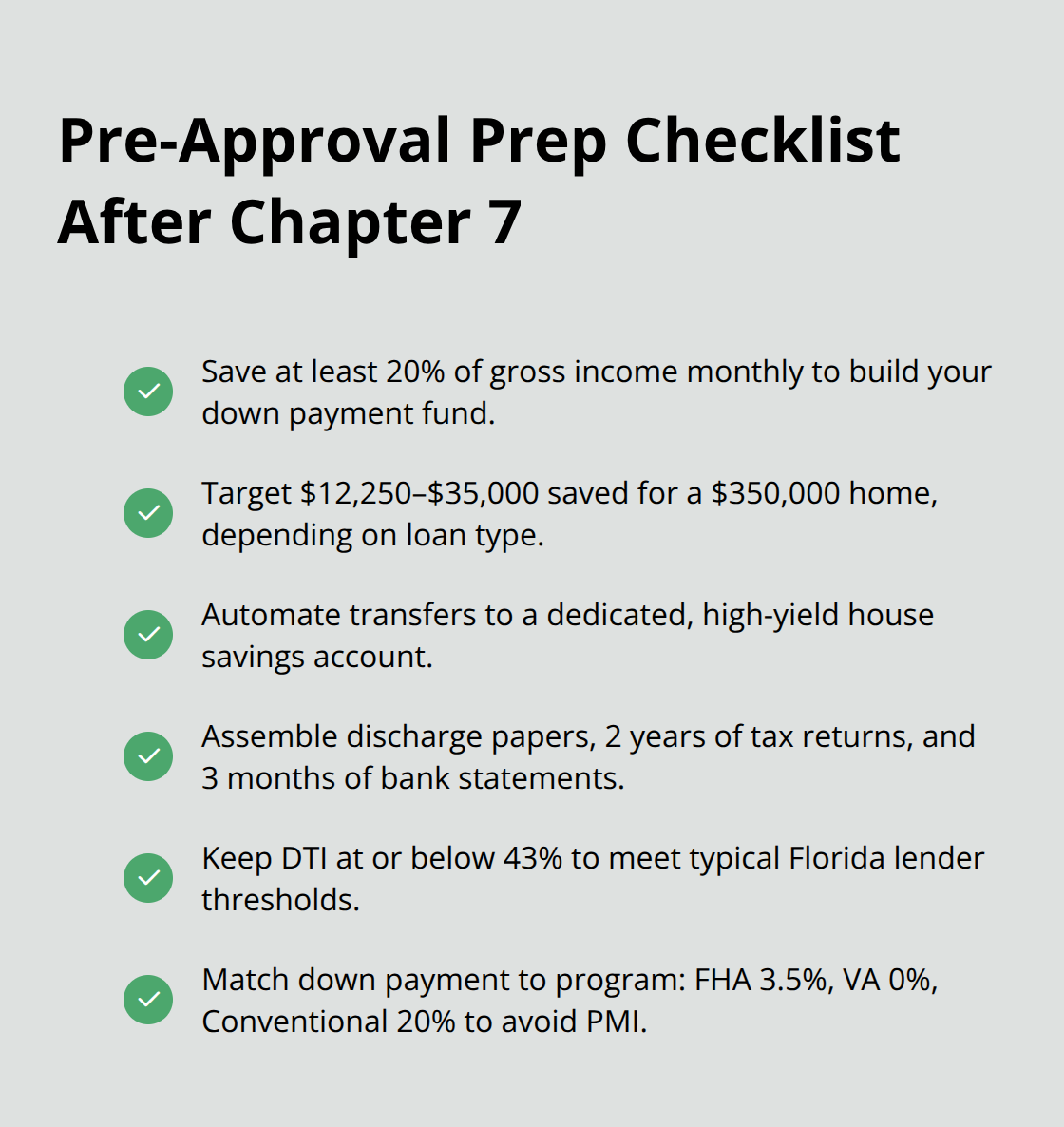
Preparation for post-bankruptcy home buying requires three strategic moves that separate successful buyers from those who face repeated rejections. First, build your down payment fund aggressively and save 20% of your gross income monthly rather than the typical 10% recommendation. Florida housing costs average $350,000 statewide, which means you need $12,250-$35,000 saved (depending on your loan type). FHA loans accept 3.5% down payments, but larger amounts like 10-20% down reduce your monthly costs and improve approval odds significantly.
Build Your Down Payment Fund Strategically
Set up automatic transfers to a dedicated house fund that you never touch for other expenses. Open a high-yield savings account specifically for your home purchase to maximize growth while you wait out mandatory periods. Calculate your target amount based on loan type: FHA requires 3.5% minimum, VA loans need zero down for veterans, and conventional loans work best with 20% down to avoid private mortgage insurance.
Gather Required Documentation Early
Lenders demand extensive paperwork from bankruptcy filers that goes beyond standard mortgage applications. Collect your bankruptcy discharge papers, two years of tax returns, three months of bank statements, and employment verification letters immediately. Your debt-to-income ratio calculations must include all monthly obligations, and Florida lenders typically reject applications above 43% DTI ratios.
Bank statements must show consistent deposits and patterns that prove financial stability rather than erratic cash flow.
Find Specialized Mortgage Lenders
Standard mortgage brokers often lack experience with bankruptcy cases, which leads to wasted applications and credit inquiries. Movement Mortgage and Quicken Loans maintain dedicated bankruptcy departments that understand Chapter 7 recovery timelines. Local credit unions like VyStar and Suncoast frequently approve borderline cases that national banks reject. Non-QM lenders such as Angel Oak and Athas Capital provide immediate post-discharge financing at higher rates but faster timelines.
Monitor Your Credit Progress
Credit monitoring reports from all three bureaus help identify errors before lenders pull your credit. Check your reports monthly and dispute any inaccuracies immediately to prevent delays in your application process. Track your score improvements and document positive changes that demonstrate your financial recovery to potential lenders.
Final Thoughts
Chapter 7 bankruptcy does not permanently block homeownership for Florida residents who plan their recovery strategically. FHA loans provide the fastest route at two years post-discharge, while conventional options become available after four years with proper credit rebuilding. Success in buying a house after Chapter 7 bankruptcy requires disciplined financial habits and patience during mandatory wait periods.
Most Florida bankruptcy filers who save consistently and rebuild credit responsibly purchase homes within 2-4 years of discharge. You need credit scores above 580 for FHA loans and above 620 for conventional mortgages to qualify for the best rates. Work with lenders who understand post-bankruptcy cases rather than traditional mortgage brokers who lack this experience.
Proper legal guidance during your Chapter 7 case positions you for faster financial recovery afterward. We at Harnage Law, PLLC help clients through bankruptcy proceedings while keeping future homeownership goals in mind (including strategic debt discharge decisions that benefit mortgage applications later). Our approach during the bankruptcy process helps set the foundation for your homeownership recovery when you’re ready to buy again.