
Filing for Chapter 7 bankruptcy without legal representation has become increasingly common in Florida. Many people ask “can I file bankruptcy without a lawyer” as they face mounting debt and limited resources.
We at Harnage Law, PLLC see both successful DIY cases and costly mistakes that could have been avoided. Understanding the risks and requirements before you decide can save you thousands of dollars and months of stress.
Understanding Chapter 7 Bankruptcy Requirements in Florida
Income Limits Determine Your Chapter 7 Eligibility
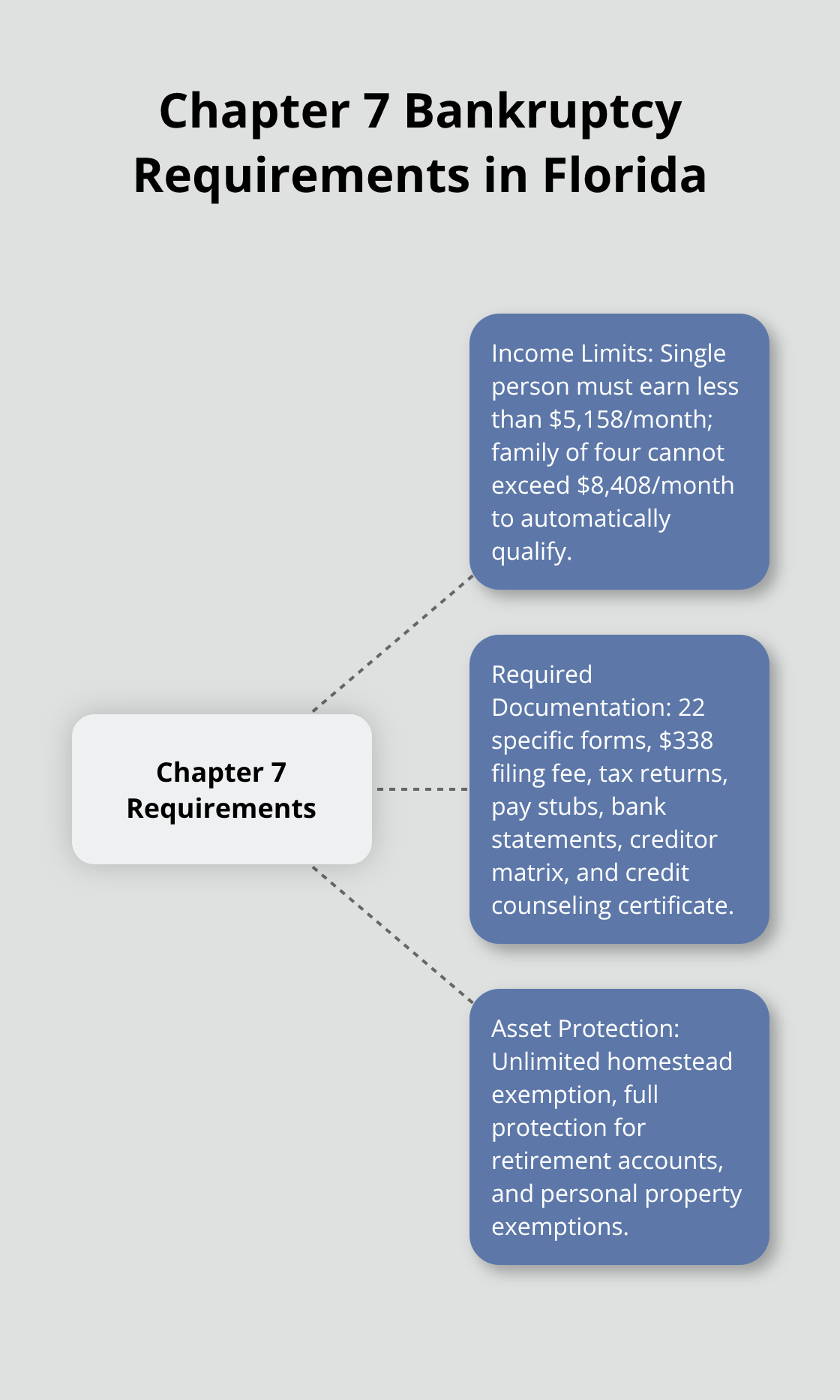
Your household income decides Chapter 7 eligibility through the means test, a calculation that compares your average monthly income from the past six months to Florida’s median income levels. For 2024, a single person household in Florida must earn less than $5,158 per month, while a family of four cannot exceed $8,408 monthly to automatically qualify. The U.S. Trustee Program updates these figures each April, and income above these amounts triggers a complex second part of the means test that examines your disposable income after allowed expenses.
Required Documentation Makes or Breaks Your Case
The Northern District of Florida requires 22 specific forms for a complete Chapter 7 filing, with the filing fee set at $338. Your petition must include tax returns from the past two years, six months of pay stubs, bank statements, and a complete creditor matrix that lists every debt. The court mandates a credit counseling certificate from an approved agency, which costs between $10-50 and must be completed within 180 days before you file. Any missing required document leads to case dismissal, and court statistics show that 40% of pro se filers face dismissal for incomplete paperwork.
Florida Asset Protection Provides Unmatched Benefits
Florida’s homestead exemption protects unlimited equity in your primary residence, provided the property doesn’t exceed half an acre in a municipality or 160 acres outside city limits. This protection requires two years of Florida residency before you file. Your retirement accounts receive full protection (including 401k and IRA funds), while wages stay protected from garnishment if you qualify as head of household. Florida allows $1,000 in personal property exemptions, or $4,000 if you don’t claim homestead, plus $1,000 in vehicle equity. These exemptions mean most Florida residents keep their home, car, and retirement savings through Chapter 7.
However, even with these strong protections, the actual filing process presents numerous challenges that catch many DIY filers off guard.
The DIY Filing Process and Common Pitfalls
The Northern District of Florida processes bankruptcy filings through two divisions, with Tallahassee handling all mail and document submissions while Pensacola accepts only in-person deliveries. Self-represented filers cannot access the electronic filing system and must submit documents via email, fax, mail, or personal delivery to 110 East Park Avenue, Suite 100, Tallahassee, Florida 32301. Court statistics reveal that pro se filers face a 60-day window to complete their financial management course after the meeting of creditors, and missing this deadline triggers automatic case dismissal.
Filing Timeline Traps Most DIY Filers
The 341 meeting of creditors occurs 21-40 days after your filing date, and you must attend this mandatory hearing in business attire without electronic devices. Federal courthouses require photo identification for entry, and casual clothing like jeans or shorts will prevent courthouse access. The trustee reviews your petition during this meeting, and incomplete Schedule J income and expense forms account for 35% of pro se case dismissals according to Northern District data. Your creditor matrix must include exact addresses for every debt, and a single incorrect creditor address can delay your discharge for months.
Hidden Costs Drain Your Budget Beyond Filing Fees
The $338 filing fee represents only the starting cost of DIY bankruptcy. Credit counseling agencies charge $10-50 for required pre-filing courses, while the mandatory financial management course adds another $25-75 to your expenses. PACER system access costs 10 cents per page after your first $30 quarterly, and most pro se filers spend $100-200 reviewing court documents and case precedents. Certified mail requirements for creditor notifications cost $3-5 per creditor, and a typical case with 15 creditors adds $60 in postage costs.
Amendment Fees Multiply When Errors Occur
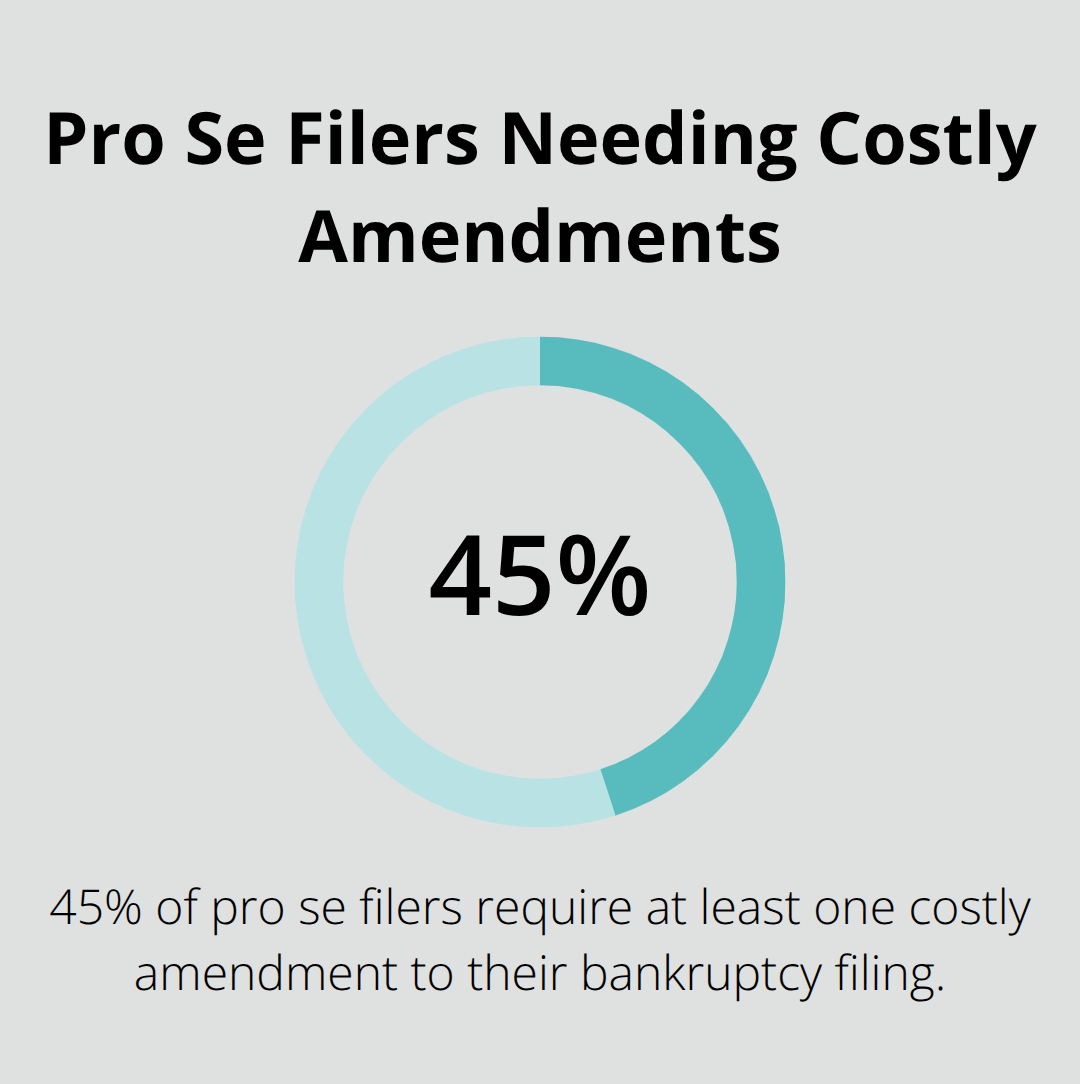
Court filing errors require amended schedules at $32 per amendment, and the Northern District reports that 45% of pro se filers need at least one costly amendment. Schedule amendments become necessary when you discover missed creditors, incorrect asset valuations, or income calculation errors after your initial filing. The court allows no exceptions for mathematical mistakes or omitted information, and each correction adds both time and expense to your case. These amendment costs often exceed the savings people expect from self-representation.
While these procedural challenges create significant hurdles, certain financial situations make DIY filing particularly dangerous and can result in permanent asset loss.
When Self-Representation Becomes Risky
Self-representation turns financially catastrophic when business ownership, multiple properties, or high-value assets enter your bankruptcy case. Business owners face automatic trustee scrutiny of corporate structures, partnership agreements, and asset transfers within two years before you file, with the trustee possessing authority to reverse transactions deemed fraudulent. Northern District trustees challenge 78% of cases that involve business interests, and pro se filers lose these challenges 90% of the time according to court records. Property owners with multiple real estate holdings face complex valuation disputes and homestead exemption calculations that require precise legal positioning to avoid forced sales.
Trustee Challenges Target Asset Transfers and Income Sources
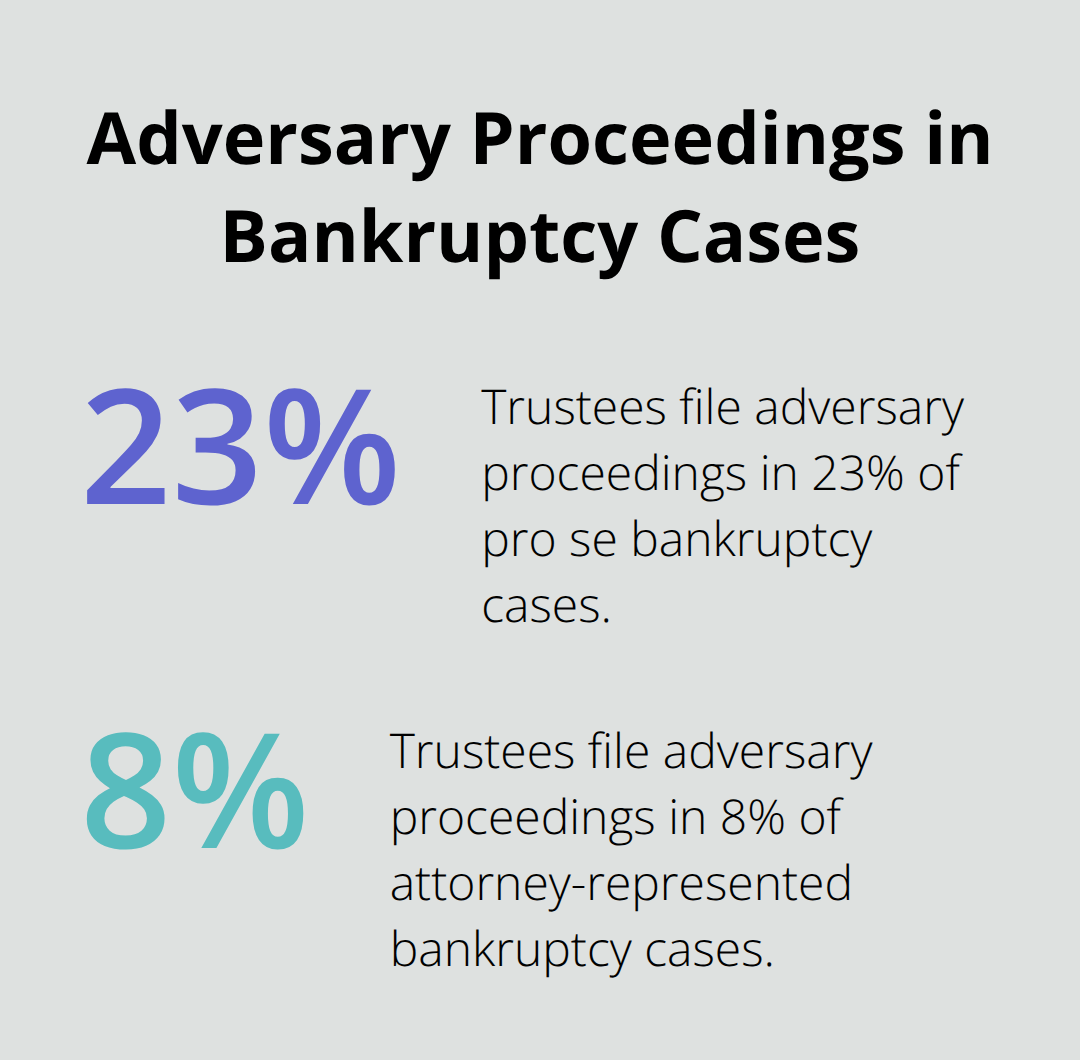
Trustees scrutinize every financial transaction from the 90 days before your filing date, with particular focus on payments that exceed $600 to family members or business associates. The Northern District reports that trustees file adversary proceedings in 23% of pro se cases compared to 8% of attorney-represented cases, targeting preference payments and fraudulent transfers. Income from rental properties, business partnerships, or contract work triggers additional trustee examination of your means test calculations, and mathematical errors in these complex income streams lead to case dismissal or discharge denial. Trustees also challenge homestead exemption claims when property ownership involves business use or multiple parcels, requiring detailed legal arguments that pro se filers cannot effectively present.
Asset Protection Strategies Most People Miss
Florida residents lose exempt assets through timing mistakes and improper pre-filing planning that attorneys routinely prevent. Converting non-exempt assets to exempt property requires specific timing and documentation that must occur before you file, yet 65% of pro se filers attempt these conversions incorrectly according to trustee reports. Retirement account withdrawals destroy exemption protection permanently, while incorrect homestead exemption applications result in forced home sales despite Florida’s unlimited protection. Joint property ownership with non-filing spouses creates complex legal issues that pro se filers handle poorly, often resulting in partial asset loss that proper legal representation would have prevented entirely.
Complex Financial Situations Demand Professional Guidance
High-income debtors who fail the means test face additional scrutiny that requires sophisticated legal arguments to navigate successfully. Business debt mixed with personal obligations creates classification issues that determine which debts receive discharge protection (and which remain after your case closes). Tax debt older than three years may qualify for discharge under specific conditions, but pro se filers rarely understand these technical requirements and miss opportunities to eliminate substantial tax obligations.
Final Thoughts
The question “can I file bankruptcy without a lawyer” has a complex answer that depends entirely on your financial situation. DIY cases save the $1,500-3,000 attorney fee but risk asset loss worth far more through procedural mistakes or trustee challenges. Simple cases with straightforward income, minimal assets, and no business interests often succeed with self-representation.
Business ownership, multiple properties, recent asset transfers, or income above median levels create complications that destroy most pro se cases. The Northern District’s 45% amendment rate for self-represented filers demonstrates how easily mistakes occur. Professional legal assistance becomes necessary when you own business interests, face creditor lawsuits, have complex income sources, or possess high-value assets that require protection strategies.
We at Harnage Law, PLLC help Florida residents navigate Chapter 7 bankruptcy while protecting their assets and stopping creditor harassment. Our guidance through the bankruptcy process prevents costly mistakes that destroy financial fresh starts (and can cost tens of thousands in lost property). An informed decision about representation protects your financial future and maximizes your debt discharge benefits.
