Chapter 7 bankruptcy offers a legal path to discharge debts and eliminate overwhelming financial obligations. Many people in Florida struggle with credit card balances, medical bills, and personal loans that feel impossible to repay.
We at Harnage Law, PLLC understand that filing for Chapter 7 isn’t a decision you make lightly. This guide walks you through what debts qualify for discharge, how the process works, and how to rebuild your financial life afterward.
What Debts Disappear in Chapter 7 and Which Ones Stay
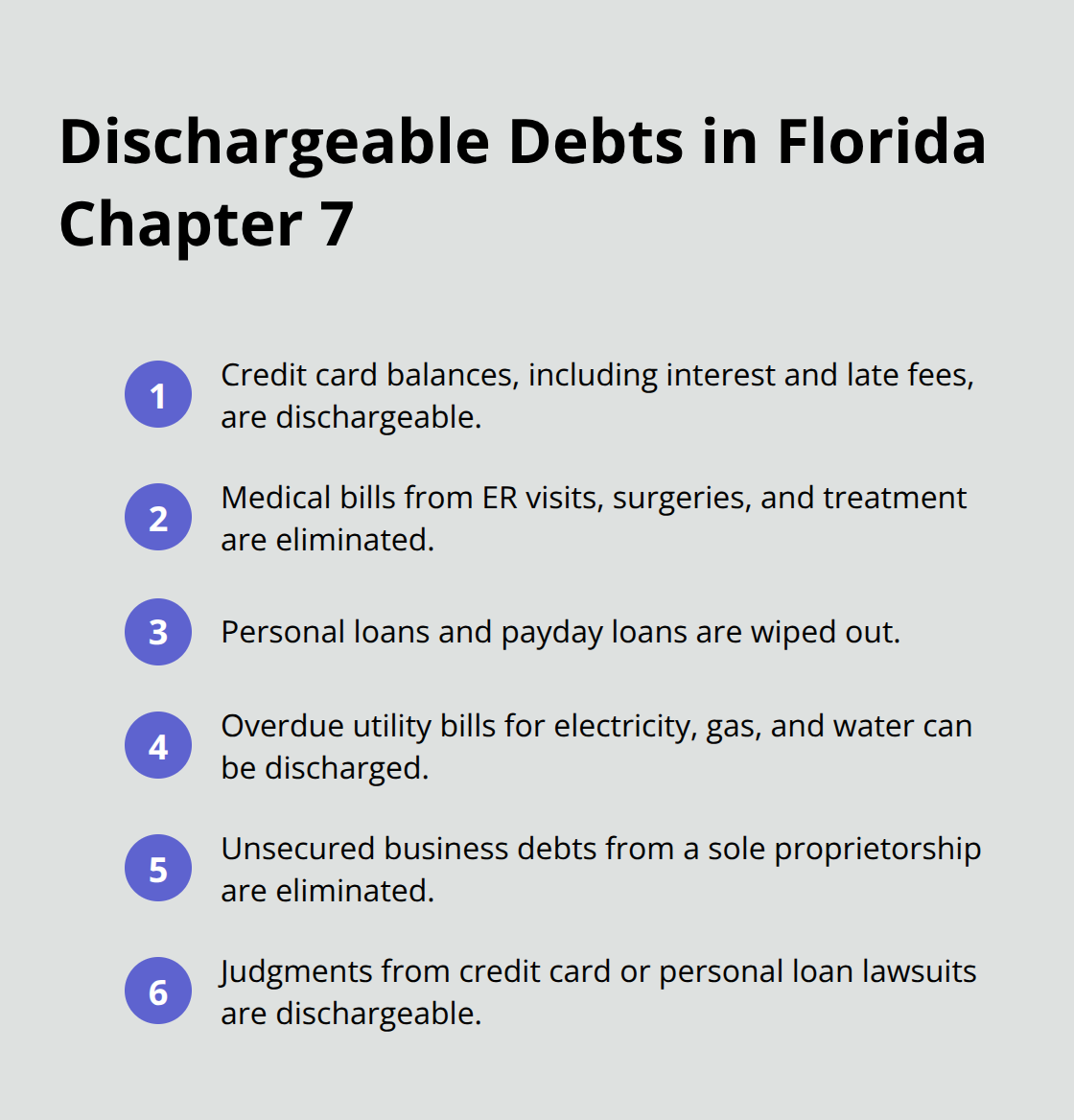
Credit card debt ranks among the most common debts discharged in Florida Chapter 7 cases. If you carry balances across multiple cards, Chapter 7 wipes out the full amount owed, including accrued interest and late fees. Medical bills are equally dischargeable-whether from emergency room visits, surgeries, or ongoing treatment, healthcare debt qualifies as unsecured debt that the bankruptcy court eliminates. Personal loans from banks or online lenders vanish under Chapter 7, as do payday loans, which many Floridians use as a quick financial fix but then struggle to repay. Overdue utility bills for electricity, gas, and water can be discharged. Judgments resulting from credit card lawsuits or personal loan defaults are also eliminated. If you operated a sole proprietorship and incurred business debt classified as unsecured, those obligations disappear too. The common thread: all these debts are unsecured, meaning no creditor holds collateral to reclaim if you stop paying.
Debts That Survive Chapter 7 No Matter What
Child support and alimony obligations never get discharged-federal bankruptcy law treats family support as too important to eliminate. Student loans present a high bar: you must prove undue hardship, a standard so difficult that most borrowers cannot meet it. Income taxes assessed within three years of your filing date are non-dischargeable, according to 11 U.S.C. Section 523(a). Fines, criminal restitution, and traffic tickets remain your responsibility. Debts from fraud or embezzlement stay intact if a creditor challenges them in court. Luxury purchases of $1,150 or more made within 60 days before filing, or cash advances of $1,150 or more within the same window, may be deemed non-dischargeable if the creditor objects-the lookback period creates real risk if you charge expensive items right before filing. Debts from driving while intoxicated that caused injury or death are permanent. Any debt you fail to list in your bankruptcy schedules might survive if the creditor discovers the case.
The 60-Day Rule That Costs You
Many Floridians make critical mistakes in the weeks before filing. Purchasing a television, jewelry, or designer items worth $1,150 or more within two months of your filing date puts those debts at risk. Creditors often challenge these purchases as luxury goods that should not be wiped out. The same applies to cash advances-if you withdraw $1,150 or more in cash through credit cards shortly before filing, creditors may argue you took the money with no intention to repay. Stop large purchases at least three months before filing to avoid this trap. Planning your filing date matters more than most people realize.
What Happens Next in Your Chapter 7 Case
Understanding which debts discharge and which survive sets the foundation for your bankruptcy filing. The next phase involves the actual filing process, where you submit your petition to the court and meet with your bankruptcy trustee. This meeting (called the 341 meeting) gives creditors a chance to question you about your finances and your debts. Your trustee will review your assets and determine what property can be liquidated to pay creditors. The discharge order-the document that officially eliminates your qualifying debts-comes after this process concludes.
How Your Chapter 7 Case Moves From Filing to Discharge in Florida
The Automatic Stay and Initial Filing Requirements
Filing your Chapter 7 petition triggers an automatic stay that stops creditor calls, lawsuits, wage garnishments, and collection efforts immediately. You must submit your petition along with schedules listing all assets, liabilities, income, and expenses to the U.S. Bankruptcy Court for the Middle District of Florida or the appropriate district for your location. The filing fee is $338, though you can request a waiver under Official Form 103B if you meet poverty guidelines, or pay in installments with at least half due at filing. Within 14 days, you must provide proof of payment or waiver to the court.
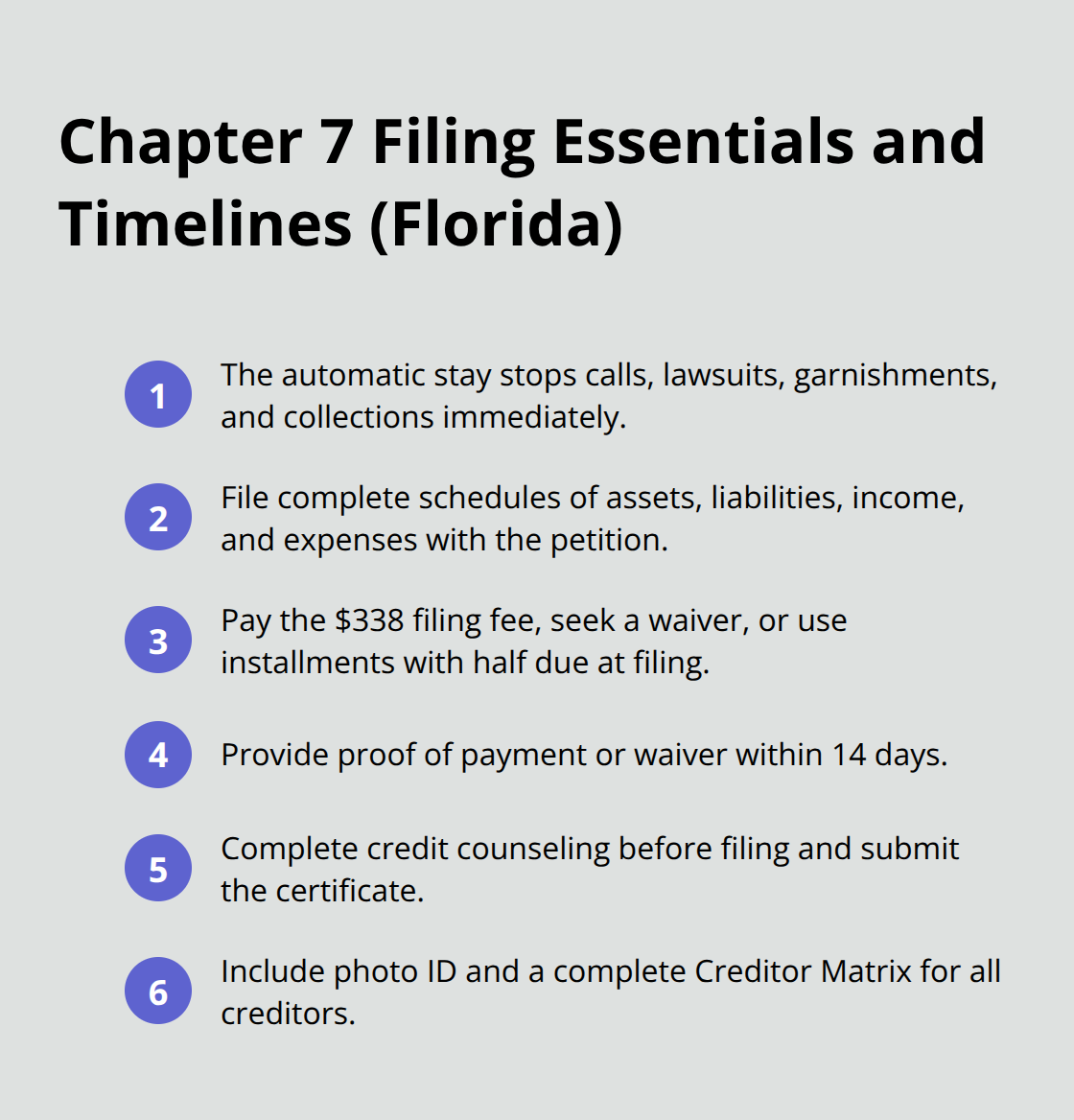
You also need to file a Certificate of Credit Counseling from an approved agency before the petition is considered complete. The U.S. Trustee’s website lists all approved credit counseling providers in Florida. Complete the counseling course before you file, not after-missing this requirement delays your entire case and can result in dismissal. Your petition must include a legible photocopy of government-issued photo identification and a complete Creditor Matrix with the name and address of every creditor you owe money to. Omitting even one creditor creates problems: debts not listed in your schedules cannot be discharged, meaning you remain legally obligated to pay them even after your case closes.
The 341 Meeting and Trustee’s Role
The 341 meeting of creditors happens 21 to 50 days after filing, and your attendance is mandatory. The bankruptcy trustee assigned to your case will question you under oath about your finances, assets, income sources, and the debts you listed. Creditors can attend and ask questions, though most do not show up for Chapter 7 cases. The trustee’s primary job is to identify and liquidate non-exempt assets to pay your creditors.
Florida law provides homestead exemptions that protect your primary residence up to a certain amount of equity, and personal property exemptions for vehicles, household goods, and other items. The trustee will determine what property qualifies as exempt under Florida or federal law and what can be sold. If you own assets with significant equity beyond exemption limits, the trustee will arrange their sale.
Completing Your Course and Receiving Your Discharge
After the 341 meeting, you must complete a Personal Financial Management Course from an approved provider and file the certification within 60 days of your first meeting date. Failure to complete this course prevents the court from issuing your discharge order. Once the trustee finishes liquidating assets, pays creditors according to bankruptcy priority rules, and confirms all creditors have been notified, the court enters your discharge order, typically three to six months after filing. This order legally eliminates your qualifying unsecured debts and stops you from being pursued for payment on those obligations.
With your discharge order in hand, you now face the most important phase of your bankruptcy journey: rebuilding your financial life and establishing the habits that prevent future debt problems.
Rebuilding Credit and Financial Stability After Discharge in Florida
Verify Your Credit Report for Accuracy
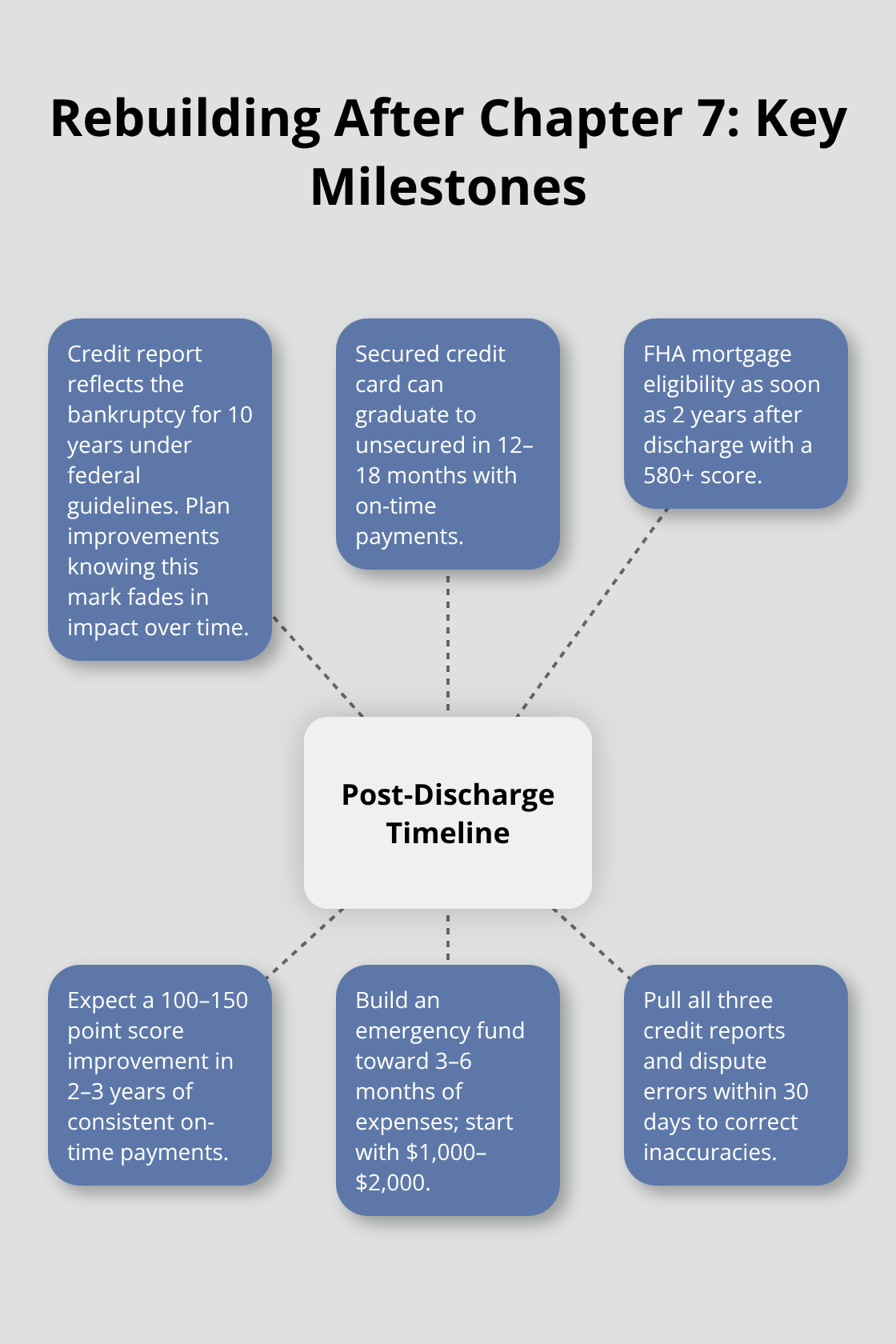
Your discharge order eliminates qualifying debts, but your credit report still reflects the bankruptcy filing for ten years according to federal guidelines. The immediate priority involves verifying accuracy on your credit report because errors can sabotage your financial recovery. Pull your free annual credit reports from all three bureaus at AnnualCreditReport.com and scrutinize every entry. Look for debts that should have been discharged but still appear as active accounts, duplicate listings, or accounts belonging to someone else entirely. Dispute inaccuracies directly with the credit bureau in writing within 30 days, providing documentation from your discharge order. Correcting false information can improve your score by 50 to 100 points depending on what gets removed.
Many Floridians waste months assuming their credit is hopeless when simple corrections would dramatically change their position. Start this process immediately after discharge-the sooner you fix errors, the sooner your score begins recovering.
Build New Credit Responsibly
Establishing new credit responsibly means rejecting the temptation to revert to old spending habits while also proving you’ve changed. Secured credit cards require a cash deposit typically between $200 and $2,500 that serves as your credit limit, and banks report your payment activity to credit bureaus just like traditional cards. Make small purchases monthly and pay the full balance before the due date every single month-this demonstrates reliability to lenders. After 12 to 18 months of perfect payments, many issuers convert your secured card to an unsecured account and return your deposit.
Authorized user status on someone else’s account with an excellent payment history can also boost your score, though you bear no responsibility for that account. Within two to three years of consistent on-time payments, your credit score typically improves 100 to 150 points from its post-discharge low. The FHA allows mortgage qualification just two years after Chapter 7 discharge if your credit score reaches 580 or higher, making homeownership achievable sooner than most people expect.
Create a Budget and Emergency Fund
A realistic monthly budget prevents the debt spiral that led to bankruptcy initially. Calculate your take-home pay after taxes and mandatory deductions, then list every fixed expense including rent or mortgage, insurance, and utilities. Allocate remaining funds to variable expenses like groceries and transportation, then designate at least 10 percent of your monthly income for an emergency fund. Most financial advisors recommend three to six months of living expenses in savings, but starting with $1,000 to $2,000 provides a buffer against unexpected car repairs or medical costs that previously forced you into credit card debt. Without this cushion, a single emergency pushes you back toward borrowing, undermining your fresh start.
Final Thoughts
Chapter 7 bankruptcy in Florida provides a genuine fresh start by eliminating qualifying unsecured debts and stopping creditor harassment permanently. The discharge order you receive represents far more than a legal document-it marks the moment your financial obligations shift from overwhelming to manageable. Your credit score will recover, homeownership becomes possible again within two years, and the constant stress of collection calls disappears immediately upon filing.
The path forward requires discipline and intentional choices. Your budget becomes your financial roadmap, preventing the spending patterns that created debt in the first place. An emergency fund protects you from unexpected expenses that previously forced you back into borrowing, while secured credit cards and consistent on-time payments rebuild your credit score steadily. Within three years, most Chapter 7 filers see their credit scores improve by 100 to 150 points from their post-discharge low.
Discharge debts through Chapter 7, and you gain the opportunity to make different decisions going forward. We at Harnage Law, PLLC help you understand which debts qualify for elimination, protect your assets throughout the bankruptcy process, and work toward the fresh financial start you deserve. Contact our team to discuss your Chapter 7 options and take the first step toward financial freedom.