Filing Chapter 7 in Florida can feel overwhelming when you’re drowning in debt. The process involves specific steps, eligibility rules, and paperwork that many people find confusing.
We at Harnage Law, PLLC have guided hundreds of Florida residents through this journey. This guide breaks down everything you need to know to move forward with confidence.
What Chapter 7 Bankruptcy Means in Florida
How Chapter 7 Works for Florida Residents
Chapter 7 bankruptcy is a liquidation process where you discharge unsecured debts in exchange for allowing a court-appointed trustee to sell your nonexempt assets. In Florida, most of your qualifying debts vanish within 90 to 120 days after filing, giving you a genuine financial restart rather than a repayment plan. The process starts when you file a petition with the federal bankruptcy court, listing all your debts and assets, then move through a series of court procedures that culminate in a discharge order.
Key Differences Between Chapter 7 and Other Bankruptcy Types
Chapter 7 differs fundamentally from Chapter 13, which requires a three to five year repayment plan. Chapter 7 discharges unsecured debts like credit cards and medical bills, while Chapter 13 restructures them into manageable monthly payments. Chapter 13 also allows you to catch up on mortgage or car payments over time-something Chapter 7 does not. If you have significant equity in a home or vehicle, Chapter 13 might protect those assets better than Chapter 7 would.
Eligibility Requirements for Filing Chapter 7 in Florida
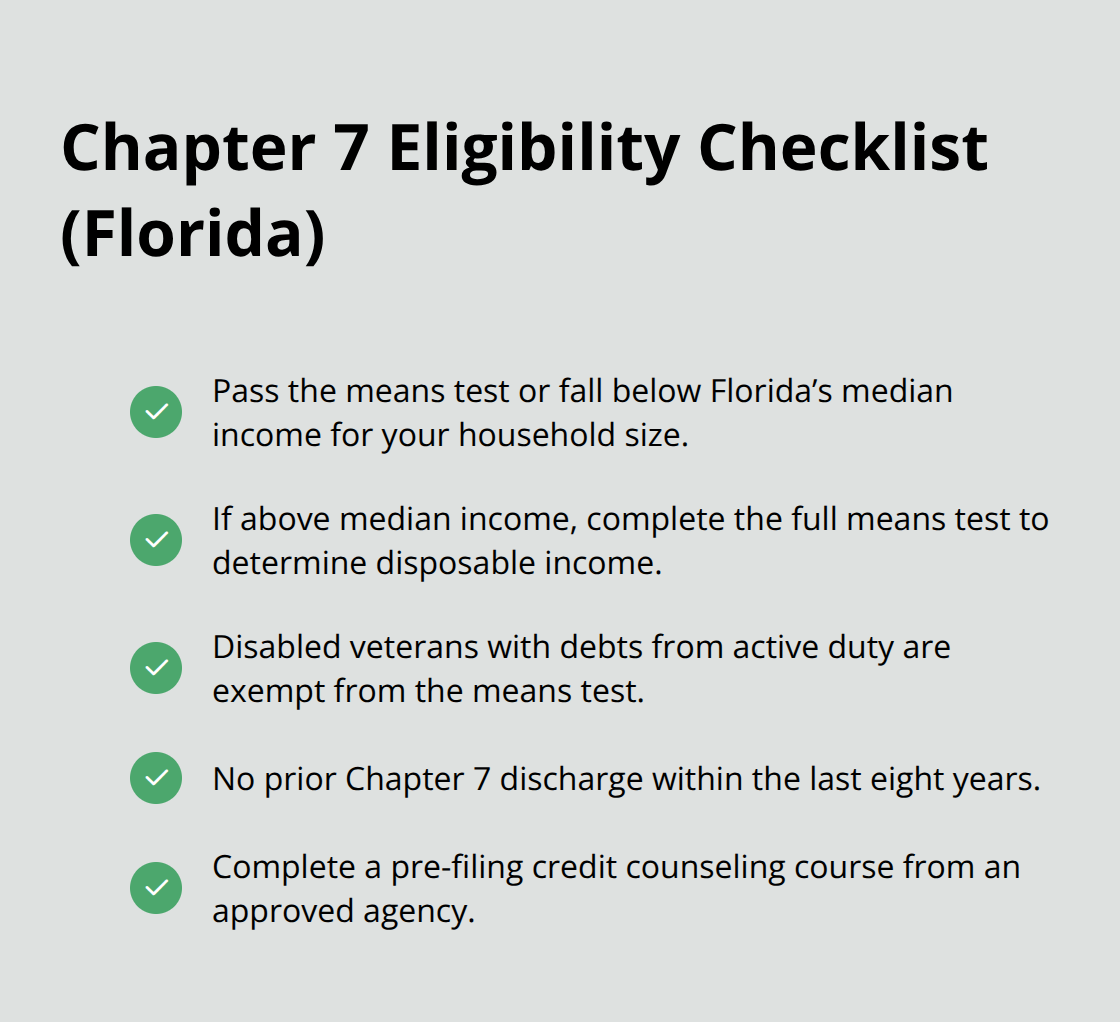
To file Chapter 7 in Florida, you must pass the means test, which compares your income to Florida median thresholds. The Florida median annual income for a single person stands at $41,334; for two people, $51,839; and for four people, $63,196 according to current bankruptcy court standards. If your average monthly income over the past six months, multiplied by 12, falls below your household size threshold, you automatically qualify for Chapter 7.
If your income exceeds the median, you must complete a detailed means test calculation that subtracts allowed living expenses from your income to determine if you have disposable income available to repay debts. Disabled veterans who incurred debts during active duty are exempt from the means test entirely. You also cannot have filed a previous bankruptcy discharge within the past eight years for Chapter 7, and you must complete a credit counseling course from an approved agency before filing.
Costs and Asset Protection in Florida
The filing fee is $338, though you can request installment payments or a fee waiver if you meet financial hardship criteria. Florida residents benefit from one of the most generous homestead exemptions in the nation, allowing unlimited home equity protection if you have owned the property for at least 1,215 days before filing. You can also exempt up to $5,000 in vehicle equity in a single car.
Understanding these eligibility rules and protections sets the foundation for your filing strategy. The next step involves gathering the specific documents and financial information the court requires.
The Chapter 7 Filing Process in Florida
Gathering Required Documents and Financial Information
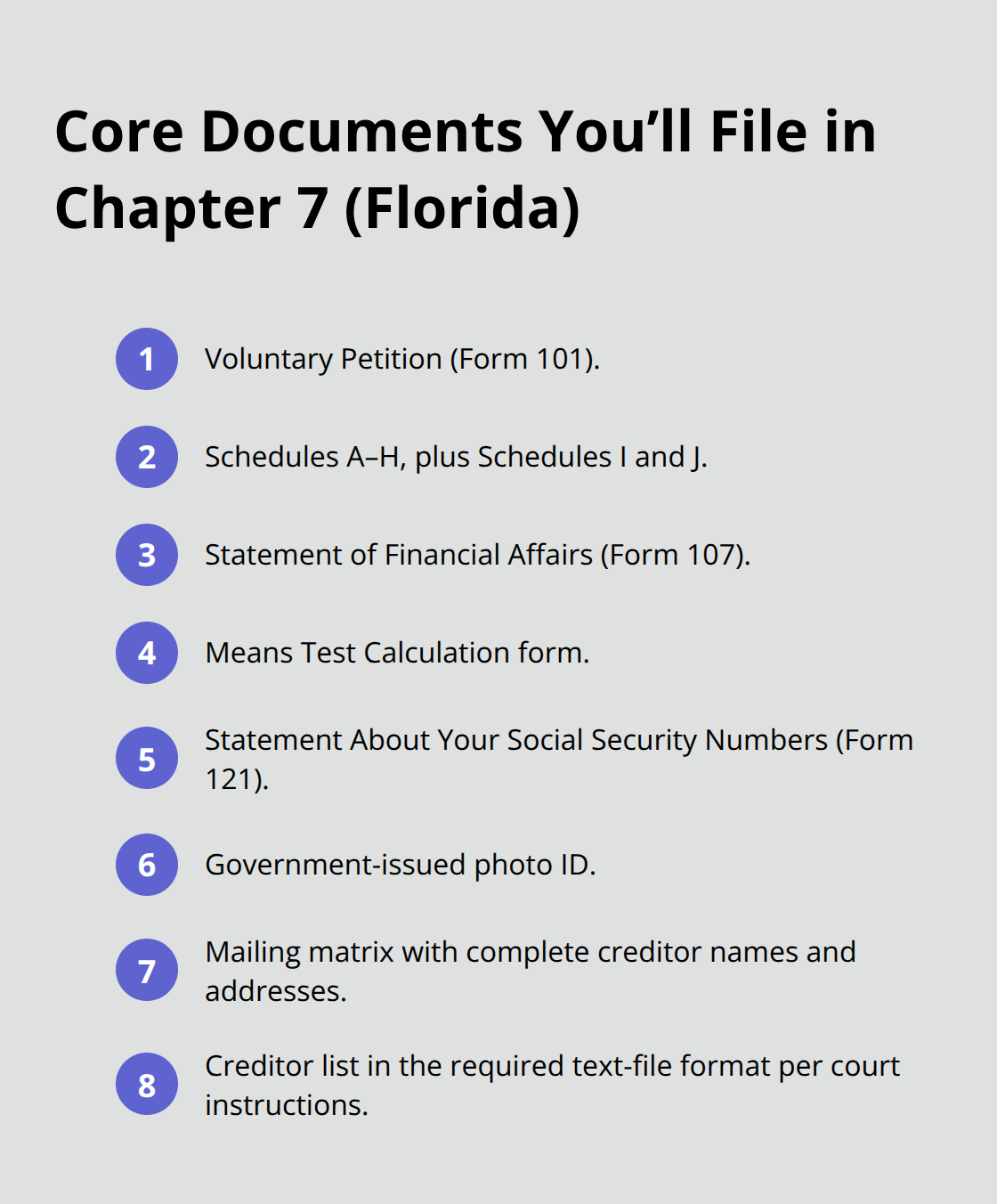
Gathering the right paperwork before filing is non-negotiable. The court requires specific documents at the time of filing, and submitting incomplete or incorrect forms leads to dismissal. You need your Voluntary Petition, Summary of Assets and Liabilities, Schedules A through H, Schedules I and J, your Statement of Financial Affairs, the Means Test Calculation form, and a Statement About Your Social Security Numbers. Additionally, you must provide a legible government-issued photo ID and a paper mailing matrix with complete names and addresses for all creditors. The court also requires a disk or electronic file containing creditor information in a specific text-file format, which you can find detailed instructions for on the official court website.
Taking the Required Credit Counseling Course
Before you file your petition, you must complete the required credit counseling course from an approved agency listed on the U.S. Trustee website. This course is mandatory and covers budgeting, debt management alternatives, and the bankruptcy process itself. The course typically takes one to two hours and provides you with a certificate that you submit with your filing. Select an approved provider from the official list to avoid delays or rejection of your paperwork.
Filing Your Petition with the Court
Filing your petition involves submitting all documents to the federal bankruptcy court in your district. Pro se filers (those representing themselves without an attorney) must file in person at the courthouse during Clerk’s Office hours, which run Monday through Friday from 8:30 am to 4:00 pm, excluding federal holidays. Bring your photo ID and plan to pass through security screening, as electronic devices are prohibited in most federal courthouses.
When you file, you pay the $338 filing fee with a certified check or money order payable to the Clerk of the U.S. Court. If you cannot afford the full amount upfront, you can request to pay in installments with a minimum initial payment of at least half the filing fee, or you can apply for a complete fee waiver using Official Bankruptcy Form 103B if your income falls below the poverty guidelines.
The Automatic Stay Takes Effect
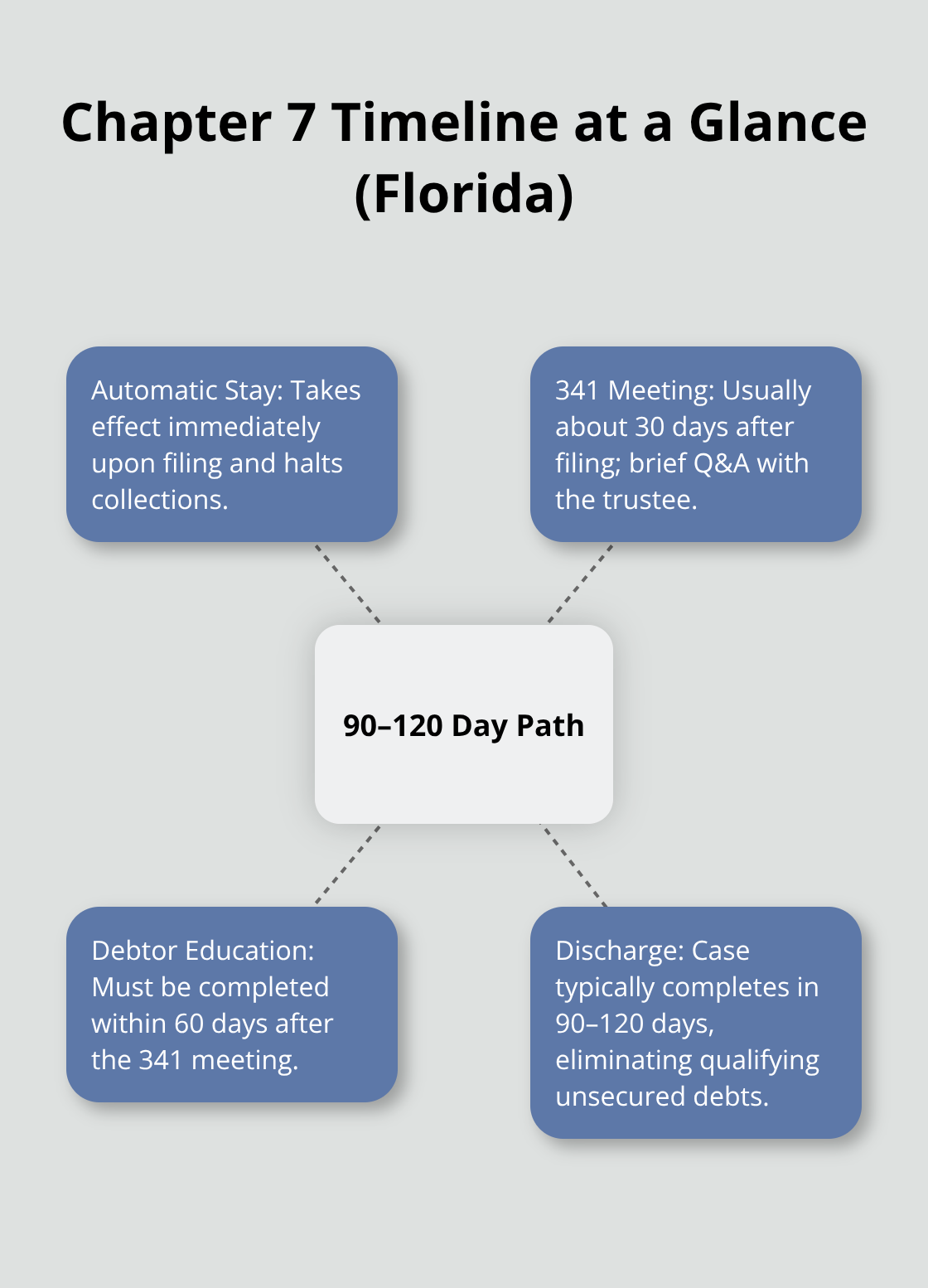
Once the court receives your petition, an automatic stay goes into effect immediately. This protection stops creditor calls, collection lawsuits, wage garnishments, and foreclosure proceedings. The automatic stay remains in effect for the duration of your Chapter 7 case and represents one of the most valuable aspects of filing Chapter 7 in Florida. With this protection in place, you can now move forward to the next critical phase: the meeting with creditors and the path toward discharge.
What Happens After You File Chapter 7 in Florida
The Automatic Stay Stops Creditor Collection Immediately
The moment your petition reaches the courthouse, the automatic stay activates and stops nearly all creditor collection efforts immediately. Creditors cannot call you, file lawsuits, garnish your wages, or foreclose on your home once this protection takes effect. The stay remains active throughout your entire Chapter 7 case, typically lasting 90 to 120 days. This breathing room is not theoretical-it is the single most practical benefit of filing Chapter 7 in Florida because it halts the relentless collection pressure you face daily. Without the automatic stay, creditors would continue harassing you while your case proceeds, but Florida law and federal bankruptcy code prevent that entirely. Your creditors know the stay is in place, so the phone calls stop almost immediately after filing.
Your 341 Meeting of Creditors
About 30 days after filing, the court schedules your 341 meeting of creditors, also called the meeting of the debtor. You must appear in person at this meeting, which typically lasts 10 to 15 minutes despite sounding intimidating. The bankruptcy trustee assigned to your case will ask you questions about your income, debts, assets, and intentions regarding secured property like a home or vehicle. Creditors rarely attend these meetings in Chapter 7 cases, so you will not face an aggressive courtroom confrontation. Bring your photo ID and any documents the trustee requests before the meeting. An attorney present during the 341 meeting protects your interests and handles technical questions you might not understand, though representation is not required by law.
Completing Your Debtor Education Course
After this meeting concludes, you move toward the final phase of your case. Before you receive your discharge, you must complete a second credit counseling course, sometimes called a debtor education course. This final course covers financial management and rebuilding your credit after bankruptcy. The course takes roughly one to two hours and must be completed within 60 days after your 341 meeting. Once you finish this course and submit the certificate to the court, you are ready for discharge.
Receiving Your Discharge Order
The bankruptcy court then issues your discharge order, which eliminates your qualifying unsecured debts permanently. Credit card balances, medical bills, personal loans, and similar debts vanish completely. Secured debts like mortgages and car loans remain if you choose to keep those assets, but you are no longer personally liable for unsecured obligations. The entire process from filing to discharge typically takes 90 to 120 days, giving you a genuine financial restart in roughly four months rather than years of repayment. If you have filed Chapter 7 before, timing restrictions apply before you can file again.
Final Thoughts
Filing Chapter 7 in Florida provides a legitimate path to financial relief when debt becomes overwhelming. The process takes roughly 90 to 120 days from petition to discharge, and the automatic stay stops creditor harassment immediately upon filing. You must pass the means test based on Florida income thresholds, complete credit counseling before and after filing, and submit specific financial documents the court requires.
We at Harnage Law, PLLC guide individuals and families through every step of the Chapter 7 process in Florida. Our role is to provide personalized legal guidance, handle the complex paperwork, represent you at the 341 meeting, and protect your assets throughout your case. When you file Chapter 7 in Florida with our assistance, you avoid costly mistakes that lead to dismissal or unfavorable outcomes.
Contact Harnage Law, PLLC for a consultation to assess your eligibility and discuss whether Chapter 7 is the right option for your situation. We serve multiple Florida locations and can answer your specific questions about the timeline, costs, and protections available to you. Financial stability is within reach, and the sooner you take action, the sooner the automatic stay protects you from creditor pressure.