Chapter 7 bankruptcy offers Florida residents a legitimate path to eliminate overwhelming debt and start fresh. The process can feel overwhelming, but understanding how it works in your state makes the journey manageable.
We at Harnage Law, PLLC have guided countless Floridians through Chapter 7 for Florida, and we know the rules that apply here. This guide walks you through every step, from the automatic stay that stops creditors to rebuilding your credit afterward.
How Chapter 7 Actually Works in Florida
The Automatic Stay Stops Creditors Cold
The moment you file Chapter 7 in Florida, an automatic stay takes effect-and this is where immediate relief happens. The automatic stay is a court order that stops creditors from calling, suing, garnishing wages, or repossessing your vehicle. According to the U.S. Bankruptcy Code, this protection kicks in automatically, and creditors who violate it face sanctions. In practical terms, that constant phone harassment ends. Your paycheck stops getting garnished.
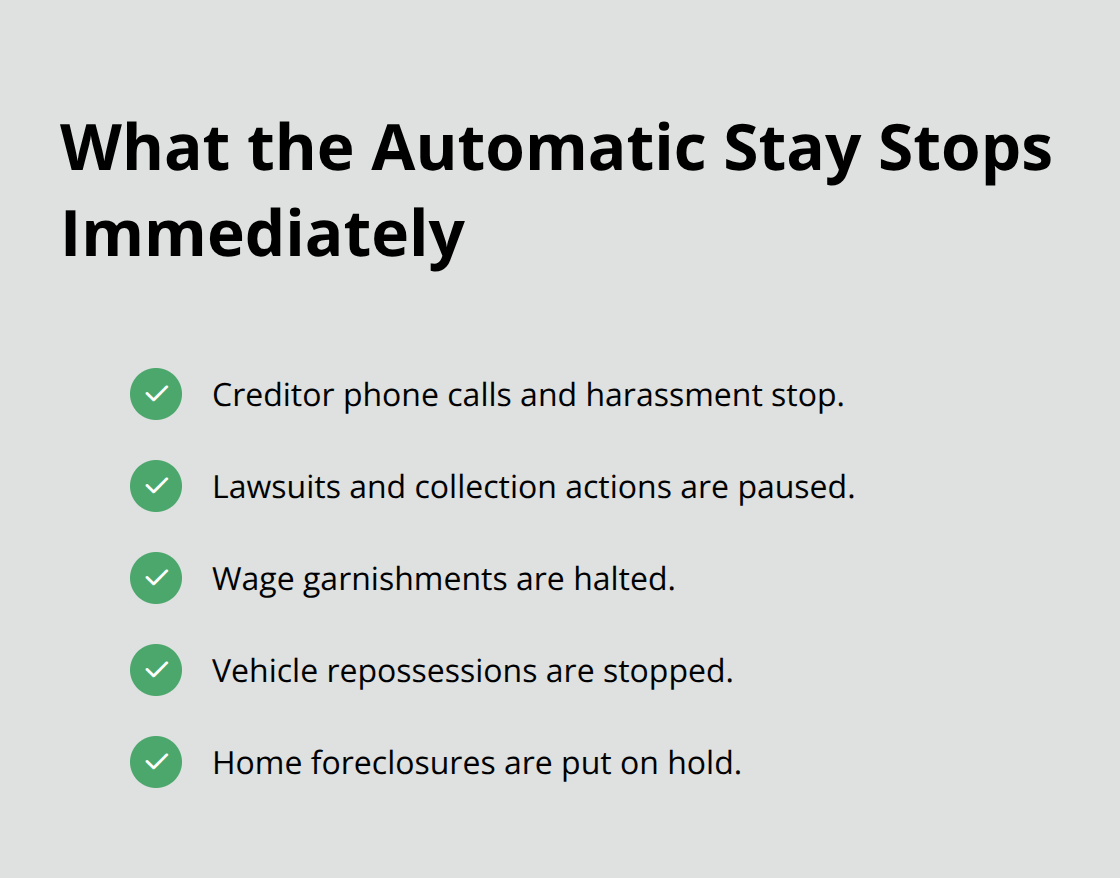
The foreclosure notice on your home gets halted.
The stay lasts until your case closes or until a creditor gets court permission to lift it, which rarely happens in Chapter 7 cases that move forward smoothly. One critical action item: notify your employer immediately after filing so they stop withholding garnishment payments. The trustee assigned to your case will handle most creditor communications, but your creditors need written notice that the automatic stay is in effect.
What Gets Wiped Away and What Doesn’t
Not all debts disappear in Chapter 7, and this distinction matters enormously for your planning. Credit card balances, medical bills, personal loans, and utility debt typically get discharged, meaning you owe nothing after the case closes. Student loans, child support, alimony, and most tax debts survive Chapter 7-they follow you after discharge. Criminal fines and debts incurred through fraud also remain.
The discharge itself is permanent; once the court issues it, creditors cannot pursue you for those eliminated debts. This usually happens within 3 to 6 months of filing. The reality is that many Floridians file Chapter 7 specifically because the dischargeable debts make up the bulk of what they owe. If your situation involves significant student loans or tax obligations, Chapter 7 may not be your best path, and a bankruptcy attorney can help you evaluate Chapter 13 as an alternative.
The Trustee’s Role in Liquidating Assets
The trustee is a court-appointed official whose sole job is to review your case and liquidate non-exempt assets to repay creditors. Florida’s exemption laws are generous-your primary home, one vehicle up to $5,000 in equity, retirement accounts, and certain personal property are protected. The trustee cannot touch these. What the trustee can sell includes a second home, a second vehicle, valuable collections, or significant equity in investment property.
Many Chapter 7 cases in Florida are no-asset cases, meaning the trustee finds nothing non-exempt to sell because your protected property covers what you own. The trustee also verifies that you completed the required credit counseling course before filing and that you attend the 341 Meeting of Creditors, which is a brief questioning session where the trustee asks about your income, debts, and assets. Preparation is essential here-bring documentation like pay stubs, tax returns, and a list of creditors to this meeting. Honesty is non-negotiable; misrepresenting assets or income constitutes bankruptcy fraud with serious criminal penalties.
Understanding these three pillars-the automatic stay, dischargeable versus non-dischargeable debts, and the trustee’s authority-positions you to move forward with confidence. The next section covers the specific rules and protections that Florida law provides to debtors, which can significantly impact what you keep and what you lose.
Florida-Specific Rules and Protections
Florida’s Homestead Exemption Shields Your Primary Residence
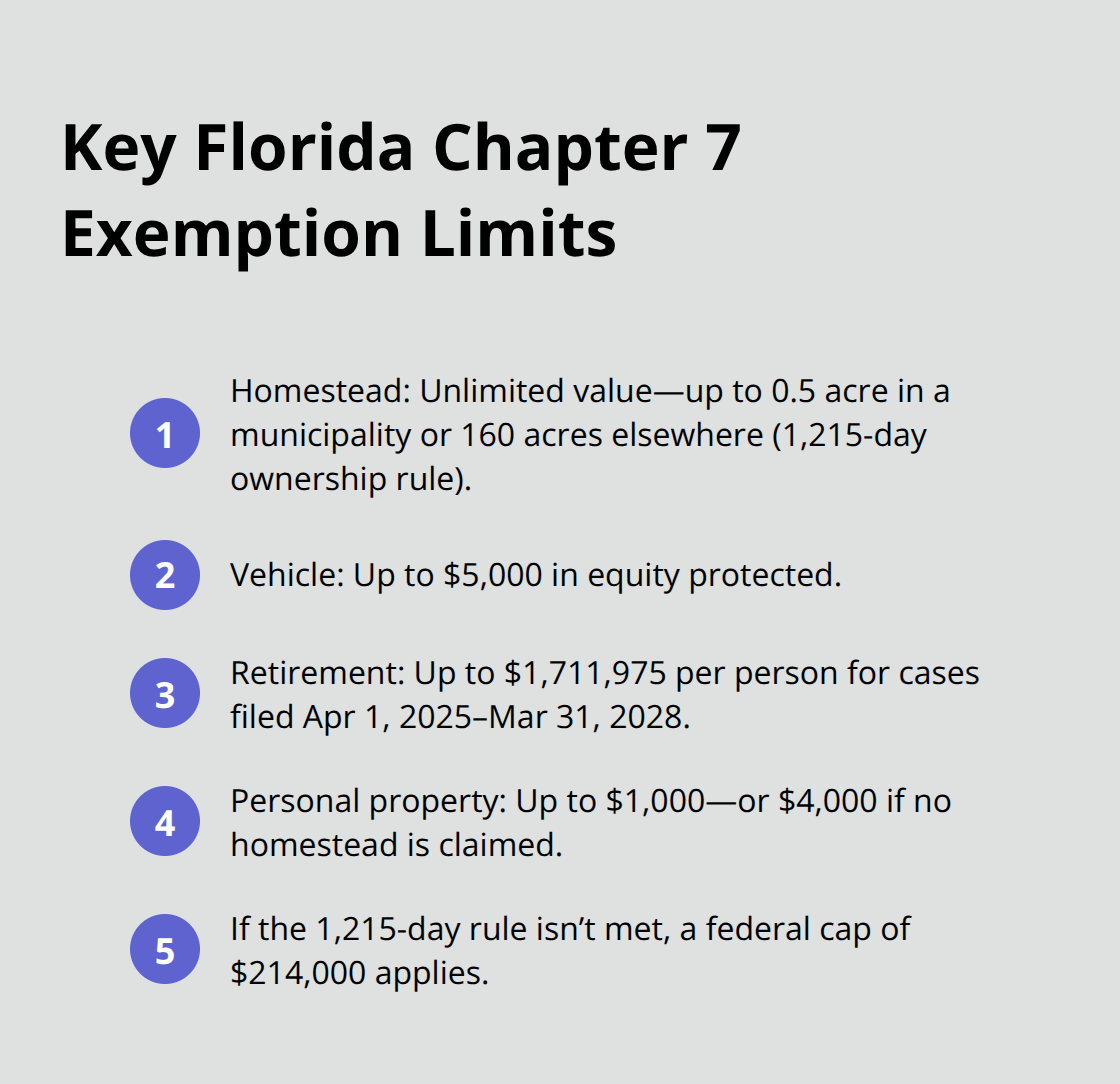
Florida’s bankruptcy exemptions rank among the most debtor-friendly in the nation, and this reality shapes your Chapter 7 outcome dramatically. The homestead exemption stands out as the crown jewel: your primary residence receives unlimited protection up to a half-acre in a municipality or 160 acres elsewhere, with no dollar cap whatsoever. This means a $500,000 home or a $2 million home receives identical protection, provided you own the property for at least 1,215 days before filing. If you have not met that 1,215-day requirement, a federal cap of $214,000 applies instead.
Married couples filing jointly can double the homestead exemption if both spouses own the property, making this protection even more powerful for dual-income households. The trustee cannot touch your primary residence, period.
Protected Assets Beyond Your Home
Beyond your home, Florida protects one motor vehicle up to $5,000 in equity, retirement accounts with a cap of $1,711,975 per person for cases filed between April 1, 2025 and March 31, 2028, and personal property worth up to $1,000 or $4,000 if you do not claim the homestead exemption. Florida also protects education savings accounts, health savings accounts, and prescribed health aids, recognizing that debtors need resources to stay healthy and educate their children. Life insurance proceeds payable to a specific beneficiary are protected, and disability income benefits are exempt as well. This framework means most Floridians keep what matters most: their home, their car, and their retirement savings.
How Chapter 7 Stops Wage Garnishment
Wage garnishment in Florida faces strict limitations that Chapter 7 eliminates entirely. Before you file, creditors can garnish up to 25 percent of your disposable income, but the automatic stay stops this immediately upon filing. A single parent earning $3,000 monthly and facing garnishment recovers roughly $750 per month, a meaningful increase for budgeting and survival.
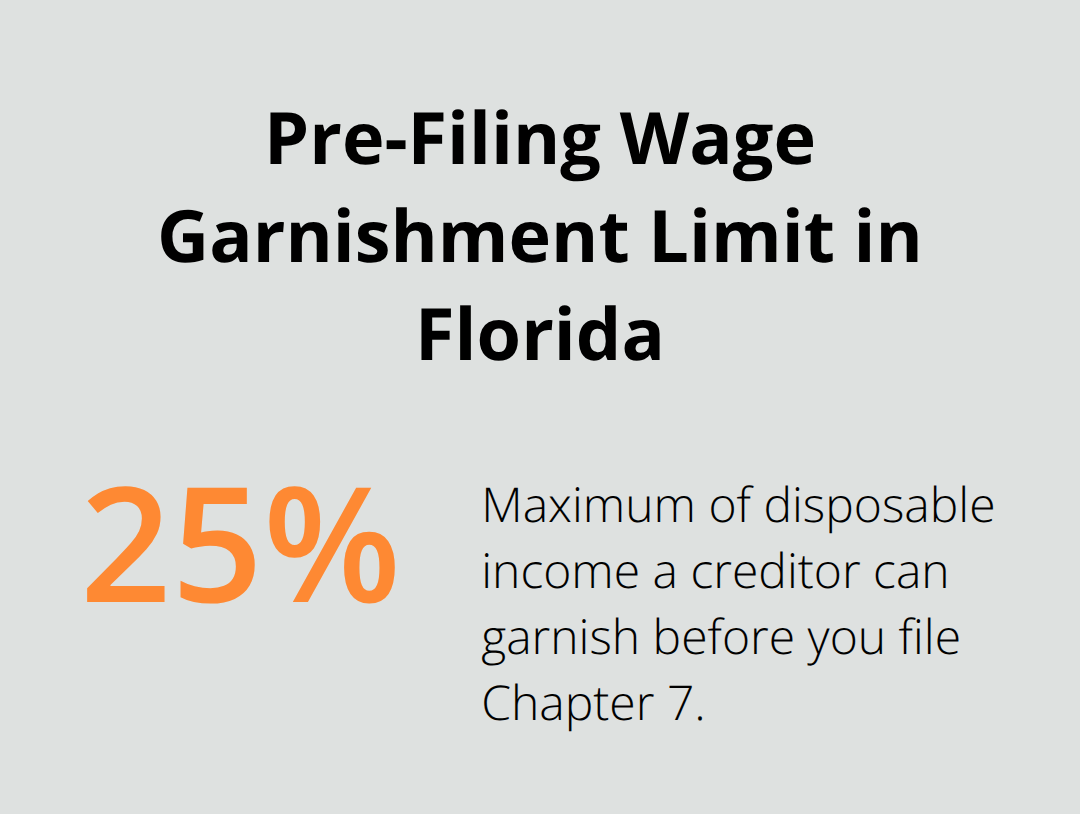
Public benefits like Social Security, veterans benefits, unemployment assistance, and workers compensation are already protected from creditors under Florida law, and Chapter 7 reinforces this protection. Alimony and child support are exempt to the extent reasonably necessary for your support and your dependents’ support, meaning these obligations remain but creditors cannot seize them. The practical advantage here is substantial: if you currently lose a quarter of your paycheck to a creditor, filing Chapter 7 restores that income to your household immediately.
Why These Protections Matter for Your Fresh Start
Florida recognizes that debtors deserve a genuine fresh start, not a stripped-down existence. These state-specific rules exist precisely because the law acknowledges that families need their homes, vehicles, and retirement savings to rebuild. Understanding which assets the trustee cannot touch removes one major source of anxiety during the filing process. The next section walks you through the actual Chapter 7 process from start to finish, showing you exactly what documents you need and what happens at each stage.
Filing Chapter 7 in Florida: What You Need to Know
Complete Credit Counseling Before You File
You must complete a credit counseling course from an agency approved by the U.S. Trustee before you submit your petition, so start this step immediately if you have not already. The U.S. Trustee publishes the list of approved agencies, making it straightforward to find a provider. This course takes a few hours and costs between $50 and $100, a small investment compared to the relief Chapter 7 provides. Once you finish, you receive a certificate that you must include with your filing documents.
Gather Your Documents and Pay the Filing Fee
The filing fee stands at $338, payable within 14 days of filing by certified check or money order made out to Clerk, U.S. Court. If you cannot pay upfront, you may request installment payments with a minimum initial payment of half the fee, or apply for a fee waiver using Official Bankruptcy Form 103B if your household income falls below the federal poverty guidelines. At filing, you must submit the Voluntary Petition for Individuals, a Statement About Social Security Numbers showing only the last four digits for privacy, your Certificate of Credit Counseling, a Creditor Matrix with names and addresses, a legible government-issued photo ID, and an original petition bearing your wet signature-electronic filing alone does not satisfy this requirement.
You must also include comprehensive financial statements: Schedule A/B lists all property, Schedule C claims your exemptions, Schedule D covers secured claims, Schedule E/F addresses unsecured claims, Schedule G identifies executory contracts, Schedule H notes co-debtors, Schedule I reports income, and Schedule J details expenses. The Declaration of Financial Affairs and the Statement of Current Monthly Income round out the required paperwork. Accuracy matters tremendously; misrepresenting financial information constitutes bankruptcy fraud with potential criminal consequences including fines and imprisonment.
Understand the Means Test for Your Household
The means test calculation uses Form B122A-1 and Form B122A-2 to determine whether your income and expenses qualify you for Chapter 7. If your household income falls below the Florida median income for your family size, you generally qualify. Even if your income exceeds the median, a detailed analysis of allowable expenses may still qualify you. The U.S. Trustee Program publishes current median income figures and expense multipliers based on Census Bureau and IRS data, so verify these numbers for your household size before filing. These figures change periodically, and using outdated numbers can delay your case or create complications.
Prepare for the 341 Meeting of Creditors
The 341 Meeting of Creditors happens after filing and is far less intimidating than its name suggests. The trustee asks straightforward questions about your income, debts, and assets, and creditors rarely attend or ask questions. Bring original pay stubs from the last 60 days, recent tax returns, bank statements, and a list of all creditors to this meeting so you can answer questions accurately and quickly. Preparation here prevents delays and demonstrates that you take the process seriously. The meeting typically lasts 10 to 15 minutes, and the trustee moves through cases efficiently.
Complete Your Financial Management Course and Receive Discharge
After the 341 meeting, you must file a Certification of a Personal Financial Management Course within 60 days to receive your discharge. This course differs from the pre-filing credit counseling and is a separate requirement under 11 U.S.C. Section 727. Your discharge typically arrives within 3 to 6 months of filing, and once issued, it is permanent and stops all collection efforts on discharged debts. The trustee may liquidate non-exempt assets during this period, but Florida’s generous exemptions mean most filers retain their homes, vehicles, and retirement savings.
Moving Forward After Chapter 7 in Florida
Your discharge marks a beginning, not an ending. The moment the court eliminates your qualifying debts, you gain breathing room to rebuild your financial foundation. Your credit score begins recovering within months as you demonstrate responsible financial behavior, and opening a secured credit card with a $500 deposit that you pay off monthly for six to twelve months establishes a positive payment history that credit bureaus reward. Within two to three years of consistent on-time payments, many Chapter 7 for Florida filers qualify for conventional credit cards and auto loans at reasonable rates.
Creating a realistic budget prevents the spending patterns that led to your original debt. Start by tracking every dollar for one month to identify where money actually goes, then allocate funds for essentials like housing, utilities, food, and transportation before discretionary spending. The Federal Trade Commission offers free budgeting worksheets online, and many nonprofit credit counseling agencies provide ongoing support at no cost. An emergency fund of $1,000 to $2,000 protects you from unexpected expenses that previously forced you back into debt (automate your savings by directing a small amount from each paycheck into a separate account before you see the money).
Florida residents have access to resources that support long-term financial stability, including the Legal Aid Society of the Orange County Bar Association and similar organizations throughout Florida that offer free financial counseling to those who qualify. The Consumer Financial Protection Bureau website provides tools for comparing credit products and understanding your rights as a borrower. We at Harnage Law, PLLC remain available to answer questions about your discharge and your ongoing obligations, and our team can guide you through rebuilding strategies tailored to your situation.