Florida residents facing overwhelming debt often struggle to understand the differences between Chapter 7 vs Chapter 11 vs Chapter 13 bankruptcy options.
Each bankruptcy chapter serves different financial situations and offers distinct advantages. We at Harnage Law, PLLC help clients navigate these complex decisions daily.
Understanding which option fits your circumstances can save thousands of dollars and years of financial stress.
Chapter 7 Bankruptcy Overview for Florida Residents
Eligibility Requirements and Income Limits
Chapter 7 bankruptcy serves Florida residents with limited income who need immediate debt relief. The Florida median annual income sets clear thresholds: single persons can earn up to $41,334, while four-member households qualify with incomes up to $63,196 without additional testing.
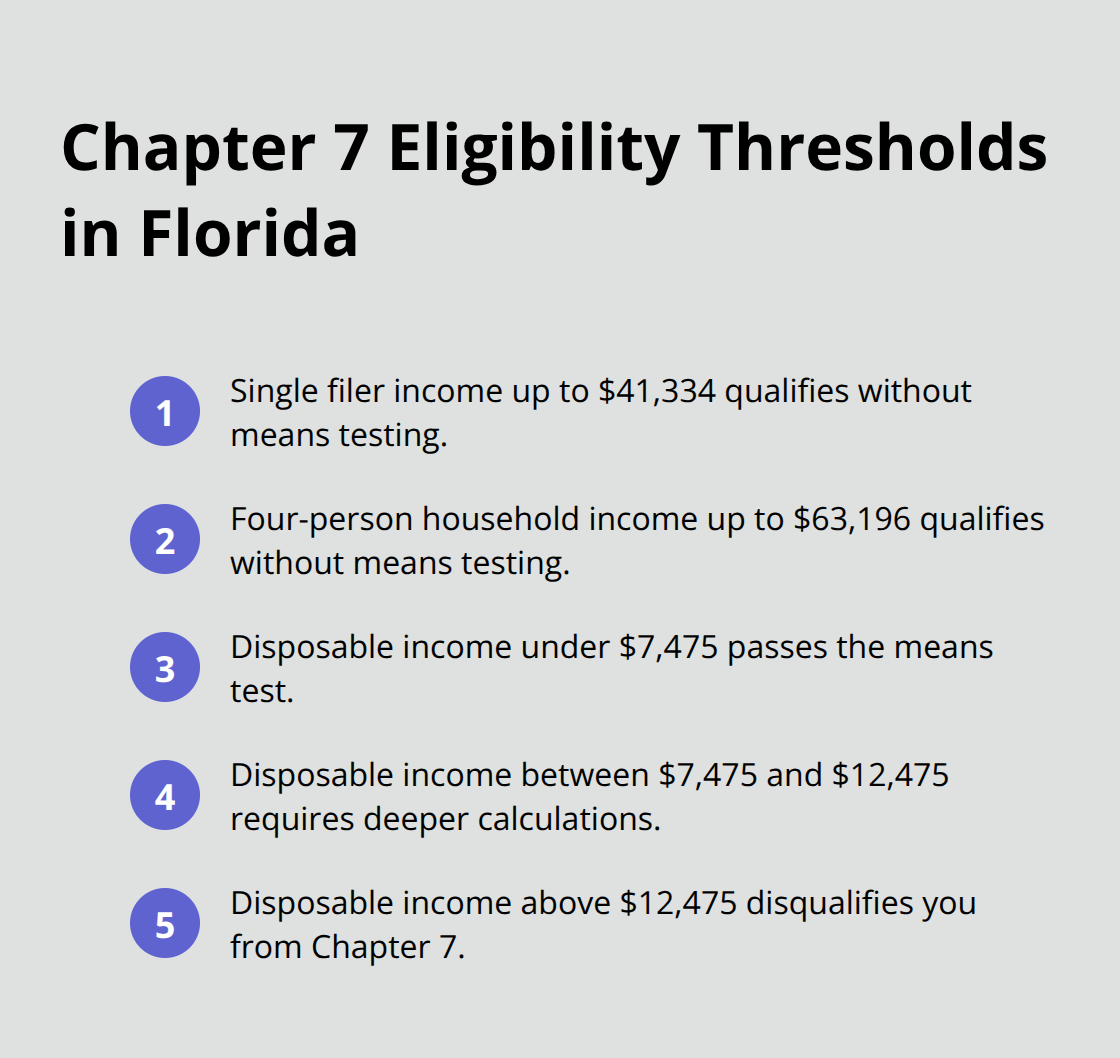
Families who earn above these amounts must complete the means test, which calculates disposable income over 60 months. You qualify for Chapter 7 if your disposable income falls below $7,475. Income between $7,475 and $12,475 requires further calculations, while amounts above $12,475 disqualify you from Chapter 7 entirely.
Asset Liquidation Process and Exemptions
Florida’s homestead exemption provides unlimited home equity protection for Chapter 7 filers (one of the strongest protections nationwide). You can also exempt up to $1,000 in vehicle equity and various personal property items under Florida Statutes.
Most Chapter 7 cases become no-asset cases, which means all your property qualifies for exemptions. The trustee finds no assets to liquidate, and you keep your protected property while debts receive discharge.
Timeline and Discharge of Debts
The automatic stay takes effect immediately when you file, which stops wage garnishments and collection calls instantly. Chapter 7 cases typically resolve within six months, making this the fastest path to debt freedom for eligible Florida residents.
Qualifying debts receive complete discharge at case completion, which gives you a clean financial slate. This rapid timeline contrasts sharply with the multi-year repayment plans required in other bankruptcy chapters, making Chapter 7 particularly attractive for those seeking quick resolution.
Chapter 11 and Chapter 13 Bankruptcy Alternatives
Chapter 11 Business Reorganization Costs
Chapter 11 bankruptcy demands significantly higher costs than Chapter 7, with filing fees alone reaching $1,738 plus attorney fees that often exceed $50,000 for complex cases. Major corporations like Delta Airlines and General Motors used Chapter 11 to restructure billions in debt while they maintained operations, but individual filers face extensive documentation requirements and court oversight of major financial decisions.
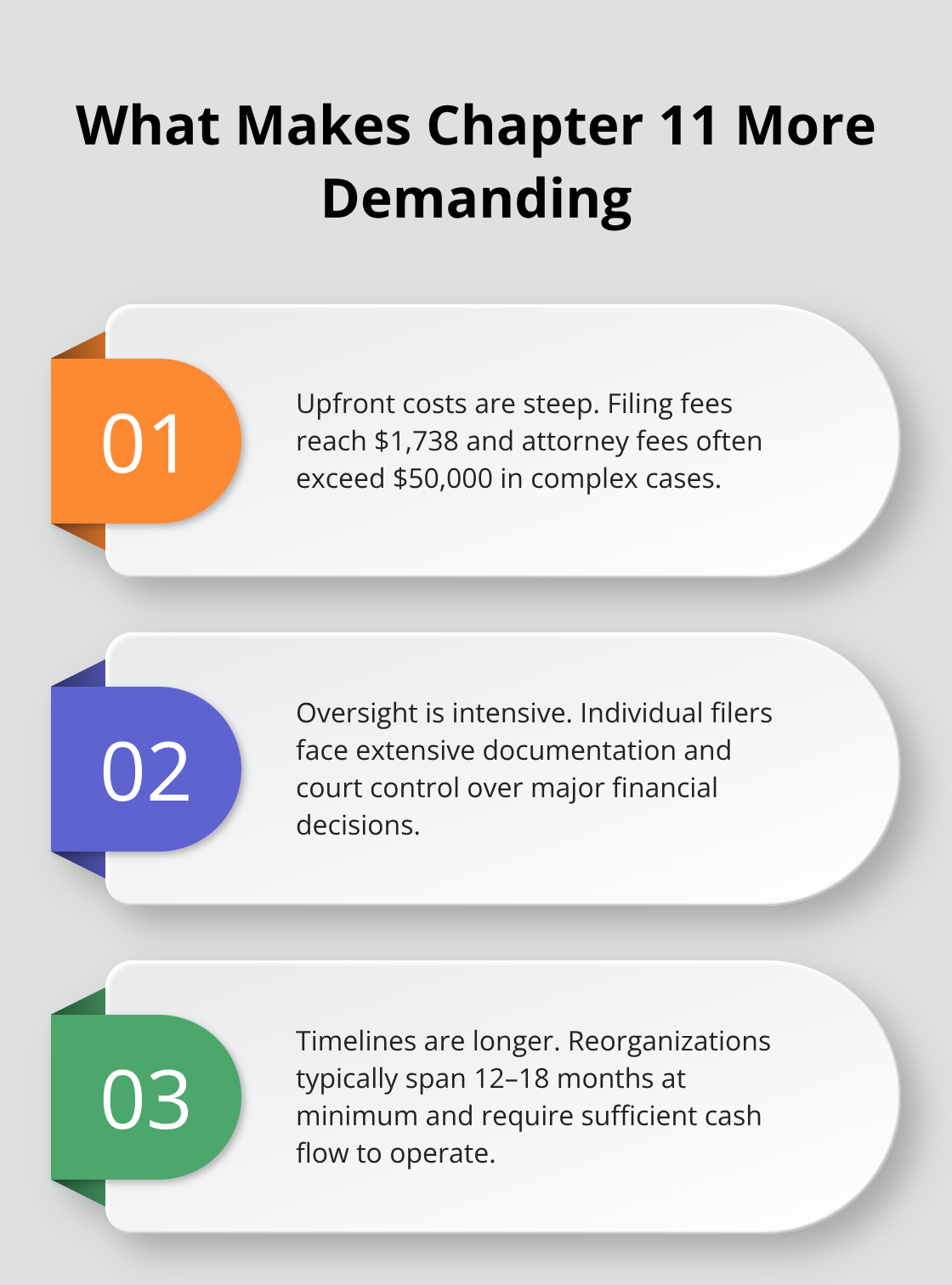
Florida business owners who consider Chapter 11 must demonstrate sufficient cash flow to fund operations during reorganization (which typically takes 12-18 months minimum). The Small Business Administration reports that only businesses with realistic reorganization prospects should pursue this option, as failed Chapter 11 cases often convert to Chapter 7 liquidation anyway.
Chapter 13 Income and Debt Limits
Chapter 13 requires consistent monthly income and limits total secured debt to $1,395,875 and unsecured debt to $465,275 according to current federal guidelines. Florida residents must propose repayment plans that last three to five years, with disposable income calculations that determine monthly payment amounts to the bankruptcy trustee.
This option serves individuals who earn regular income but cannot qualify for Chapter 7 due to the means test. The court must approve all repayment plans before they take effect.
Chapter 13 Payment Structure Challenges
Unlike Chapter 7’s quick discharge, Chapter 13 demands unwavering commitment to court-approved payment schedules. Creditors receive payments through the trustee system, and any missed payments can result in case dismissal. The repayment plan must demonstrate that creditors receive at least what they would have gotten in Chapter 7 liquidation.
This requirement makes Chapter 13 expensive for those with significant exempt assets. Monthly payments often stretch household budgets thin over the three-to-five-year commitment period.
These alternative bankruptcy chapters present complex requirements and extended timelines that make them less attractive for most Florida residents who face overwhelming debt. The decision between these options depends heavily on your specific financial circumstances and long-term goals.
Choosing the Right Bankruptcy Chapter in Florida
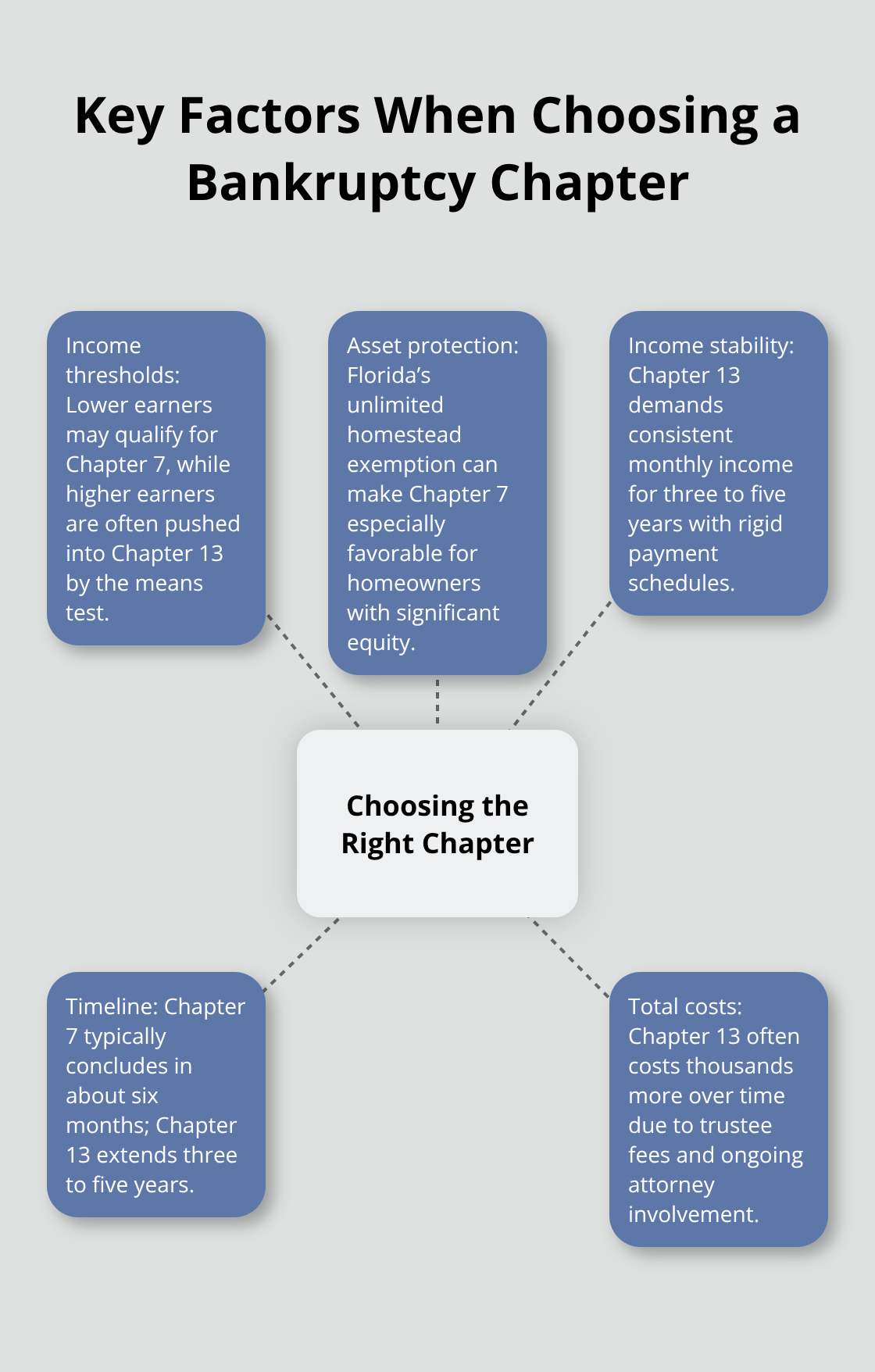
Your income level controls your initial bankruptcy options in Florida. Singles who earn below $41,334 or four-person households with income under $63,196 can file Chapter 7 for the fastest debt elimination. Higher earners must complete the means test, which typically forces them into Chapter 13’s three-to-five-year repayment plans that cost significantly more over time.
Asset Protection Shapes Your Choice
Florida’s unlimited homestead exemption makes Chapter 7 exceptionally attractive for homeowners with substantial equity. You retain your home regardless of its value, while Chapter 13 requires payments to creditors equal to what they would receive from liquidated non-exempt assets. This calculation often renders Chapter 13 payments unaffordable for Florida residents who own valuable property.
Vehicle equity up to $1,000 receives protection, but luxury cars or multiple vehicles may force you toward Chapter 13 if you want to keep them. The state’s generous exemptions favor Chapter 7 filers who can protect most assets while eliminating debt completely.
Income Stability Requirements Differ
Chapter 7 requires no ongoing income commitments after discharge, making it ideal for unemployed individuals or those with irregular earnings. Chapter 13 demands consistent monthly income for three to five years, with court-approved payment schedules that cannot accommodate income fluctuations.
The trustee system in Chapter 13 requires precise monthly payments (any missed payments can result in case dismissal). This rigid structure creates financial stress for families already struggling with debt obligations.
Recovery Timeline Affects Long-term Success
Chapter 7 discharges qualifying debts within six months, which allows immediate financial recovery and credit rebuilding. The U.S. Courts report that most Chapter 7 cases become no-asset cases, meaning you keep exempt property while eliminating debt completely.
Chapter 13’s extended payment period delays your fresh start and costs thousands more in trustee fees and attorney costs over the repayment timeline. The automatic stay provides immediate relief in both chapters, but Chapter 7’s quick resolution prevents years of court supervision and payment obligations that define Chapter 13 cases.
Final Thoughts
The Chapter 7 vs Chapter 11 vs Chapter 13 bankruptcy comparison shows clear advantages for most Florida residents who face debt problems. Chapter 7 provides the fastest resolution within six months, complete debt discharge, and protection of exempt assets through Florida’s generous homestead exemption. Chapter 13 requires three-to-five-year payment commitments that cost thousands more in fees and trustee payments, while Chapter 11 serves primarily businesses with complex reorganization needs and substantial legal costs.
Florida’s income thresholds make Chapter 7 accessible for singles who earn under $41,334 and four-person households below $63,196. Higher earners face means tests that often push them toward expensive Chapter 13 repayment plans. The automatic stay provides immediate relief in all chapters, but Chapter 7’s quick discharge eliminates ongoing court supervision and payment obligations (unlike the extended commitments required in other bankruptcy types).
We at Harnage Law, PLLC help Florida residents navigate Chapter 7 bankruptcy to discharge qualifying debts and achieve financial freedom. Our firm stops creditor harassment, prevents wage garnishments, and halts lawsuits while we guide clients through every step of the bankruptcy process. We provide personalized legal services to protect your assets and rebuild your financial future.