Chapter 7 bankruptcy offers Florida residents a fresh financial start by eliminating most unsecured debts. However, not everyone qualifies for this debt relief option.
Understanding how you qualify for Chapter 7 bankruptcy requires meeting specific income thresholds and asset requirements. We at Harnage Law, PLLC help Florida families navigate these qualification criteria to determine their eligibility.
Income Requirements for Chapter 7 Bankruptcy in Florida
Median Income Test Thresholds
The median income test acts as the first barrier for Chapter 7 qualification in Florida. As of April 2024, a single-person household must earn less than $62,973 annually to automatically qualify, while a four-person household faces a threshold of $104,069. Households with more than nine people add $9,900 for each additional person. Florida residents calculate their average monthly income by totaling gross earnings from the six months before they file and multiply by two.
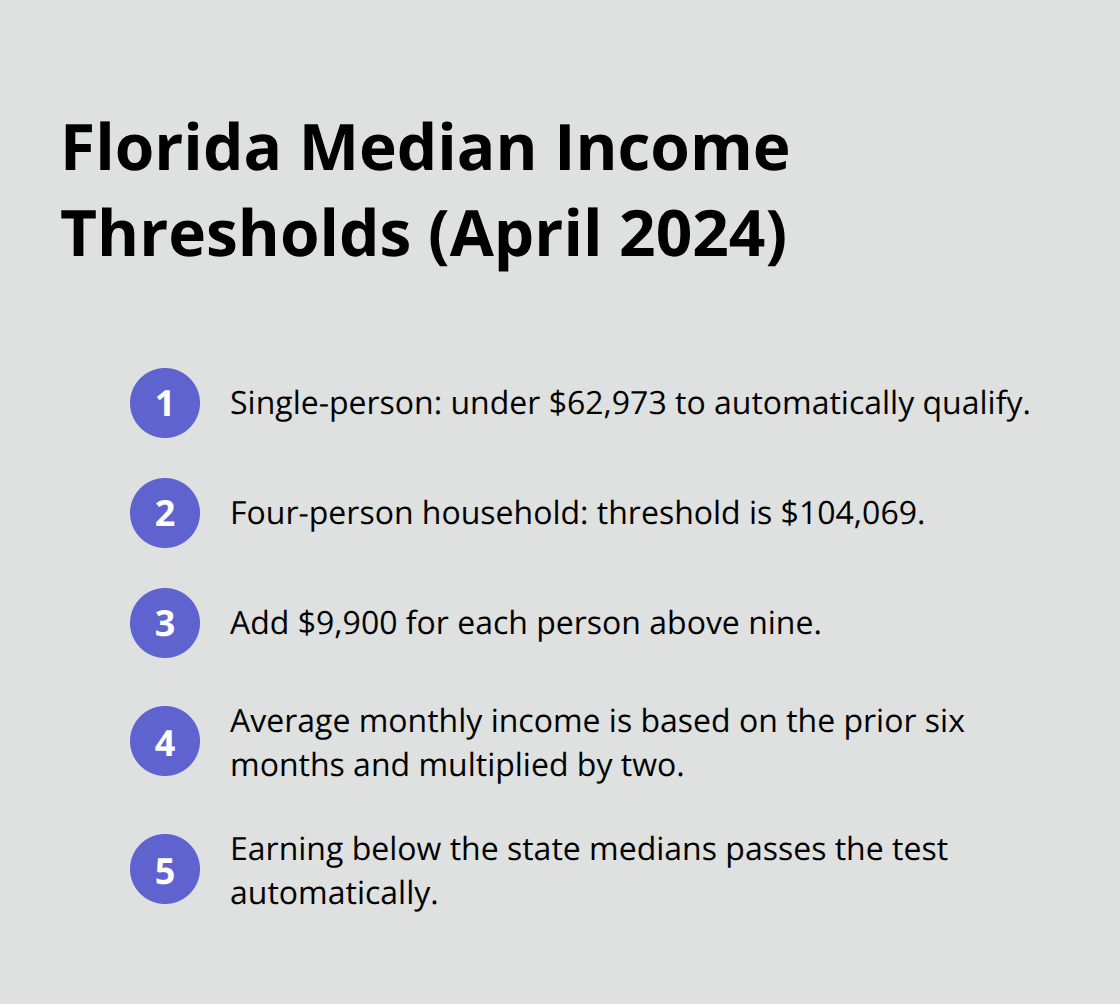
Those who earn below these state medians pass automatically and can proceed with their Chapter 7 case.
Means Test Calculation Process
Applicants who earn above median income must complete the means test with Form 122A-2 to determine disposable income after necessary expenses. The calculation subtracts allowable monthly costs (including mortgage payments, car loans, taxes, mandatory retirement contributions, and childcare expenses) from current income. If disposable income falls below $9,075 annually, the applicant qualifies for Chapter 7. Those with disposable income that exceeds $15,150 face disqualification and must consider Chapter 13 bankruptcy instead. The means test uses IRS and Census Bureau data to set expense limits by county and metropolitan area.
Exceptions to Income Limits
Disabled veterans with ratings of 30% or higher bypass the means test entirely, as do individuals who file primarily business debt rather than consumer debt. Military members on active duty also receive exemptions from standard income calculations. These exceptions recognize unique circumstances that standard income thresholds cannot adequately address and provide alternative pathways to debt relief for qualified Florida residents.
While income requirements form the foundation of Chapter 7 eligibility, Florida’s asset protection laws also play a significant role in determining qualification and what property you can keep during bankruptcy proceedings.
Asset and Property Considerations
Florida Homestead Exemptions
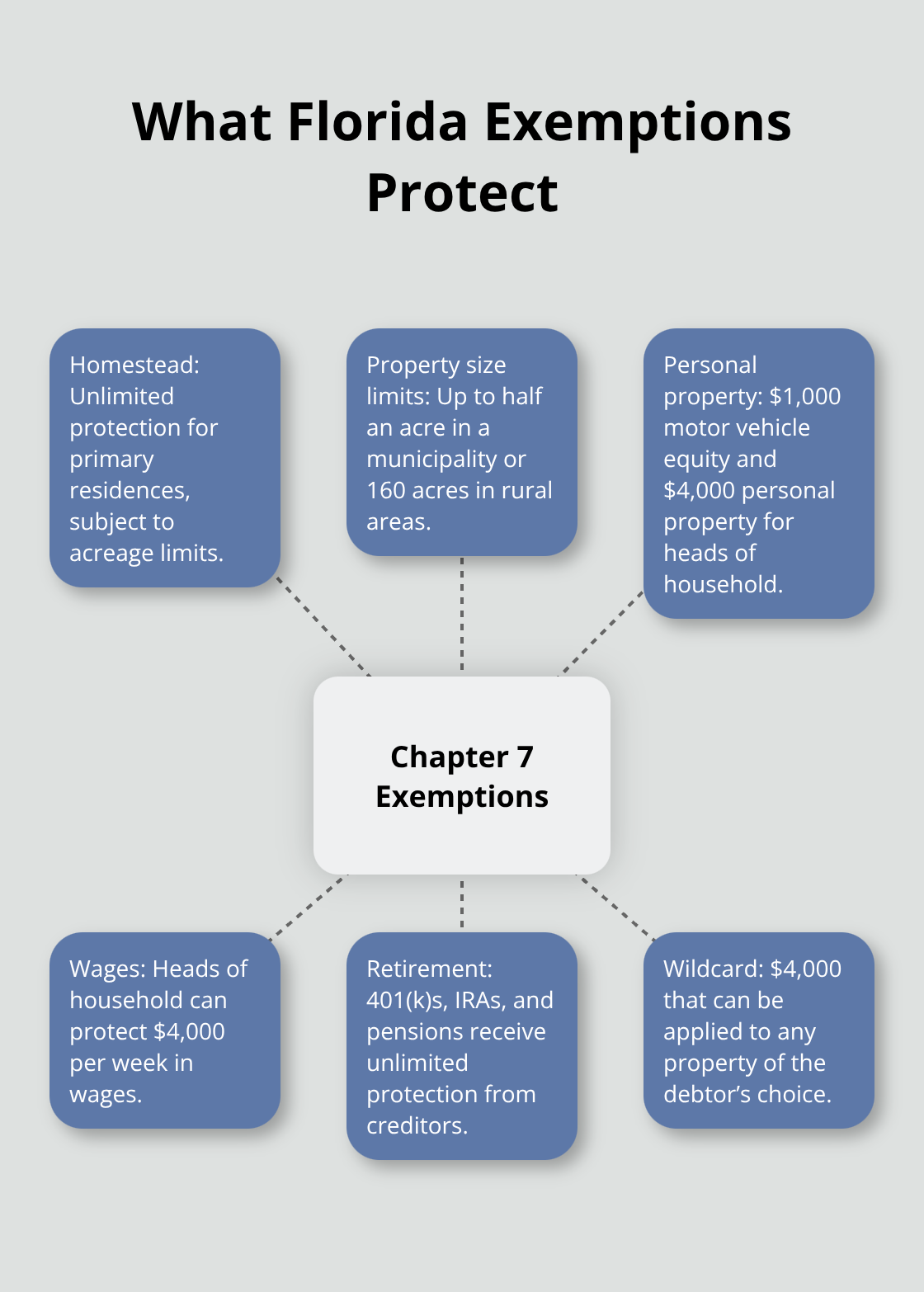
Florida’s homestead exemption provides unlimited protection for primary residences, making it one of the most powerful asset shields in the United States. Homeowners can protect their entire property value when the residence sits on half an acre or less within municipal boundaries or 160 acres or less in rural areas. This protection covers condominiums, mobile homes, and cooperative apartments without regard to market value. The exemption applies only to primary residences where the debtor actually lives, not to investment properties or vacation homes.
Personal Property Protection Limits
Florida law protects specific amounts of personal property through various exemptions. Motor vehicle equity receives protection up to $1,000 per person, while heads of household can shield $4,000 in personal property and $4,000 per week in wages. Retirement accounts (including 401(k)s, IRAs, and pensions) receive unlimited protection from creditors. The state also offers a wildcard exemption of $4,000 that debtors can apply to any property of their choice, providing flexibility in asset protection strategies.
Non-Exempt Assets That May Be Liquidated
The bankruptcy trustee will liquidate non-exempt assets that fall outside Florida’s exemption protections. Luxury items such as expensive jewelry, artwork, and recreational vehicles typically face sale unless they qualify for specific exemptions. Investment properties, second homes, stocks and bonds, and high-value collections cannot claim protection under standard exemptions. Cash holdings above reasonable amounts and valuable collections also become part of the bankruptcy estate for creditor payment.
Most Chapter 7 filers in Florida keep their homes and essential belongings due to the state’s generous exemption laws, but proper documentation proves vital to claim these protections during the bankruptcy process.
Documentation Needed for Chapter 7 Filing
Tax Returns and Income Documentation
Florida Chapter 7 filers must provide two years of complete tax returns and four recent pay stubs to verify income calculations. The bankruptcy trustee requires W-2 forms, 1099 statements, and profit-and-loss statements for self-employed individuals from the past two years. Social Security recipients need benefit statements, while those who receive unemployment must submit award letters.
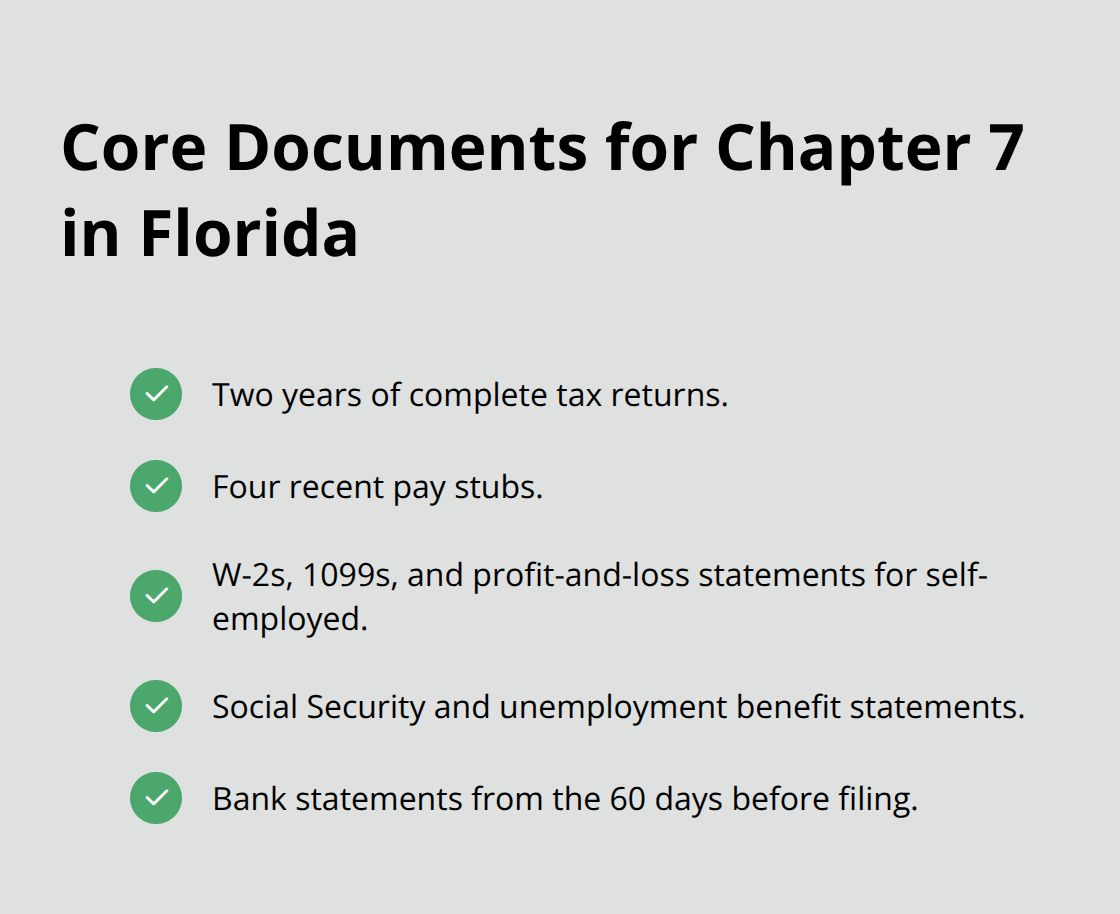
Bank statements from the 60 days before you file reveal cash flow patterns and potential preference payments to creditors.
Complete Creditor Information and Debt Records
The creditor matrix demands exact names and addresses for every debt, which includes medical bills, credit cards, personal loans, and utility accounts. Account numbers and current balances must accompany each creditor list to prevent dismissal of the bankruptcy case. Collection agencies require both their information and the original creditor details. Student loan servicers, mortgage companies, and car loan lenders need separate documentation that shows payment histories and current amounts owed.
Property Valuations and Asset Documentation
Real estate appraisals or tax assessments establish home values for homestead exemption calculations, while vehicle valuations from Kelley Blue Book or similar sources determine car equity amounts. Retirement account statements, life insurance policies with cash values, and investment portfolios require current balance documentation. Personal property inventories must include jewelry appraisals, electronics values, and household goods estimates to complete Schedule A/B asset lists accurately.
Final Thoughts
How do you qualify for Chapter 7 bankruptcy in Florida? You must pass income thresholds through median income tests or means test calculations, protect assets within Florida’s exemption limits, and provide complete financial documentation. Most Florida residents benefit from the state’s unlimited homestead exemption and generous personal property protections.
The qualification process involves multiple steps that demand accuracy and attention to detail. Income calculations must reflect the six months before you file, while asset valuations determine what property you can keep. Missing documentation or incorrect forms can delay or dismiss your case entirely.
We at Harnage Law, PLLC guide Florida families through every aspect of Chapter 7 qualification and filing procedures. Our firm helps clients discharge qualifying debts while protecting their assets and stopping creditor harassment (including wage garnishments and collection calls). We provide personalized legal services that address your specific financial situation and help you achieve a fresh financial start through the bankruptcy process.