Chapter 7 bankruptcy offers Florida residents a path to financial freedom, but determining eligibility requires careful calculation of your income, expenses, and debts.
A Chapter 7 bankruptcy calculator helps you assess whether you qualify for this debt relief option under Florida’s specific laws and exemptions. We at Harnage Law, PLLC understand that financial decisions require accurate information and proper guidance.
How Chapter 7 Bankruptcy Calculators Work in Florida
Income Assessment Through Six-Month Averaging
Chapter 7 bankruptcy calculators in Florida use a precise six-month income system to determine your eligibility. The calculator takes your total household income from the six months before you file and divides it by six to establish your average monthly income. This figure multiplies by 12 to create your annual income for comparison against Florida’s median income thresholds.
For a single-person household, the current Florida median sits at $62,973, while an eight-person household reaches $143,669. If your calculated annual income falls below these thresholds, you automatically qualify for Chapter 7 without further tests.
Means Test Calculations for Higher Earners
When your income exceeds Florida’s median, the calculator performs a detailed means test analysis. This process subtracts allowable monthly expenses from your income to determine disposable income over the next five years. The calculator includes IRS standard deductions for housing, food, and transportation, plus Florida-specific allowances like health insurance premiums and court-ordered payments.
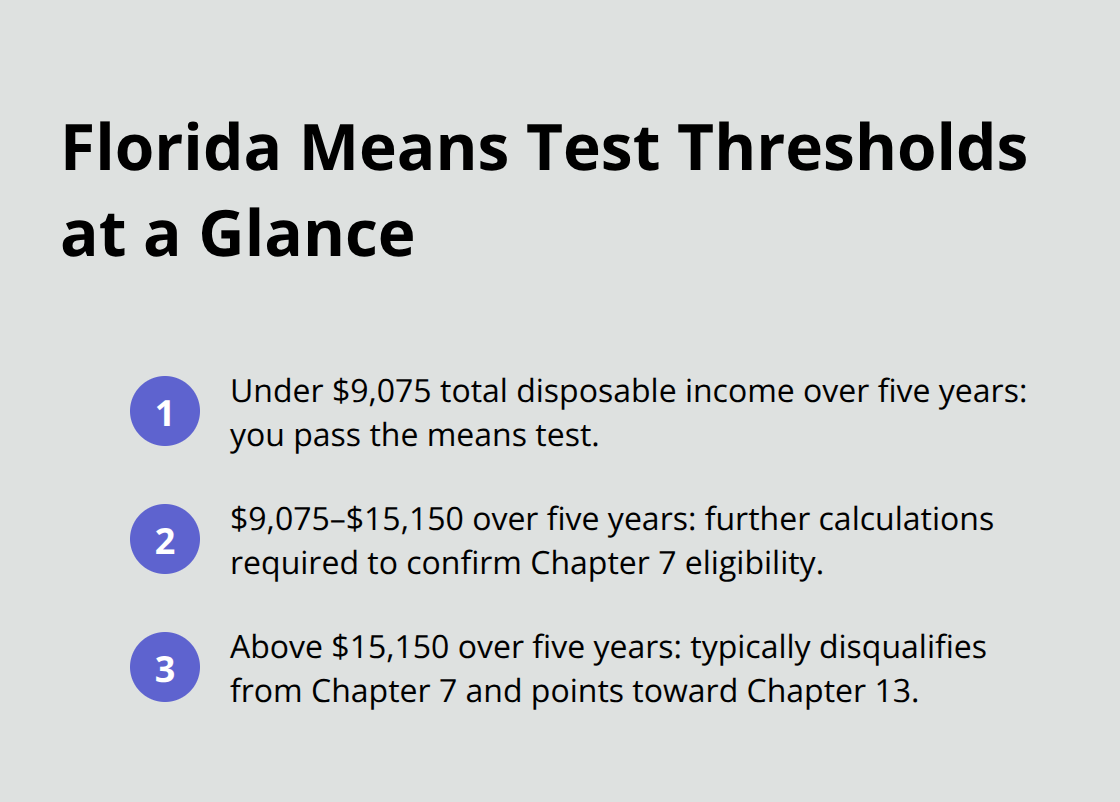
If your five-year disposable income totals less than $9,075, you pass the means test. Amounts between $9,075 and $15,150 require additional calculations to verify Chapter 7 eligibility. Higher amounts typically disqualify you from Chapter 7 and direct you toward Chapter 13 bankruptcy instead.
Asset Protection Calculations Under Florida Law
Florida bankruptcy calculators also evaluate your property against the state’s generous exemption limits. The homestead exemption protects unlimited equity in your primary residence (provided you’ve owned it for at least 1,215 days before you file). The calculator factors in Florida’s $4,000 wildcard exemption for personal property, which doubles to $8,000 for married couples who file jointly.
Vehicle equity protection reaches $1,000, supplemented by unused wildcard exemption amounts. These calculations help determine whether Chapter 7 will result in asset loss or complete property protection. Understanding these financial factors sets the foundation for evaluating the key requirements you must meet before you file.
Key Financial Factors to Calculate Before Filing
Monthly Income Thresholds That Determine Your Path
Your six-month average monthly income decides whether you face additional scrutiny in Chapter 7 bankruptcy. Florida residents with household incomes below $62,973 annually for single filers or $143,669 for eight-person households automatically qualify without means testing. Calculate your exact monthly income when you add wages, self-employment earnings, rental income, unemployment benefits, alimony, and child support from the past six months, then divide by six. Social Security Disability and Supplemental Security Income don’t count toward this total, which gives disabled individuals significant advantages in qualification.
Essential Expense Categories That Reduce Your Disposable Income
Florida bankruptcy law allows specific expense deductions that can push you below the means test threshold. Housing costs (mortgage payments, property taxes, and utilities) receive IRS standard allowances based on your county. Transportation expenses cover car payments, insurance, fuel, and maintenance up to national standards. Health insurance premiums, mandatory retirement contributions, and court-ordered payments like child support or alimony reduce your disposable income dollar-for-dollar. Childcare expenses necessary for employment also qualify as allowable deductions. Document these expenses with precision because they directly impact your Chapter 7 eligibility.
Property Values That Determine What You Keep
Florida’s homestead exemption protects unlimited equity in your primary residence if you’ve owned it for 1,215 days before you file. Your home must sit on half an acre or less in a municipality, or 160 acres or less in rural areas. The $4,000 wildcard exemption covers personal property like furniture, electronics, and jewelry (doubling to $8,000 for married couples).
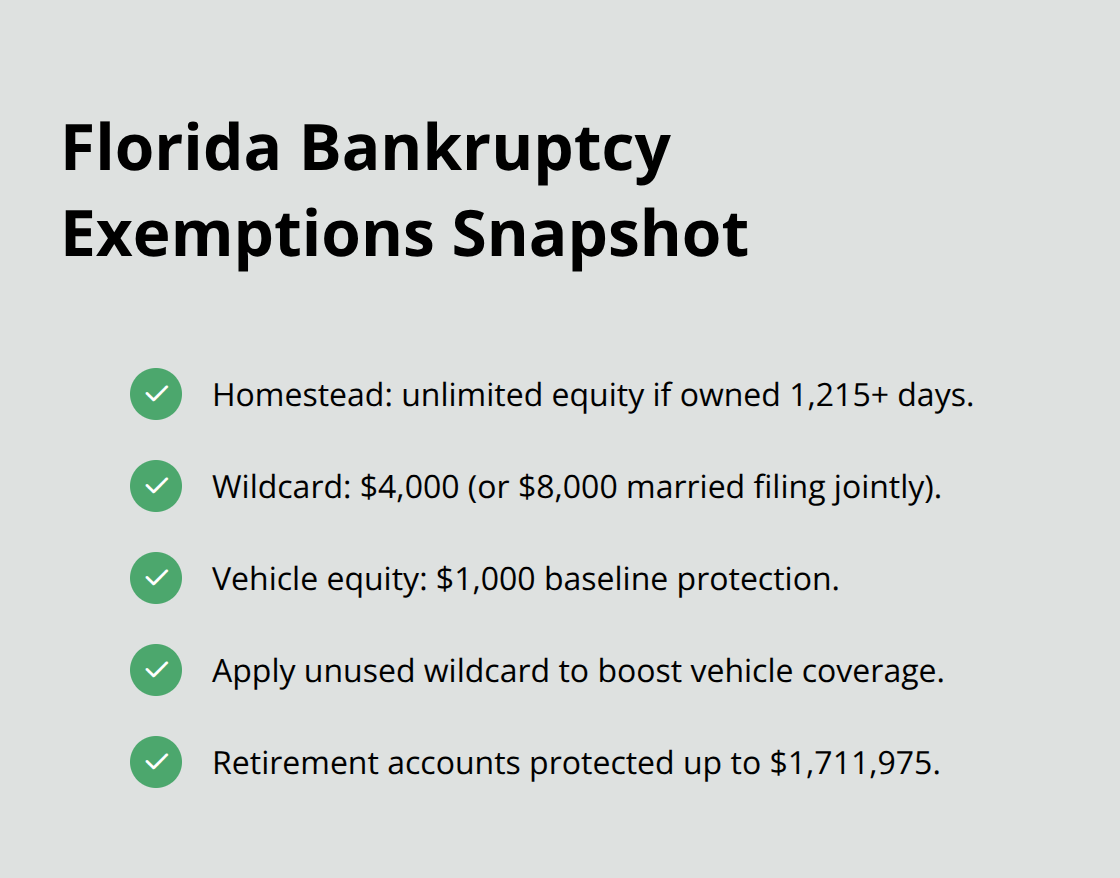
Vehicle equity protection reaches $1,000, but you can apply unused wildcard exemption amounts to protect additional car value. Retirement accounts receive full federal protection up to $1,711,975. Calculate your property values accurately because overvaluation can result in unexpected asset loss.
These calculations provide the foundation for recognizing when Chapter 7 becomes the right choice for your financial situation.
Warning Signs That Indicate Chapter 7 May Be Right for You in Florida
Debt Load That Signals Financial Crisis
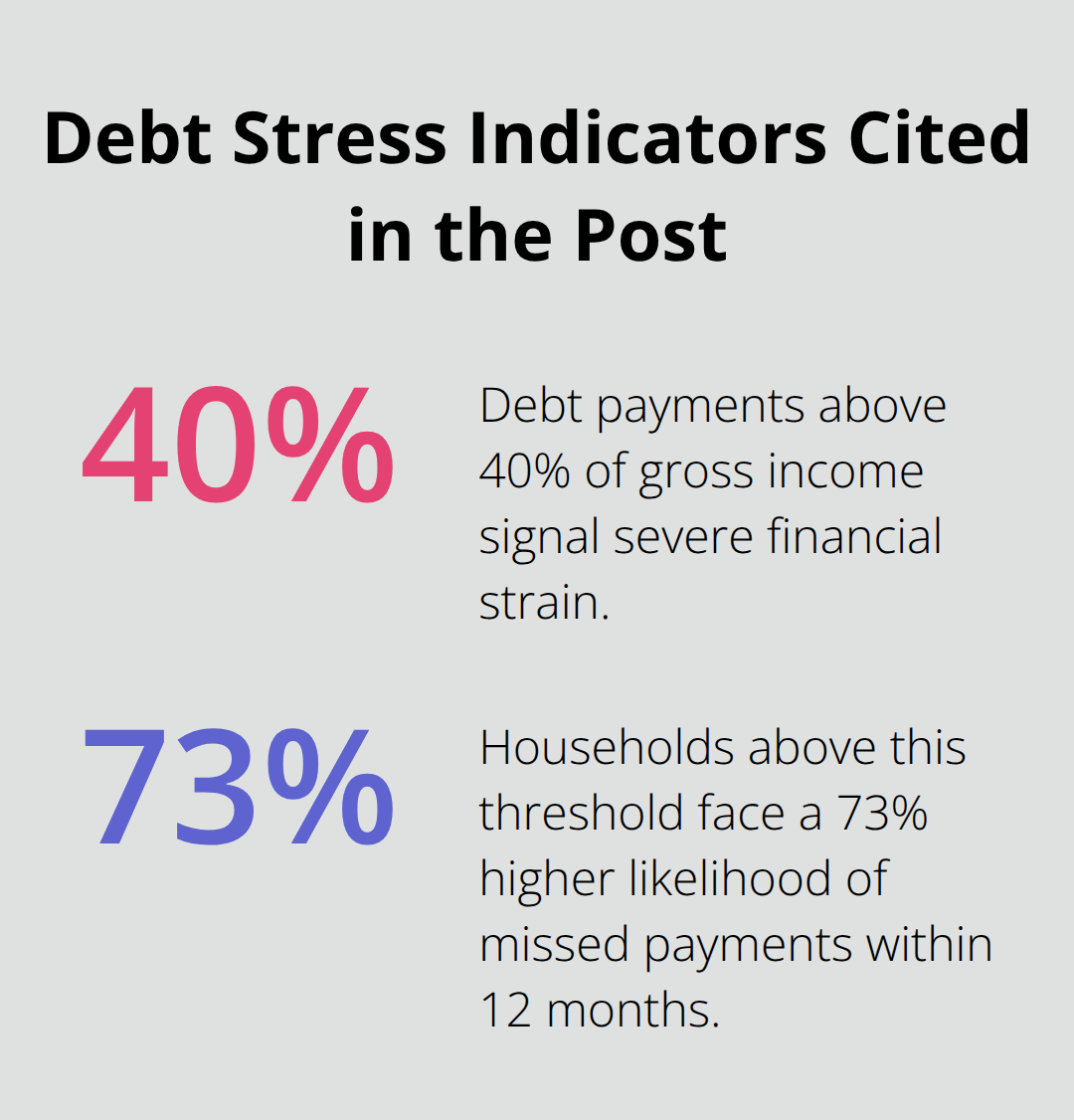
Florida residents who carry debt that exceeds 40% of their monthly gross income face a mathematical impossibility that Chapter 7 can solve. When mortgage payments, credit card minimums, car loans, and other obligations consume nearly half your income, you operate in financial survival mode rather than build wealth. The Federal Reserve reports that households who spend more than 40% of income on debt payments have a 73% higher likelihood of missed payments within 12 months.
This debt-to-income threshold becomes even more dangerous when you factor in Florida’s lack of state income tax (which means your take-home pay represents a larger percentage of gross income than in other states). If your debt payments exceed this 40% mark, Chapter 7 offers immediate relief through debt discharge rather than years of struggle with unmanageable payments.
Credit Card Minimums That Exceed Your Capacity
Missed minimum credit card payments create a cascade of financial destruction that Chapter 7 stops immediately. Average credit card interest rates reached 24.45% in 2024, according to the Federal Reserve Bank of St. Louis, which means minimum payments on $10,000 in credit card debt approach $250 monthly. When you cannot meet these minimums, late fees that average $32 per missed payment compound your debt burden while they damage your credit score. Florida residents who face this situation often see their minimum payments increase to 4-5% of outstanding balances, which creates a debt spiral where payments never reduce principal. Chapter 7 eliminates these unsecured debts entirely, stops late fees and interest accumulation while it provides immediate relief for essential expenses like housing and food.
Imminent Asset Loss Through Foreclosure or Repossession
Foreclosure notices and repossession threats indicate that secured creditors will seize your property within 30-90 days without intervention. Florida’s foreclosure process averages 180 days from initial filing to sale, but this timeline accelerates when you miss multiple payments. Chapter 7’s automatic stay immediately halts all collection activities, which includes foreclosure proceedings and vehicle repossession attempts. While Chapter 7 may not save underwater assets, it provides time to negotiate with lenders or plan your transition while it eliminates unsecured debts that prevent you from affording secured payments. Florida’s generous homestead exemption means many residents can protect significant home equity through Chapter 7 while they discharge credit cards and medical bills that created the payment crisis.
Final Thoughts
Chapter 7 bankruptcy calculators provide Florida residents with powerful tools to assess their financial situation and determine eligibility for debt relief. These calculators evaluate your six-month income average against Florida’s median thresholds, perform means test calculations for higher earners, and analyze asset protection under the state’s generous exemption laws. The mathematical precision of these tools helps you understand whether your debt load exceeds manageable levels and if Chapter 7 offers the most effective path forward.
However, a Chapter 7 bankruptcy calculator cannot replace professional legal guidance when you navigate Florida’s complex bankruptcy laws. Each financial situation requires personalized analysis beyond what automated tools provide (especially when asset protection and exemption strategies come into play). We at Harnage Law, PLLC assist individuals and families who face financial challenges through legal guidance and representation throughout the bankruptcy process.
If your calculations indicate Chapter 7 eligibility, the next step involves detailed financial documentation and consultation with qualified legal counsel. We focus on helping clients discharge qualifying debts while they protect their assets under Florida law. Contact us to discuss your specific situation and move forward with your case.