Filing for Chapter 7 bankruptcy in Florida is overwhelming, and finding trustworthy guidance makes all the difference. The wrong resources can cost you money and delay your fresh start.
We at Harnage Law, PLLC know that Florida Chapter 7 resources exist-you just need to know where to look. This guide shows you exactly where to find reliable help, what support is available, and which mistakes to avoid.
Where to Find Trustworthy Bankruptcy Help in Florida
Official Government Resources
Start with the Northern District of Florida’s official bankruptcy court website, which offers free forms, local rules, and contact information for assigned trustees. The U.S. Trustee Program maintains the definitive list of approved credit counseling agencies by state and district. This list matters because credit counseling must be completed by an approved nonprofit agency within six months before filing Chapter 7-using an unapproved provider wastes money and disqualifies you from filing.
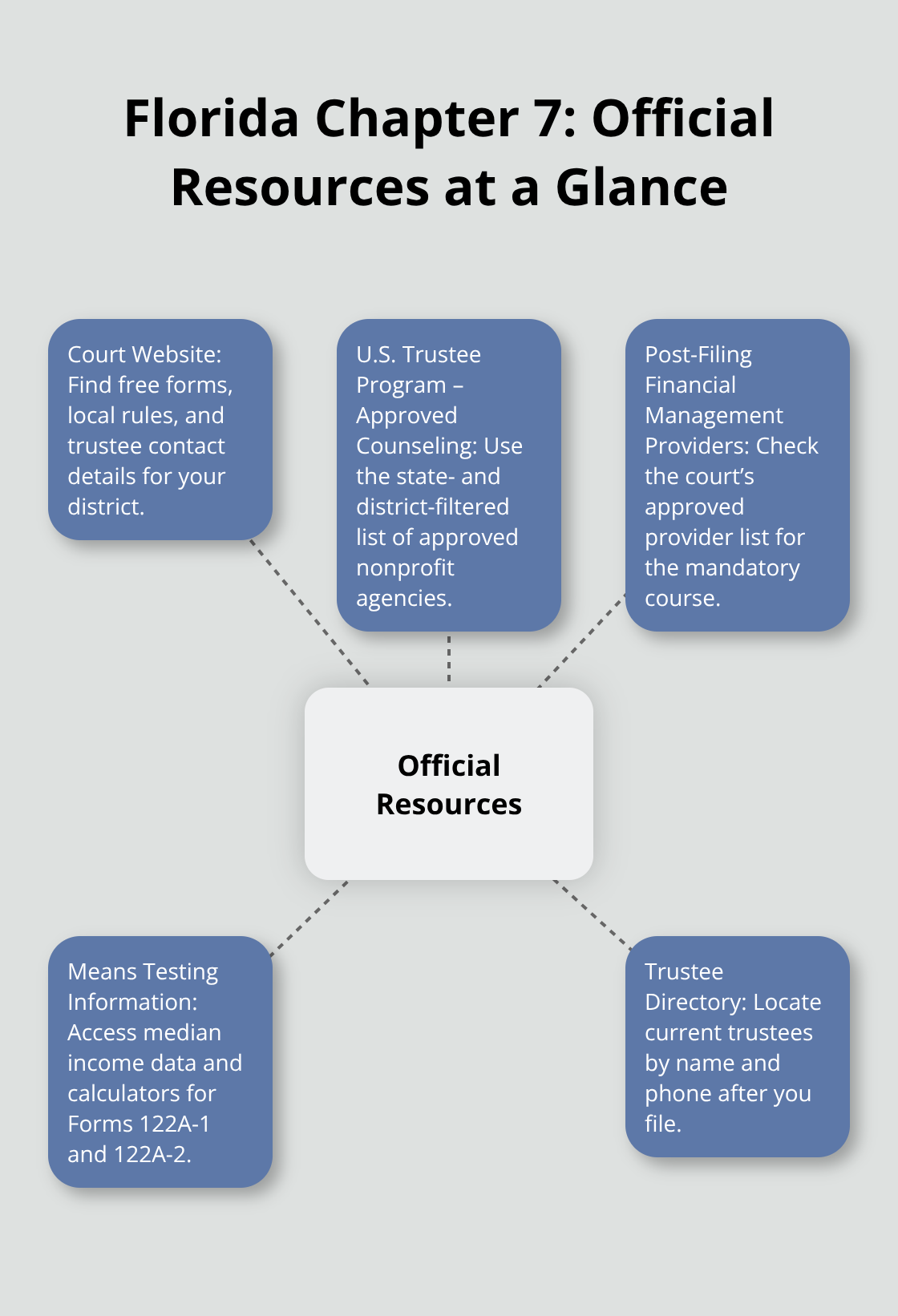
The court also publishes approved providers for the mandatory post-filing financial management course, which is separate from credit counseling.
Florida’s three bankruptcy districts (Northern, Middle, and Southern) each have distinct local forms and procedures, so confirm which district covers your county before gathering documents. The U.S. Trustee Program’s Means Testing Information resource provides calculators and Census Bureau data needed to complete Forms 122A-1 and 122A-2, eliminating guesswork about income thresholds. As of 2025, Florida’s median income for a single filer is $58,000; exceeding this triggers the full means test. The court’s website also lists current trustees by name and phone number, allowing you to contact them directly with specific questions about your case after filing.
Approved Credit Counseling Agencies
Non-profit credit counseling agencies approved by the court operate differently from for-profit debt settlement companies, which often charge high fees and make false promises. Verify that any agency you select appears on the official U.S. Trustee Program list filtered for your Florida district and judicial location. Many approved agencies offer counseling by phone or online if in-person sessions are inconvenient, and some provide services in languages beyond English and Spanish (a significant advantage for multilingual households).
Legal Representation and Free Guidance Programs
Attorneys provide consultations to walk you through the entire filing process, explain which debts discharge and which don’t, and ensure your paperwork is accurate before submission. An attorney review catches errors that lead to dismissal or delayed discharge, such as incomplete schedules, missing signatures, or inconsistent asset values. The P.L.A.N. program, operated by the Northern District of Florida, offers free initial guidance by calling 866-944-6421, connecting you with volunteer attorneys who answer basic questions at no cost. The Pro Bono Initiative provides reduced-rate or free legal representation if you cannot afford an attorney, coordinated through the Northern District of Florida Bankruptcy Bar Association. These programs exist specifically because bankruptcy filing has grown more complex, and self-representation without guidance leads to costly mistakes.
Understanding where to find help is only half the battle-knowing what types of support actually exist makes the difference between a smooth filing and one plagued by errors and delays.
What Support You Actually Get During Florida Chapter 7 Filing
Pre-Filing and Post-Filing Credit Education
Credit counseling and financial management courses are mandatory, not optional, and the distinction between them matters for your timeline. The U.S. Trustee Program requires pre-filing credit counseling completed within six months before you submit your petition-this must come from an approved nonprofit agency in your Florida district, and you’ll receive a certificate proving completion that gets attached to your filing. The post-filing financial management course is separate and must be finished before discharge is granted, meaning you complete two distinct educational requirements at different stages of your case.
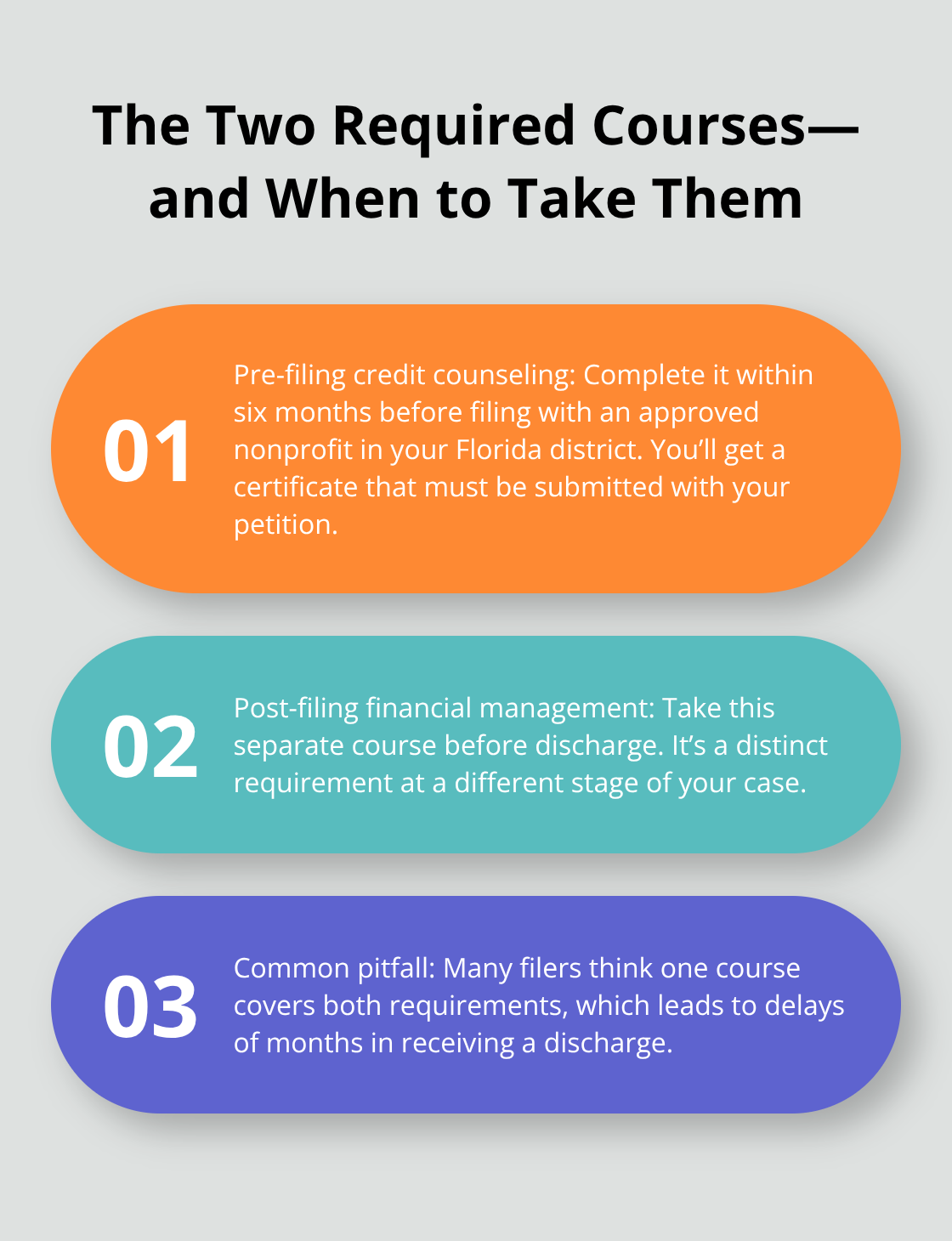
Most filers mistakenly assume one course covers both requirements, which delays their discharge by months.
Approved agencies in Florida offer online and phone counseling if traveling to an office is impractical, and some provide services in Creole, Vietnamese, and other languages beyond English and Spanish. Check the U.S. Trustee Program’s filtered list for your specific district to confirm language availability and scheduling options before committing to a provider.
Your Bankruptcy Trustee’s Role and Responsibilities
Your assigned bankruptcy trustee becomes your primary contact after filing and handles the critical 341 Meeting of Creditors, which typically occurs 21 to 40 days after you file. The trustee reviews your paperwork, questions you about your assets and liabilities, and determines whether any non-exempt property should be liquidated to pay creditors. This is not a court hearing but an administrative meeting where you must appear with a photo ID and proof of your Social Security Number, and missing it results in automatic dismissal.
The trustee’s contact information appears in the Notice of Chapter 7 Bankruptcy Case mailed within 10 business days of filing, and you can call them directly with questions about required documents or meeting logistics. The trustee scrutinizes incomplete asset schedules, missing signatures, or income calculations that don’t match your tax returns-these errors trigger extended questioning and sometimes denial of discharge.
How Attorney Review Protects Your Filing
An attorney review before filing catches errors that would prompt trustee scrutiny and potential complications. Incomplete schedules, inconsistent asset values, and signature gaps create problems that cost time and money to fix after submission. A consultation with an attorney allows you to have your forms reviewed before submission, which costs far less than addressing mistakes after filing. This step protects your discharge timeline and prevents the complications that plague self-represented filers.
The complexity of bankruptcy filing has increased significantly, and the difference between a smooth case and one plagued by errors often comes down to whether someone reviewed your paperwork before you submitted it. Your next decision involves selecting the right legal guidance for your specific situation.
Mistakes That Cost Florida Filers Time and Money
For-Profit Scams Target Desperate Filers
For-profit debt settlement companies and unqualified services prey on Florida residents facing financial stress, charging fees between $1,500 and $5,000 upfront while promising debt reduction that never materializes. The Federal Trade Commission reports that debt settlement firms intentionally delay payments to creditors, damaging your credit further and triggering lawsuits before any settlement occurs. These predatory operations differ fundamentally from court-approved credit counseling agencies, which operate as nonprofit organizations and charge minimal fees (typically $50 to $200) while focusing on education rather than false promises.
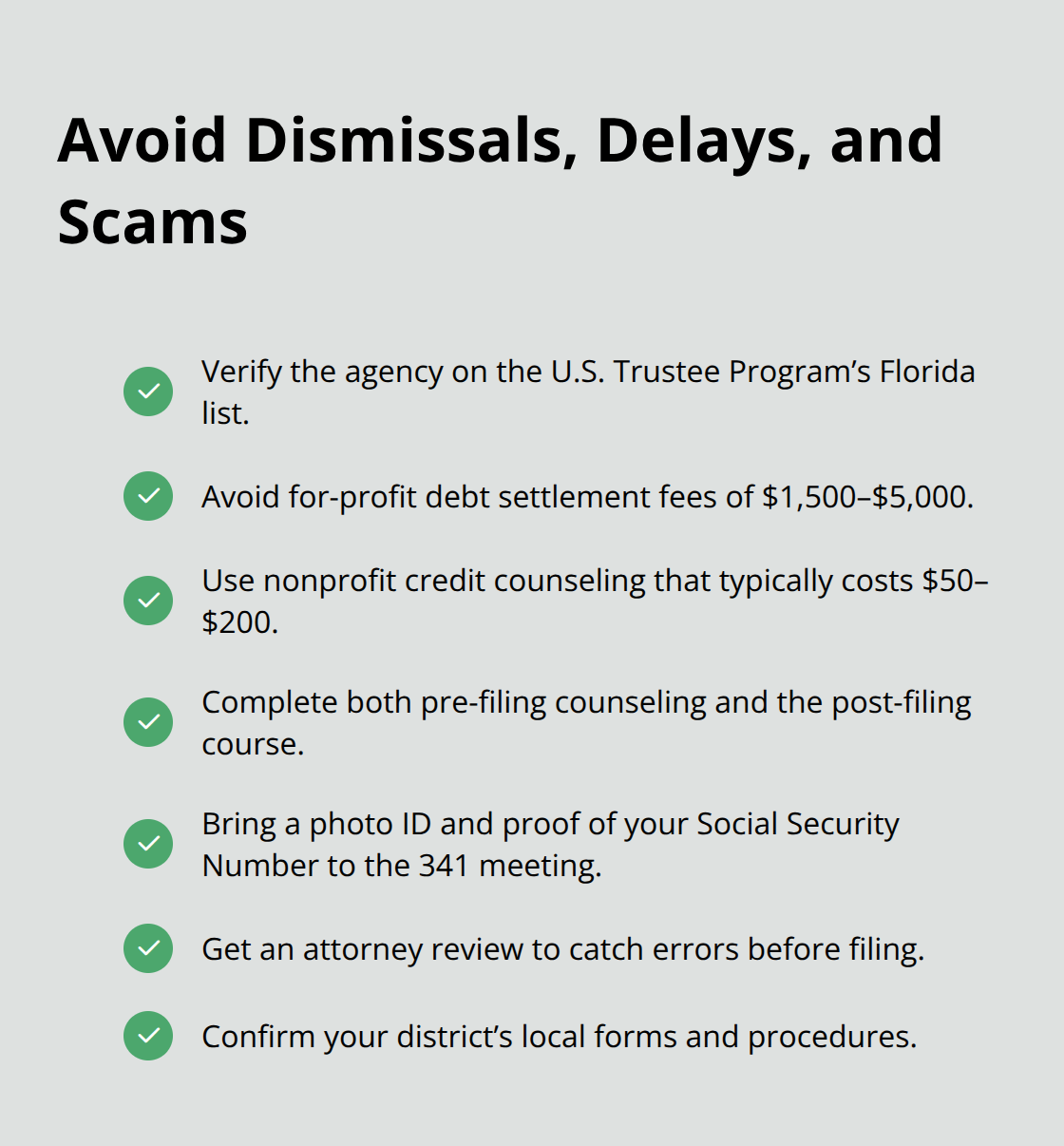
Ignoring the U.S. Trustee Program’s official list of approved agencies leaves you vulnerable to scams that drain your savings without advancing your Chapter 7 case.
Using Unapproved Credit Counseling Providers
When you file Chapter 7 in Florida, the trustee assigned to your case reviews every document you submitted. If your credit counseling certificate came from an unapproved provider, your filing faces immediate dismissal. This means months of wasted time and the need to refile with correct documentation, costing additional filing fees and extending your debt discharge timeline indefinitely. The trustee scrutinizes your paperwork with particular attention to whether you completed pre-filing credit counseling through an agency listed on the U.S. Trustee Program’s official registry for your specific Florida district.
Filing Without Professional Review First
Many Florida residents attempt to gather documents and complete forms without guidance, only to discover during the 341 Meeting that their asset schedules contradict their tax returns or their income calculations exclude required deductions that trigger the full means test. The trustee assigned to your case will question inconsistencies aggressively, and correcting errors after filing requires amended documents and sometimes additional hearings that extend your case by months. The P.L.A.N. program offers free initial guidance through the Northern District of Florida at 866-944-6421, but this program handles basic questions rather than complete case preparation.
Complex Financial Situations Demand Early Assistance
If your financial situation involves business income, multiple properties, or significant assets, waiting to seek professional assistance until after filing guarantees complications that delay your fresh start. An attorney consultation before you file prevents the costly corrections that plague self-represented filers and protects your discharge timeline from the errors that create trustee scrutiny and potential complications.
Final Thoughts
Florida Chapter 7 resources exist throughout your state, but knowing where to find them separates filers who discharge their debts smoothly from those who face dismissals and delays. Government websites, approved credit counseling agencies, and legal guidance programs provide the foundation you need to file correctly and protect your discharge timeline. The mistake most Florida residents make is waiting too long to seek help or trusting unqualified services that promise quick fixes without delivering results.
The trustee assigned to your case will scrutinize every document you submit, and errors in your paperwork create complications that extend your case by months. Pre-filing credit counseling through an approved nonprofit agency, accurate asset schedules, and proper income calculations are non-negotiable requirements that determine whether your discharge happens on time or gets delayed indefinitely. The P.L.A.N. program offers free initial guidance, but complex financial situations demand attorney review before you file to catch mistakes that would otherwise trigger trustee questioning and potential denial of discharge.
We at Harnage Law, PLLC assist individuals and families in overcoming financial challenges by providing legal guidance and representation throughout your Chapter 7 case. Contact us to schedule a consultation and have your paperwork reviewed before filing, which prevents the costly corrections that plague self-represented filers and positions you for a successful fresh start.