Filing for bankruptcy doesn’t automatically mean losing your home and car. Florida offers strong property protection laws that can help you keep these assets.
Many people wonder “can I file bankruptcy and keep my house and car” when facing financial difficulties. We at Harnage Law, PLLC see clients successfully protect their primary residence and vehicle through Florida’s exemption system every day.
What Property Can You Actually Protect in Florida Bankruptcy?
Florida’s Unlimited Homestead Protection
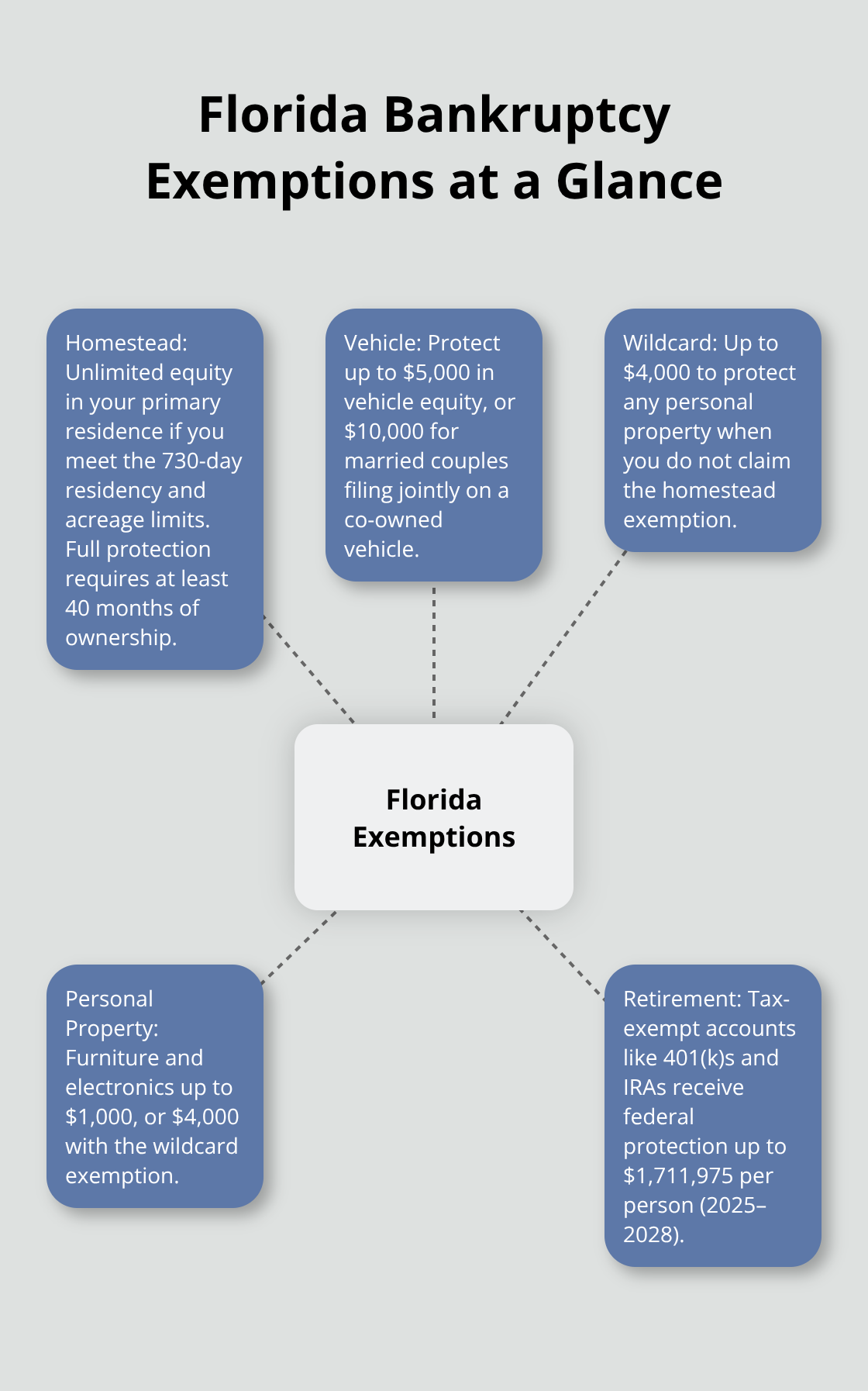
Florida provides one of the most generous homestead exemptions in the United States. You can protect unlimited equity in your primary residence when you meet the residency requirement of 730 days before you file and your property doesn’t exceed one-half acre in a municipality or 160 acres outside city limits. This means a $500,000 home or a $2 million home receives the same complete protection from creditors.
You must have owned the property for at least 40 months to claim the full unlimited exemption amount. The homestead exemption only applies to your primary residence, not investment properties or vacation homes.
Vehicle and Personal Property Exemptions
Florida allows you to exempt up to $5,000 in vehicle equity, which doubles to $10,000 for married couples who file jointly when they co-own the vehicle. If you don’t claim the homestead exemption, you can use Florida’s wildcard exemption of up to $4,000 to protect any personal property (cash, additional vehicle equity, or other assets).
Personal property exemptions cover furniture and electronics up to $1,000, or $4,000 with the wildcard exemption. Tax-exempt retirement accounts like 401k plans and IRAs receive federal protection up to $1,711,975 per person for cases filed between 2025 and 2028.
Federal vs State Exemption Choice
Florida residents must choose between federal and state exemptions when they file for bankruptcy. State exemptions typically provide better protection for most filers due to the unlimited homestead exemption. Federal exemptions offer different amounts and categories but rarely match Florida’s generous homestead protection.
The choice you make affects every aspect of your asset protection strategy. Most Florida bankruptcy attorneys recommend state exemptions because they protect more property value overall.
These exemption rules form the foundation for specific strategies that help you keep your home when you file Chapter 7 bankruptcy.
How Do You Keep Your Home in Chapter 7 Bankruptcy in Florida?
Meeting Homestead Exemption Requirements
The 730-day Florida residency requirement begins the day you establish legal residence, not when you purchase property. Courts verify residency through voter registration, driver’s license records, and tax filings. The 40-month ownership requirement for unlimited equity protection applies to each property individually.
If you owned your current home for only 20 months, your exemption caps at $189,050 according to federal bankruptcy law. Property size limits are strict: one-half acre within municipal boundaries or 160 acres in rural areas. Courts can jeopardize your entire homestead protection if you exceed these limits by even a few square feet.
Managing Mortgage Payments During Bankruptcy
Chapter 7 bankruptcy eliminates your personal liability for mortgage debt, but the lender’s lien remains on your property. You must stay current on mortgage payments to keep your home. Missing payments during bankruptcy can trigger foreclosure proceedings that the automatic stay cannot prevent long-term.
Lenders often work with homeowners who demonstrate consistent payment ability during the bankruptcy process. Some borrowers catch up on missed payments through post-bankruptcy payment plans (though this requires lender cooperation and isn’t guaranteed).
How Trustees Evaluate Your Home’s Value
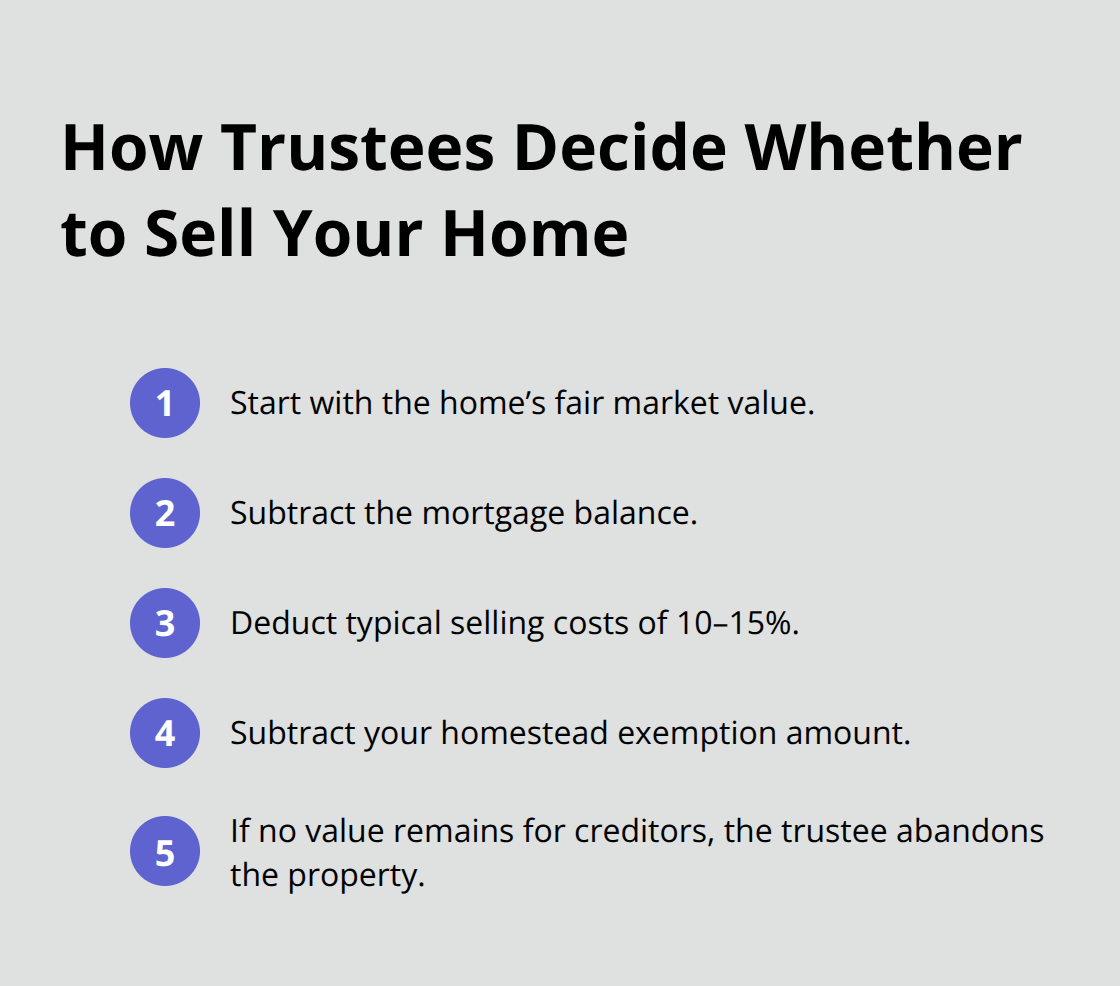
The bankruptcy trustee calculates whether selling your home benefits creditors through a specific formula. They subtract the mortgage balance, selling costs (typically 10-15%), and your homestead exemption from fair market value. If this calculation shows no benefit to creditors, the trustee abandons the property back to you.
Professional appraisals often determine home values, and trustees typically use conservative estimates that favor homeowners. Market conditions at the time of filing can significantly impact these valuations.
Reaffirmation Agreements and Payment Obligations
Reaffirmation agreements with mortgage lenders formalize your continued payment obligation after bankruptcy. Florida law doesn’t require these agreements if you maintain current payments and want to keep the home. Some lenders prefer reaffirmation agreements for clarity, while others accept informal arrangements.
These agreements restore your personal liability for the mortgage debt, which means you cannot discharge this obligation in future bankruptcies. Your vehicle protection strategy follows similar principles but involves different exemption amounts and considerations.
How Do You Keep Your Vehicle in Florida Bankruptcy?
Florida’s $5,000 Vehicle Protection Limit
Florida law protects up to $5,000 of equity in your motor vehicle during Chapter 7 bankruptcy. Married couples double this protection to $10,000 for jointly owned vehicles. Vehicle equity equals fair market value minus outstanding loan balance. A car worth $12,000 with a $8,000 loan has $4,000 equity, which falls completely within the exemption. The bankruptcy trustee cannot touch this vehicle.
A paid-off vehicle worth $8,000 exceeds the exemption by $3,000, which creates a problem that requires immediate action. The wildcard exemption becomes valuable when you don’t claim homestead protection. This $4,000 exemption can supplement your vehicle protection and cover up to $9,000 total vehicle equity for single filers. Multiple vehicles complicate the calculation since the $5,000 exemption typically applies to one primary vehicle (though some courts allow you to split the exemption between vehicles when you demonstrate legitimate need for both).
Reaffirmation Agreements vs Redemption for Vehicle Loans
Reaffirmation agreements with auto lenders restore your personal liability for the vehicle loan after bankruptcy discharge. These agreements require court approval and your continued ability to make payments. Vehicle lenders push reaffirmation aggressively because it protects their collection rights. When you refuse reaffirmation, you eliminate your payment obligation, but the lender can repossess the vehicle anytime after bankruptcy discharge (even if payments stay current).
Redemption allows you to purchase your vehicle from the lender for its current fair market value, regardless of the loan balance. A vehicle worth $6,000 with a $12,000 loan balance can be redeemed for $6,000 cash. This option works best when you have access to lump sum cash or alternative loans. Most bankruptcy attorneys recommend redemption over reaffirmation when the loan balance significantly exceeds vehicle value.
Transportation Strategy During Financial Recovery
Vehicle age and condition directly impact your post-bankruptcy transportation stability. Vehicles older than five years with high mileage create maintenance costs that strain your finances. You often achieve better long-term outcomes when you trade down to a more reliable vehicle before you file bankruptcy rather than fight to keep an expensive or unreliable car.
Public transportation availability in your Florida county affects vehicle necessity arguments with trustees. Miami-Dade and Broward counties offer extensive transit options, while rural counties provide limited alternatives. Your location influences whether trustees view vehicle ownership as luxury or necessity, which affects their willingness to pursue non-exempt equity.
Final Thoughts
Florida’s bankruptcy laws provide strong protection for your home and vehicle when you understand the exemption system properly. The unlimited homestead exemption protects your primary residence regardless of value, while the $5,000 vehicle exemption covers most car equity situations. These protections answer the common question “can I file bankruptcy and keep my house and car” with a resounding yes for most Florida residents.
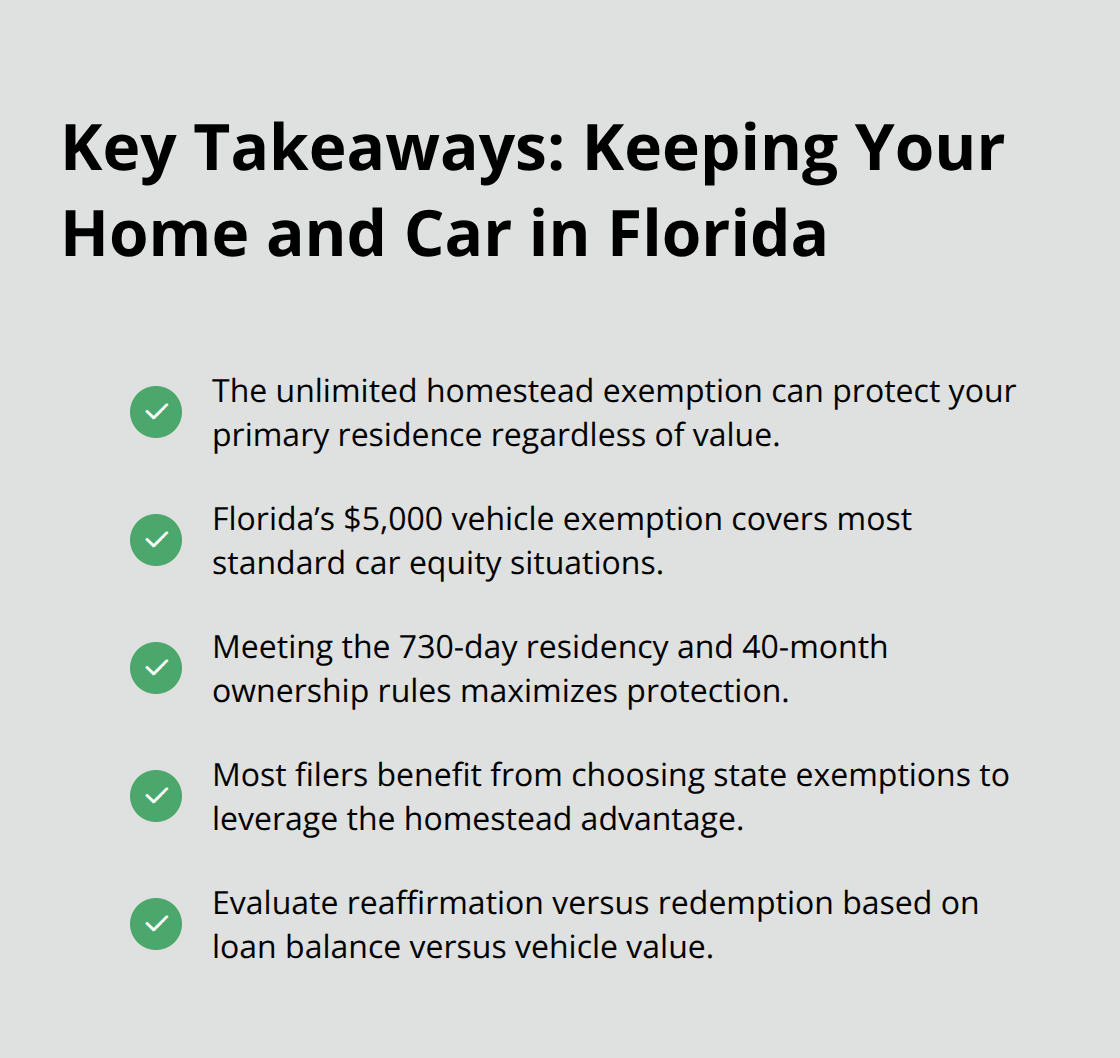
Strategic decisions about reaffirmation agreements, redemption options, and exemption choices directly impact your financial recovery. The 730-day residency requirement and 40-month homestead ownership period maximize your asset protection when you meet these deadlines. Complex exemption rules and trustee evaluations determine whether you keep your property (making professional guidance valuable during this process).
We at Harnage Law, PLLC guide clients through every step of the Chapter 7 bankruptcy process while we protect their assets and stop creditor harassment. Our Florida-based firm focuses on helping individuals and families discharge debts for a fresh financial start. Professional legal guidance becomes invaluable when you navigate complex bankruptcy laws that affect your property rights.