Many Florida homeowners worry “Do I lose my house if I file bankruptcy?” The answer often surprises people.
Florida’s homestead exemption provides some of the strongest home protection in the United States. We at Harnage Law, PLLC see most clients keep their primary residence through Chapter 7 bankruptcy.
Your home’s safety depends on specific factors like mortgage status, equity levels, and property type.
Chapter 7 Bankruptcy and Florida Homestead Exemption
Florida’s homestead exemption stands as the most powerful home protection law in America. Unlike other states that cap home equity protection at amounts like $25,000 or $50,000, Florida allows unlimited equity protection for your primary residence. This means whether your home has $50,000 or $500,000 in equity, the homestead exemption can protect it all during Chapter 7 bankruptcy.
Property Size and Residence Requirements
Your home must qualify as your primary residence and meet specific size requirements. Inside city limits, the exemption covers up to one-half acre. Outside municipalities, protection extends to 160 acres. These limits apply to the actual property boundaries, not the home’s value.
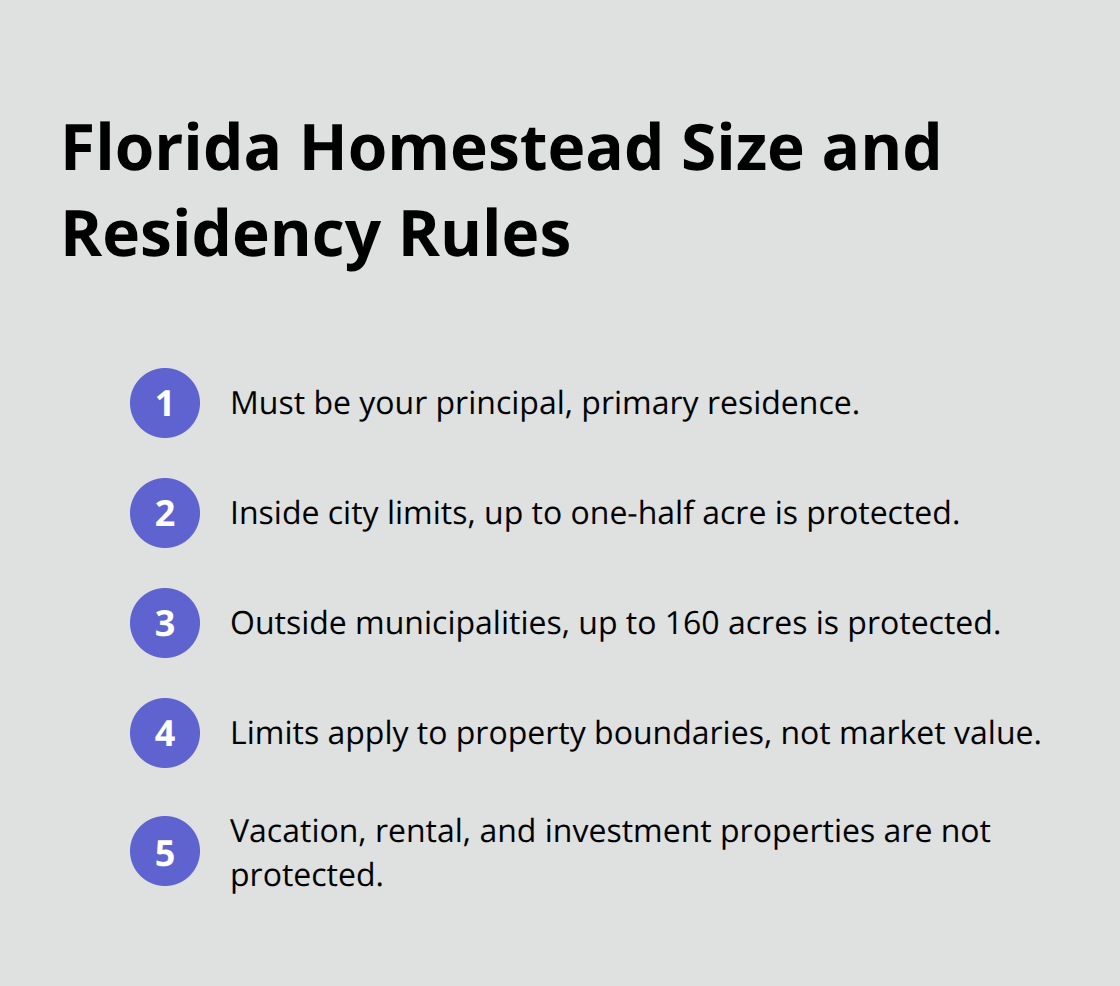
The property must serve as your principal residence where you live most of the time. Vacation homes, rental properties, and investment real estate receive no homestead protection under Florida law.
The 1,215-Day Ownership Rule
Florida requires ownership for at least 1,215 days before you file bankruptcy to claim unlimited homestead protection (approximately 40 months). Homeowners who owned their property for less than 1,215 days still receive protection, but the exemption caps at $170,350 in equity.
The clock starts from your deed record date, not when you moved in. This period prevents people from moving to Florida solely to abuse the generous homestead laws. Courts track ownership through public records, which makes accurate documentation vital for protection.
How the Exemption Works in Practice
The homestead exemption protects your equity from creditors and bankruptcy trustees. If you owe $200,000 on a home worth $400,000, your $200,000 equity stays protected. The trustee cannot force a sale to pay unsecured debts like credit cards or medical bills.
This protection applies even when you have substantial equity. Other states might force home sales when equity exceeds their caps, but Florida’s unlimited protection prevents this outcome in most cases. However, Florida homestead exemptions have specific requirements that self-represented filers frequently misunderstand.
Now that you understand how Florida protects your home equity, let’s examine the specific situations where homeowners successfully keep their properties through bankruptcy.
Common Scenarios Where You Keep Your Home
Most Florida homeowners who file Chapter 7 bankruptcy keep their primary residence when they maintain current mortgage payments. The combination of Florida’s unlimited homestead exemption and mortgage reaffirmation creates a powerful shield against home loss. This scenario plays out successfully in the majority of cases involving primary residences.
Current Mortgage Payments Protect Your Home
Homeowners current on their mortgage at the time they file and who continue payments almost always keep their homes. The automatic stay temporarily halts foreclosure proceedings and provides breathing room to address other debts. Your mortgage lender cannot accelerate the loan or demand immediate full payment simply because you filed bankruptcy.
Federal bankruptcy courts recognize that stable housing benefits both debtors and the broader community. The key lies in consistent mortgage payments before, during, and after your bankruptcy case. Missing even one payment during the process can jeopardize your home protection.
Mortgage Reaffirmation Agreements
Reaffirmation agreements allow you to keep your home by formally accepting continued personal liability for the mortgage debt. This legal document removes the mortgage from your bankruptcy discharge, which means you stay responsible for payments. Most mortgage lenders require reaffirmation to continue normal service relationships.
The agreement must receive court approval, which typically happens when payments remain affordable relative to your post-bankruptcy income. Reaffirmation also helps rebuild your credit score through continued reports of on-time mortgage payments. Without reaffirmation, lenders might change service terms or refuse to accept payments.
Unlimited Equity Protection
Florida’s unlimited homestead exemption protects all equity in your primary residence regardless of amount. Homeowners with $100,000, $300,000, or even $600,000 in equity receive identical protection under state law. The bankruptcy trustee cannot force a sale when your equity falls within the homestead exemption boundaries (which covers your entire primary residence).
This protection applies even when you have substantial unsecured debt like credit cards or medical bills. Other states cap homestead protection at much lower amounts, often forcing home sales to pay creditors. However, certain circumstances can still threaten your home despite these strong protections.
Situations That Could Put Your Home at Risk
Despite Florida’s strong homestead protection, specific situations can still jeopardize your home ownership during Chapter 7 bankruptcy. Understanding these threats helps homeowners prepare for potential challenges and take protective action when necessary.
Tax Liens Survive Bankruptcy Discharge
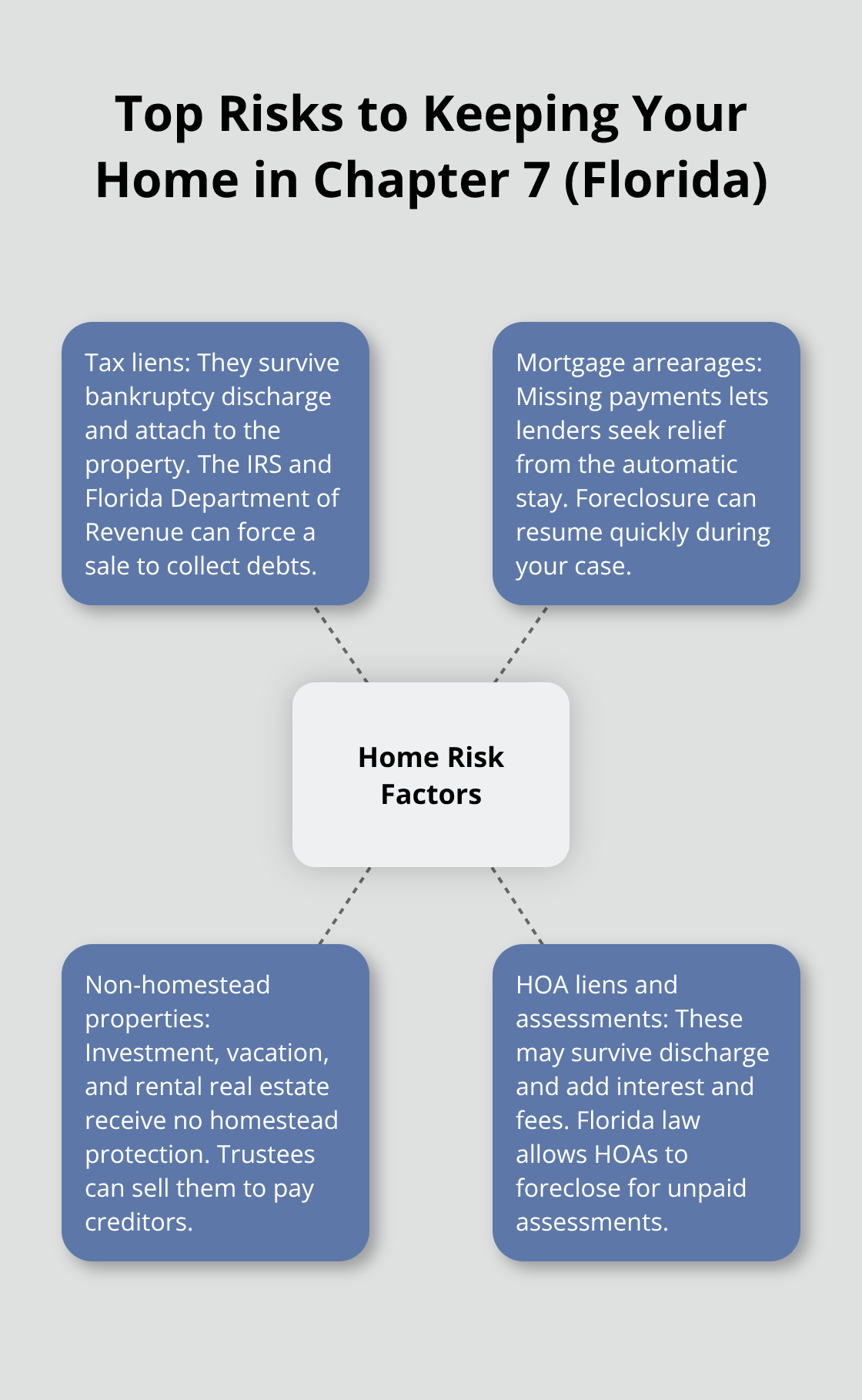
Tax liens pose the greatest threat because they survive bankruptcy discharge and attach directly to your property regardless of exemptions. The IRS and Florida Department of Revenue can force home sales to collect unpaid income taxes, property taxes, or other government debts even after your bankruptcy case closes.
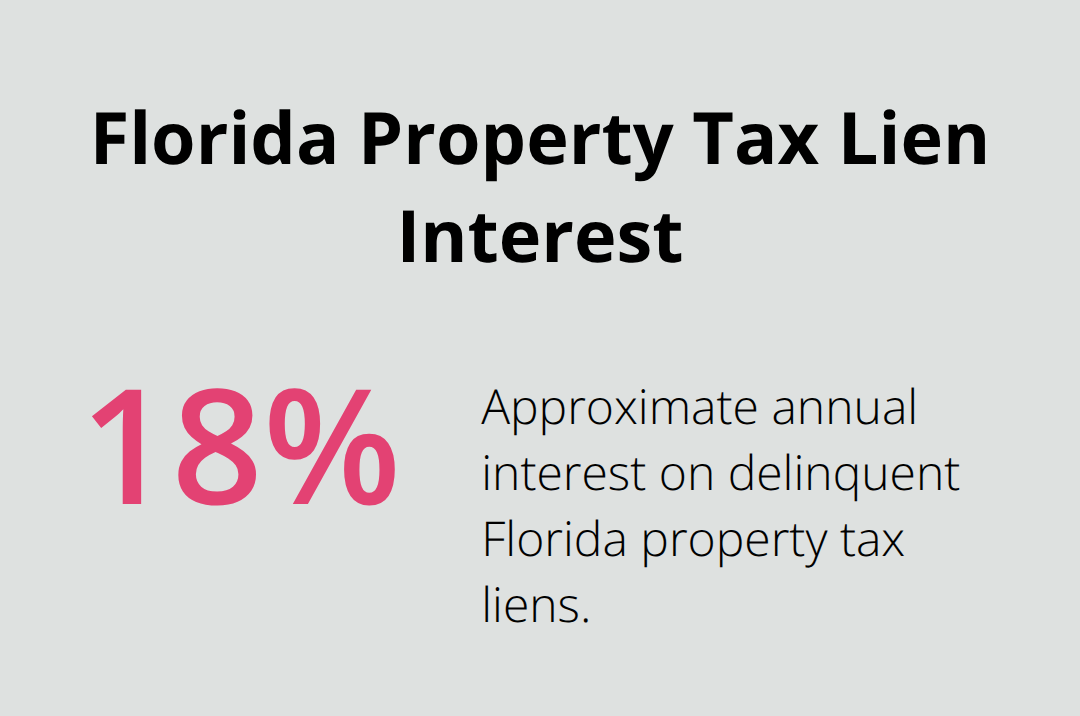
Property tax liens accumulate at roughly 18% annual interest in Florida, which makes them particularly dangerous for homeowners who fall behind. These liens take priority over most other debts and can result in forced sales even when your home has full homestead protection.
Mortgage Arrearages Create Foreclosure Risk
Homeowners who fall behind on mortgage payments face the most common path to home loss during bankruptcy. The automatic stay provides only temporary foreclosure protection, typically lasting 3-4 months while your case proceeds through the courts.
Mortgage companies can request relief from the automatic stay if you miss payments during bankruptcy, which allows them to resume foreclosure immediately. Florida courts processed over 47,000 foreclosure cases in 2023 according to the Florida Supreme Court, with many cases involving homeowners who filed bankruptcy but could not maintain mortgage payments.
Chapter 7 eliminates your personal liability for mortgage debt, but the lien remains on your property. This means lenders can still foreclose even though they cannot pursue you for any deficiency balance after the sale.
Non-Homestead Properties Receive No Protection
Investment properties, vacation homes, and rental real estate receive no homestead protection in Florida bankruptcy cases. Trustees routinely sell these properties to pay creditors because they generate cash without violating exemption laws.
Second homes worth $100,000 with $20,000 in mortgages provide $80,000 for creditors, which makes them attractive targets for trustees. Commercial properties and vacant land also lack exemption protection, regardless of their connection to your primary residence or business operations.
Homeowners Association Liens and Special Assessments
Homeowners association liens and special assessments can threaten your home even when you maintain current mortgage payments. These liens often survive bankruptcy discharge and can accumulate substantial interest and attorney fees over time.
Florida law allows HOAs to foreclose on properties for unpaid assessments, even when the amounts seem relatively small compared to your home’s value. Some associations pursue aggressive collection tactics that can result in forced sales despite homestead protection.
Final Thoughts
The question “Do I lose my house if I file bankruptcy?” has a reassuring answer for most Florida homeowners. Statistics show that the vast majority of Chapter 7 filers keep their primary residence thanks to Florida’s unlimited homestead exemption and proper legal guidance. Florida’s homestead laws provide unmatched protection compared to other states.
When homeowners maintain current mortgage payments and work with experienced bankruptcy attorneys, home retention rates exceed 90% in Chapter 7 cases. The key lies in understanding exemption requirements and addressing potential threats before they become critical. We at Harnage Law, PLLC help clients navigate these complex protections while stopping creditor harassment and preventing wage garnishments.
Homeowners who face foreclosure notices or mounting debt should act quickly rather than wait until options become limited (early intervention allows for better planning and stronger asset protection strategies that preserve your home ownership). Professional legal guidance makes the difference between successful home retention and unnecessary loss. Chapter 7 bankruptcy can eliminate overwhelming debt while keeping your primary residence safe under Florida’s generous exemption laws.