Filing Chapter 7 bankruptcy doesn’t mean losing your military benefits or disability payments. Many veterans in Florida worry that bankruptcy will strip away the compensation they’ve earned through service, but the law actually protects most VA benefits during the process.
At Harnage Law, PLLC, we help veterans understand how bankruptcy relief works alongside their existing benefits. This guide walks you through what happens to your income, assets, and protections when you file Chapter 7 in Florida.
Chapter 7 Bankruptcy Eligibility for Veterans in Florida
VA Disability Income and the Means Test
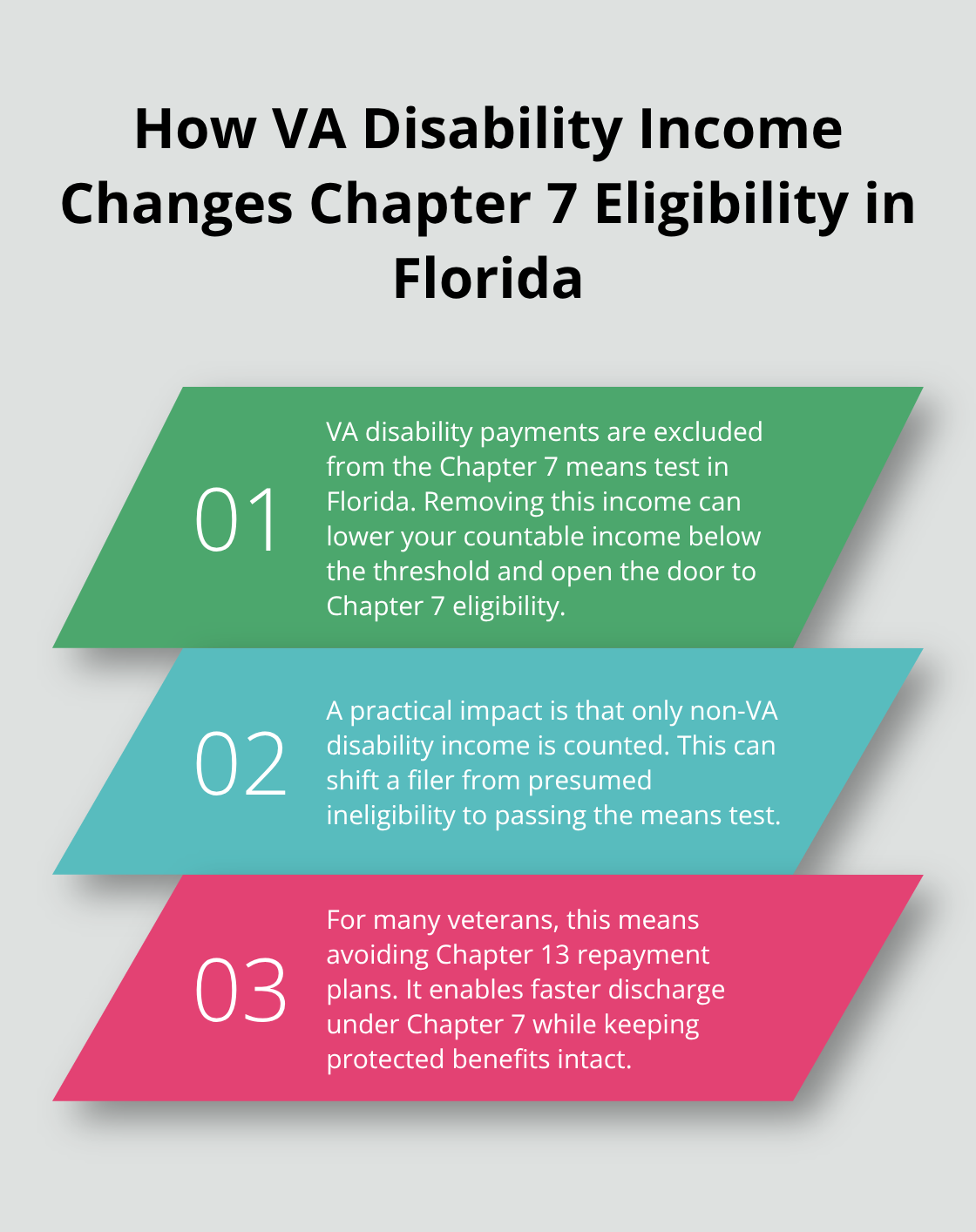
Veterans in Florida gain a significant advantage in Chapter 7 bankruptcy that most civilians lack. VA disability income exclusion from the means test calculation-a protection established around 2017-fundamentally changed how Florida bankruptcy courts evaluate veteran eligibility. The means test determines whether your income qualifies you for Chapter 7. If your household income exceeds Florida’s median, you normally cannot file Chapter 7 unless you pass the means test by showing that your disposable income falls below the threshold. However, when VA disability payments are removed from this calculation, many veterans who would otherwise fail the means test suddenly become eligible for Chapter 7 relief.
Consider a veteran earning $65,000 annually. If $30,000 comes from VA disability compensation, only $35,000 counts toward the means test. This single protection opens the door to Chapter 7 discharge for thousands of Florida veterans who would otherwise face Chapter 13 repayment plans lasting three to five years.
Protected Military Income Sources
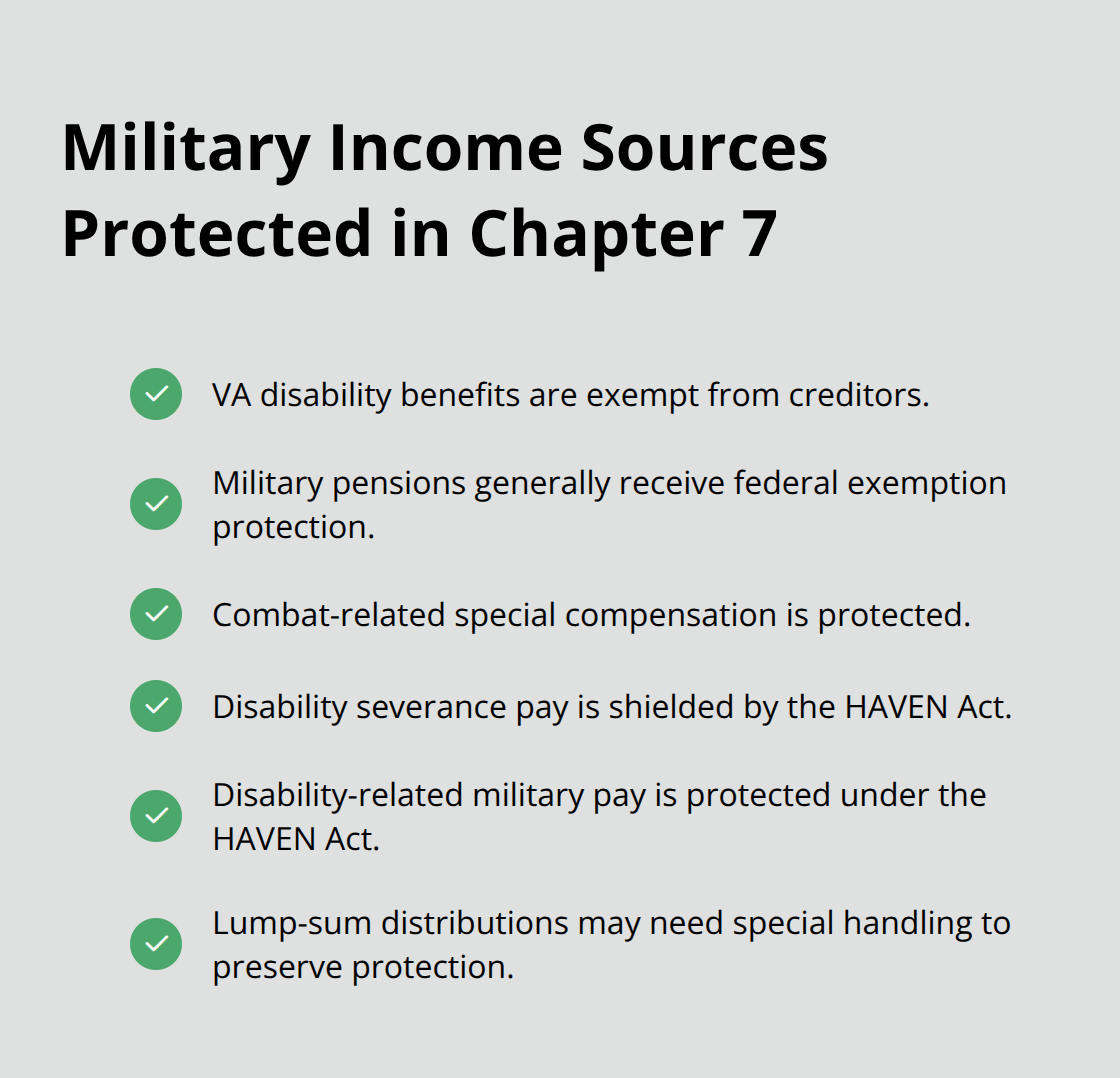
VA disability payments, military pensions, and combat-related special compensation all receive strong protection under bankruptcy law. VA disability benefits remain completely exempt as protected assets, meaning creditors cannot seize these funds during or after bankruptcy. Military pensions generally receive similar protection through federal exemptions under 11 U.S.C. 522, though lump-sum pension distributions require careful analysis to determine whether they qualify as protected retirement accounts.
The HAVEN Act of 2019 specifically shields disability severance pay, combat-related special compensation, and disability-related military pay during Chapter 7 proceedings. Reserves and National Guard members who served at least 90 days may also qualify for these veteran exemptions if they file within 540 days of release from active duty. Your earned military income faces no risk when you file Chapter 7 in Florida, whether you receive monthly payments or lump-sum distributions.
How Chapter 7 Protects Your Financial Foundation
Filing Chapter 7 allows you to discharge unsecured debts like credit cards, medical bills, and personal loans while keeping your protected income and assets intact. The automatic stay that triggers when you file immediately halts wage garnishments, foreclosure actions, and collection calls, giving you breathing room to reorganize your finances.
Many Florida veterans rely primarily on disability payments or pensions as their main income, and Chapter 7 recognizes this reality by protecting these funds completely from the bankruptcy process. If you face foreclosure on a VA-backed home loan, Chapter 7 can stop that process temporarily through the automatic stay, providing time to negotiate alternatives or pursue discharge. The combination of the means test exclusion for VA disability income and Florida’s generous homestead exemption creates a powerful shield for veterans.
Understanding which income counts toward the means test and which assets remain protected requires careful review of your specific situation. The next section examines how Florida’s homestead exemption and other asset protections work together to safeguard your property during Chapter 7 bankruptcy.
What Assets Stay Protected When You File Chapter 7
Florida’s Homestead Exemption for Veterans
Florida’s homestead exemption stands as one of the most generous asset protections in the nation, and veterans gain full access to this shield. Under Florida Statutes, your primary residence receives unlimited protection from creditors in bankruptcy, regardless of the home’s value. A veteran with a $500,000 home faces zero risk of losing it through Chapter 7, provided the property qualifies as a homestead and you meet residency requirements. The homestead exemption applies to both Chapter 7 and Chapter 13 filings, but Chapter 7 offers faster relief since you discharge debts rather than enter a repayment plan. Florida courts recognize homestead protection as a fundamental right, making it virtually impossible for creditors to seize your primary residence during bankruptcy.
Combined with VA loan protections and the automatic stay that halts foreclosure actions, most veterans preserve their homes while discharging tens of thousands in unsecured debt. Your residence remains your own even as you eliminate credit card balances, medical bills, and other obligations through Chapter 7.
Personal Property and Vehicle Protection
Personal property exemptions in Florida provide additional layers of protection beyond your home. Florida Statutes allow you to protect a vehicle up to a certain value, household furnishings, and other essential personal property during Chapter 7. These protections work alongside your homestead exemption to shield the assets you depend on daily. Your car, furniture, and household items remain yours throughout the bankruptcy process, allowing you to maintain your standard of living while eliminating debt.
Service-Connected Disability Payments and HAVEN Act Protections
Service-connected disability payments receive absolute protection as exempt income, meaning creditors cannot touch these funds before, during, or after bankruptcy. Combat-related special compensation, disability severance pay, and disability-related military pay all fall under HAVEN Act protections established in 2019, shielding monthly compensation and lump-sum distributions alike. These protections recognize that your earned military benefits fund your essential living expenses and should never face seizure by creditors.
Keeping Exempt Funds Separate to Maintain Protection
The critical step is keeping exempt money separate from nonexempt funds to avoid commingling, which could jeopardize your protection. When exempt and nonexempt funds mix in a single account, creditors may argue they can seize the entire balance. Many veterans overlook this detail, so maintaining separate bank accounts for disability payments and other protected income prevents disputes during bankruptcy proceedings. Documentation of exempt funds matters significantly-track which accounts hold protected income and which hold other funds.
This separation strategy (combined with clear records) strengthens your position throughout the bankruptcy process and eliminates confusion about which assets remain protected. As you move forward with Chapter 7, understanding how the means test applies to your specific income sources becomes the next critical factor in determining your eligibility and the timeline for discharge.
Filing Chapter 7 as a Veteran in Florida
How the Means Test Works for Veterans
The means test creates the first hurdle in Chapter 7, but veterans in Florida face a significantly lower barrier than other filers. The means test compares your household income to Florida’s state median income, and if you exceed it, you must demonstrate that your disposable income falls below a specific threshold to qualify for Chapter 7. Here’s where VA disability income changes everything: when calculating your means test, Florida courts exclude VA disability payments entirely from the equation. This exclusion, established around 2017, means a veteran earning $65,000 annually with $30,000 in VA disability compensation only counts $35,000 toward the means test. That single protection transforms eligibility for thousands of Florida veterans who would otherwise face Chapter 13 repayment plans lasting three to five years.
Combat-related special compensation and disability severance pay also receive favorable treatment, though the specific calculation depends on how these payments are classified. You must review your actual pay stubs and benefit statements rather than estimates to understand which income sources count and which don’t. Many veterans mistakenly assume they don’t qualify for Chapter 7 because their total income exceeds the median, yet they would pass the means test once disability payments are removed from the calculation.
Timeline and Steps in the Chapter 7 Process
The timeline for Chapter 7 bankruptcy in Florida typically spans four to six months from filing to discharge, though this varies based on whether the trustee requests additional information or identifies assets to liquidate. The process begins with filing your petition and schedules, which requires detailed documentation of all income sources, assets, and debts. Those separate accounts for exempt and nonexempt funds pay off here, since clear records accelerate the trustee’s review.
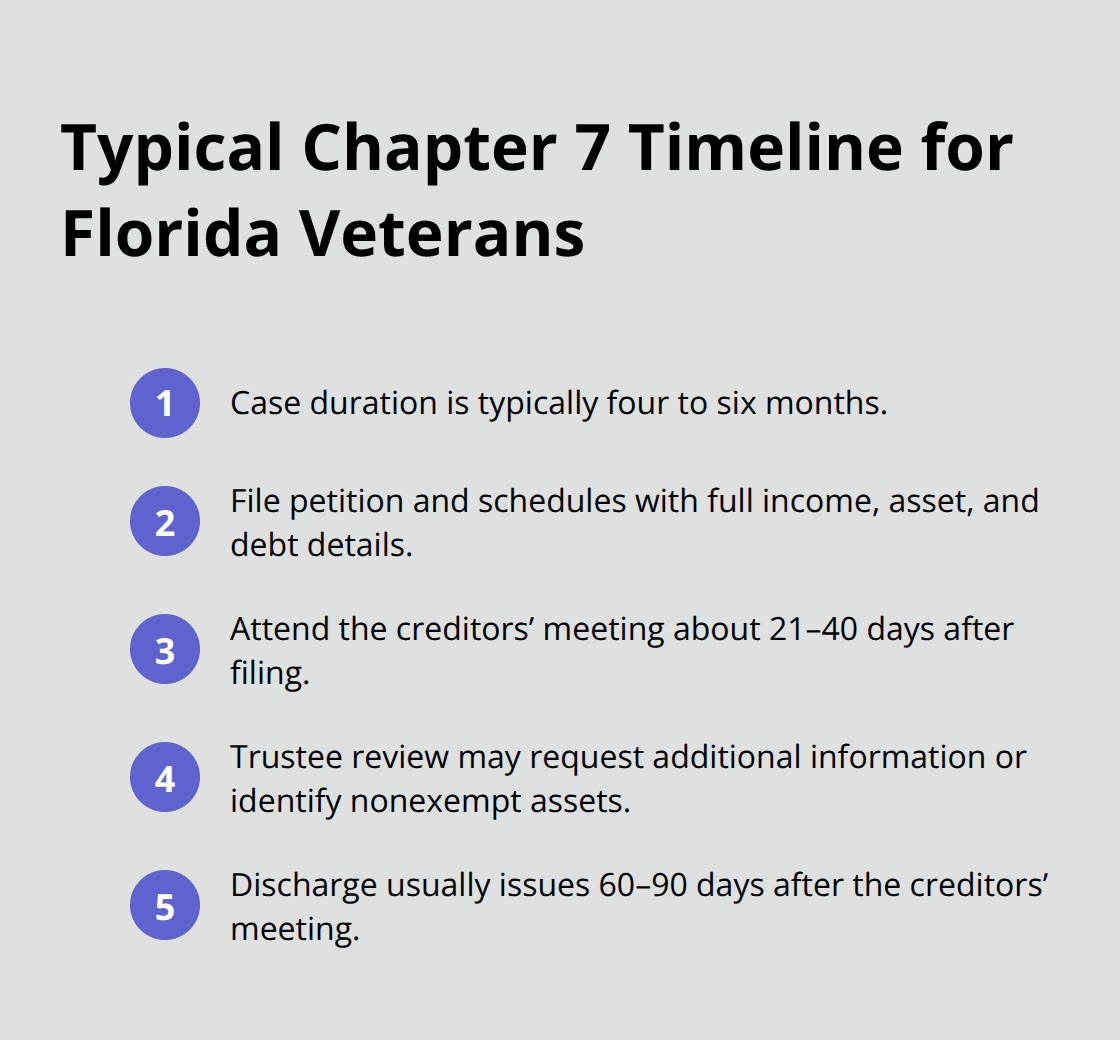
You’ll attend a creditors’ meeting approximately 21 to 40 days after filing, where the trustee may ask questions about your finances and the basis for claiming exemptions on your disability payments or home. Most veteran cases proceed without complications at this meeting since the trustee focuses on identifying nonexempt assets to liquidate, and protected income generates little interest. The discharge typically arrives 60 to 90 days after the creditors’ meeting, officially eliminating your qualifying unsecured debts.
The Automatic Stay and Creditor Protection
Throughout the bankruptcy process, the automatic stay remains in effect, preventing foreclosure, wage garnishment, and collection calls. This protection gives you breathing room to complete the bankruptcy without creditor interference. The automatic stay halts most collection efforts immediately upon filing, stopping the pressure that often accompanies serious debt situations.
Working with a Florida Bankruptcy Attorney
An attorney familiar with military finances and Florida exemptions streamlines this timeline considerably, since they understand which documents the trustee requests most frequently and can prepare your schedules to withstand scrutiny immediately. At Harnage Law, PLLC, we assist veterans through every step of the Chapter 7 process, helping you navigate the means test, protect your assets, and achieve discharge efficiently. Understanding which of your income sources count toward the means test and which assets remain protected requires careful review of your specific situation.
Final Thoughts
Chapter 7 bankruptcy in Florida offers genuine financial relief when unsecured debt becomes unmanageable, and the protections built into federal law and Florida statutes shield your VA disability payments, military pensions, and primary residence throughout the process. Your earned military benefits remain completely safe, the automatic stay stops creditor harassment immediately upon filing, and you discharge credit cards, medical bills, and personal loans while protecting what matters most. The means test exclusion for VA disability income fundamentally changes your Chapter 7 eligibility compared to civilian filers, and many veterans who believe their income disqualifies them actually pass the means test once disability payments are removed from the calculation.
The timeline for Chapter 7 in Florida typically spans four to six months from filing to discharge, giving you a relatively quick path to eliminating qualifying debts and achieving bankruptcy relief. Throughout this process, the automatic stay prevents foreclosure, wage garnishment, and collection calls, providing the breathing room you need to reorganize your finances. Keeping exempt funds separate from other money and maintaining clear documentation of your protected income strengthens your position throughout bankruptcy proceedings.
We at Harnage Law, PLLC guide veterans through every stage of Chapter 7, helping you navigate the means test, protect your assets, and achieve discharge efficiently. Contact us today to discuss your options with someone who understands military finances and Florida bankruptcy law.