Social Security recipients facing mounting debt often believe bankruptcy isn’t an option. The reality is different-Chapter 7 bankruptcy in Florida offers real debt discharge possibilities for those on fixed incomes.
At Harnage Law, PLLC, we help Social Security recipients understand how bankruptcy protections work and which debts can actually be eliminated. This guide walks through income requirements, asset protection, and the fresh start benefits available to you.
How Social Security Income Affects Chapter 7 Eligibility in Florida
Social Security Exclusion from the Means Test
Social Security income does not count toward the Chapter 7 means test in Florida, which is a significant advantage for recipients on fixed incomes. Under 11 U.S.C. § 101(10A), Social Security retirement, SSDI, and SSI payments are excluded from current monthly income calculations on Form 22A, the means-testing document that determines whether you qualify for Chapter 7. This exclusion means that your Social Security amount has no bearing on whether a bankruptcy trustee views your income as too high to file Chapter 7. For many Social Security recipients in Florida, this creates an automatic pathway to Chapter 7 eligibility that would not exist if their benefits were counted. The federal means test compares your household income to the state median for your household size; by excluding Social Security, you are much more likely to fall below that median threshold and avoid forced conversion to Chapter 13.
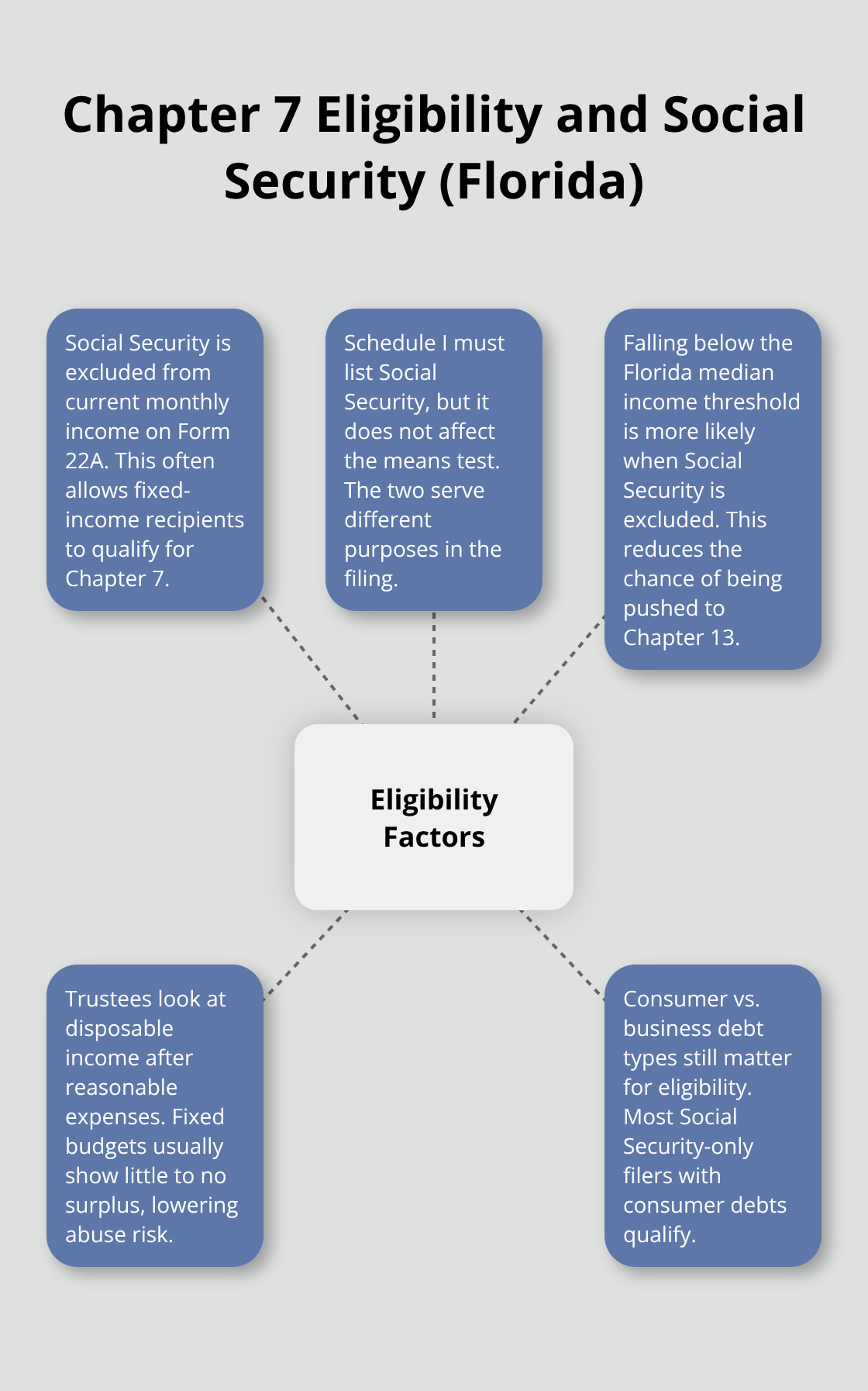
If your only income is Social Security, you qualify for Chapter 7 in virtually all cases, assuming your debts are consumer debts rather than business-related obligations.
Schedule I and the Disposable Income Test
Social Security income must still appear on Schedule I of your bankruptcy petition as part of your current income, even though it does not factor into the means test calculation. This distinction confuses many filers, but it matters: the means test and Schedule I serve different purposes. While Schedule I lists all income sources, the means test filters out Social Security to determine eligibility. The second hurdle comes from Schedule I and Schedule J together, which show whether you have leftover money each month after paying reasonable living expenses. If a trustee sees that you have disposable income-even after accounting for legitimate expenses-they can object to your Chapter 7 filing under 11 U.S.C. § 707(b)(1), claiming abuse.
Why Social Security Recipients Face Lower Abuse Risk
For Social Security recipients, this risk is lower because fixed-income budgets typically have little or no surplus once housing, utilities, medications, and food are accounted for. If you own minimal nonexempt assets and your monthly expenses consume most or all of your Social Security income, the trustee has little incentive to pursue conversion to Chapter 13. Your financial situation-not the amount of your benefits-determines whether the trustee objects to your filing.
Protecting Your Benefits Through Account Separation
Keep your Social Security deposits in a dedicated account separate from other income or funds; this documentation protects your benefits from commingling and makes it clear to the trustee that Social Security funds remain exempt property under federal law. This separation also simplifies your bankruptcy filing and reduces questions about which funds belong to your protected benefits. With proper account management in place, you move forward to understanding which specific debts Chapter 7 can eliminate and how the discharge process stops creditor actions against you.
How Your Social Security Stays Protected in Bankruptcy
Federal Protection Before and During Bankruptcy
Federal law shields your Social Security benefits from creditors regardless of whether you file bankruptcy. Under 42 U.S.C. § 407, Social Security retirement, SSDI, and SSI payments cannot be seized by creditors to satisfy debts, even without filing. When you file Chapter 7 in Florida, the automatic stay immediately halts all collection attempts against you, including creditor calls or lawsuits targeting your income. This protection is absolute for funds that remain in a dedicated account-meaning a bank account that receives only Social Security deposits and no other income or transfers. The trustee assigned to your case cannot touch these protected funds, and creditors lose all legal mechanisms to access them.
Why Account Separation Matters
Commingling Social Security with other income creates unnecessary risk. A large deposit from another source mixed with Social Security in the same account blurs the trustee’s ability to identify which funds are protected, potentially leading to disputes about what portion belongs to the bankruptcy estate. Maintain one account exclusively for Social Security deposits and use separate accounts for any other income, such as part-time work, pension payments, or VA disability benefits. This straightforward approach protects you far more effectively than any other strategy.
Documentation Protects Your Position
Documentation matters more than most people realize when protecting Social Security benefits during bankruptcy. Keep bank statements showing regular Social Security deposits for at least three to six months before filing, and label your account clearly if your bank allows account naming. If you receive a back-pay lump sum from the Social Security Administration, deposit it into your dedicated Social Security account immediately and retain the SSA award letter as proof of the funds’ source.
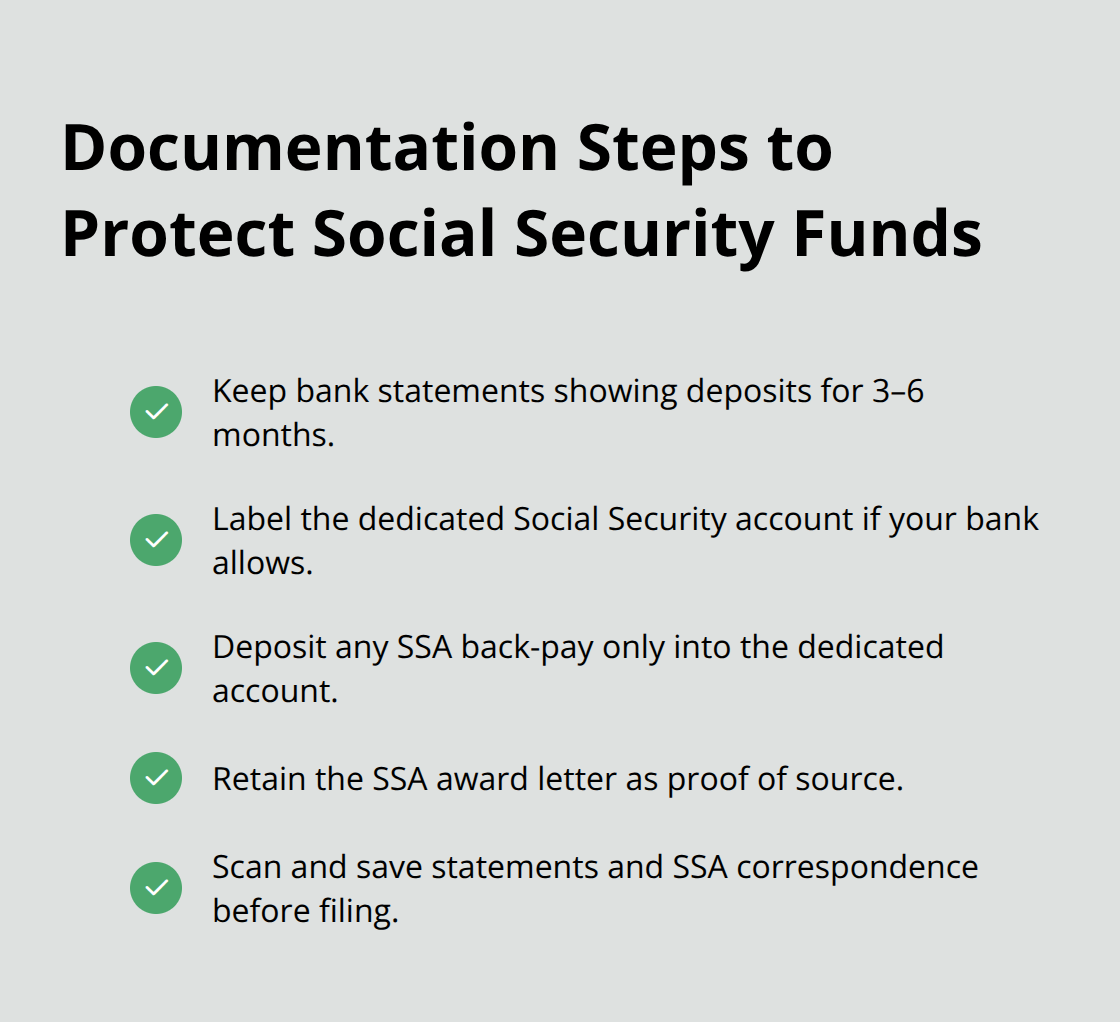
Many trustees in Florida districts recognize the significance of this documentation and will not challenge Social Security-sourced funds when the paper trail is clear. Photograph or scan your bank statements and SSA correspondence before filing, creating a record that protects you if questions arise during the bankruptcy process. Without this documentation, you may face unnecessary delays or trustee inquiries that could have been prevented with minimal effort upfront.
Transparency in Your Bankruptcy Petition
The bankruptcy petition itself requires you to list Social Security on Schedule I, but this listing does not make your benefits property of the estate-it simply shows the trustee your actual income sources. Combined with a dedicated account and supporting documentation, this transparency actually strengthens your position and demonstrates good faith to the court. With your Social Security protection firmly established, you can now focus on understanding which specific debts Chapter 7 can eliminate and how the discharge process stops creditor actions against you.
What Debts Disappear in Chapter 7 and What Stays
Chapter 7 bankruptcy eliminates most unsecured consumer debts, which means credit card balances, medical bills, personal loans, and payday loans vanish upon discharge. These debts represent money you borrowed without pledging specific property as collateral, making them ideal candidates for elimination. Secured debts like mortgages and car loans remain your responsibility because the lender holds a claim to the underlying property.
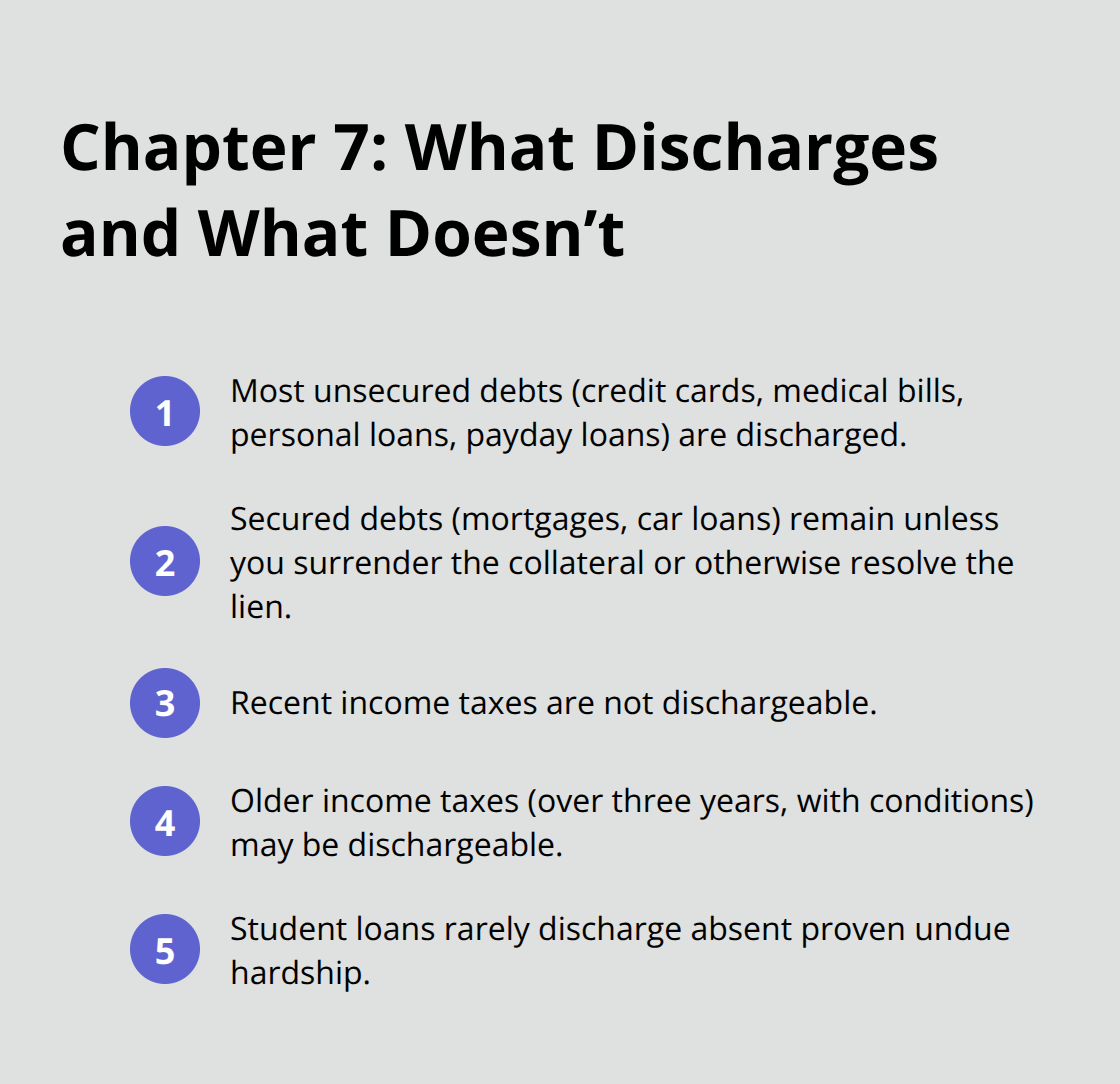
Tax debts present a mixed picture: recent income taxes cannot be discharged, but older tax obligations from returns filed more than three years ago may qualify for elimination if certain conditions are met. Student loans almost never discharge in Chapter 7 unless you can prove undue hardship, a legal standard that courts rarely apply favorably.
How Chapter 7 Stops Collection Harassment Immediately
The moment you file Chapter 7 in Florida, the automatic stay takes effect and immediately halts all collection calls, letters, lawsuits, and wage garnishment attempts. Creditors cannot contact you directly once your case is filed; they must work through the bankruptcy trustee instead. For Social Security recipients, this protection proves invaluable because creditors often escalate harassment against individuals perceived as vulnerable or unable to defend themselves. A cease-contact letter under the Fair Debt Collection Practices Act can stop calls without filing bankruptcy, but this temporary solution does not prevent lawsuits or judgment entries that lead to wage garnishment and bank levies. Chapter 7 stops these actions permanently when your debts are discharged.
Judgment Debts and Permanent Relief
If a creditor has already obtained a judgment against you, Chapter 7 wipes out that judgment debt entirely, removing the legal basis for future collection efforts. Social Security recipients living on fixed incomes cannot absorb even small monthly deductions, making this permanent relief far more valuable than any negotiated settlement or payment plan. The discharge typically occurs within four to six months of filing, and once granted, creditors cannot pursue you for the discharged debts under any circumstances.
The Fresh Start Advantage for Fixed-Income Situations
Chapter 7 offers what bankruptcy law calls a fresh start, meaning eligible debts simply disappear and you owe nothing further on them. This differs fundamentally from Chapter 13, which requires you to repay a portion of your debts over three to five years through a court-approved plan. For someone receiving only Social Security, Chapter 13 payments often consume money needed for medications, utilities, or food, creating new financial hardship rather than relief. Chapter 7 avoids this trap entirely. The psychological benefit matters as much as the financial one: Social Security recipients report significant stress reduction when collection calls stop and the threat of lawsuits disappears (stress that directly impacts health and well-being). Chapter 7’s straightforward path to discharge, combined with Social Security protection, creates genuine breathing room for those on fixed incomes.
Final Thoughts
Social Security recipients in Florida have a clear path to Chapter 7 bankruptcy relief that many never realize exists. The exclusion of Social Security from the means test removes the primary barrier that stops other filers, while federal law protects your benefits throughout the bankruptcy process and beyond. When you file Chapter 7, your Social Security income remains untouchable by creditors, the automatic stay halts collection harassment immediately, and debt discharge eliminates qualifying debts entirely.
The practical steps forward are straightforward. Gather documentation of your Social Security deposits and any back-pay awards, keeping these funds in a dedicated account separate from other income. List all your debts and assets honestly on your bankruptcy petition, including Social Security on Schedule I, then complete the required credit counseling course before filing.
We at Harnage Law, PLLC guide Social Security recipients through every stage of Chapter 7 bankruptcy in Florida, helping you understand how your benefits stay protected and which debts will be eliminated. Contact Harnage Law, PLLC to discuss your circumstances and learn whether Chapter 7 offers the relief you need.