Business losses from a failed venture can actually strengthen your Chapter 7 bankruptcy case in Florida. These losses reduce your income and demonstrate genuine financial hardship to the court, which directly impacts how much debt you can discharge.
We at Harnage Law, PLLC know that proper bankruptcy strategy requires documenting these losses accurately. The right documentation can lower your disposable income and preserve more of your personal assets.
How Business Losses Lower Your Disposable Income and Strengthen Your Chapter 7 Case
The Means Test and Business Loss Impact
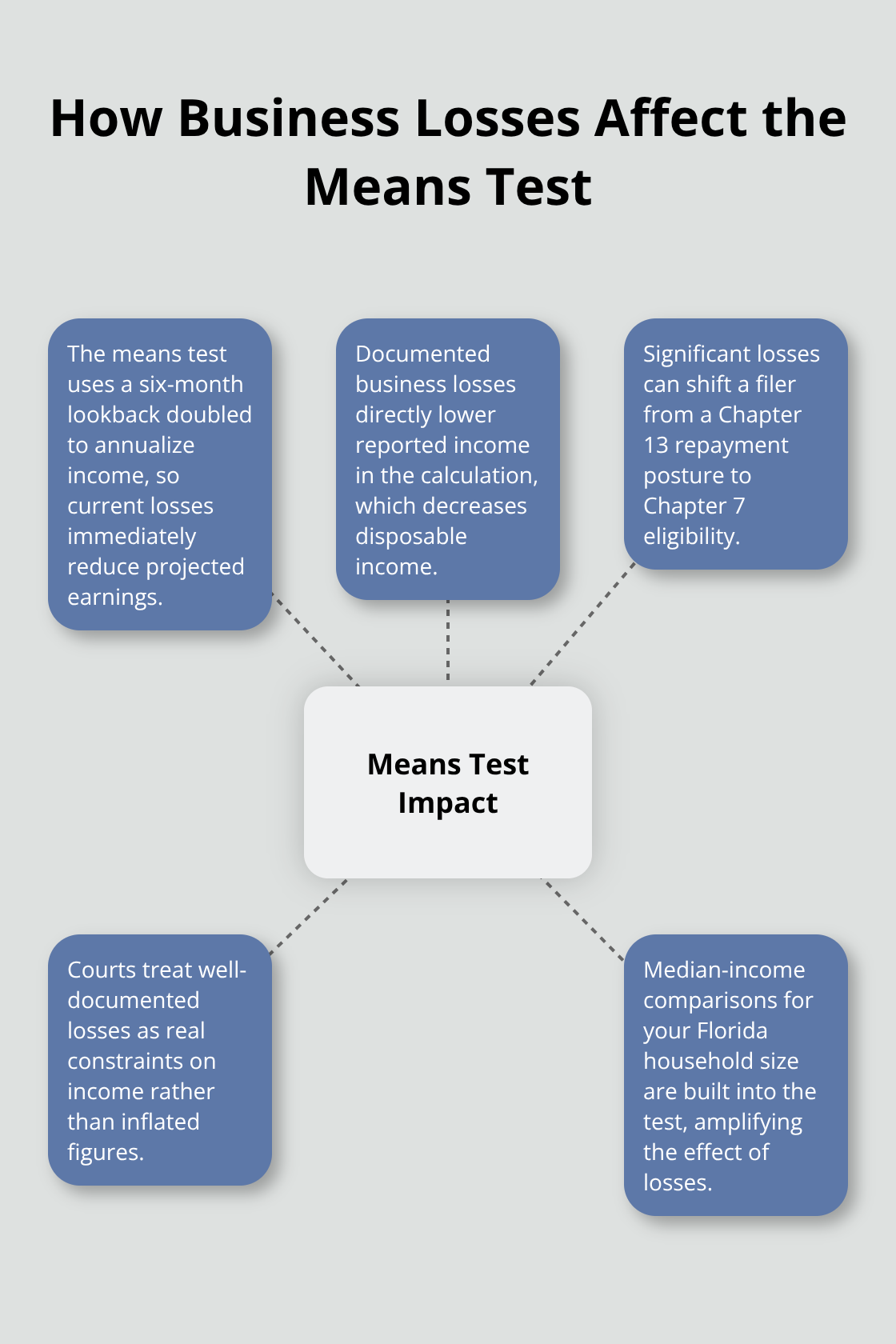
When you file Chapter 7 in Florida, the court calculates your disposable income using a means test that directly accounts for business losses. The means test compares your income against the Florida median income for your household size, then subtracts allowable expenses to determine what you could theoretically pay toward debt. If your business generated losses, those losses reduce your reported income on the calculation, which lowers your disposable income figure. The U.S. Department of Justice requires the means test to use six months of recent income history doubled to project annual earnings, so current business losses have an immediate impact on this critical calculation. A business that lost $30,000 last year significantly changes your disposable income compared to a business that broke even, potentially shifting you from a Chapter 13 repayment scenario into Chapter 7 eligibility. The court views legitimate business losses as evidence that your income is genuinely constrained, not inflated or artificially high.
Why Documentation Matters More Than General Claims
Accurate documentation of business losses matters more than claiming vague financial hardship. Courts in Florida and across the country scrutinize income claims heavily, but they accept documented business losses because tax returns and financial records verify them. The IRS has already reviewed your tax filings if you reported those losses, which gives them credibility in bankruptcy court. When you file Chapter 7, the trustee assigned to your case will review your Schedule C (Profit or Loss from Business) or Schedule F (Profit or Loss from Farming) to confirm the losses you claim. If your business reported a $50,000 loss on your 2024 tax return, that becomes part of your official financial picture-not a negotiable claim. The trustee will cross-reference this with bank statements and business expense records to verify the loss is legitimate and not inflated.
How Net Income Determines Chapter 7 Eligibility
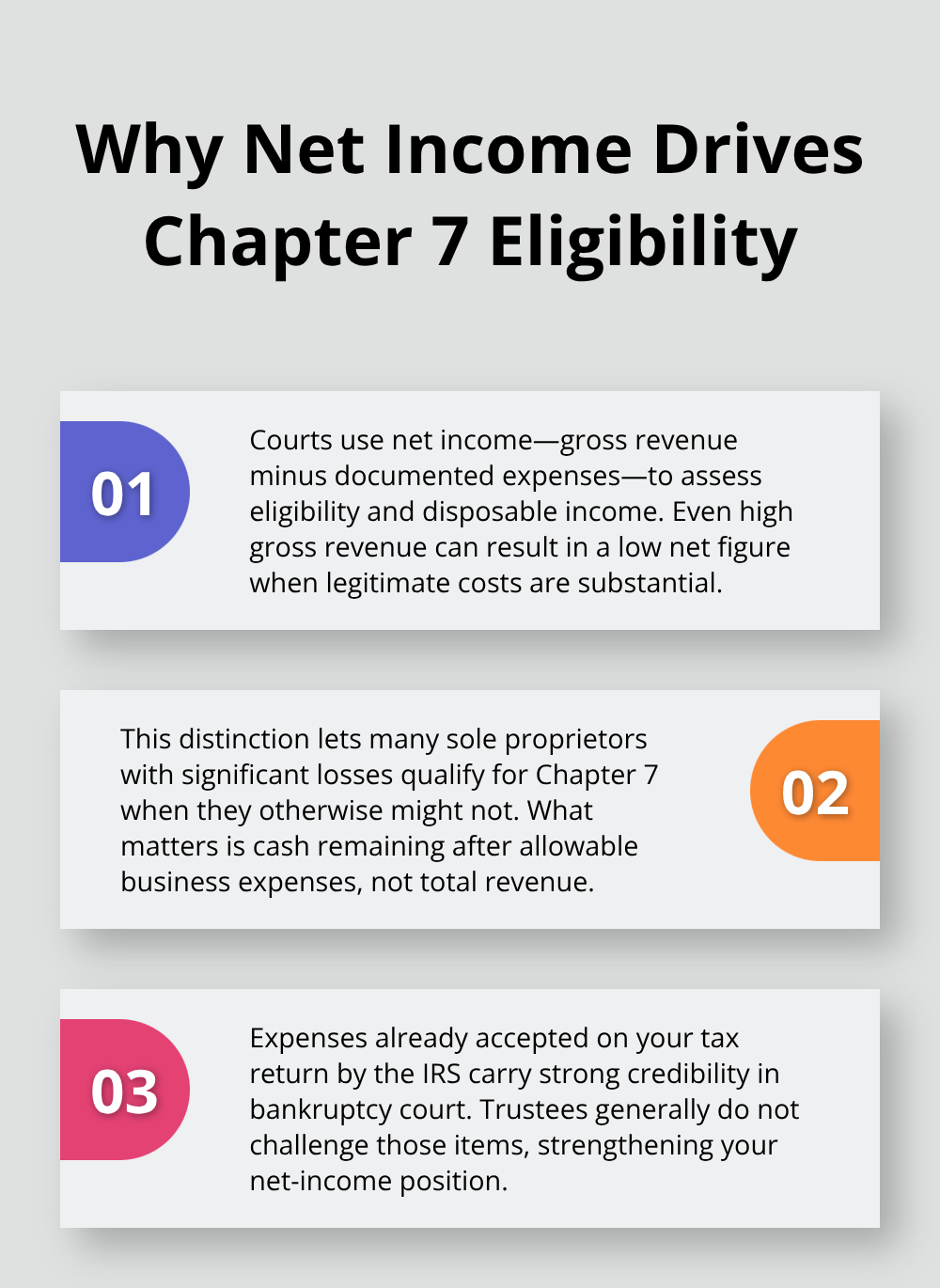
A business loss that reduced your net income below the Florida median for your household size can essentially guarantee Chapter 7 eligibility, even if your gross revenue was high. For example, if you had $200,000 in gross revenue but $180,000 in documented business expenses, your net income of $20,000 might fall below the median income threshold for your household, making Chapter 7 available without passing the detailed means test. Sole proprietors and self-employed individuals with significant losses often find Chapter 7 the fastest path to debt discharge. This outcome occurs because the court focuses on net income, not gross revenue. Your actual ability to pay creditors depends on what remains after legitimate business expenses (not on total money flowing through your business). Understanding this distinction helps you prepare accurate financial schedules for your filing. The next section covers how to gather and organize the specific documents the trustee will examine.
Building Your Documentation Package for the Trustee
Gather Tax Returns and Business Records
The trustee assigned to your Chapter 7 case will demand specific financial records within days of your filing, so you must gather them beforehand to prevent delays and strengthen your credibility. Start with your last two years of federal tax returns, particularly Schedule C if you are self-employed or own a sole proprietorship. Schedule C directly reports your business income and expenses, and the line labeled Net Profit or Loss becomes your official business loss figure that the court uses. If you reported a $45,000 loss on your 2024 Schedule C, that number will appear on your bankruptcy schedules and cannot be inflated or minimized later.
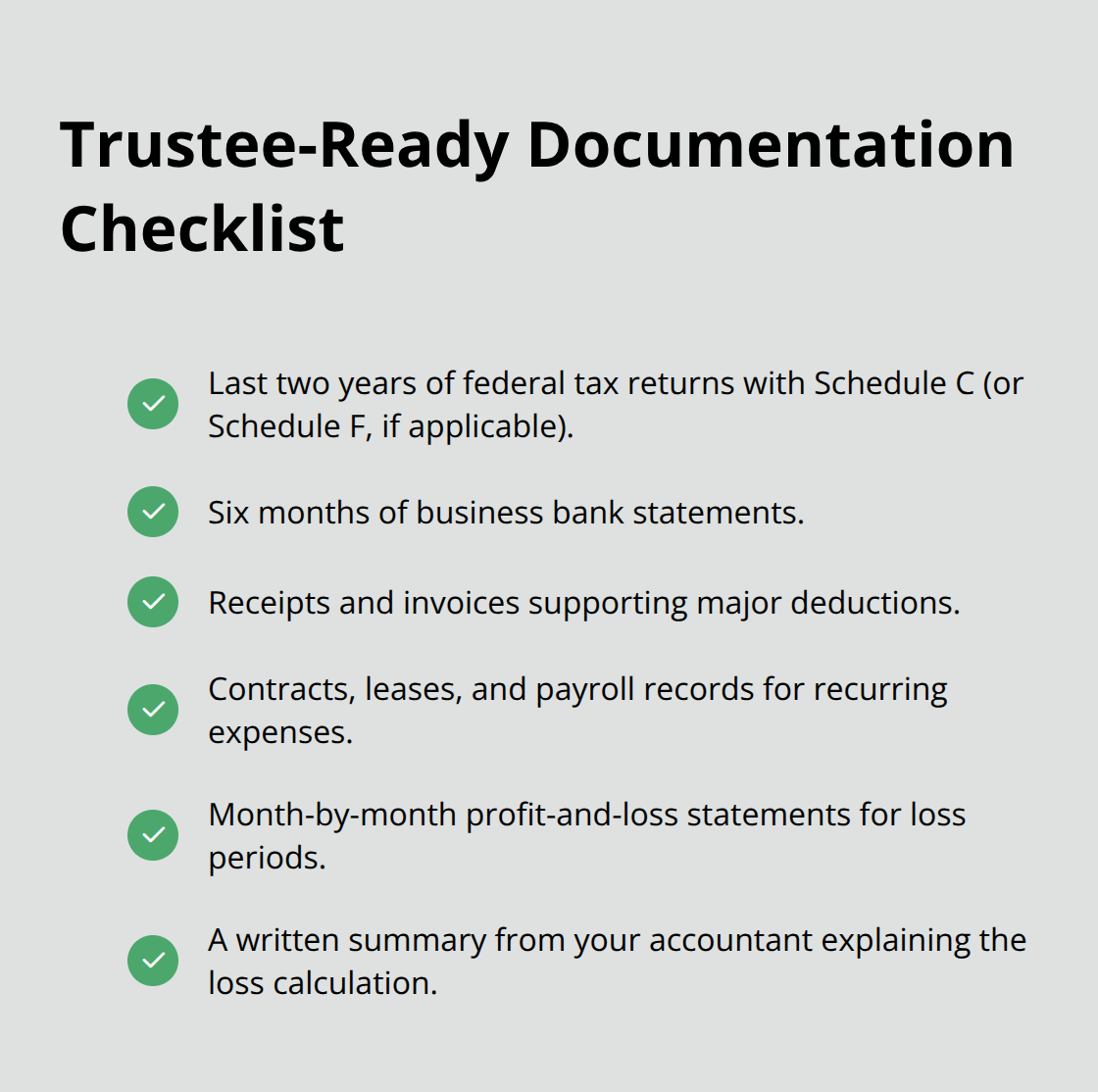
Beyond tax returns, you should collect your business bank statements for the past six months to verify that the losses you report match actual cash flow. The trustee will cross-reference your Schedule C figures against these statements to confirm legitimacy. You must gather receipts, invoices, and expense documentation for major deductions claimed on your return, such as equipment purchases, rent, payroll, or inventory costs. The IRS already reviewed these items if you filed your return, but the bankruptcy trustee will want to see the supporting evidence.
Organize Documents Chronologically
You should organize these documents chronologically in a folder or digital file so you can quickly locate any item the trustee requests. Many trustees in Florida request copies of business profit-and-loss statements for months where losses were concentrated, so you must have month-by-month records readily available to speed up the process. This preparation demonstrates to the court that you take your financial obligations seriously and have nothing to hide.
Verify Your Loss Calculation with Professional Help
An accountant or bookkeeper who prepared your tax returns can calculate your exact net business loss and explain which expenses qualify as deductible business costs versus personal expenses that the court will disallow. This distinction matters because the trustee may challenge expenses that seem personal rather than truly business-related. For example, a home office deduction requires documentation showing the square footage used exclusively for business, while a vehicle expense requires mileage logs or lease agreements.
If your accountant provides a written summary showing how the loss was calculated and which items were included, you have a defense against trustee objections. The Northern District of Florida and Middle District of Florida both require detailed income documentation, and this summary from your accountant demonstrates that your loss calculation follows standard accounting practices. You should schedule a consultation with your accountant before filing to review your business loss figure and verify it will withstand scrutiny. Some accountants charge $200 to $500 for this review, which costs far less than dealing with trustee disputes later.
Address Self-Prepared Returns
If you prepared your own taxes, you should consider hiring a bookkeeper or accountant now to verify your loss calculation is defensible, even if you did not use one when filing your return. This professional review protects you from challenges during the bankruptcy process. With your documentation package complete and verified, the next step involves understanding how the trustee evaluates your business losses against your overall financial picture and what questions you should anticipate during your meeting of creditors.
How Business Losses Shield Your Assets in Chapter 7
Income Reduction Through Documented Losses
Business losses directly reduce the income figure courts use to calculate how much you must repay creditors, which means lower losses translate to more debt discharge and stronger asset protection. When the court determines your disposable income through the means test, it subtracts your documented business expenses from your gross revenue to find your net income. A business that lost $40,000 in 2024 reduces your reported annual income by that full amount, which can drop you below Florida’s median income threshold for your household size and eliminate the need to pass the detailed means test entirely. This income reduction matters because it shifts the court’s perception of your financial capacity. Courts in Florida recognize that legitimate business losses represent genuine hardship, not temporary setbacks or income fluctuations. The U.S. Department of Justice uses six months of recent income history doubled to project annual earnings, so your current business loss immediately affects this calculation.
Net Income Versus Gross Revenue
If you operated a business that generated $150,000 in gross revenue but reported $95,000 in documented expenses, your net income of $55,000 becomes the figure the court uses for eligibility and disposable income calculations. This distinction between gross revenue and net income is why sole proprietors with significant losses often qualify for Chapter 7 when they otherwise might not. Your actual ability to repay creditors depends on what remains after legitimate business expenses, and courts understand this principle thoroughly. The trustee cannot challenge expenses already reported on your tax return and accepted by the IRS, which gives your loss calculation substantial credibility.
Strategic Documentation Strengthens Protection
Strategic documentation of every business expense strengthens this protection because the trustee will verify each deduction against your tax returns and supporting records. Expenses like rent, payroll, equipment depreciation, inventory costs, and professional services all reduce your net income figure if properly documented. When you file Chapter 7, the trustee assigned to your case will cross-reference your Schedule C against bank statements and business records to confirm the losses you claim. This means your business loss becomes a legal shield against creditor claims because it demonstrates you have no disposable income available for repayment plans. The trustee will examine receipts, invoices, and expense documentation for major deductions claimed on your return to verify that each item qualifies as a legitimate business cost rather than a personal expense. This verification process protects you because the IRS already reviewed these items if you filed your return, establishing their legitimacy before bankruptcy court ever sees them.
Final Thoughts
Business losses from a failed venture strengthen your Chapter 7 bankruptcy case in Florida because they reduce your reported income and demonstrate genuine financial hardship to the court. The means test calculation that determines your eligibility directly accounts for business expenses and net income, so losses you reported to the IRS become part of your official financial picture in bankruptcy court. Your business loss is not a claim you must defend or negotiate; it is a verified fact that the IRS already accepted when you filed your tax return.
Proper documentation forms the foundation of successful bankruptcy strategy in Chapter 7 cases. The trustee assigned to your case will examine your Schedule C, bank statements, receipts, and expense records to verify that your business loss is legitimate and not inflated. An accountant or bookkeeper can review your loss calculation to verify it withstands trustee scrutiny, which costs far less than dealing with disputes after you file.
We at Harnage Law, PLLC help you present your financial situation clearly and accurately to the court. Our team guides you through the documentation process and filing Chapter 7 with confidence so you can discharge qualifying debts and protect your assets. Contact us for a consultation to discuss whether Chapter 7 is the right path forward for your situation.