A sudden income drop forces many Florida residents into a financial corner they didn’t see coming. When paychecks shrink or disappear entirely, debt spirals faster than most people can manage, and creditors waste no time pursuing aggressive collection tactics.
We at Harnage Law, PLLC know that waiting rarely helps. Chapter 7 bankruptcy offers a genuine path to a fresh start with debt, stopping creditor harassment and protecting your assets before the situation becomes irreversible.
How Income Loss Spirals Into Debt
Job Loss Creates Immediate Financial Pressure
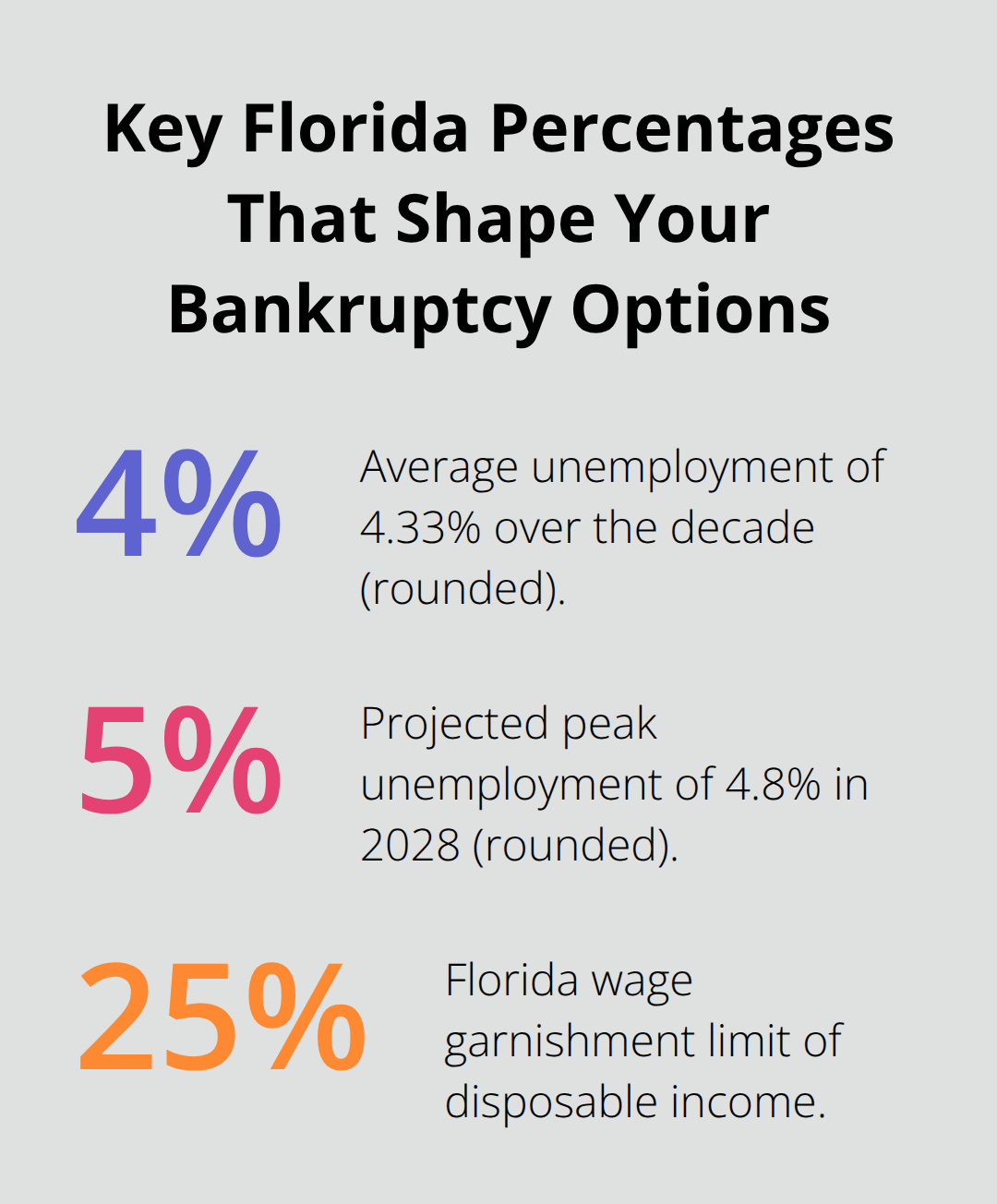
Job loss hits Florida households hard, and the financial consequences arrive faster than most people anticipate. When employment ends abruptly, the first month feels manageable-you tap savings, reduce spending, and hope for a quick job transition. Within two or three months, reality sets in. Credit card balances climb because living expenses don’t pause for unemployment. Rent, utilities, groceries, and insurance still demand payment. According to Florida’s 2026 economic forecast, unemployment is projected to peak at 4.8% in 2028, with an average of 4.33% over the decade, meaning more Florida residents will face job loss in the coming years.
What starts as a temporary income gap transforms into a debt accumulation problem that spirals beyond recovery.
Medical Emergencies Compound Financial Crisis
Medical emergencies compound this crisis instantly. A single hospitalization or surgery costs thousands of dollars even with insurance, and many people delay seeking care specifically because they cannot afford it. When medical debt combines with unemployment, the debt-to-income ratio deteriorates rapidly, making recovery without intervention nearly impossible. The financial damage happens faster than most people can respond to it.
Reduced Hours and Pay Cuts Create Slow Erosion
Reduced hours and pay cuts create a slower but equally destructive financial erosion. Unlike job loss, which is sudden and sometimes qualifies for unemployment benefits, reduced hours often go uncompensated. A retail worker losing five hours per week loses $250 to $300 monthly-enough to force credit card reliance for groceries and utilities. Per capita personal income in Florida is forecast to grow from about $88,000 in 2026 to roughly $126,300 by 2035, but these are nominal figures that don’t account for inflation or individual income volatility.
Creditors Don’t Wait for Stability
The timing matters enormously because creditors don’t wait for your situation to stabilize. Once payments slip by 30 days, collection calls intensify. Interest rates spike on credit cards, and late fees accumulate. Many Florida residents face this exact scenario: income drops 15–20%, but debt obligations remain unchanged, creating an impossible math problem. The six-month income averaging method used in bankruptcy calculations actually works in your favor during income decline because it captures your lower earning period and can move you below the Florida median income threshold for Chapter 7 eligibility. This timing advantage means that filing sooner rather than later positions you to qualify for relief that might otherwise slip away as your income stabilizes.
Why Creditors Escalate When Your Income Drops in Florida
Collection Actions Accelerate in Predictable Stages
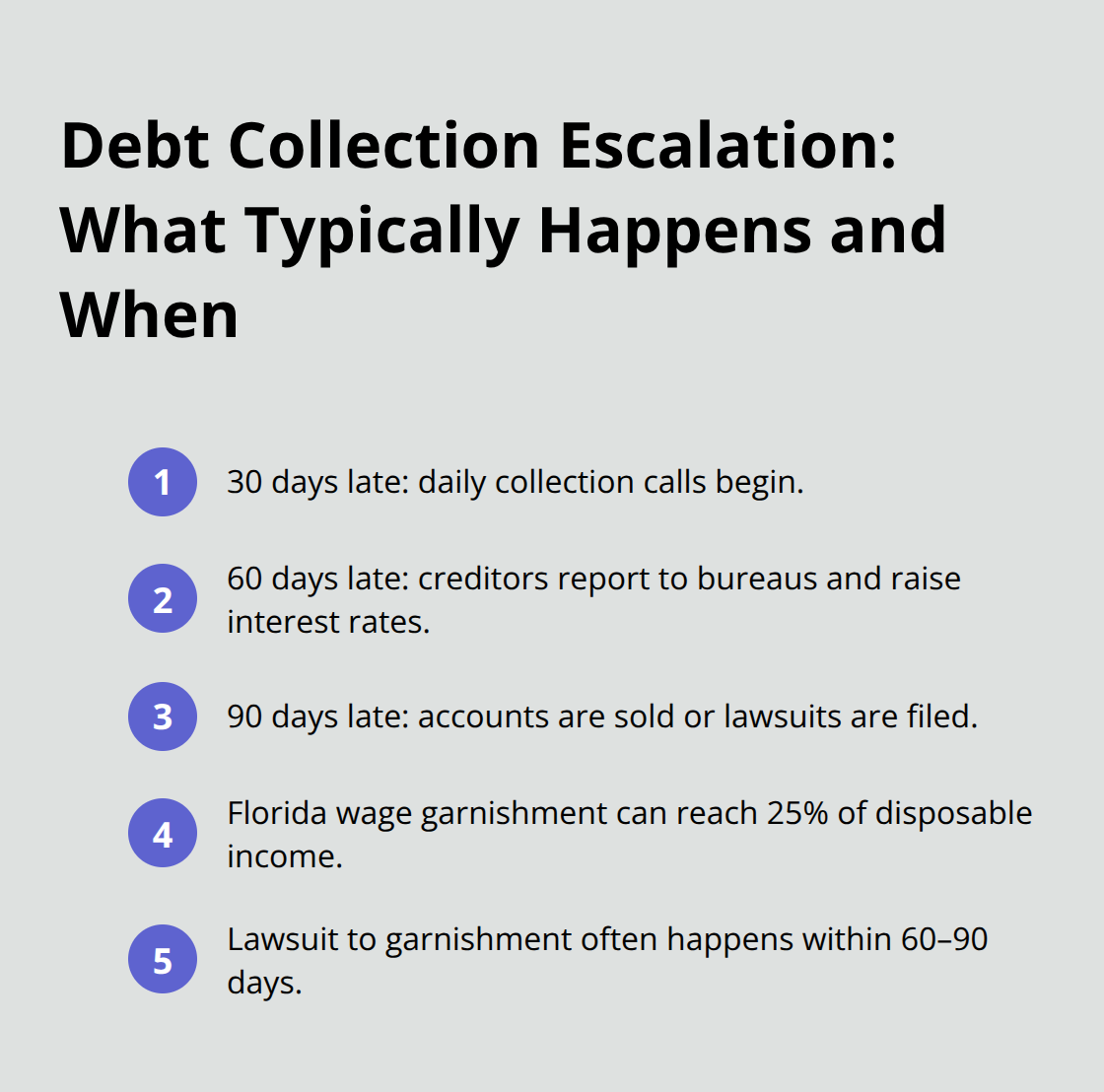
When your income falls, creditors shift from passive billing to aggressive collection. This isn’t a gradual process-it accelerates in predictable stages. Once a payment hits 30 days late, collection calls begin daily. At 60 days, creditors file reports with credit bureaus and interest rates spike. At 90 days, many creditors sell accounts to debt collection agencies or file lawsuits. Florida law allows creditors to garnish wages starting at 25% of your disposable income after federal and state deductions, meaning a $2,000 monthly paycheck could lose $400 or more to garnishment.
This compounds the original income loss.
Wage Garnishment Multiplies Your Financial Damage
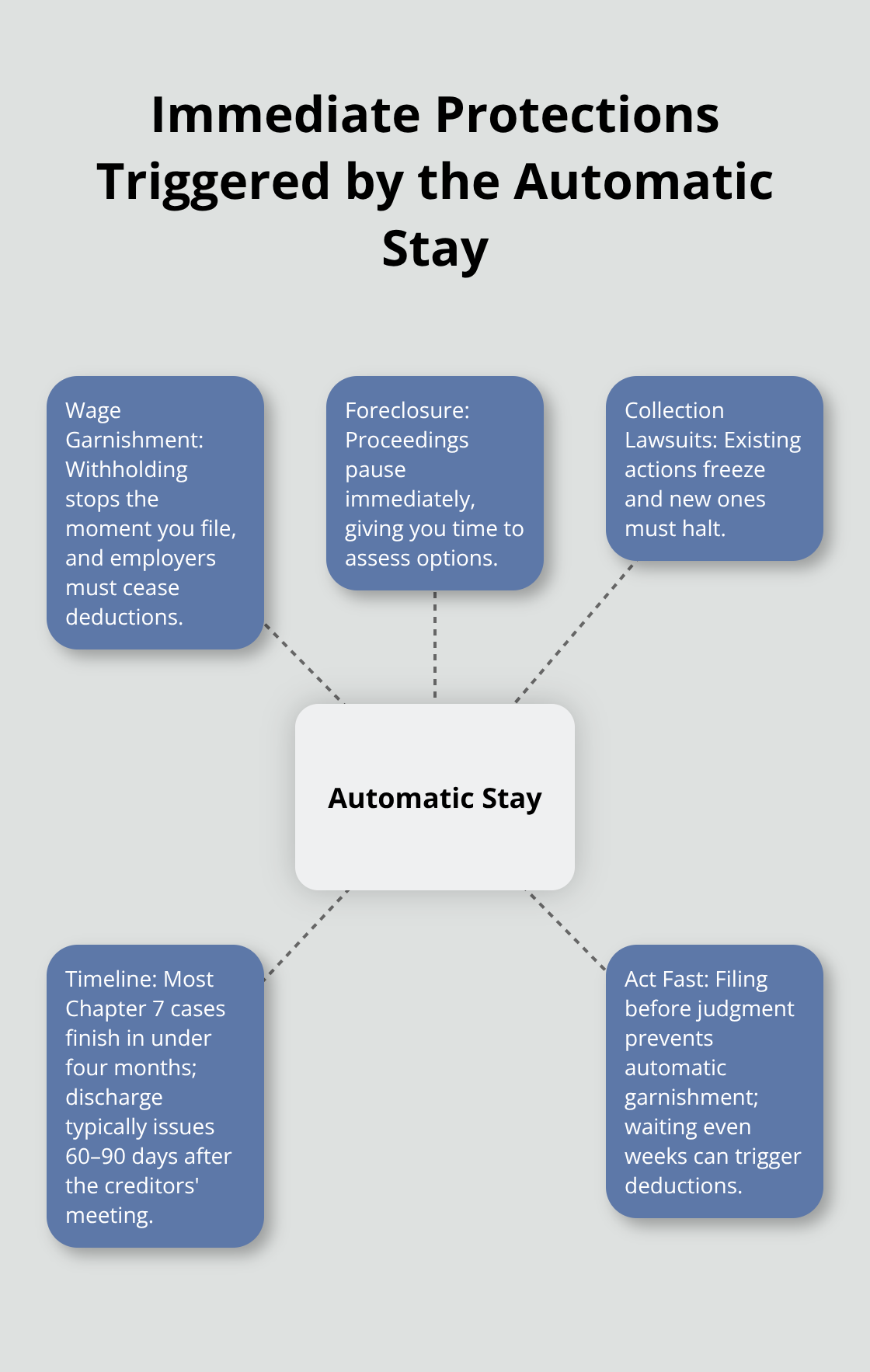
If you earn $3,000 monthly and lose $500 to job reduction, then face $400 in wage garnishment, your take-home drops $900-a devastating 30% hit. The timing of filing Chapter 7 matters because once a creditor obtains a judgment, garnishment becomes automatic. Florida courts process these quickly, often within 60 to 90 days of a lawsuit filing. The automatic stay in Chapter 7 stops wage garnishment immediately upon filing, but only if you file before the judgment is finalized. Waiting even two weeks can mean the difference between stopping garnishment and watching it drain your account for months.
Foreclosure Timelines Force Urgent Action
Foreclosure and asset seizure follow a similar timeline. If you have a mortgage and miss payments, the lender typically files a foreclosure action 120 days after the first missed payment in Florida. Once foreclosure begins, the process accelerates-most cases resolve in 6 to 12 months, and your home can be sold at auction with minimal warning. Chapter 7 filing triggers the automatic stay, which halts foreclosure immediately, giving you time to evaluate options. However, the stay in Chapter 7 is temporary for mortgage debt; creditors can request relief from the stay after a few months. If you want to keep your home, Chapter 13 is often the better path because it allows you to catch up on missed payments through a court-approved repayment plan.
Liens Against Your Assets Create Cascading Vulnerability
Unsecured creditors pursue liens against bank accounts, vehicles, and other property. A creditor judgment in Florida allows liens on personal property and real estate, meaning your car or savings account becomes vulnerable. The sooner you file Chapter 7, the sooner the automatic stay protects these assets from seizure. Waiting until multiple judgments exist makes recovery harder and more expensive because you must fight multiple lien claims rather than addressing all debts at once through bankruptcy discharge. Understanding your debt-to-income ratio and the window for filing Chapter 7 becomes essential when creditors move this fast.
Act Before Creditors Lock in Judgments in Florida
Calculate Your Debt-to-Income Ratio Now
Your debt-to-income ratio tells you exactly how much breathing room you have left, and calculating it takes minutes. Add up all monthly debt payments-credit cards, car loans, medical bills, personal loans-then divide by your gross monthly income. If that number exceeds 43%, creditors have already shifted into collection mode, and your window for filing Chapter 7 is narrowing. Florida’s median income thresholds matter here because they determine whether you qualify for Chapter 7 without passing the means test. A household of two earns $51,839 annually according to current Florida standards, meaning $4,320 monthly. If you owe $2,000 monthly in debt payments, your ratio is 46%-dangerously high.
Use the Six-Month Averaging Method to Your Advantage
The six-month averaging method used in bankruptcy filings works in your favor during income decline. If you earned $5,000 monthly six months ago but earn $3,500 now, bankruptcy calculations use the average of $4,250, potentially moving you below the Florida median and qualifying you for Chapter 7 without the means test. This advantage disappears as your income stabilizes, which is why filing within 30 to 60 days of job loss or significant income reduction gives you the strongest position. The timing of your filing directly affects your eligibility, and waiting costs you this mathematical advantage.
The Automatic Stay Stops Creditors Immediately
The automatic stay stops wage garnishment, foreclosure, and collection lawsuits the moment your Chapter 7 petition is filed. Creditors cannot ignore this court order-garnishment halts, foreclosure proceedings pause, and debt collection calls must cease. Most Chapter 7 cases resolve in under four months, with discharge typically issued 60 to 90 days after the creditors’ meeting. This speed matters because creditors are aggressive about securing judgments before you file. A judgment filed today can become a wage garnishment within weeks, but a Chapter 7 filing stops it instantly.
File Before Multiple Judgments Stack Against You
If you face multiple collection lawsuits or wage garnishment has already started, filing Chapter 7 immediately prevents additional judgments from stacking against you. The filing fee totals $335, payable in up to four installments within 180 days, and fee waivers are available for low-income filers. Gather your creditor list, recent pay stubs, and tax returns now-before creditors obtain judgments. The longer you wait, the more difficult your recovery becomes because multiple judgments create competing claims against your assets and income that Chapter 7 must address simultaneously rather than preventing through timely filing.
Your Debt Fresh Start Begins Now
Chapter 7 discharge eliminates most unsecured debts and provides the financial reset that income loss made impossible on your own. Credit cards, medical bills, personal loans, and collection accounts vanish through the discharge process, which typically arrives 60 to 90 days after your creditors’ meeting. This isn’t a repayment plan or debt consolidation-it’s a complete elimination of qualifying debts, meaning creditors must respect the court order or face serious legal consequences.
Florida exemptions protect your primary residence, vehicle, household goods, and retirement accounts during Chapter 7, allowing you to keep essential property while the trustee addresses creditor claims. Most Chapter 7 cases are no-asset cases, meaning creditors receive nothing and your property remains yours. Understanding which assets stay protected before filing prevents surprises and ensures you retain what matters most.
After discharge, a sustainable budget built on your actual income and necessary expenses prevents the income-loss spiral from repeating. The means test calculations already identified your essential living costs-housing, utilities, food, transportation, insurance-so you have a realistic baseline for post-discharge spending. We at Harnage Law, PLLC guide you through every step of this process, from calculating your eligibility through discharge and beyond, so contact us today to discuss your situation.