Chapter 7 bankruptcy offers a fresh financial start by eliminating many debts that feel impossible to repay. Not all debts disappear in a Chapter 7 discharge in Florida, though-some obligations remain your responsibility even after the process concludes.
We at Harnage Law, PLLC help Florida residents understand which debts vanish and which ones stick around. This guide breaks down the discharge rules so you know exactly what to expect.
What Debts Disappear in a Florida Chapter 7 Discharge
Credit Card Debt and Personal Loans
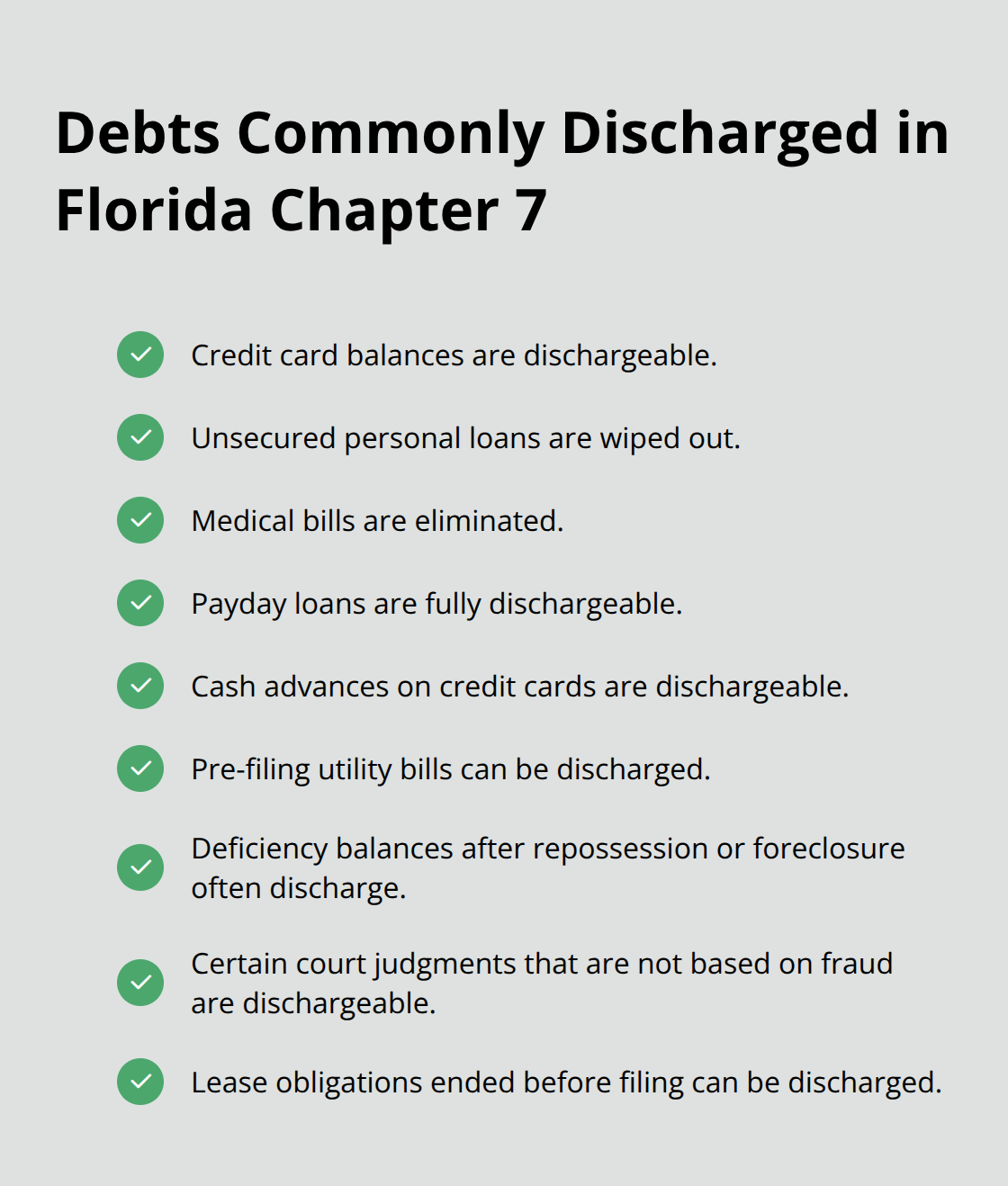
Credit card balances rank among the most commonly eliminated debts in Florida Chapter 7 filings. The average American household carries roughly $6,375 in credit card debt according to recent consumer data, and nearly all of it vanishes through discharge regardless of how late the payments became or how high the fees climbed. Personal loans follow the same path-unsecured personal loans get wiped clean in Chapter 7, which matters because many people turn to these loans when credit cards max out.
Medical Bills and Other Healthcare Costs
Medical bills discharge completely, and this matters significantly because medical debt represents the leading cause of personal bankruptcy filings in the United States. Payday loans, despite their predatory structure and sky-high interest rates, are fully dischargeable. Cash advances on credit cards disappear too, even if you took them within 60 days of filing (the exception only applies to purchases over $1,150, not cash advances).
Utility Bills, Deficiencies, and Court Judgments
Outstanding utility bills for electricity, gas, and water discharge as long as they accumulated before your filing date. Deficiency balances after car repossession or home foreclosure often discharge as well-if your vehicle sold at auction for less than you owed, that gap typically vanishes through discharge. Certain court judgments stemming from unpaid debts get discharged, though judgments arising from fraud or intentional harm do not. Lease obligations you ended before filing also discharge as dischargeable debts.
The Unsecured Debt Framework
Florida courts treat most unsecured debts aggressively in Chapter 7 discharge. The key distinction is whether the debt is unsecured, meaning no collateral backs it. If creditors cannot claim your property to satisfy the debt, Chapter 7 discharge eliminates it.
This applies even to debts that feel overwhelming-tens of thousands in credit card balances, medical collections spanning years, or payday loan cycles that spiraled out of control. The discharge order is permanent and legally binding; creditors cannot pursue these debts afterward through collection calls, lawsuits, wage garnishment, or any other means.
Understanding which debts fall into this dischargeable category helps you evaluate whether Chapter 7 bankruptcy actually solves your financial situation. However, not every debt vanishes in Florida Chapter 7 bankruptcy-some obligations remain your responsibility even after discharge concludes, and knowing the difference between what disappears and what stays is essential to your planning.
Debts That Survive Chapter 7 Discharge in Florida
Chapter 7 bankruptcy eliminates most unsecured debts, but federal law carves out specific obligations that follow you permanently. Child support and alimony rank at the absolute top of non-dischargeable debts under 11 U.S.C. § 523(a)(5). These family support obligations cannot disappear in Chapter 7, regardless of how far behind you’ve fallen or how impossible repayment feels. If you owe $15,000 in back alimony or $8,000 in unpaid child support, that debt remains your legal responsibility after discharge concludes.
Family Support Obligations and Chapter 13 Alternatives
The only pathway forward involves paying through a Chapter 13 repayment plan, which lets you catch up over three to five years while protecting other assets from creditors. This strategy addresses family support debts that Chapter 7 cannot touch, making Chapter 13 the practical choice when alimony or child support dominates your debt load.
Federal Student Loans and the Undue Hardship Standard
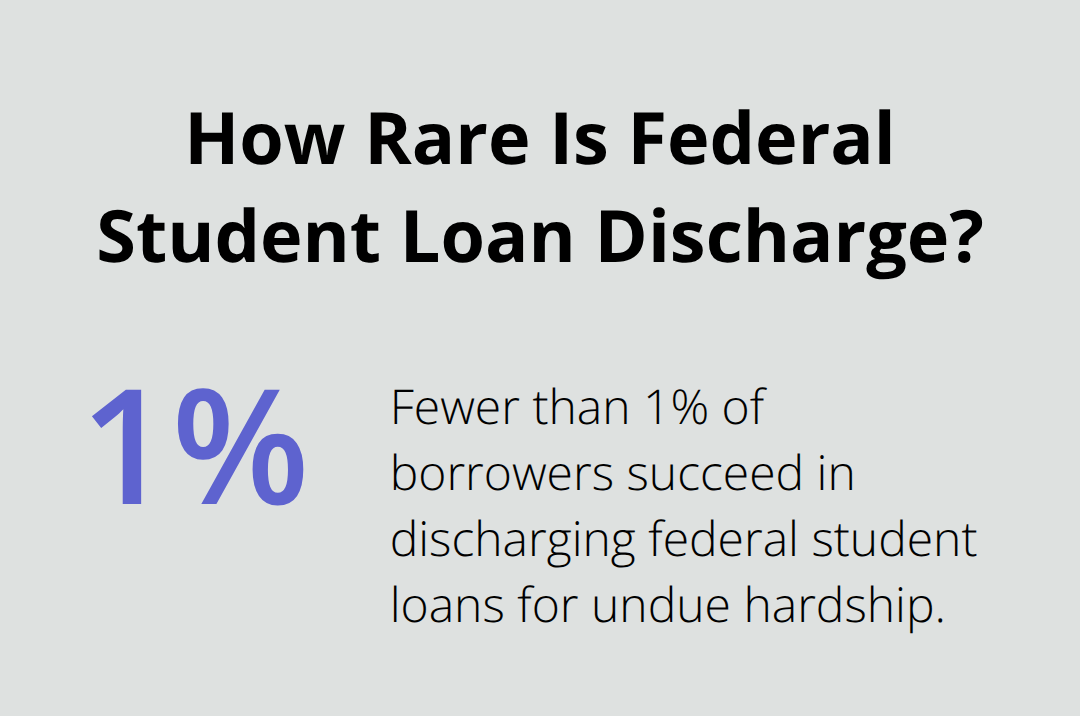
Federal student loans present another permanent obstacle. The government designed student loans to survive bankruptcy intentionally, and courts rarely grant discharge unless you prove undue hardship-a legal standard so restrictive that fewer than 1% of borrowers succeed. Private student loans sometimes discharge under different rules, but federal loans through the Department of Education stay with you indefinitely.
Tax Debts and Government Penalties
Tax debts create the third major category of non-dischargeable obligations. Recent income tax debts cannot disappear, though older taxes meeting specific IRS criteria may qualify for discharge under the three-year, six-year, and ten-year rules outlined in IRS Topic 431. The key dates matter tremendously: if you filed your tax return more than three years ago and the debt arose more than six years before your bankruptcy filing, discharge becomes possible. However, tax penalties and government fines attached to violations of law remain non-dischargeable permanently, creating a permanent financial anchor that Chapter 7 cannot cut loose.
Omitted Debts and Procedural Compliance
Debts not listed in your bankruptcy petition also remain non-dischargeable, so completeness during filing prevents costly surprises later. The bankruptcy court can deny discharge entirely if you fail to complete the required personal financial management course, don’t provide tax documents, conceal assets, or commit fraud-making compliance with procedural requirements just as important as understanding which debts qualify for elimination. Some filers carry a mix of dischargeable and non-dischargeable debts, and the strategy shifts depending on which category dominates your situation. If your primary debts are student loans, recent taxes, or family support obligations, Chapter 7 may not be your answer-Chapter 13 could address these debts through a structured repayment plan instead. Understanding these non-dischargeable categories forces a realistic conversation about what Chapter 7 actually accomplishes in your situation, which brings us to the practical steps involved in moving forward with the discharge process itself.
How Chapter 7 Discharge Works in Florida
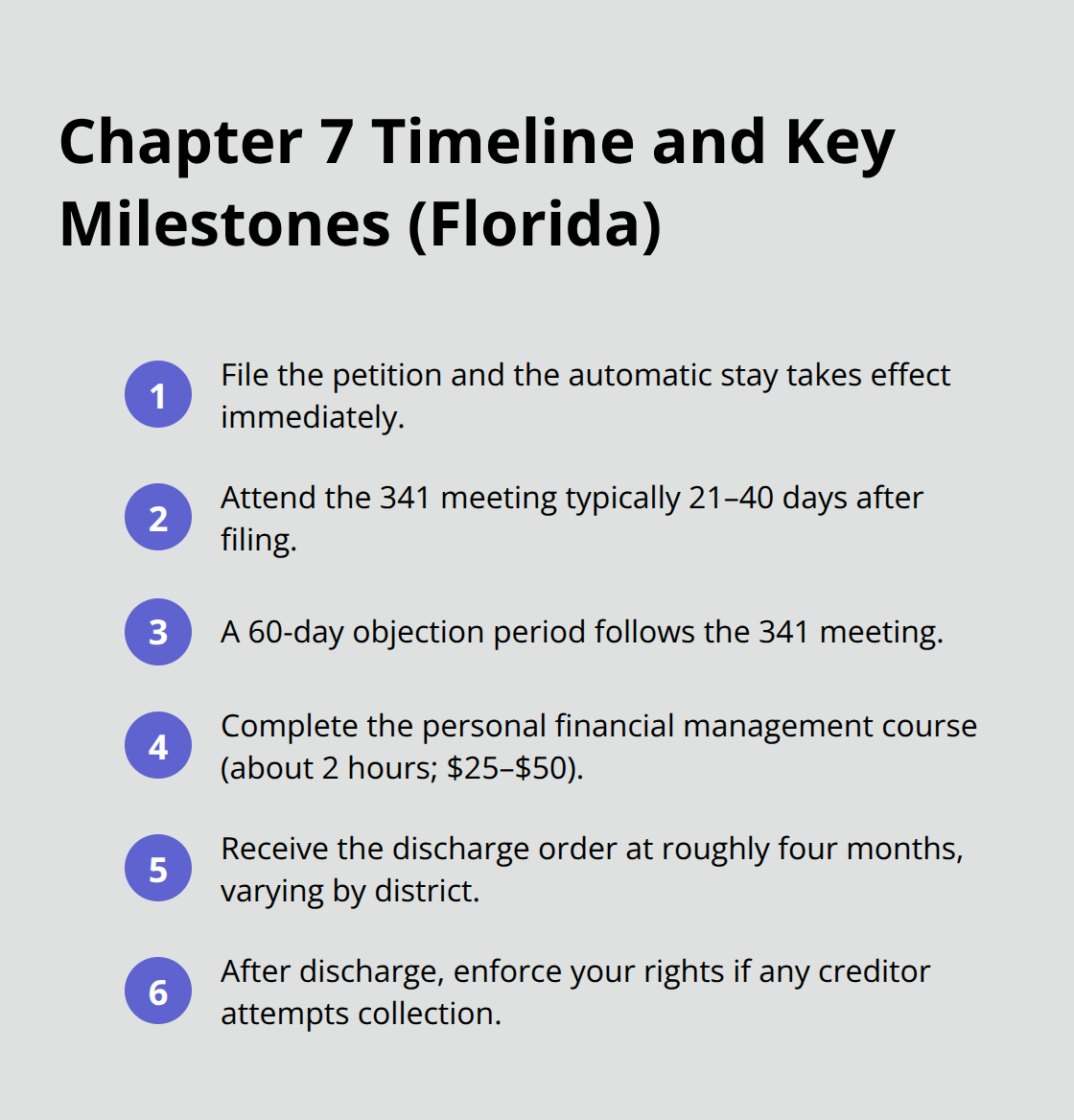
The path from filing to discharge takes roughly three to six months, and understanding the actual timeline prevents unrealistic expectations about when creditors must stop contacting you. You file your Chapter 7 petition with the bankruptcy court in your district, and the moment your case receives official filing status, the automatic stay activates immediately. This federal protection stops collection calls, wage garnishments, lawsuits, and foreclosure proceedings instantly. Creditors cannot ignore the automatic stay; violations carry serious penalties including contempt of court charges.
The 341 Meeting and Creditor Objections
The court schedules your meeting of creditors, formally called the 341 meeting, typically between 21 and 40 days after filing. This meeting is mandatory, and the trustee appointed to your case will ask questions about your assets, debts, income, and whether you have property to surrender. Most Florida Chapter 7 cases are no-asset cases, meaning you have no nonexempt property for the trustee to sell, so the meeting often runs under 15 minutes. After the 341 meeting concludes, a 60-day objection period begins during which creditors can challenge your discharge, though objections rarely occur in straightforward cases.
Completing the Financial Management Course
You must complete a personal financial management course before discharge is granted-this requirement is not optional, and failure to complete it will deny your discharge entirely. The course costs between $25 and $50 and takes roughly two hours online; the provider files proof of completion with the court automatically.
Receiving Your Discharge Order
Your discharge order arrives approximately four months after filing, though this timeline varies by district. The bankruptcy clerk mails the discharge order to you, your attorney, all creditors, and the trustee-this single document legally eliminates all dischargeable debts and permanently prohibits creditors from collecting them. Once you receive the discharge order, creditors cannot call, email, send letters, file lawsuits, garnish wages, or attempt collection in any form. If a creditor violates the discharge injunction afterward, you can file a motion to reopen your case and ask the court to hold them in civil contempt, which can result in fines against the creditor.
What Happens After Discharge
Some filers choose to voluntarily repay certain debts after discharge (perhaps to help a co-signer or maintain a relationship with a creditor), but this is entirely your choice and the creditor cannot force repayment. The discharge does not erase all obligations; non-dischargeable debts like child support, alimony, recent taxes, and student loans remain your responsibility and creditors can pursue these debts after discharge concludes. Planning carefully before filing ensures you understand which debts actually disappear and which ones require a different strategy.
Final Thoughts
Chapter 7 discharge in Florida eliminates most unsecured debts, but the process only works if you understand which obligations actually disappear and which ones remain. Credit card balances, medical bills, payday loans, and personal loans vanish through discharge, while child support, alimony, recent tax debts, and federal student loans follow you permanently. This distinction matters enormously because filing Chapter 7 when your primary debts are non-dischargeable wastes time and money.
The discharge order itself is permanent and legally binding once you receive it approximately four months after filing, and creditors cannot pursue discharged debts through any collection method afterward. Your credit score will recover gradually over time, and many filers rebuild their credit within three to five years by using secured credit cards responsibly and making all payments on time. Non-dischargeable debts still require payment, so understanding your repayment obligations prevents surprises after your discharge arrives.
We at Harnage Law, PLLC help Florida residents navigate these decisions by reviewing your specific debts, determining which ones qualify for elimination, and explaining whether Chapter 7 or Chapter 13 actually solves your financial situation. Our team stops creditor harassment, prevents wage garnishments, and halts lawsuits while guiding you through every step of the bankruptcy process. If you carry overwhelming debt and want to understand your options, contact us for a consultation about your path forward.