Chapter 7 bankruptcy offers a path to eliminate unsecured debt quickly, but not everyone can file Chapter 7. Florida has specific income limits, debt requirements, and asset rules that determine your eligibility.
We at Harnage Law, PLLC help people understand whether they qualify for this form of relief. This guide walks you through the income thresholds, the filing process, and the myths that often hold people back from taking action.
Income and Debt Requirements for Chapter 7 in Florida
Florida’s Chapter 7 eligibility hinges on two separate but interconnected tests. The median income test comes first, and it’s straightforward. Florida median household income as of April 2024 ranges from $62,973 for a single person to $143,669 for an eight-person household, with an additional $9,900 added for each person beyond eight. Calculate your average monthly income over the last six months and multiply by twelve. If that number falls below your household’s median, you pass the first test and likely qualify for Chapter 7. If you exceed the median, the means test takes over, and this is where the real scrutiny happens.
How the Means Test Determines Your Qualification
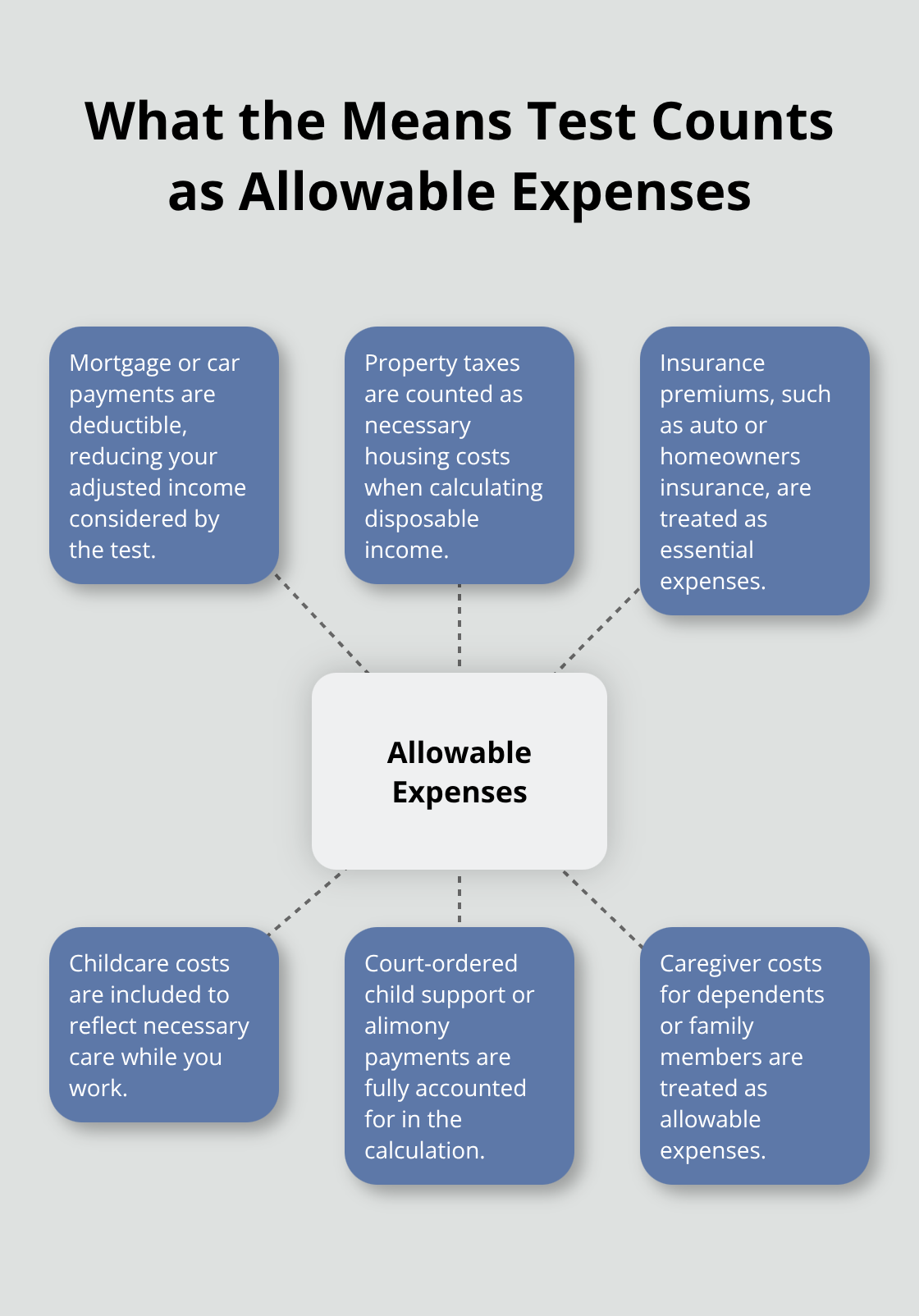
The means test subtracts allowable monthly expenses from your adjusted income. Common deductible expenses include mortgage or car payments, property taxes, insurance premiums, childcare, court-ordered child support or alimony, and caregiver costs. After subtracting these expenses, multiply your adjusted monthly income by sixty to estimate your disposable income over five years.
If that figure falls below $9,075, you generally qualify for Chapter 7. Between $9,075 and $15,150, additional calculations determine your eligibility. Above $15,150, you likely don’t qualify unless exceptions apply-such as business debt incurred to earn a profit or if you’re a disabled veteran with at least 30% disability who incurred debts during active duty or homeland defense activities.
Florida’s Asset Exemptions Protect Significant Property
Florida’s exemption laws protect significant assets, though they carry limits. Your primary residence receives strong protection through the homestead exemption, which covers unlimited equity up to half an acre in a municipality or 160 acres elsewhere, provided you’ve owned the property for at least 1,215 days before filing. If you haven’t met that timeline, a federal cap of $214,000 applies instead.
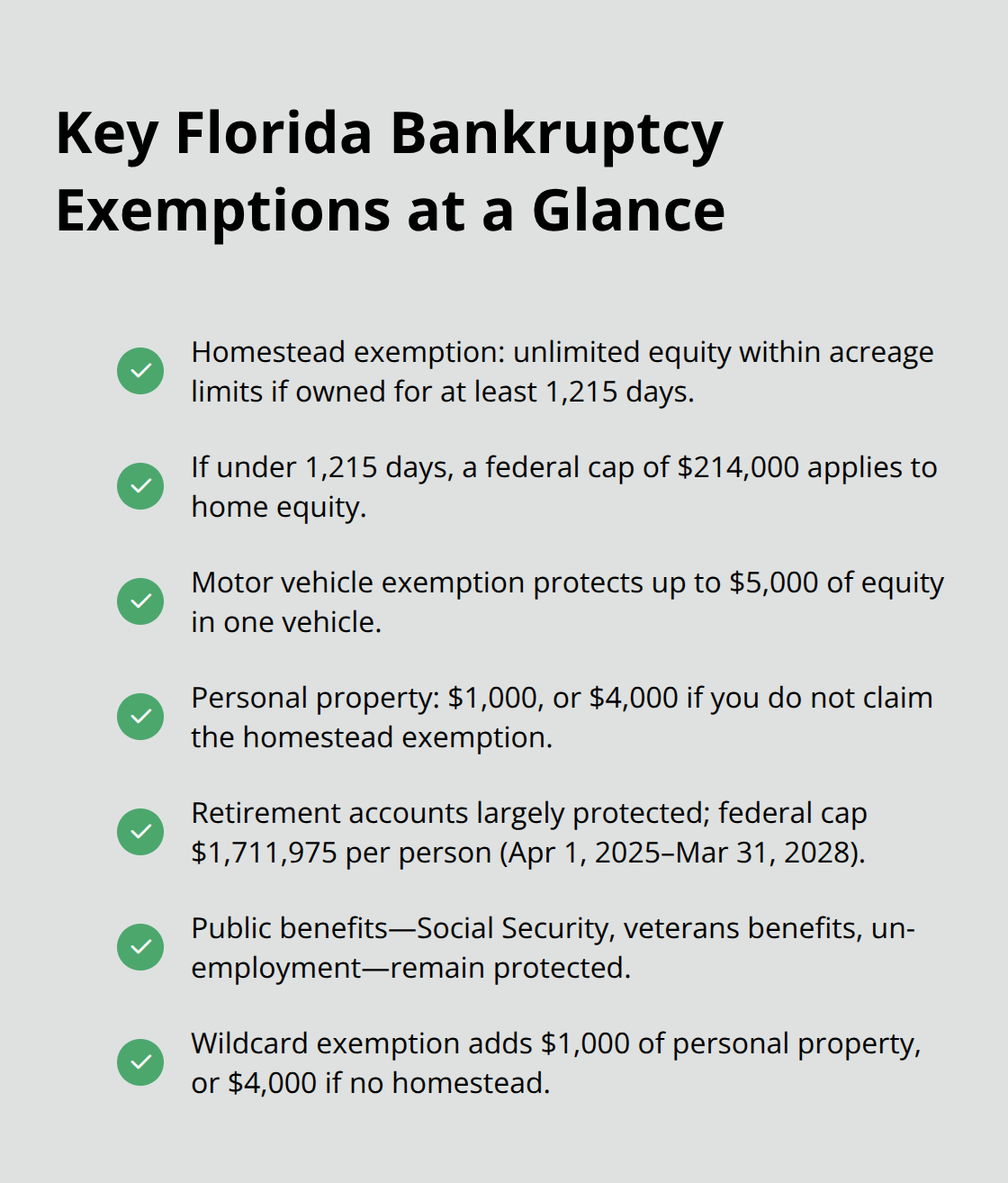
Motor vehicles get up to $5,000 of equity protection in a single vehicle, which means you can often keep a financed car through Chapter 7. Personal property including furniture, art, and electronics receives up to $1,000 of protection, or $4,000 if you don’t use the homestead exemption. Retirement accounts like 401(k)s and IRAs are largely protected in Florida bankruptcy, with a federal cap of $1,711,975 per person for cases filed between April 1, 2025 and March 31, 2028. Public benefits including Social Security, veterans benefits, and unemployment assistance remain untouched. The wildcard exemption lets you protect an additional $1,000 of personal property, or $4,000 if you skip the homestead exemption.
Nonexempt Assets Don’t Automatically Block Your Filing
Nonexempt assets don’t automatically prevent you from filing Chapter 7. Instead, the trustee may liquidate them or you may need to pay for them through a repayment plan. This distinction matters because many people assume they can’t file if they own property beyond the exemption limits, when in reality the process simply requires addressing that property through the bankruptcy system.
Unsecured Debt Is What Chapter 7 Actually Eliminates
Chapter 7 wipes out unsecured debt like credit cards, medical bills, personal loans, and payday loans. Secured debt attached to property like mortgages and car loans operates differently. You must decide whether to keep the property by reaffirming the debt (meaning you continue paying it) or surrender it to the creditor. Most people filing Chapter 7 have unsecured debt as their primary burden, and that’s exactly what this bankruptcy chapter targets. If your case is straightforward-primarily unsecured consumer debt with minimal assets-you qualify for quicker relief and potentially lower complexity. Understanding these income, asset, and debt distinctions sets the stage for the actual filing process, which involves specific documentation and strict timelines that shape your path forward.
The Chapter 7 Process and Timeline in Florida
Filing Requirements and Documentation Needed
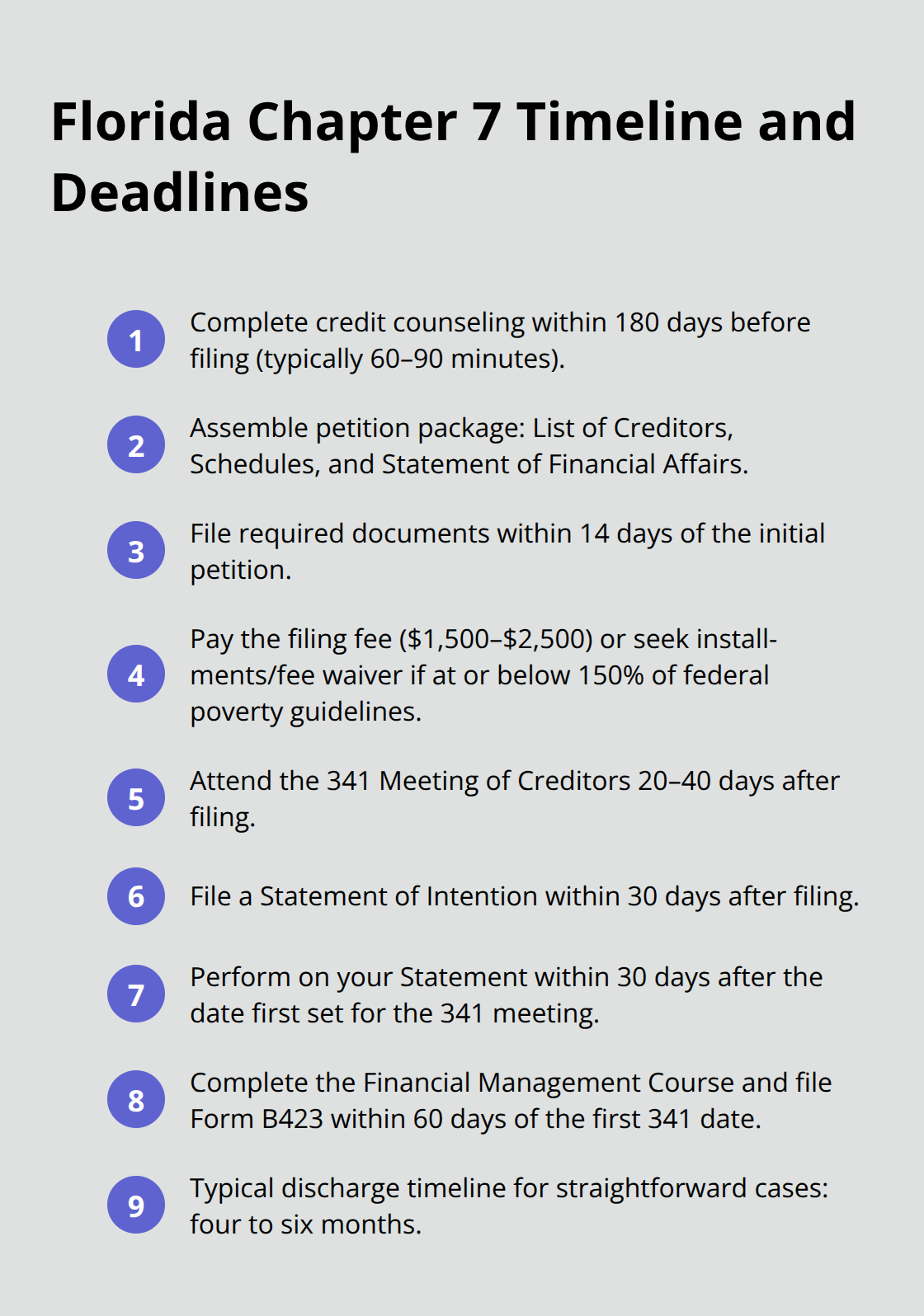
Filing for Chapter 7 in Florida requires precise documentation and strict adherence to court deadlines. Your petition package must include your List of Creditors, Schedules of Assets and Liabilities, Schedules of Income and Expenditures, and Statement of Financial Affairs. You must file these documents within 14 days of your initial petition. Before filing, you must complete credit counseling through an agency approved by the U.S. Trustee-a requirement that typically takes 60 to 90 minutes and must be finished within 180 days before you file.
Skipping this step or using an unapproved provider jeopardizes your entire case.
The filing fee in Florida runs approximately $1,500 to $2,500 depending on your location and case complexity. You can request installment payments or a fee waiver if your income falls at or below 150% of the federal poverty guidelines under Local Rule 1006-1. You must file your Certificate of Credit Counseling with your petition package, with an absolute deadline of 14 days after filing. Once you file, you can stop making payments under any debt relief plan you were previously using, though preferential payments matter: if you paid any single creditor more than $600 in the 90 days before filing, the trustee can recover that money and potentially extend your case timeline.
The Meeting of Creditors and Your Role
The Meeting of Creditors, officially called the 341 meeting, occurs 20 to 40 days after you file and is not a court hearing despite its formal name. You attend under oath, bring a photo ID and copies of your schedules, and creditors may question you about your finances and assets. Within 30 days after filing, you must file a Statement of Intention describing whether you intend to surrender or keep property securing debts like your home or car. You have 30 days after the date first set for the Meeting of Creditors to perform on that statement.
Keeping Property Through Reaffirmation Agreements
If you want to keep a financed vehicle or other secured property, you can sign a Reaffirmation Agreement to continue paying that debt. If you are represented by an attorney, judge approval is not required if your attorney signs the agreement; without representation, you must attend a Reaffirmation Hearing where the judge must approve it. Completion of a Financial Management Course and filing Form B423 must occur within 60 days of the first date set for the Meeting of Creditors. You can take these courses online, in person, or by phone through approved agencies.
Discharge and Your Fresh Start
After you complete all required steps and the court approves your discharge, the debts included in your case are wiped out, giving you a fresh financial start. The entire process typically moves faster in simple cases with minimal assets and primarily unsecured debt. Straightforward Chapter 7 filers can see discharge within four to six months, though your specific timeline depends on how quickly you complete each required step and whether creditors or the trustee raise objections. Understanding these procedural requirements and deadlines helps you stay on track and avoid costly delays. The myths surrounding what happens after discharge-and how quickly you can rebuild your credit-often prevent people from filing when they actually qualify.
Common Misconceptions About Chapter 7 in Florida
Most people believe Chapter 7 bankruptcy means losing everything they own, which stops them from filing even when they qualify. This myth costs Floridians thousands of dollars in unnecessary debt payments every year. The reality is far different. Florida’s exemption laws protect substantial assets, and the bankruptcy process specifically preserves what matters most to you. Your home receives protection through the homestead exemption covering unlimited equity if you’ve owned it for at least 1,215 days before filing. Your car stays with you if you reaffirm the debt and keep making payments, protecting up to $5,000 in equity. Retirement accounts like 401(k)s and IRAs are largely untouchable, with federal protection up to $1,711,975 per person for cases filed between April 1, 2025 and March 31, 2028. Social Security, veterans benefits, and unemployment assistance remain completely protected. Personal property including furniture, electronics, and household items receive $1,000 to $4,000 in protection depending on whether you use the homestead exemption. The trustee only liquidates nonexempt assets, and in many straightforward cases with primarily unsecured debt, nothing requires liquidation at all.
Your Job and Income Remain Protected
Chapter 7 does not give employers legal grounds to fire you. Federal law prohibits discrimination based on bankruptcy, and private employers cannot terminate you solely because you filed. Government employers face the same restriction. Your income from employment continues flowing to you throughout the process, which is exactly why the means test examines your income in the first place. This protection matters because it allows you to maintain financial stability while the court handles your case.
Credit Score Recovery Happens Faster Than Expected
Credit score recovery moves faster than most people expect. The Federal Trade Commission reports that filers can rebuild their credit to the 600-650 range within two to three years after discharge by using secured credit cards and making on-time payments. Within five to seven years, many people return to the 700-750 range. This timeline beats the alternative of struggling with debt for ten or more years while interest compounds. Lenders understand that Chapter 7 filers have eliminated their debt burden and often pose lower risk than someone carrying high credit card balances.
Mortgage Approval and Future Lending Opportunities
Getting preapproved for a mortgage after Chapter 7 is possible within three to four years of discharge, though interest rates may be slightly higher initially. Many lenders view Chapter 7 filers as lower-risk borrowers because they have eliminated their debt obligations. The bankruptcy discharge actually strengthens your financial profile compared to someone with substantial outstanding debt. Rebuilding your credit after Chapter 7 requires discipline, but the path forward is clear and achievable for most filers.
Final Thoughts
Chapter 7 eligibility in Florida depends on three core factors: your income relative to state medians, your ability to pay debts through the means test, and the types of assets you own. If your household income falls below Florida’s median for your family size, you pass the first hurdle. If it exceeds the median, the means test determines whether your disposable income over five years falls below $9,075, which qualifies you for relief. Florida’s exemption laws protect your home, vehicle, retirement accounts, and essential personal property, so you can file Chapter 7 without losing everything you’ve worked for.
The filing process follows a predictable timeline with clear deadlines: you complete credit counseling, file your petition with required documentation, attend the Meeting of Creditors, and complete a financial management course. Most straightforward cases move toward discharge within four to six months. The myths about losing your job, destroying your credit permanently, or becoming ineligible for future loans don’t match reality-federal law protects your employment, credit recovery happens within two to three years for many filers, and mortgage approval becomes possible within three to four years of discharge.
Many people who believe they can’t file Chapter 7 actually qualify due to exceptions, miscalculations of allowable expenses, or misunderstandings about asset protection. The only way to know for certain is to have your specific financial situation reviewed by someone who understands Florida bankruptcy law. We at Harnage Law, PLLC help individuals and families determine whether they can file Chapter 7 and guide them through every step of the process, so contact us today to learn whether you qualify for the fresh start Chapter 7 offers.