Creditors calling at all hours, threatening wage garnishment, and filing lawsuits can feel relentless. The good news is that Chapter 7 bankruptcy in Florida provides immediate legal protection through something called the automatic stay, which stops most collection activities the moment you file.
At Harnage Law, PLLC, we help clients understand how Chapter 7 creditor harassment protections work and what steps to take next. This guide walks you through your rights under Florida law and how bankruptcy can give you breathing room.
What Counts as Creditor Harassment Under Florida Law
Illegal Contact Methods and Timing
Florida Statutes §559.55-559.785 defines creditor harassment with specificity, and understanding these boundaries matters because violations give you grounds to sue. Creditors cannot call before 8 a.m. or after 9 p.m., cannot contact you at work after you’ve told them it’s inconvenient, cannot reach out if you’re represented by an attorney, and cannot call repeatedly with the intent to annoy or abuse.
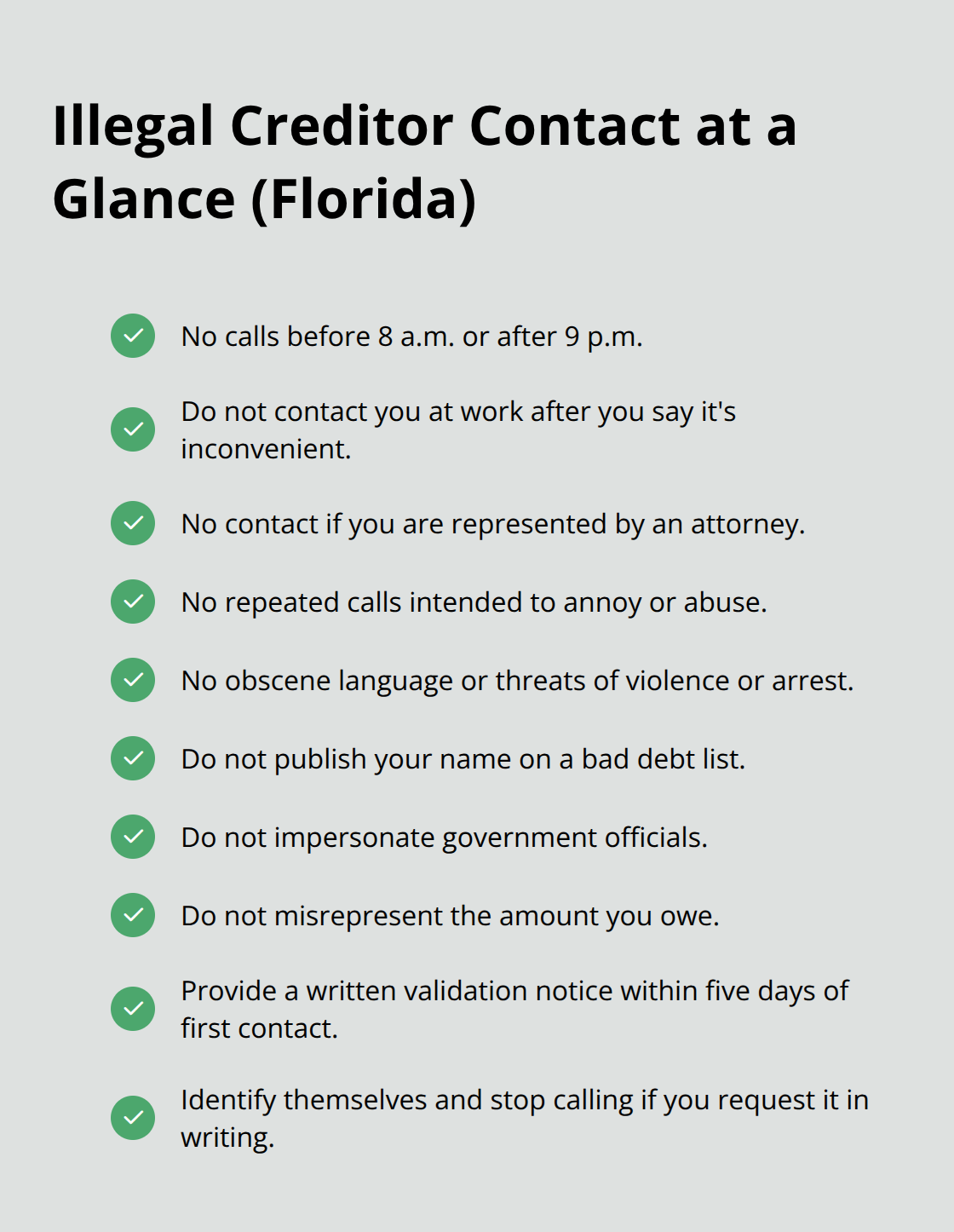
They also cannot use obscene language, threaten violence or arrest, publish your name on a bad debt list, impersonate government officials, or misrepresent the amount you owe. The Federal Trade Commission enforces the Fair Debt Collection Practices Act, which adds another layer of protection: third-party debt collectors must identify themselves in every communication, provide a written validation notice within five days of first contact, and stop calling if you request it in writing. Florida residents gain protection under both state and federal law simultaneously, which significantly strengthens your position if violations occur.
Threats and Abusive Language
Debt collectors often cross these lines because they operate on volume. If a creditor calls you five times in one week, that constitutes harassment under Florida law. If they call after you’ve sent a certified letter stating you don’t owe the debt, that represents another violation. If they threaten to file a lawsuit they have no intention of pursuing, that adds a third. You can recover up to $1,000 in statutory damages per violation under Florida’s law, plus actual damages and attorney’s fees, with a two-year window to file suit from the violation date. Under the federal FDCPA, damages reach up to $1,000 per violation as well.
Repeated Calls and Documentation
A creditor making five harassing calls could expose themselves to $5,000 in statutory damages alone, before attorney’s fees. The key is documentation: keep a detailed log with dates, times, caller information, and what was said. Save all letters and emails. If you’re receiving unwanted text messages, those fall under the Telephone Consumer Protection Act and can generate $500 to $1,500 in damages per message when you’ve revoked consent. Most people don’t pursue these claims because they feel overwhelmed, but the math is compelling once you understand the damages available.
Understanding what constitutes harassment under Florida law positions you to recognize violations when they occur. However, the most effective way to stop harassment altogether is to file for Chapter 7 bankruptcy, which triggers immediate legal protections that halt collection activities before you even step into a courtroom.
How Chapter 7 Bankruptcy Stops Creditor Harassment in Florida
The Automatic Stay Takes Effect Immediately
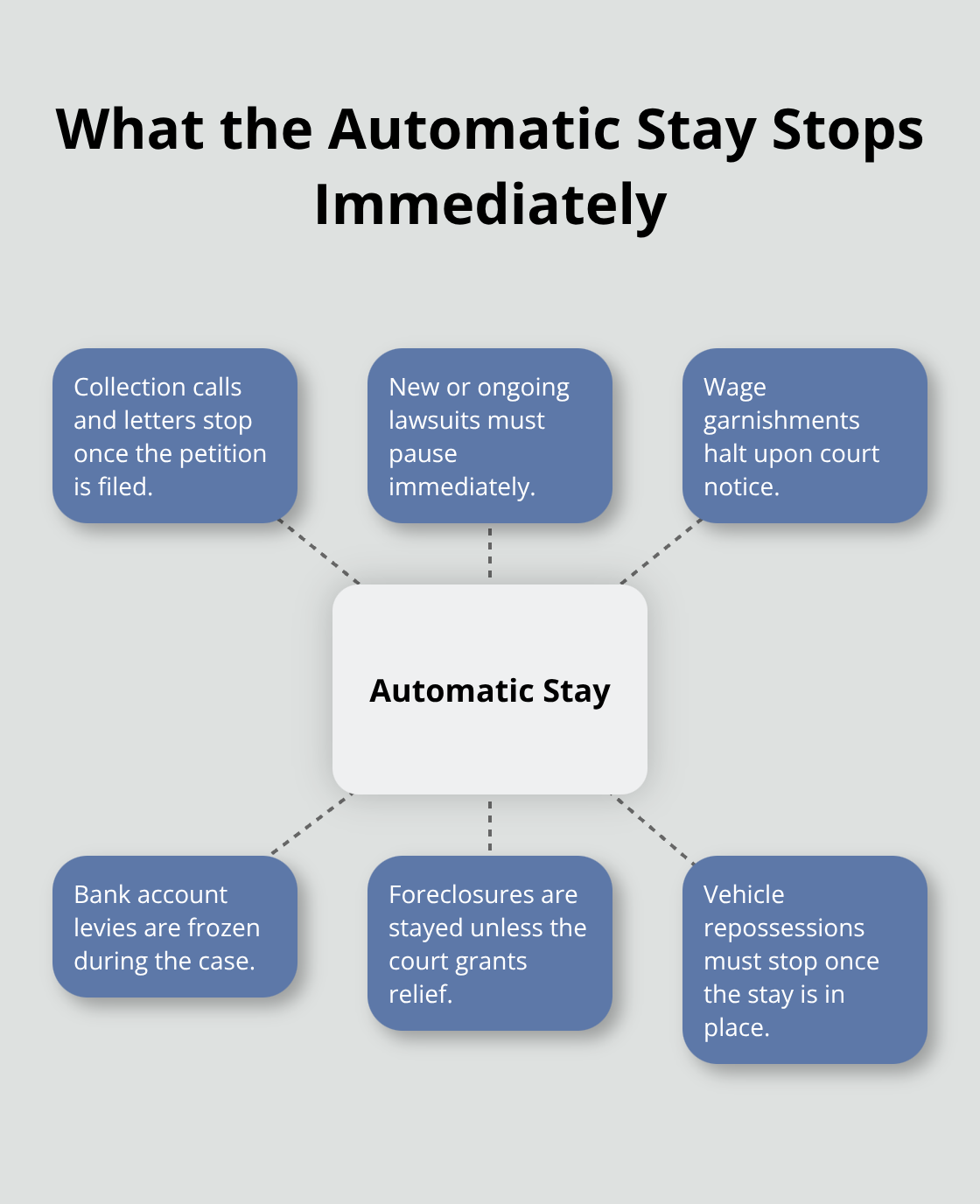
Filing Chapter 7 bankruptcy triggers the automatic stay under 11 U.S.C. §362, and this protection activates the moment your petition is filed-not days later, not after a hearing, but immediately. The automatic stay is a court order that freezes all collection activity against you, and creditors who violate it face contempt of court charges and damages. Creditors cannot call you, send letters, file or continue lawsuits, garnish your wages, levy your bank accounts, foreclose on your home, or repossess your vehicle once the stay is in place.
How the Stay Halts All Collection Actions
Third-party debt collectors must stop all contact the instant they receive notice of your filing, and if they continue calling after that notice, they have committed a federal violation. The stay applies to every creditor simultaneously-your credit card issuer, your mortgage lender, your auto loan company, and any debt buyer pursuing you all receive the same legal prohibition. In Chapter 7, the stay remains active throughout your case and continues until your debts are discharged, typically four to six months after filing. This means the harassment stops while you are still in the early stages of the process, giving you immediate psychological and financial relief from the constant pressure.
The Practical Impact on Your Daily Life
You stop spending mental energy managing creditor calls the day you file. If you are currently receiving five calls per week, those calls end. If you are facing a wage garnishment, that garnishment halts immediately once the court receives your filing. If a creditor has already filed a lawsuit against you, that lawsuit pauses and typically gets dismissed once your bankruptcy is processed.
Enforcing the Stay When Creditors Violate It
Creditors sometimes test the boundaries by calling anyway, hoping you will not know about the stay or will not enforce it. If a creditor violates the stay after receiving proper notice, you can file a motion in bankruptcy court demanding they pay damages for the violation. Courts take these violations seriously because the stay is foundational to bankruptcy protection, and judges regularly award damages plus attorney’s fees against creditors who ignore it. The key is ensuring your creditors actually receive notice of your filing-this happens automatically through the bankruptcy court system, but confirming receipt protects your position if violations occur later.
Your bankruptcy attorney plays an essential role in this process. They confirm that the bankruptcy trustee assigned to your case notifies all creditors of the stay and that any post-filing violations are documented and addressed. Understanding how the stay works positions you to recognize when creditors step out of line, but the real power lies in what happens next-the discharge process itself, which permanently eliminates your liability for qualifying debts and removes any legal basis for future collection attempts.
Protecting Your Rights While Your Chapter 7 Case Proceeds in Florida
Federal and State Protections Work Together
The Fair Debt Collection Practices Act establishes federal baseline rules that apply nationwide, but Florida adds its own state protections through the Florida Consumer Collection Practices Act, giving you two layers of legal defense. Under federal law, debt collectors must identify themselves in writing within five days of first contact, stop communication if you request it in writing, and halt calls to your workplace if your employer prohibits it. Florida law goes further by prohibiting calls before 8 a.m. or after 9 p.m., banning repeated calls intended to annoy or abuse, and blocking contact if you’ve retained an attorney. A debt collector violating federal law faces up to $1,000 per violation plus your actual damages and attorney’s fees, while Florida violations add statutory damages of up to $1,000 per incident under Florida Statutes §559.77.
Documentation Creates Your Evidence
Once you file Chapter 7, creditors cannot contact you at all during your case-but if they do, you have grounds to sue them separately from your bankruptcy action. Documentation becomes your evidence in that lawsuit. Start a detailed log immediately if you haven’t already: record the date, time, phone number, caller name, and exactly what was said during each contact. Save every letter and email from creditors. If you receive unwanted text messages, screenshot them with the date and time visible.
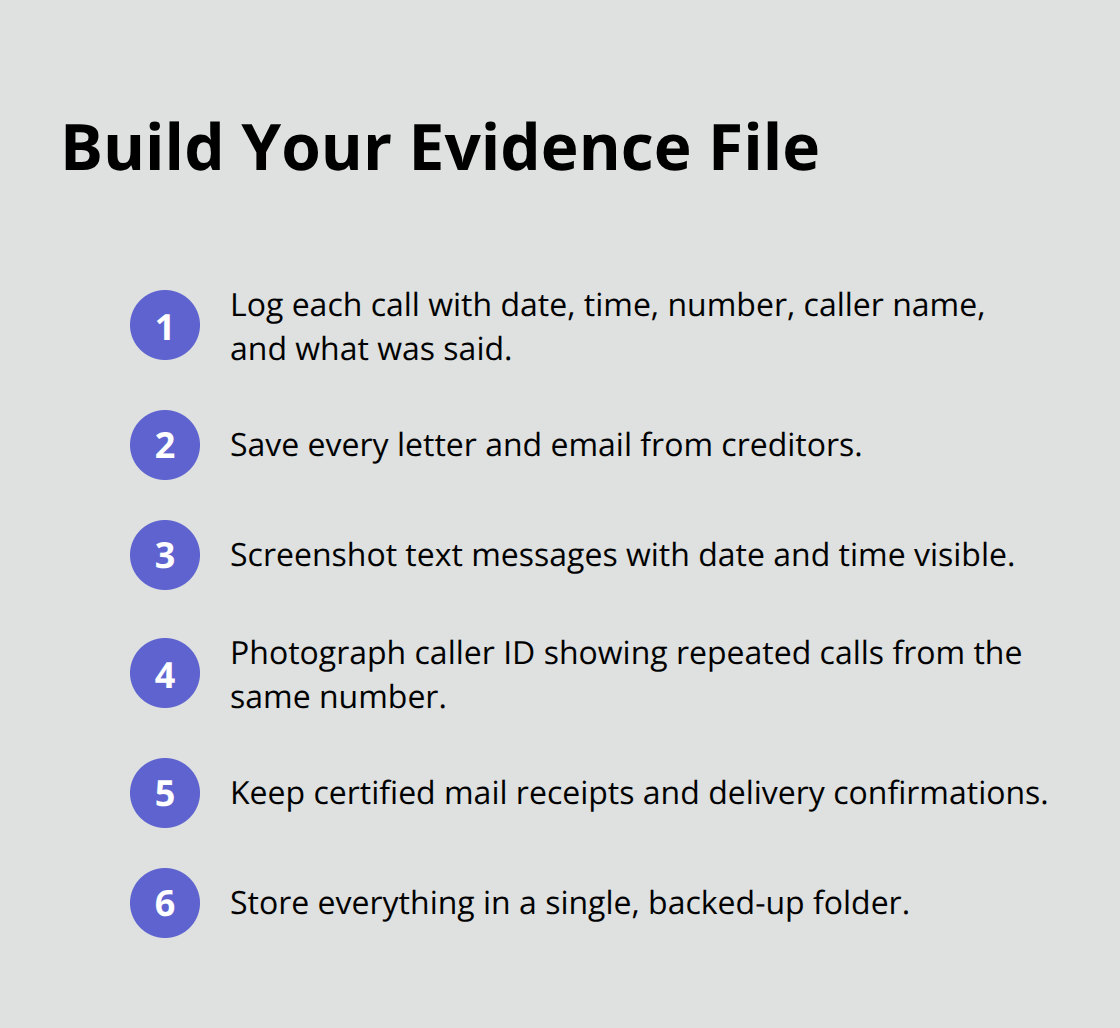
Take photos of your caller ID showing repeated calls from the same number.
Under the Telephone Consumer Protection Act, text messages to your cell phone generate $500 to $1,500 in damages per message when you’ve revoked consent, which is separate from your Chapter 7 protection. Many people ignore this because the process feels overwhelming, but the documentation you gather now translates directly to money in your pocket later.
Your Attorney and the Trustee Handle Creditor Contact
Your bankruptcy attorney coordinates with the trustee assigned to your case to confirm all creditors receive official notice of your filing, which legally obligates them to stop collection activity. If a creditor continues calling after receiving that notice, a federal violation occurs that your attorney can pursue through a motion in bankruptcy court. The trustee becomes the point of contact for all creditor inquiries during your Chapter 7 case, which removes you from direct confrontation entirely.
Your role is straightforward: provide accurate information about your debts and income, attend the required creditor meeting (called the 341 meeting), and answer questions about your financial situation honestly. The trustee’s job is to determine whether you have assets that can be liquidated to pay creditors and to confirm the process follows federal bankruptcy law. For most Chapter 7 filers in Florida, the 341 meeting lasts fewer than ten minutes, and creditors rarely attend. Your attorney prepares you for this meeting so you know exactly what to expect.
Enforcing the Stay Against Violations
Throughout your case, preserve any communications from creditors and report any violations of the stay to your attorney immediately. The stronger your documentation, the stronger your damages claim if violations occur, and the faster your attorney can stop the harassment through court intervention. Creditors sometimes test the boundaries by calling anyway, hoping you will not know about the stay or will not enforce it. If a creditor violates the stay after receiving proper notice, you can file a motion in bankruptcy court demanding they pay damages for the violation. Courts take these violations seriously because the stay is foundational to bankruptcy protection, and judges regularly award damages plus attorney’s fees against creditors who ignore it.
Final Thoughts
Chapter 7 creditor harassment stops the moment you file for bankruptcy in Florida. The automatic stay eliminates collection calls, lawsuits, wage garnishments, and all other creditor contact immediately, giving you the breathing room you need to rebuild your financial life. Understanding your rights under Florida law and federal protections positions you to recognize violations when they occur, but filing Chapter 7 removes the need to fight these battles alone.
Gather documentation of any harassment you have already experienced, including dates, times, caller information, and copies of letters or messages (this evidence supports potential claims against creditors who violated your rights before you filed). Contact a bankruptcy attorney to discuss whether Chapter 7 fits your financial situation and to understand how the automatic stay protects you specifically. Prepare for the filing process itself, which typically involves completing financial forms, attending a brief creditor meeting, and working with your trustee to resolve your debts.
We at Harnage Law, PLLC help Florida residents stop creditor harassment through Chapter 7 bankruptcy by providing personalized legal guidance and representation throughout the entire process. Our firm focuses on discharging qualifying debts, preventing wage garnishments, halting lawsuits, and stopping the constant pressure from creditors. Contact us for a free consultation to discuss your options and determine whether Chapter 7 bankruptcy is the right path forward for your situation.