Filing for Chapter 7 bankruptcy without an attorney can save thousands in legal fees, but the process demands careful attention to detail and strict adherence to Florida’s bankruptcy requirements.
We at Harnage Law, PLLC understand that many people wonder how to file bankruptcy Chapter 7 yourself while avoiding costly mistakes that could derail your case.
The self-filing route requires completing complex paperwork, meeting tight deadlines, and navigating federal bankruptcy procedures that can overwhelm even detail-oriented individuals.
What Financial Requirements Must You Meet for Florida Chapter 7 Bankruptcy?
Income Limits and Means Test Calculations
Florida Chapter 7 bankruptcy requires you to pass a strict means test that compares your income to the state median for your household size. The Administrative Office of the U.S. Courts reports that roughly 70% of all bankruptcy cases are Chapter 7 filings, but many applicants fail because their income exceeds the threshold. For a single person in Florida, the median income stands at approximately $52,000 annually as of 2023. Families of four face a median threshold of around $78,000.
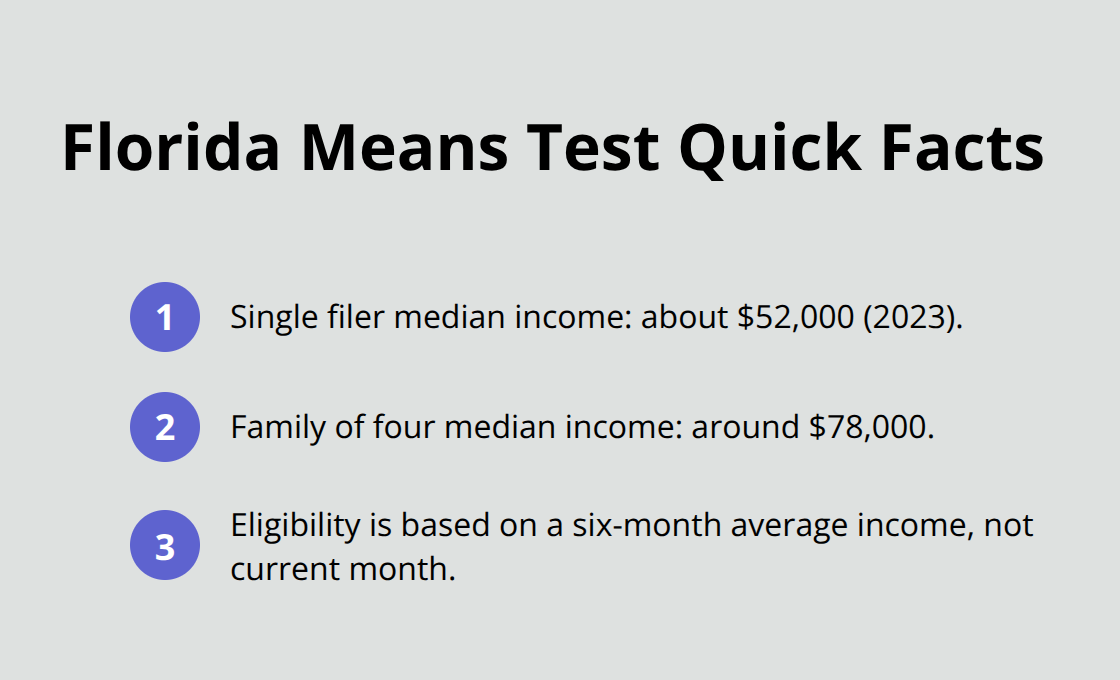
The court calculates your six-month income average before you file, not your current monthly earnings.
Documentation Requirements and Financial Records
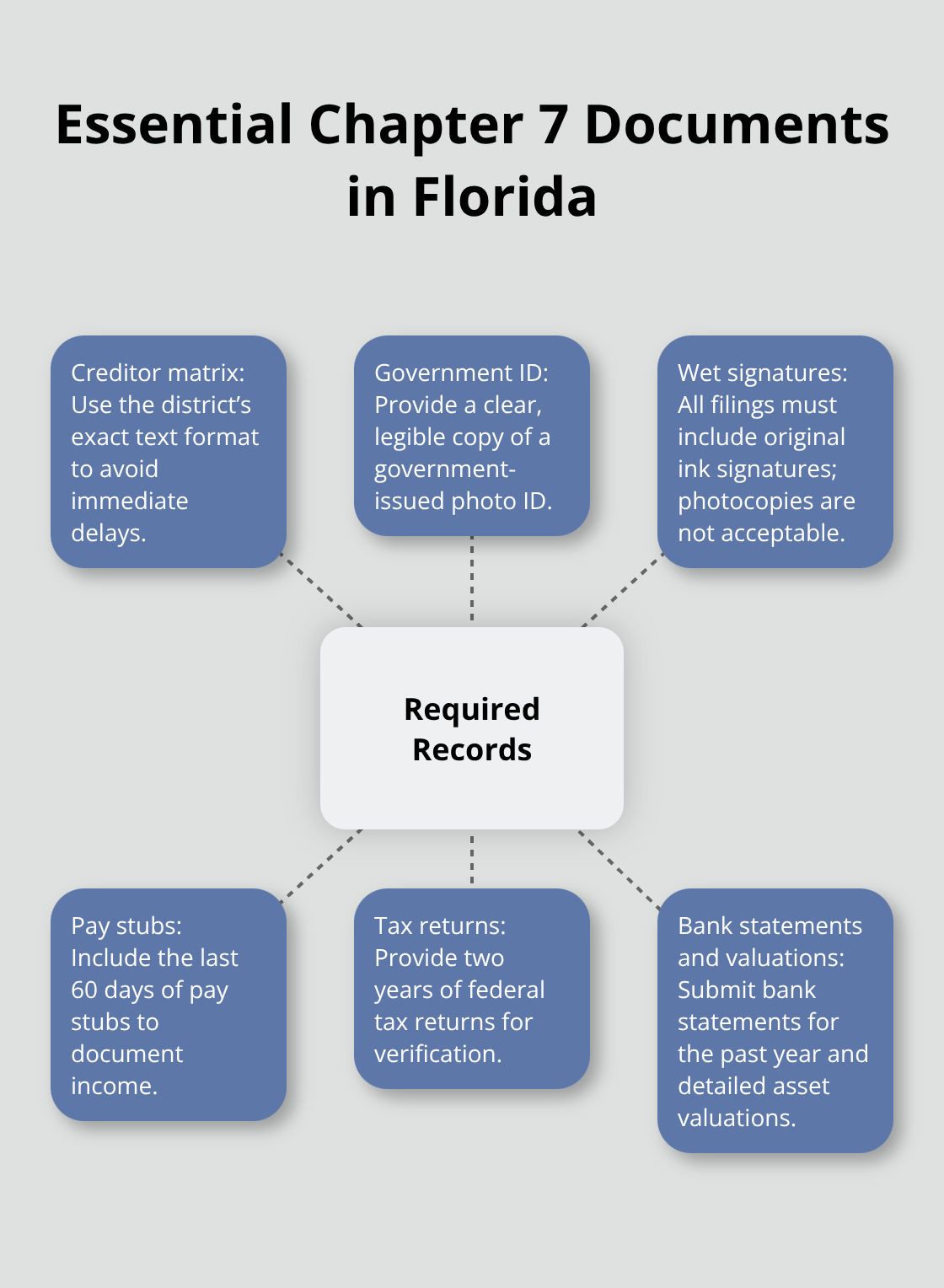
Chapter 7 cases demand extensive financial documentation that courts scrutinize carefully. You must provide 60 days of pay stubs, two years of tax returns, bank statements that cover the past year, and detailed asset valuations. The Northern District of Florida requires a creditor matrix in specific text format, and courts delay cases immediately when this requirement is missing. Your photo identification must be a clear government-issued copy, and all documents need original wet signatures. Court staff cannot provide legal advice, so incomplete paperwork results in case dismissal without guidance.
Processing Timeline and Court Procedures
Chapter 7 cases in Florida typically complete within four to six months from the date you file to discharge. The $338 filing fee must accompany your petition, though installment payment plans require half upfront (with court approval for qualified applicants). Courts in Tallahassee and Pensacola handle Northern District cases, and pro se filers cannot submit documents electronically. The meeting of creditors occurs 20 to 40 days after you file, where trustees examine your financial situation under oath. Courts automatically dismiss cases when debtors miss this mandatory meeting.
The complexity of these requirements makes proper form completion and deadline management the next critical step in your Chapter 7 process.
How Do You Actually File Chapter 7 Forms in Florida?
Completing the Required Bankruptcy Forms
Florida Chapter 7 cases require 20 different forms that courts examine with strict attention to detail. Form B101 serves as your voluntary petition and demands complete personal information, while Form B107 documents your financial affairs for the past two years. The means test calculation on Form B122A-2 determines your eligibility, and Schedule A/B lists every asset you own down to household items worth more than $600. Courts reject cases immediately when forms contain blank fields or incorrect calculations. The U.S. Courts website provides current versions, but outdated forms guarantee dismissal. Each signature must be original ink (not electronic or photocopied), as federal regulations require wet signatures on all documents.
Filing Process and Court Submission Requirements
Pro se filers in Florida must submit documents physically at courthouse locations in Tallahassee or Pensacola, as electronic access remains prohibited for self-represented debtors. The clerk’s office operates Monday through Friday from 8:30 AM to 4:00 PM, excluding federal holidays, and processes cases on a first-come basis. Cash payments stopped on December 1, 2023, so bring a money order or cashier’s check for the $338 fee. Your creditor matrix must follow exact text format requirements, and courts delay cases for weeks when this document fails to meet specifications. Photo identification verification happens at the intake counter, and many courthouses prohibit electronic devices (including phones).
Meeting of Creditors and Trustee Examination
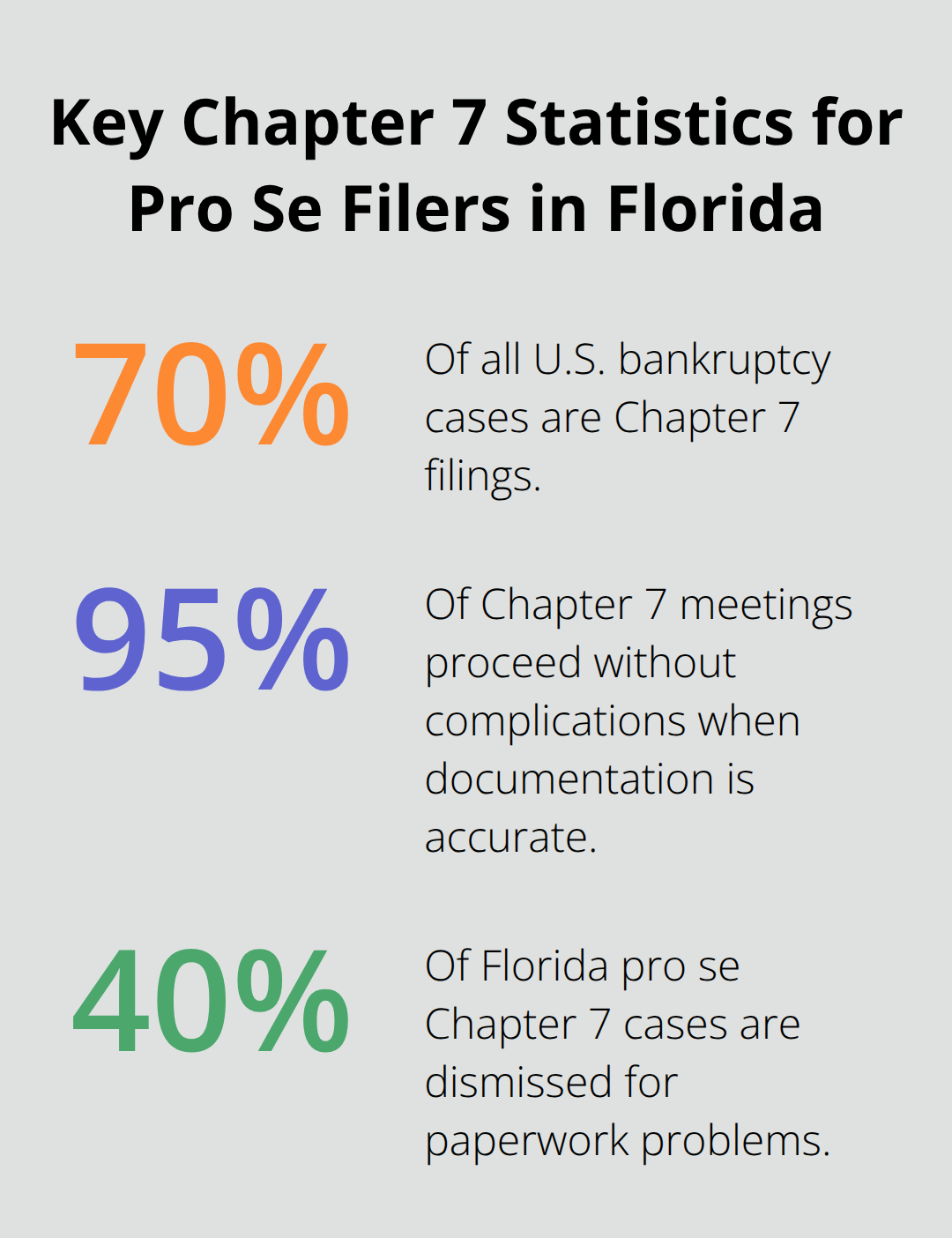
The Section 341 meeting occurs 20 to 40 days after you file and lasts approximately 10 minutes for straightforward cases. Trustees question you under oath about asset valuations, income sources, and recent financial transactions, particularly transfers made within two years of your petition date. Approximately 95% of Chapter 7 meetings proceed without complications when documentation is complete and accurate. Dress in traditional business attire, as casual clothing violates court standards and creates negative impressions.
Missing this meeting results in automatic case dismissal, and rescheduling adds months to your timeline while creating additional administrative costs.
Even perfect form completion and successful trustee meetings cannot protect you from the common errors that derail many pro se bankruptcy cases.
What Mistakes Destroy Pro Se Bankruptcy Cases in Florida
Documentation Errors That Guarantee Case Dismissal
Missing or incorrect documentation kills more pro se Chapter 7 cases than any other factor. Courts in Florida dismiss approximately 40% of self-filed cases due to incomplete paperwork, according to the Administrative Office of the U.S. Courts. The most devastating error involves submitting outdated forms, which courts reject immediately without opportunity for correction. Schedule C exemption claims frequently contain calculation mistakes that cost debtors their protected assets when trustees challenge the valuations.
Photo identification copies must remain legible, as blurry or dark photocopies force courts to delay proceedings for weeks. The creditor matrix format trips up nearly every first-time filer because courts require specific text formatting that differs from standard word processing documents. Income calculations on the means test form cause automatic dismissals when debtors include irregular payments or exclude mandatory deductions (like payroll taxes).
Deadline Violations and Court Schedule Failures
Florida bankruptcy courts operate on rigid timelines that destroy cases when missed. The 60-day deadline for filing your debtor education certificate cannot be extended, and missing this requirement voids your entire discharge permanently. Courts schedule the meeting of creditors within 20 to 40 days of your petition date, and rescheduling adds three to six months to your case timeline while creating negative trustee impressions.
Fee payment deadlines allow zero flexibility – courts dismiss cases automatically when the $338 filing fee remains unpaid after 14 days. Amendment deadlines for correcting errors typically provide only 14 days from discovery, and late submissions face rejection regardless of the error’s significance. The Northern District of Florida reports that missed deadlines account for 25% of all case dismissals among pro se filers.
Asset Protection and Exemption Calculation Failures
Exemption errors cost debtors thousands in lost assets because trustees seize undervalued or incorrectly claimed property. Florida homestead exemptions protect unlimited home equity, but many filers lose this protection by incorrectly describing their property boundaries or ownership structure. Vehicle exemptions in Florida cap at $1,000 per person, yet debtors frequently overvalue their cars and face trustee asset seizure.
Bank account timing creates major problems when debtors fail to spend down accounts before filing, as trustees claim balances exceeding exemption limits (which can result in significant financial loss). Recent asset transfers within two years of filing trigger trustee investigations that can reverse transactions and create preference payment obligations. Personal property schedules require specific valuations for items worth more than $600, and generic estimates like household goods valued at $1,000 total guarantee trustee scrutiny and potential asset loss.
Final Thoughts
Chapter 7 bankruptcy self-filing in Florida presents substantial risks that destroy cases and cost debtors thousands in lost assets. The 40% dismissal rate for pro se filers demonstrates the complexity of federal bankruptcy law and the harsh reality of court deadlines. A single form error or missed calculation can eliminate your financial fresh start permanently.
Professional legal guidance becomes necessary when cases involve business ownership, recent large asset transfers, or income near the median threshold. Complex asset valuations and exemption planning require legal knowledge that most individuals cannot master independently. The $338 filing fee becomes insignificant compared to losing home equity or vehicles due to exemption mistakes (which happens frequently in self-filed cases).
We at Harnage Law, PLLC help Florida residents navigate Chapter 7 bankruptcy while protecting their assets and stopping creditor harassment. Our firm guides clients through every step of the bankruptcy process, from initial petition to final discharge. Understanding how to file bankruptcy Chapter 7 yourself might appear cost-effective, but the financial consequences of errors often exceed attorney fees. Your financial future depends on making informed decisions about legal representation versus the substantial risks of self-representation in bankruptcy court.