
The means test for bankruptcy Chapter 7 determines whether you qualify for debt discharge based on your income and expenses. In Florida, this calculation can make or break your case.
We at Harnage Law, PLLC see many clients struggle with this process. Understanding the requirements and preparation strategies gives you the best chance of passing this financial evaluation.
How Does Florida’s Chapter 7 Means Test Work?
Income Thresholds That Matter
The means test compares your household income to Florida’s median income levels, which the U.S. Census Bureau updates annually. For 2024, a single-person household in Florida must earn below $63,036 annually to automatically qualify for Chapter 7. Two-person households face a $77,196 threshold, while four-person families must stay under $102,662. These numbers represent gross income before taxes and deductions, which makes the calculation stricter than many people expect.
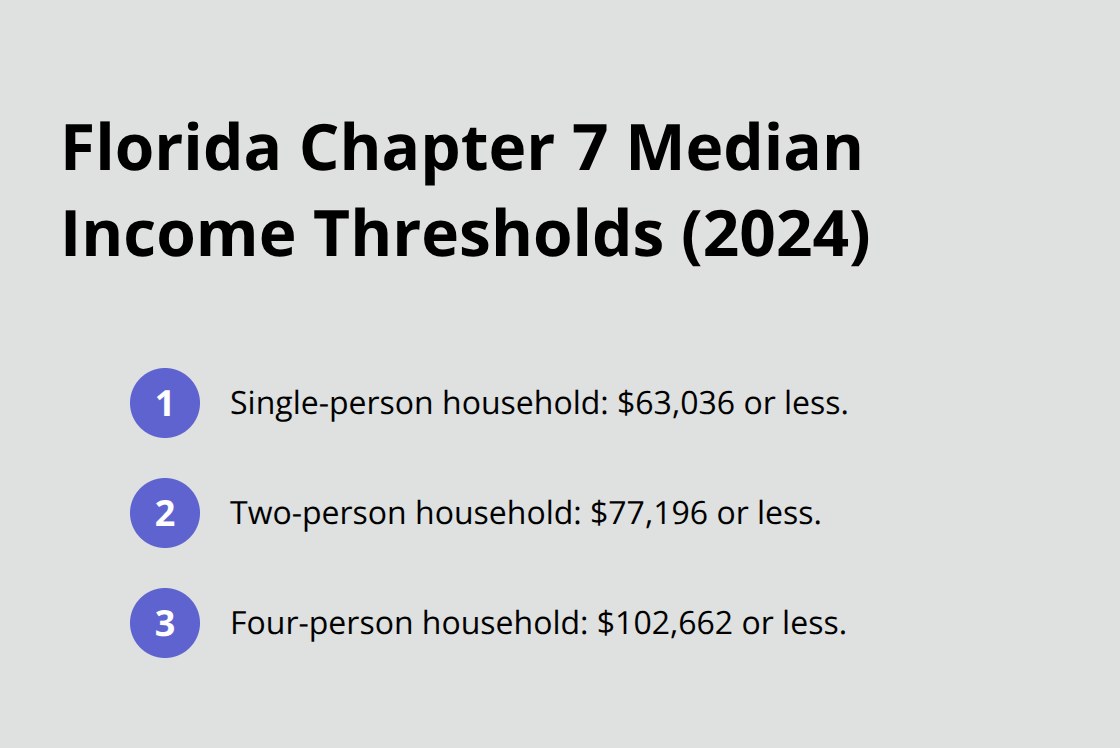
If your income falls below these median figures, you pass the means test automatically and can proceed with Chapter 7 filing. The court won’t require additional financial scrutiny. However, income that exceeds these thresholds doesn’t automatically disqualify you from Chapter 7 bankruptcy. Instead, you’ll face a more complex calculation that examines your disposable income after allowable expenses.
The Six-Month Income Window
The means test uses a specific six-month period to calculate your average monthly income, not your current income or annual salary. This calculation period covers the six full calendar months immediately before you file your bankruptcy petition. If you file in November 2024, the test examines your income from May through October 2024. This lookback period can work in your favor if you recently lost a job, took a pay cut, or experienced other income reductions.
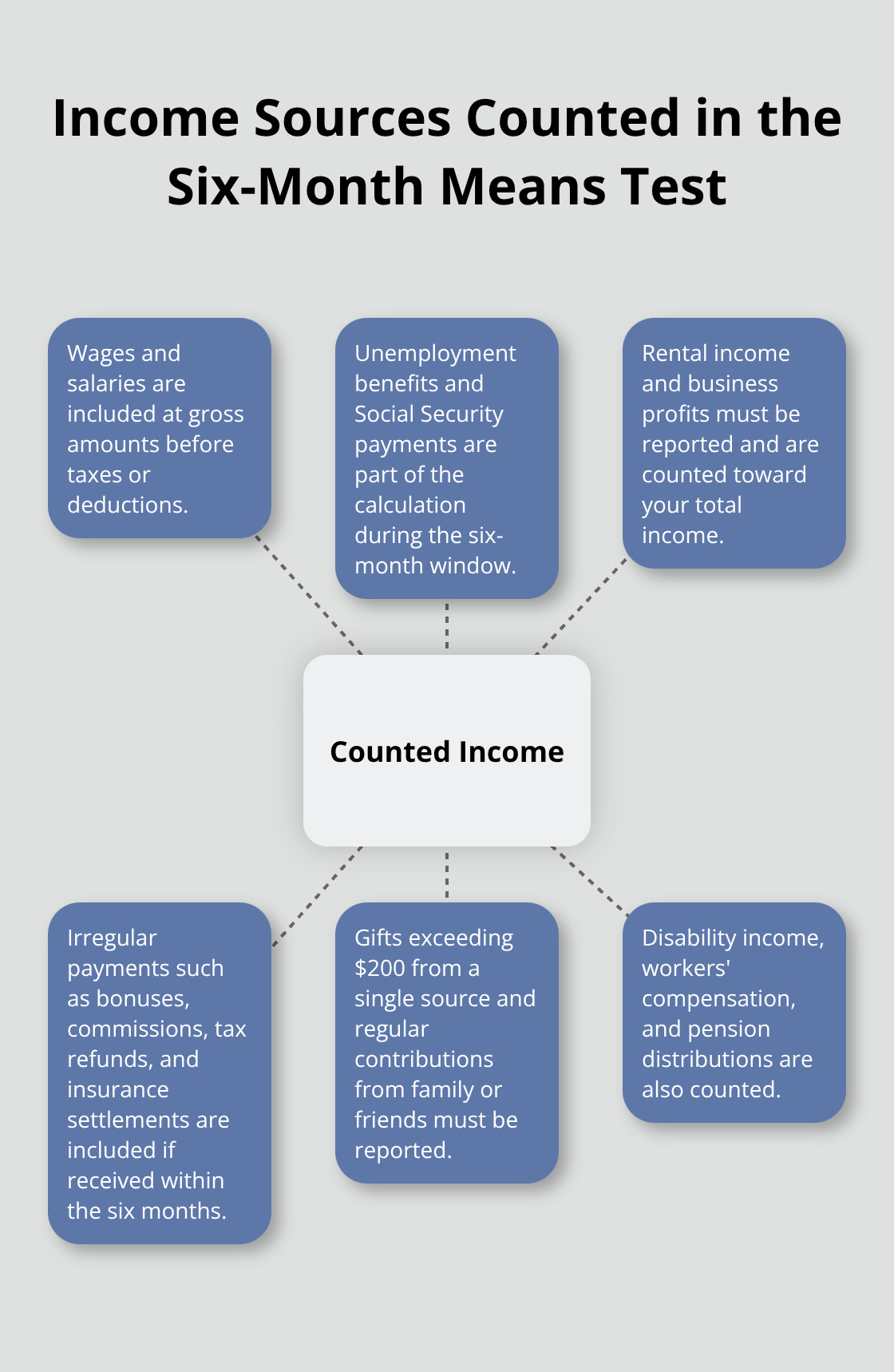
All income sources count during this period, which includes wages, unemployment benefits, Social Security payments, rental income, and even irregular payments like bonuses or commissions. The court calculates your average monthly income when it divides the total six-month income by six, then multiplies by 12 to reach an annualized figure for comparison against Florida’s median income standards.
What Happens When You Exceed the Median
Income above Florida’s median triggers the second part of the means test (Form 122A-2). This form calculates your monthly disposable income after you subtract allowable expenses from your gross income. The IRS provides standard expense amounts for housing, transportation, food, and other necessities based on your county and family size. You can also deduct actual expenses for secured debt payments, priority debts like taxes, and certain other obligations.
If your disposable income falls below $136.25 monthly, you pass the means test and qualify for Chapter 7. Monthly disposable income between $136.25 and $227.50 requires additional analysis based on your total unsecured debt. Income above $227.50 monthly typically means you must file Chapter 13 instead of Chapter 7, though exceptions exist for special circumstances.
What Income Counts in Your Means Test Calculation
Every Dollar the Court Examines
The means test captures virtually all income sources during the six-month calculation period, which catches many Florida filers off guard. Your gross wages before taxes form the foundation, but the court also counts unemployment benefits, Social Security payments, disability income, workers’ compensation, pension distributions, rental income, and business profits. Even irregular payments matter. If you received a bonus, commission, tax refund, or insurance settlement during those six months, the court includes these amounts in your calculation. The Administrative Office of U.S. Courts requires you to report gifts that exceed $200 from any single source and regular contributions from family members or friends, even if these payments seem temporary or informal.
The Six-Month Snapshot Period
The calculation period ends on the last day of the calendar month before you file your petition. If you file on December 15th, the court examines income from June through November of that year. This rule creates strategic opportunities for Florida residents who recently experienced income changes. A job loss in October won’t affect a November case because October income still counts in the calculation. However, if you wait until January to file, you would exclude October’s higher income entirely. The court divides your total six-month income by six to determine average monthly income, then multiplies by twelve for annual comparison against Florida’s median income levels.
Deductions That Lower Your Calculated Income
The means test allows specific deductions that can significantly reduce your calculated monthly income. Payroll deductions for taxes, Social Security, Medicare, mandatory retirement contributions, union dues, and court-ordered support payments all reduce your gross income figure. Business owners can deduct ordinary and necessary expenses (but personal expenses mixed with business costs face scrutiny). Health insurance premiums, disability insurance, and term life insurance premiums also qualify as deductions. The key lies in documentation. The bankruptcy trustee will verify every deduction you claim, so you must maintain detailed records of these expenses.
Income Variations and Special Circumstances
Florida residents often face seasonal employment or irregular income patterns that complicate means test calculations. Construction workers, tourism employees, and agricultural workers frequently see dramatic income swings throughout the year. The six-month lookback period might capture peak season earnings that don’t reflect your current financial reality. Similarly, one-time windfalls like inheritance payments or lawsuit settlements can artificially inflate your calculated income. The court recognizes these situations exist but applies the mechanical calculation regardless of circumstances. This rigid approach makes proper timing of your bankruptcy petition even more important for successful Chapter 7 qualification.
How Can You Improve Your Chances of Passing the Means Test?
Strategic Filing Timing Makes the Difference
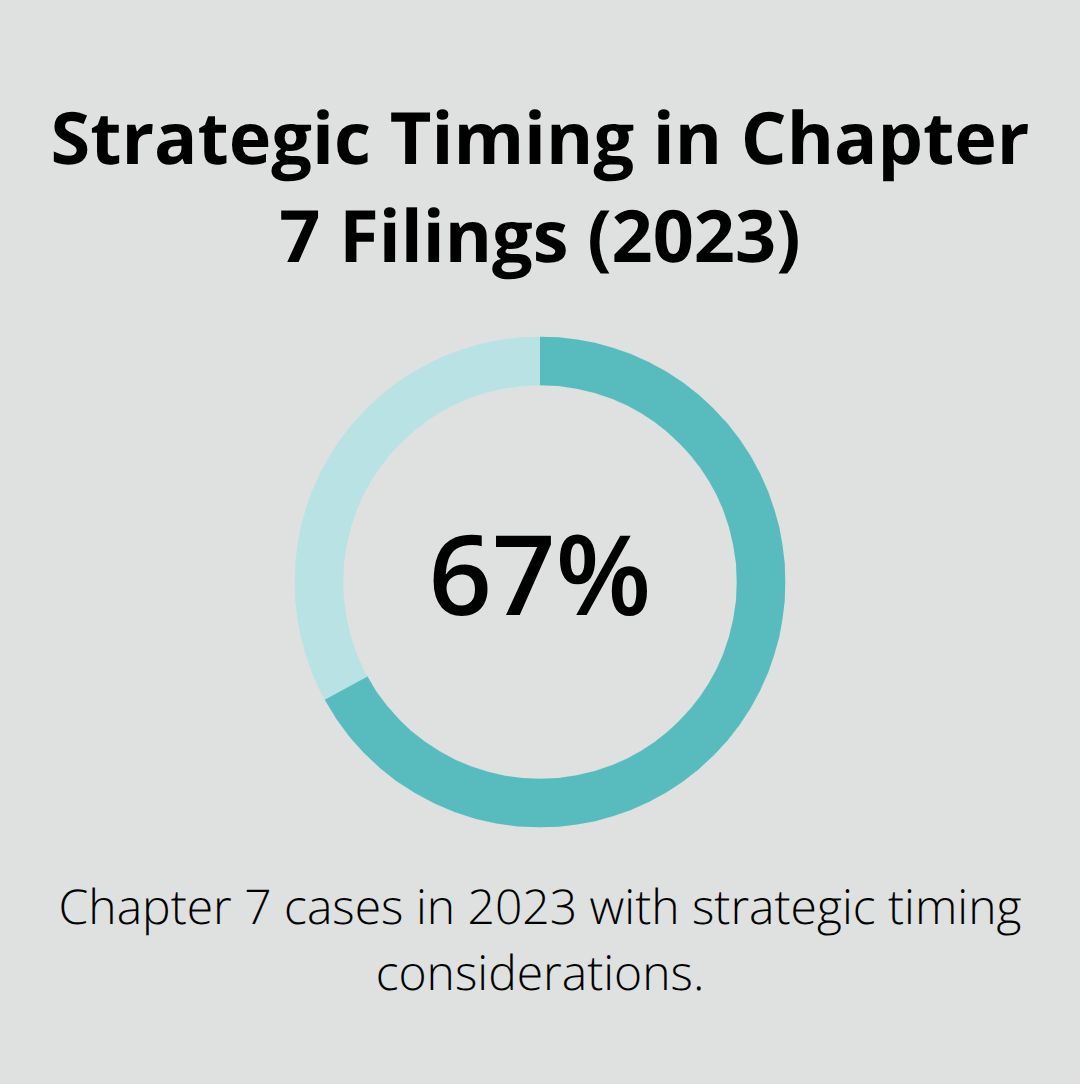
The six-month lookback period creates powerful opportunities for Florida residents who plan their filing date carefully. If you received a large bonus in January, you exclude that income entirely from your calculation when you wait until August to file. The Administrative Office of U.S. Courts data shows that 67% of Chapter 7 cases filed in 2023 involved some form of strategic timing consideration.
Workers who lose jobs or face pay cuts should wait at least one full calendar month after the income change before they file to capture the new reality in their six-month calculation window. Seasonal workers in Florida’s tourism and construction industries benefit most from this approach. A construction worker who earns $8,000 monthly during peak season but only $3,000 in slower months can dramatically improve their means test results when they file during the lower-income period.
Maximize Legitimate Expense Deductions
The IRS National Standards for living expenses provide substantial deduction opportunities that many Florida filers overlook. A family of four in Miami-Dade County can deduct $2,583 monthly for housing and utilities under current standards, regardless of their actual housing costs. Transportation expenses allow $688 monthly for the first car and $332 for the second vehicle, plus actual costs for car payments, insurance, and required maintenance.
Health insurance premiums, mandatory retirement contributions, and court-ordered support payments reduce your calculated income dollar-for-dollar. Business owners face more complex calculations but can deduct ordinary expenses like equipment depreciation, professional licenses, and necessary business insurance. The key lies in documentation and the timing of these expenses to coincide with your filing period.
Manage Income Fluctuations Effectively
Florida residents with irregular income patterns must approach the means test with particular care since the mechanical calculation doesn’t account for income volatility. Real estate agents who earned $15,000 in commissions during one exceptional month but averaged $4,000 monthly otherwise still face the higher calculation average.
The solution involves careful tracking of income patterns and filing when the six-month window reflects your true earning capacity rather than temporary windfalls. Clients should maintain detailed income records for at least eight months before they consider bankruptcy to identify optimal filing windows (this preparation proves particularly valuable for commission-based workers, freelancers, and small business owners whose income varies significantly month to month).
Final Thoughts
The means test for bankruptcy Chapter 7 demands careful preparation and strategic timing. You must gather six months of income documentation, including pay stubs, tax returns, and records of all income sources. Compare your average monthly income to Florida’s current median income thresholds and document all allowable expenses if you exceed these limits.
Florida residents with seasonal income or recent job changes should analyze their six-month calculation window carefully. The court applies mechanical calculations regardless of your current circumstances (which makes timing your filing date particularly important). You often achieve better results when you file after a period of lower income rather than during high-earning months.
We at Harnage Law, PLLC help Florida residents navigate the means test process and work toward a fresh financial start. Our firm focuses on Chapter 7 bankruptcy cases and provides guidance through every step of the process. When you face complex income calculations or need assistance with Chapter 7 bankruptcy, professional legal guidance can make the difference between qualification and denial.