Chapter 7 bankruptcy offers Florida residents a path to eliminate overwhelming debt and start fresh financially. Many people wonder “Do I qualify for Chapter 7 bankruptcy?” when facing financial hardship.
We at Harnage Law, PLLC understand that determining eligibility involves complex income calculations, asset evaluations, and timing requirements. The qualification process depends on passing the means test and meeting specific federal guidelines.
What Makes You Eligible for Chapter 7 in Florida
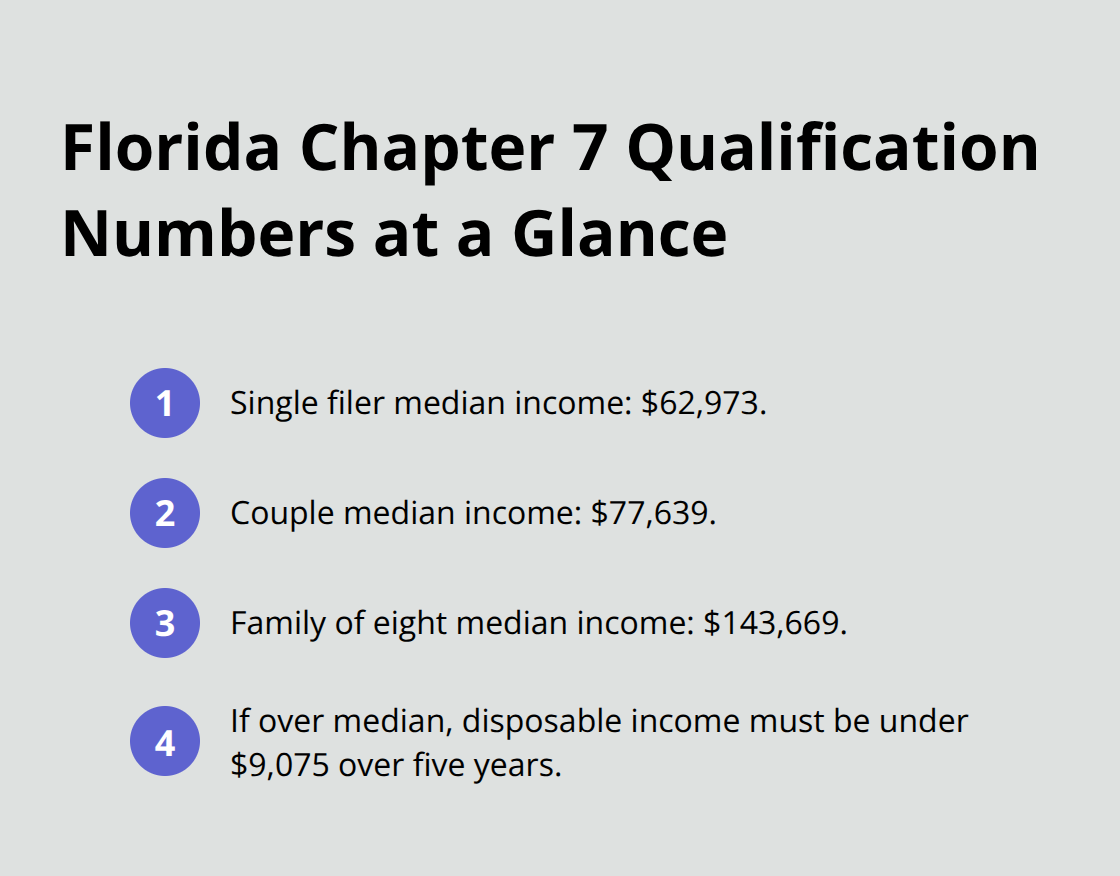
Florida residents must meet three primary requirements to qualify for Chapter 7 bankruptcy. The means test calculation determines if your household income falls below Florida’s median income levels, which as of April 2024 are $62,973 for single filers, $77,639 for couples, and $143,669 for families of eight. If your income exceeds these thresholds, you must pass additional calculations that show disposable income below $9,075 over five years after allowable expense deductions.
Income Calculations That Determine Your Fate
The means test uses your average monthly income from the six months before you file. For 2024, a single person household in Florida must earn less than $5,158 per month, while a family of four cannot exceed $8,408 monthly to automatically qualify. Major allowable deductions include secured debt payments, court-ordered support, childcare costs, and certain insurance premiums. You must provide accurate documentation of all income sources and expenses to pass this test. Florida’s generous exemption laws protect your primary residence with unlimited equity protection and up to $5,000 in vehicle equity.
Asset Protection Under Florida Law
Retirement accounts like 401(k)s and IRAs remain protected up to $1,711,975 for cases filed between April 2025 and March 2028. Public benefits such as Social Security and veterans’ benefits stay exempt from creditor claims. The Florida wildcard exemption allows for an additional $1,000 of personal property protection (increasing to $4,000 if you don’t use the homestead exemption). Married couples can double exemption amounts when they file jointly.
Debt Types That Get Wiped Clean
Chapter 7 eliminates most unsecured debts such as credit cards, medical bills, personal loans, and deficiency balances from repossessed vehicles. However, certain debts survive bankruptcy discharge: child support, alimony, most tax obligations, student loans, and debts from willful injury or intoxication. The process typically takes four to six months from filing to discharge, with over 99% of cases that result in successful debt elimination.
Business debt allows you to bypass the means test entirely, while disabled veterans with at least 30% rating can also avoid income calculations if debts arose during service. Many people put off speaking with an attorney because they assume they don’t qualify. These qualification factors become even more important when you consider the common reasons why some applications get denied.
What Disqualifies You From Chapter 7
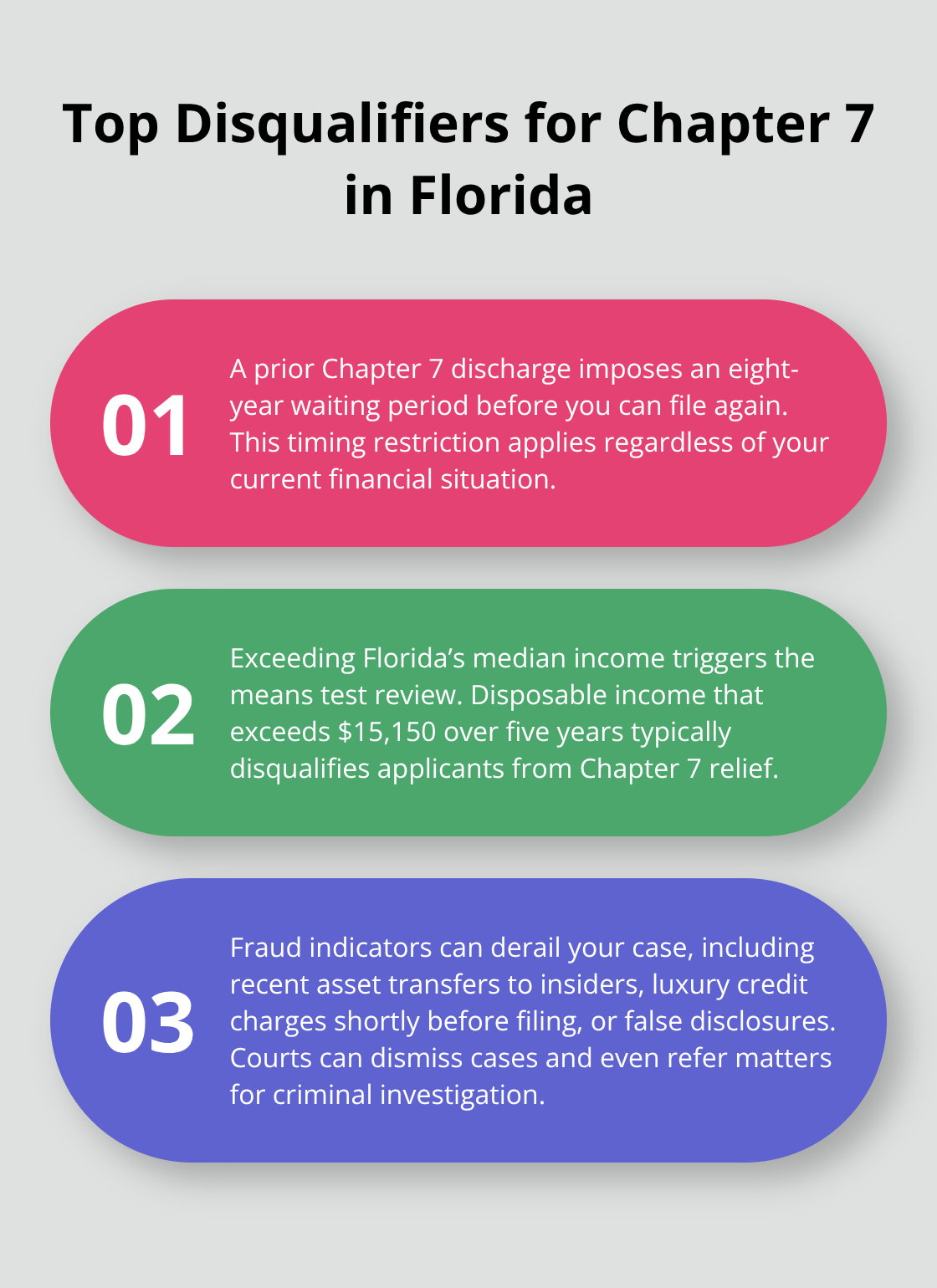
Three specific situations will prevent you from filing Chapter 7 bankruptcy in Florida, and these barriers save time and frustration when you understand them early. Previous bankruptcy discharge within eight years blocks new Chapter 7 filings completely – this timing restriction applies regardless of your current financial situation. Income calculations that place you above Florida’s median thresholds trigger additional scrutiny through the means test, where disposable income that exceeds $15,150 over five years typically disqualifies applicants from Chapter 7 relief.
When Past Bankruptcies Block Your Path
Chapter 7 discharge creates an eight-year wait period before you can file again, while Chapter 13 requires a six-year gap before Chapter 7 eligibility returns. Courts track these dates precisely and use your previous discharge date, not your filing date. Dismissed cases without discharge don’t trigger wait periods, but multiple dismissals within one year can prevent new filings for 180 days. Previous Chapter 13 cases that paid less than 70% to unsecured creditors extend wait periods significantly.
Income Thresholds That Slam the Door
Florida’s April 2024 median income limits create hard barriers: $62,973 for singles and $77,639 for couples. Income that exceeds these amounts forces you into means test calculations that examine every expense category. Income includes wages, self-employment income, rental income, and Social Security benefits from the six months before you file. The means test allows specific deductions like secured debt payments and court-ordered support, but luxury expenses get rejected. Disposable income above $15,150 over five years pushes you toward Chapter 13 instead.
Fraudulent Actions That Destroy Your Case
Asset transfers to family members or friends within two years before you file raise red flags that can derail your case entirely. Courts examine recent financial transactions for signs of hidden assets or preferential payments to certain creditors. Credit card debt that runs up immediately before you file (especially for luxury purchases that exceed $800 within 90 days) creates presumptions of fraud. False information on bankruptcy documents or failure to disclose assets results in case dismissal and potential criminal charges. These mistakes often stem from poor timing rather than malicious intent, but courts show little tolerance for incomplete disclosure.
The means test calculation becomes the next major hurdle once you pass these initial qualification barriers.
How Does the Means Test Calculate Your Chapter 7 Eligibility?
The means test calculation starts with your current monthly income from the six months before you file, then applies Florida-specific deductions to determine if you qualify for Chapter 7 bankruptcy. Your gross monthly income includes wages, self-employment earnings, rental income, unemployment benefits, and Social Security payments that courts average over this six-month period. The calculation excludes Social Security income for most purposes, but includes other government benefits like disability payments. If your household income falls below Florida’s median of $62,973 for singles or $77,639 for couples as of April 2024, you automatically pass the means test without further calculations.
Standard Expense Deductions That Lower Your Income
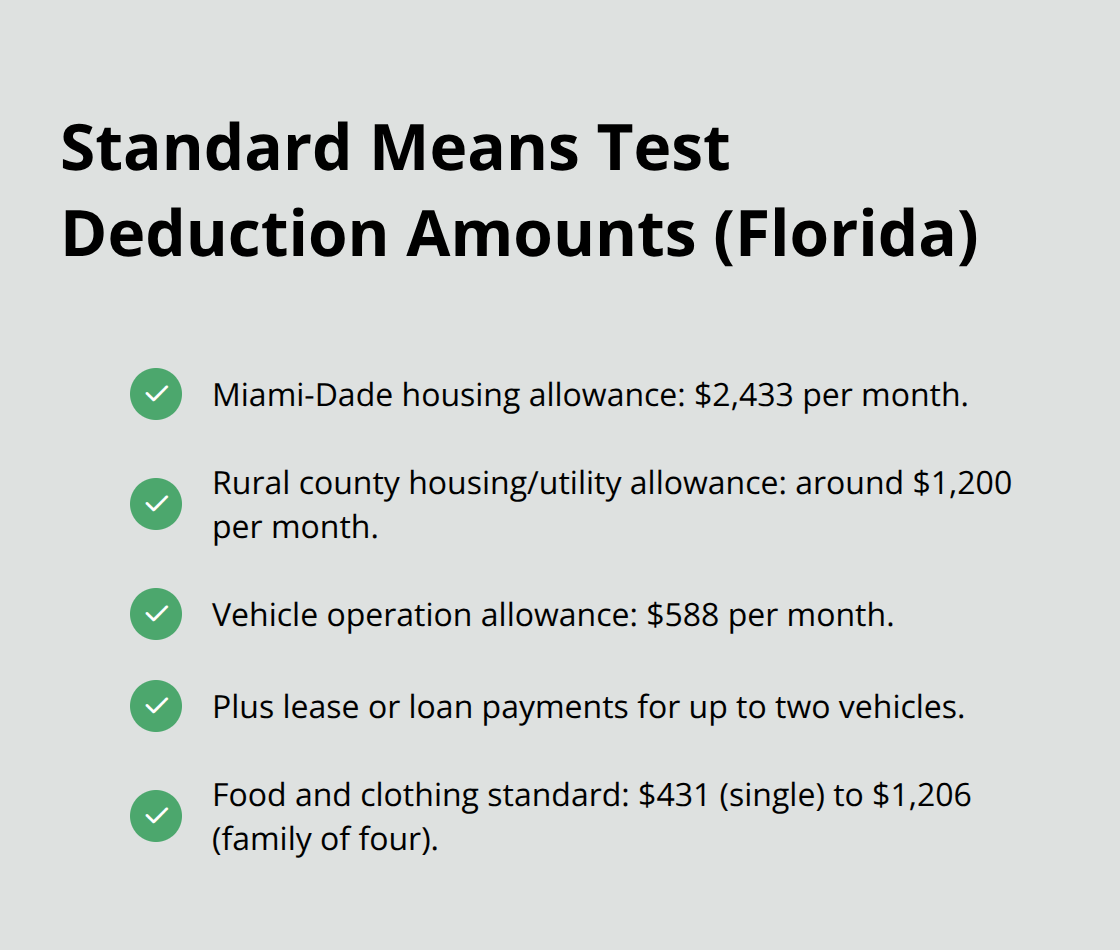
The means test allows specific monthly deductions that reduce your disposable income calculation significantly. Miami-Dade County permits $2,433 monthly for housing while rural counties allow around $1,200 (housing and utility standards vary by county). Transportation expenses include $588 monthly for vehicle operation plus lease or loan payments for up to two vehicles. Food and clothing standards range from $431 for single filers to $1,206 for families of four.
Health insurance premiums, life insurance up to $200 monthly, and court-ordered payments like child support get deducted dollar-for-dollar. Childcare costs for working parents and education expenses for disabled children also reduce your disposable income. The calculation becomes more complex when your adjusted monthly income falls between $9,075 and $15,150 over five years, which requires additional scrutiny of your expenses.
Florida Exemptions That Protect Your Assets During Qualification
Florida’s homestead exemption protects unlimited equity in your primary residence, which strengthens your Chapter 7 qualification by preserving major assets from liquidation. The $5,000 vehicle exemption covers most car loans while the $1,000 wildcard exemption covers personal property like furniture and electronics. This wildcard exemption expands to $4,000 if you skip homestead protection.
Retirement accounts including 401k plans and IRAs stay protected up to $1,711,975 for cases filed through March 2028. These exemptions work together with the means test because protected assets don’t generate income that counts against your qualification. Married couples who file jointly can double most exemption amounts, effectively protecting $10,000 in vehicle equity and $2,000 in personal property.
Final Thoughts
Three key steps determine your Chapter 7 bankruptcy eligibility: you calculate your household income against Florida’s median thresholds, complete the means test if your income exceeds $62,973 for singles or $77,639 for couples, and review your asset protection under Florida’s generous exemption laws. The process becomes straightforward once you gather six months of income documentation and understand which debts qualify for discharge. Most people who complete credit counseling and pass the means test successfully discharge their unsecured debts within four to six months.
The question “Do I qualify for Chapter 7 bankruptcy?” often has a positive answer for Florida residents who face overwhelming debt. However, timing restrictions from previous bankruptcies or income levels that exceed federal guidelines can complicate your situation. Over 99% of Chapter 7 cases result in successful debt discharge, which provides relief from credit cards, medical bills, and personal loans (while certain debts like child support and student loans typically survive the process).
We at Harnage Law, PLLC guide clients through every step of the bankruptcy process, from initial qualification assessment through final debt discharge. Our Florida-based practice helps families stop creditor harassment while they protect their assets under state exemption laws. Professional legal guidance becomes valuable when your financial situation involves complex income calculations or asset protection concerns that require careful navigation of federal bankruptcy requirements.