Chapter 7 bankruptcy offers powerful financial relief for Florida residents drowning in debt. The benefits of bankruptcy Chapter 7 include immediate protection from creditors and the discharge of most unsecured debts.
We at Harnage Law, PLLC see clients transform their financial lives through strategic Chapter 7 filings. Understanding the process helps you maximize these advantages while protecting your valuable assets.
What Benefits Does Chapter 7 Bankruptcy Provide in Florida
Automatic Stay Stops Collection Actions
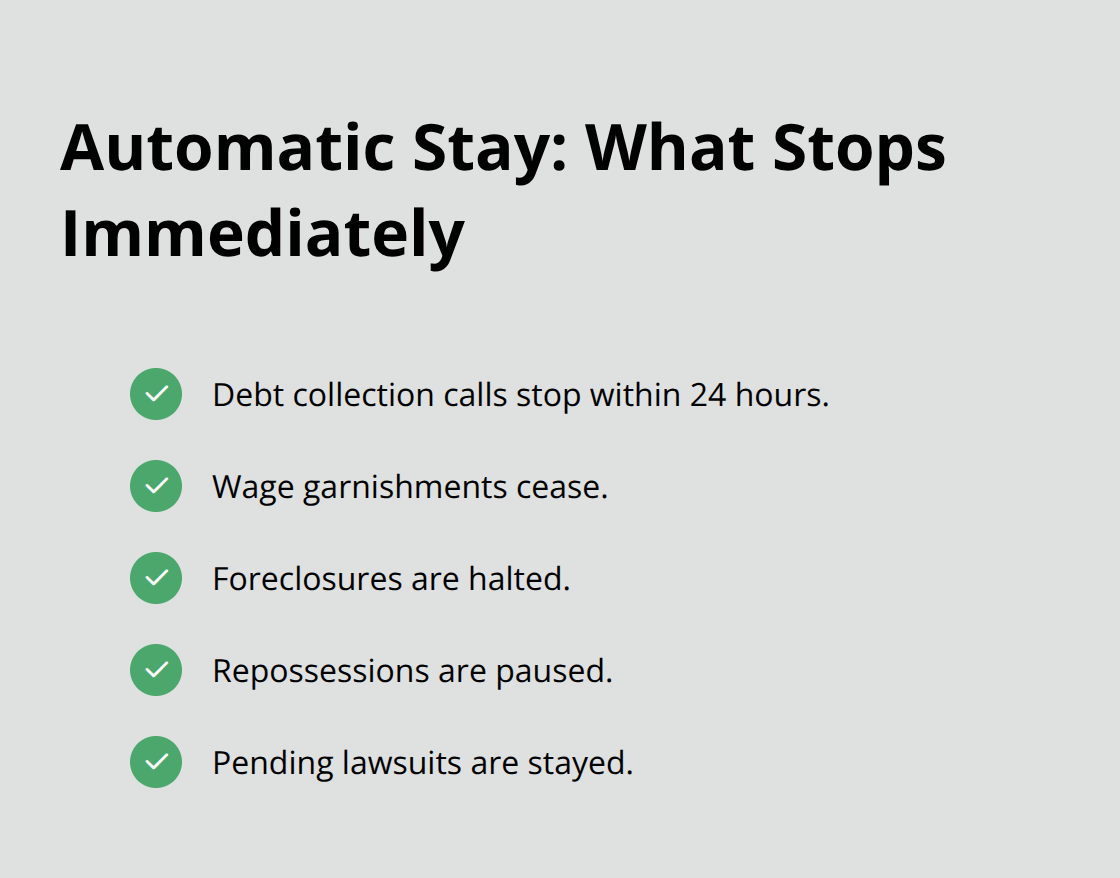
Chapter 7 bankruptcy filing triggers an automatic stay that immediately halts all creditor harassment activities. Phone calls from debt collectors stop within 24 hours of the filing, and wage garnishments cease instantly. The U.S. Bankruptcy Code Section 362 provides this protection and stops foreclosure proceedings, repossessions, and pending lawsuits. Florida residents who face multiple collection actions see immediate relief that allows them to focus on financial recovery without constant pressure from creditors.
Complete Discharge of Most Unsecured Debts
Chapter 7 bankruptcy eliminates credit card debt, medical bills, personal loans, and utility bills permanently. According to U.S. Bankruptcy Court data, over 99% of individual debtors receive a complete discharge within 60 to 90 days after their creditors meeting. The typical Florida filer discharges between $25,000 to $50,000 in unsecured debt. This discharge provides genuine financial freedom since discharged debts cannot be collected even if your income increases significantly after bankruptcy.
Asset Protection Through Florida Exemptions
Florida offers generous exemption laws that protect your primary residence through unlimited homestead exemptions for properties up to half an acre in municipalities (or 160 acres in rural areas). Vehicle exemptions protect up to $1,000 in equity, while personal property exemptions cover $1,000 per person or $2,000 for married couples who file jointly. Retirement accounts that include 401k plans and IRAs remain completely protected. These exemptions mean 95% of Chapter 7 filers keep all their property while they eliminate overwhelming debt burdens.
Fast Resolution Timeline
Chapter 7 bankruptcy cases typically resolve within three to four months from the initial filing date. This quick timeline contrasts sharply with Chapter 13 bankruptcy, which requires three to five years of payment plans. The expedited process allows Florida residents to move forward with their financial recovery much faster than other debt relief options (including debt consolidation or settlement programs).
Strategic preparation before you file can maximize these benefits and protect your most valuable assets throughout the process.
How Should You Prepare for Maximum Chapter 7 Benefits
Strategic Filing Timing Maximizes Your Advantages
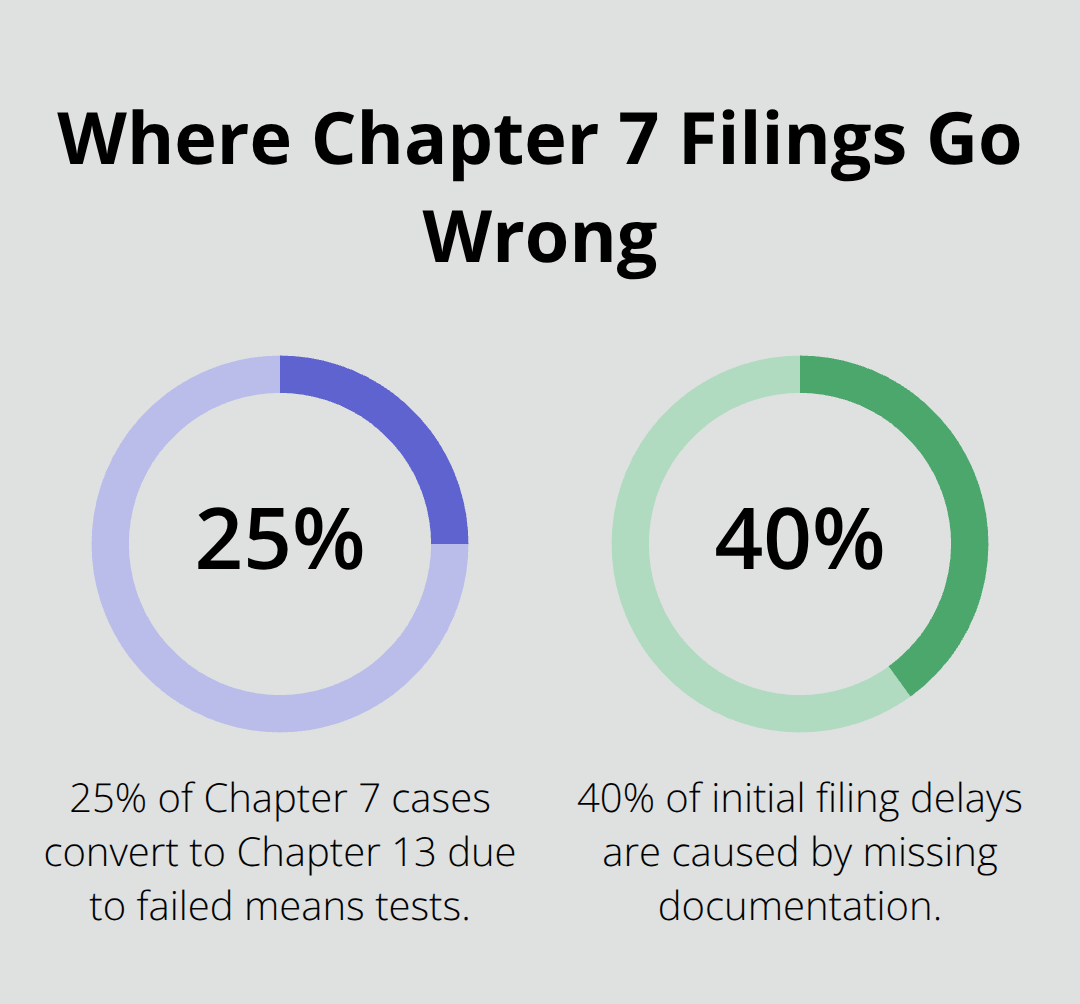
Filing timing directly impacts your debt discharge and asset protection in Chapter 7 bankruptcy. Income calculations for the means test use the six months that precede your filing date, which makes timing critical for Florida residents with variable income. Workers who receive annual bonuses or seasonal income should file after their lowest-income period to pass the means test more easily. The U.S. Trustee Program reports that 25% of Chapter 7 cases convert to Chapter 13 due to failed means tests, often from poor timing decisions.
Avoid major purchases or asset transfers within 90 days before you file, as these transactions face scrutiny from bankruptcy trustees. Florida residents should also consider their homestead exemption timing since you must live in Florida for at least 1,215 days before you file to claim the unlimited homestead exemption. Cash advances and luxury purchases that exceed $725 within 70 days of filing become non-dischargeable debts according to U.S. Bankruptcy Code Section 523.
Document Organization Prevents Filing Delays
Complete financial documentation prevents court delays and trustee objections that can extend your case beyond the typical four-month timeline. Florida bankruptcy courts require six months of pay stubs, two years of tax returns, bank statements for all accounts, and detailed asset valuations. Missing documentation causes 40% of initial filing delays according to Administrative Office of U.S. Courts data.
Gather mortgage statements, vehicle titles, insurance policies, and retirement account statements before you consult with your attorney.
Property appraisals become necessary when your home equity approaches Florida exemption limits or when you own valuable personal property. Business owners need additional documentation that includes profit and loss statements, business tax returns, and accounts receivable records. Organized file folders for each document category speed up the attorney review process and reduce legal fees significantly.
Florida Exemption Laws Protect Your Most Valuable Assets
Florida exemption laws offer some of the most generous asset protection in the United States, but proper application requires precise legal strategy. The unlimited homestead exemption protects your primary residence regardless of value, provided the property doesn’t exceed size limitations of half an acre in cities or 160 acres in rural areas. Married couples who file jointly can double most personal property exemptions, which protects $2,000 in household goods and $2,000 in vehicle equity instead of the $1,000 individual limits.
Retirement accounts that include 401k plans, IRAs, and pension benefits receive complete protection under both federal and Florida law. Florida Statute 222.11 protects life insurance cash values and annuities from creditors, which makes these powerful tools for pre-bankruptcy planning. Wages become exempt from garnishment once you deposit them into bank accounts, but only if you can trace the funds directly from employment sources.
Understanding how to protect these assets during the actual Chapter 7 process requires knowledge of specific Florida exemption strategies and trustee procedures.
How Do You Protect Your Florida Assets in Chapter 7
Florida Homestead Protection Offers Unlimited Value Coverage
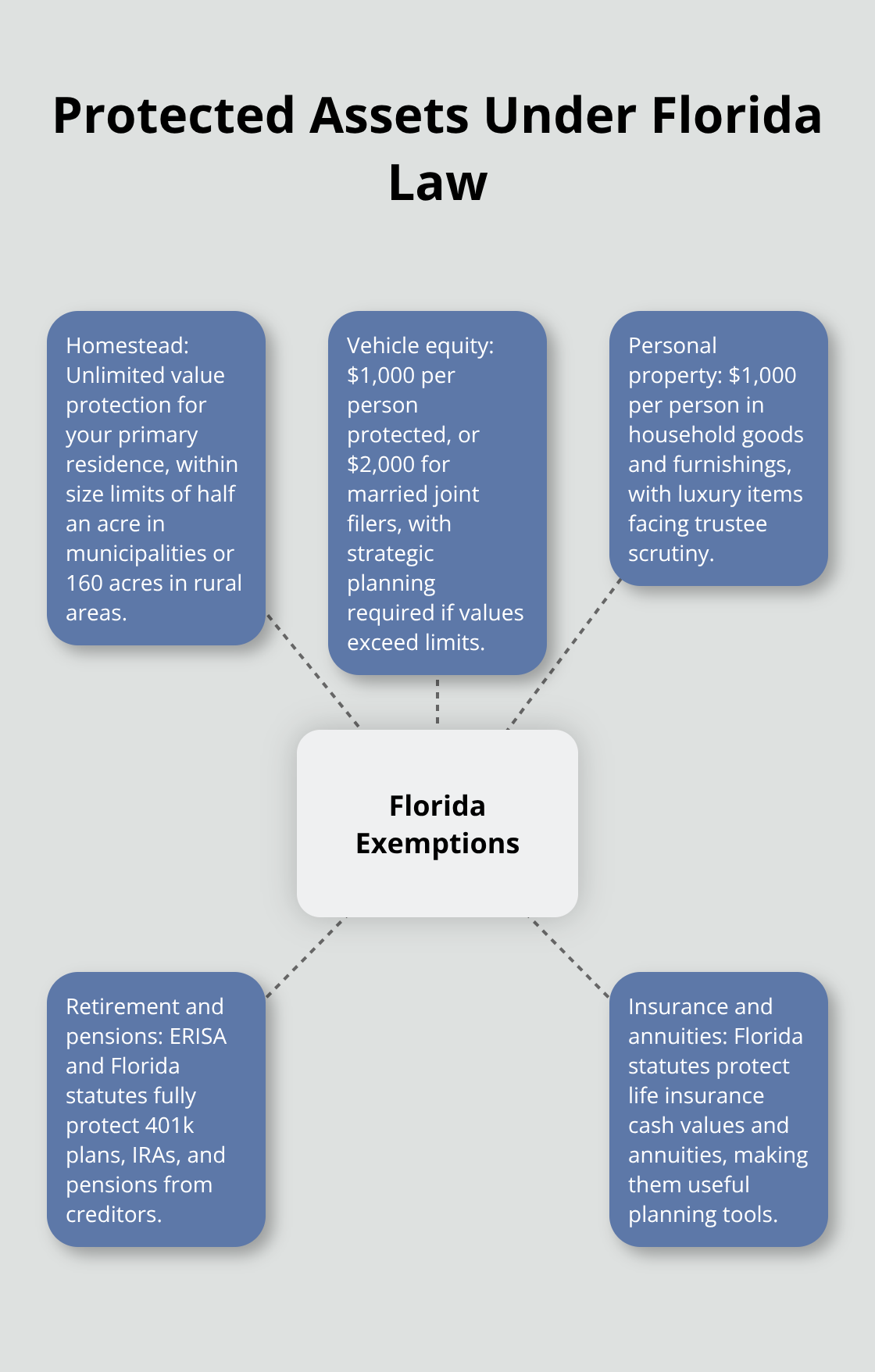
Florida has specific rules regarding exemptions, which can greatly influence the outcome of your case. Florida homestead exemptions provide the strongest residential property protection in the United States with no dollar limit restrictions. Your primary residence receives complete protection regardless of value, provided the property measures half an acre or less in municipalities or 160 acres maximum in rural areas. The Florida Constitution Article X Section 4 establishes this protection, which means a $500,000 home receives the same protection as a $5 million estate.
You must live in Florida for at least 1,215 days before you file to claim unlimited protection. Residents who moved from other states within this timeframe face a $170,350 federal cap on homestead exemptions according to Bankruptcy Code Section 522. Property ownership through tenancy by entireties provides additional protection for married couples, which shields the home from individual spouse creditors even outside bankruptcy proceedings.
Vehicle and Personal Property Exemptions Require Strategic Planning
Florida vehicle exemptions protect $1,000 in equity per person, which doubles to $2,000 for married joint filers under Florida Statute 222.25. Vehicle values that exceed exemption limits force trustees to liquidate the asset unless you can pay the difference to retain ownership. Personal property exemptions cover $1,000 per person in household goods, clothing, and furnishings, but luxury items face scrutiny from trustees.
Professional practice exemptions protect up to $4,000 in tools and books necessary for your occupation, which benefits skilled tradespeople and professionals who rely on equipment for income generation. These exemptions help maintain your ability to earn income after bankruptcy discharge.
Retirement Account Safeguards Provide Complete Protection
Retirement accounts receive complete federal protection under ERISA and Bankruptcy Code Section 522. Florida Statute 222.21 adds state-level protection for these accounts, which creates dual-layer security for 401k plans, IRAs, and pensions. Life insurance cash values and annuities gain protection under Florida Statute 222.14, which makes whole life policies valuable pre-bankruptcy planning tools.
These protections remain absolute regardless of account balances or contribution amounts. Trustees cannot access these funds to pay creditors, which preserves your retirement security throughout the bankruptcy process.
Final Thoughts
Chapter 7 bankruptcy delivers immediate debt relief, but your financial recovery extends far beyond discharge. The benefits of bankruptcy Chapter 7 create opportunities for long-term financial stability when you implement smart recovery strategies. Credit rebuilding starts immediately after discharge through secured credit cards and self-reporting rent payments.
Many Florida residents see credit scores improve within 18 to 24 months post-discharge. Focus on maintaining low credit utilization and consistent payment patterns to accelerate score recovery. Financial education prevents future debt problems when you create emergency funds and track spending patterns (avoiding high-interest credit products that previously caused financial distress).
Professional legal guidance becomes vital when you face complex financial situations or significant assets. We at Harnage Law, PLLC help Florida residents navigate Chapter 7 bankruptcy while protecting valuable assets and maximizing debt discharge benefits. Our Chapter 7 bankruptcy guidance provides personalized legal representation throughout the entire process.