
Losing your car ranks among the top concerns for Florida residents considering bankruptcy. Many people wonder, “If I file bankruptcy, what happens to my car?”
The answer depends on several factors including your vehicle’s value, loan status, and which exemptions you choose. We at Harnage Law, PLLC see clients keep their cars more often than they expect when they understand Florida’s protection options.
How Does Florida Protect Your Car in Bankruptcy?
Florida’s $5,000 Vehicle Exemption Creates Real Protection
Florida residents who file Chapter 7 bankruptcy can protect up to $5,000 of equity in their vehicle under the state’s motor vehicle exemption. This protection jumped from just $1,000 in July 2024 when Senate Bill 158 took effect. The legislature recognized that vehicle costs have risen dramatically since lawmakers set the original $1,000 limit in 1993.
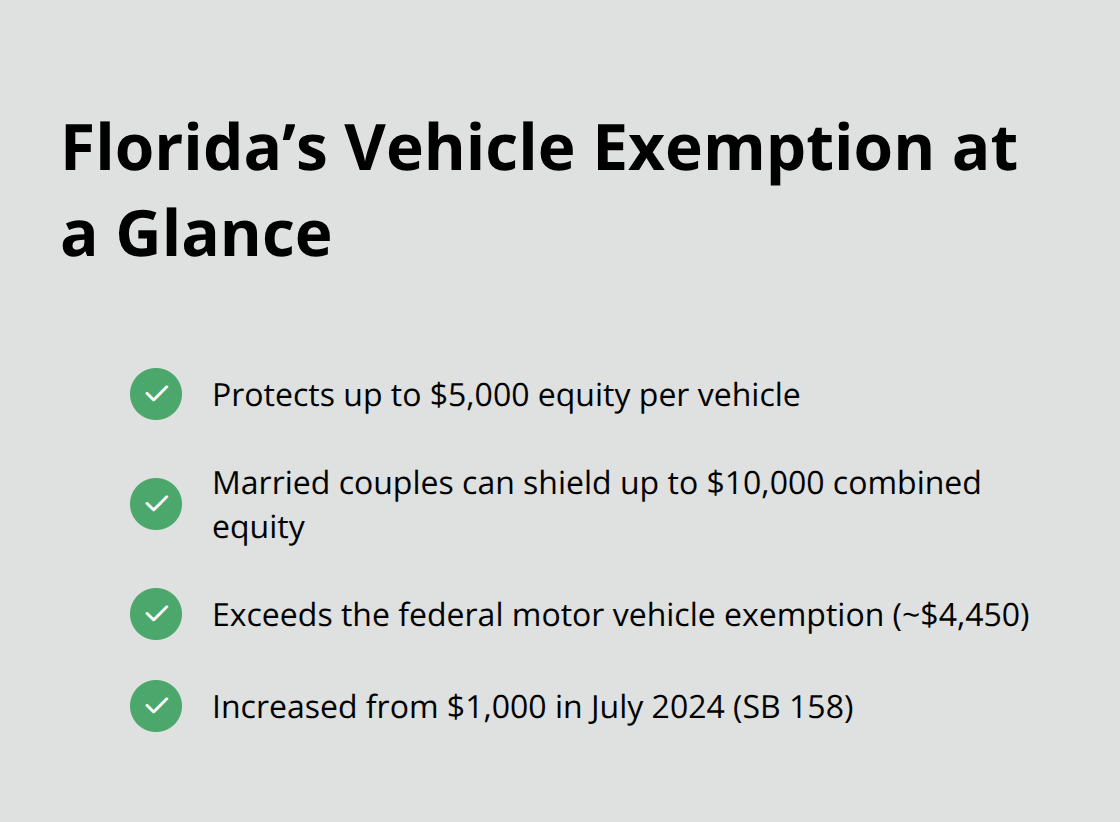
The $5,000 exemption applies to each vehicle you own. A married couple can potentially protect $10,000 in combined vehicle equity. Most Florida filers retain their cars because the average vehicle equity falls below this threshold (especially when you factor in depreciation and outstanding loan balances).
State Exemptions Outperform Federal Options
Florida mandates that residents who have lived in the state for at least 730 days must use state exemptions rather than federal bankruptcy exemptions. This requirement works in your favor because Florida’s $5,000 vehicle exemption significantly exceeds the federal exemption of approximately $4,450.
Florida also offers an unlimited homestead exemption for homes owned over 1,215 days, plus a wildcard exemption of $1,000 or $4,000 depending on whether you claim the homestead protection.
Most Cases Result in Asset Retention
The National Bankruptcy Forum reports that Florida’s exemption laws rank among the most debtor-friendly in the nation. Statistics show that over 95% of Chapter 7 cases in Florida result in no-asset proceedings. This means debtors keep all their property without liquidation.
These protection levels matter most when you understand how courts calculate your vehicle’s actual equity and what steps you can take to maximize your chances of retention.
What Determines if You Keep Your Car in Florida Bankruptcy?
Vehicle Equity Calculations Drive Your Outcome
The bankruptcy trustee calculates your vehicle equity by subtracting your outstanding loan balance from your car’s current market value. If your 2020 Honda Civic has a market value of $18,000 and you owe $15,000 on your auto loan, your equity equals $3,000. Since this falls below Florida’s $5,000 exemption, you keep the car. However, if you own a paid-off 2019 Toyota Camry worth $22,000, your $22,000 equity exceeds the exemption limit, which puts the vehicle at risk for liquidation.
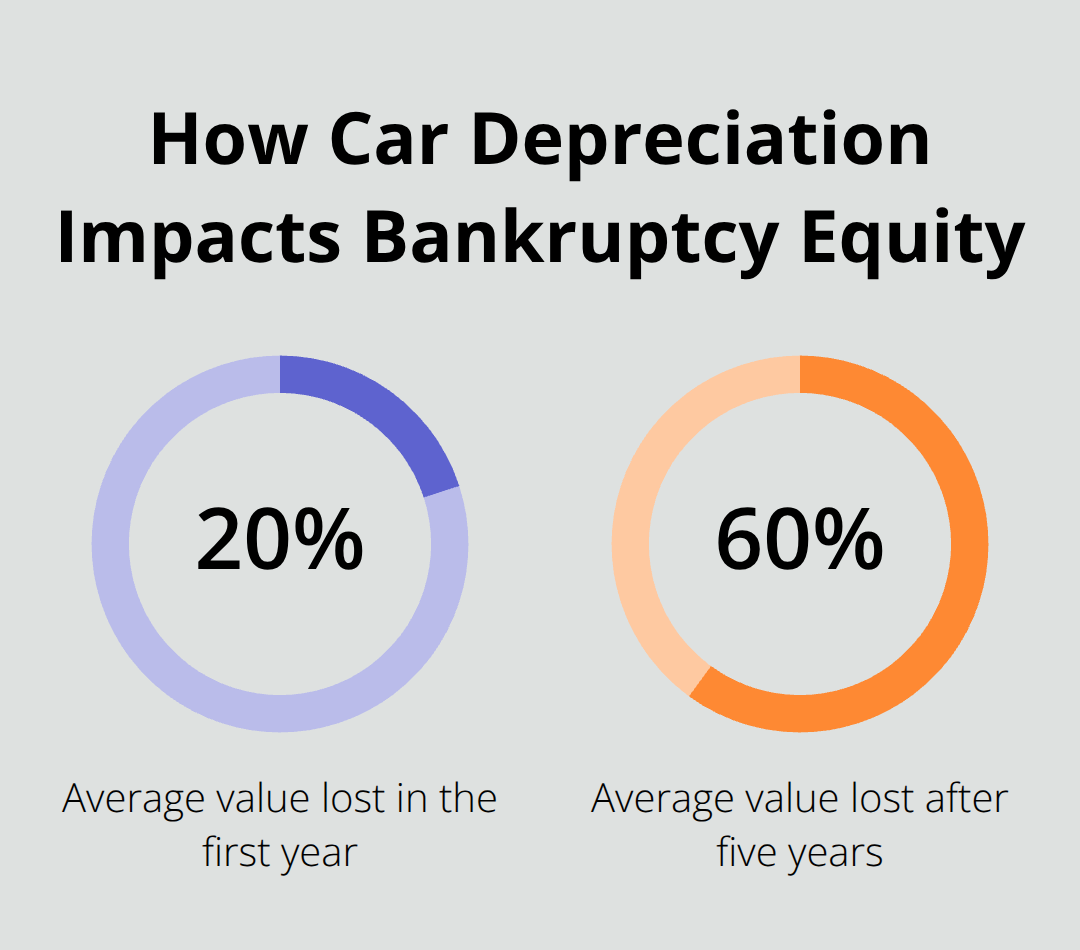
The trustee uses Kelley Blue Book or similar valuation services to determine market value and typically chooses the trade-in value rather than retail price. This works in your favor because trade-in values run 10-15% lower than retail prices. Car depreciation also helps protect your vehicle since most cars lose 20% of their value in the first year and 60% after five years (according to automotive industry data).
Reaffirmation Agreements Require Steady Income
Reaffirmation agreements allow you to keep financed vehicles by continuing loan payments after bankruptcy discharge. The court requires proof that you can afford these payments without causing financial hardship. Your monthly income must exceed your necessary expenses by at least the amount of your car payment. If your monthly take-home pay totals $4,200 and your essential expenses reach $3,800, you can potentially reaffirm a $350 car payment. Courts reject reaffirmation agreements when the payment would strain your post-bankruptcy budget and force you to surrender the vehicle instead.
Timing Your Filing Maximizes Protection
Filing bankruptcy immediately after purchasing a vehicle often provides better protection because you owe more than the car’s worth. New car buyers who finance the full purchase price typically maintain negative equity for the first two to three years of ownership. This underwater position means the trustee has no incentive to seize the vehicle since liquidation would not generate funds for creditors (making your car safe from seizure).
Understanding these factors helps you assess your situation, but Chapter 7 will discharge most of your debts while allowing you to take specific steps to strengthen your position and protect your vehicle through strategic planning.
How Can You Protect Your Car During Florida Bankruptcy?
Reaffirmation Agreements Lock In Your Vehicle Rights
Reaffirmation agreements represent the most common method to retain financed vehicles in Chapter 7 bankruptcy. You sign a new contract with your lender that survives the bankruptcy discharge and keeps your original loan terms intact. The court requires a hearing if your attorney refuses to recommend the agreement or if you lack legal representation.
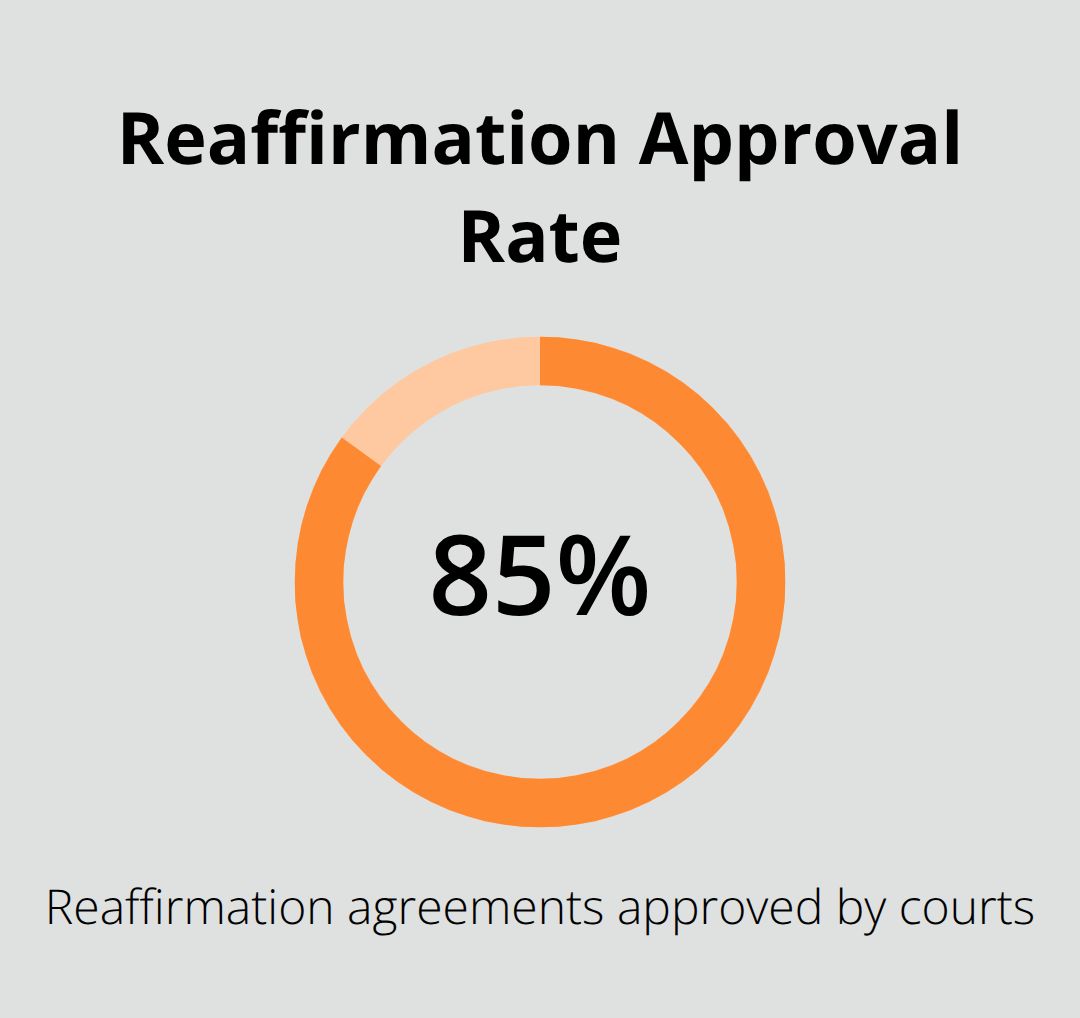
During this hearing, the judge evaluates whether the payment creates an undue hardship based on your post-bankruptcy budget. Courts approve approximately 85% of reaffirmation agreements (according to Administrative Office of the U.S. Courts data). You must stay current on payments throughout the bankruptcy process to qualify for reaffirmation. Missing even one payment typically disqualifies you from this option and forces vehicle surrender.
Redemption Offers Immediate Ownership for Paid-Off Vehicles
Vehicle redemption allows you to purchase your car from the bankruptcy estate at its current replacement value rather than what you originally paid. This strategy works best for older vehicles where the replacement value falls significantly below your equity. If you own a 2015 sedan worth $12,000 but owe nothing, you can potentially redeem it for $12,000 and eliminate the trustee’s interest completely.
The catch requires payment of the full redemption amount in cash within a short timeframe. Most filers cannot access large sums quickly, which makes redemption practical only for lower-value vehicles or filers with available cash reserves. Some third-party lenders offer redemption finance options, but their interest rates typically exceed 20% annually.
Strategic Timing Maximizes Your Protection
Chapter 7 bankruptcy filed within 90 days of a major vehicle purchase often provides optimal protection because negative equity shields your car from seizure. The trustee cannot liquidate an asset that produces no recovery for creditors. Conversely, bankruptcy filed immediately after you pay off a vehicle loan exposes you to maximum risk since your full equity becomes vulnerable.
Market conditions also influence timing decisions since vehicle values fluctuate seasonally, with spring typically bringing higher valuations than winter months. Vehicle equity position evaluation at least six months before you file helps identify potential timing advantages that can protect your transportation.
Final Thoughts
Florida’s bankruptcy laws provide multiple pathways to protect your vehicle during Chapter 7 proceedings. The state’s $5,000 exemption shields most car equity, while reaffirmation agreements help you retain financed vehicles. Redemption options work for paid-off cars when you have available cash.
Strategic timing can maximize these protections by filing when your equity position offers the best advantage. If you file bankruptcy what happens to your car depends heavily on proper planning and legal guidance. Complex calculations involving market values, loan balances, and exemption strategies require professional evaluation (especially when multiple vehicles are involved).
We at Harnage Law, PLLC help Florida residents navigate these decisions while protecting their transportation needs throughout the bankruptcy process. Professional legal counsel can evaluate your specific situation, recommend optimal timing, and guide you through reaffirmation or redemption procedures. Chapter 7 bankruptcy offers debt relief while preserving essential assets when you approach it with proper preparation and knowledgeable representation.