Business bankruptcy can provide a fresh start when your Florida company faces overwhelming debt. Understanding how to file bankruptcy for a business requires navigating complex federal and state requirements.
We at Harnage Law, PLLC see many business owners who wait too long to explore their options. The sooner you act, the more choices you’ll have for protecting your assets and planning your financial future.
Which Business Bankruptcy Chapter Should You Choose in Florida
Florida businesses face three primary bankruptcy options when financial distress threatens operations. Each chapter serves different situations and business goals, with distinct timelines and costs that affect your decision.
Chapter 7 Liquidation Closes Business Operations
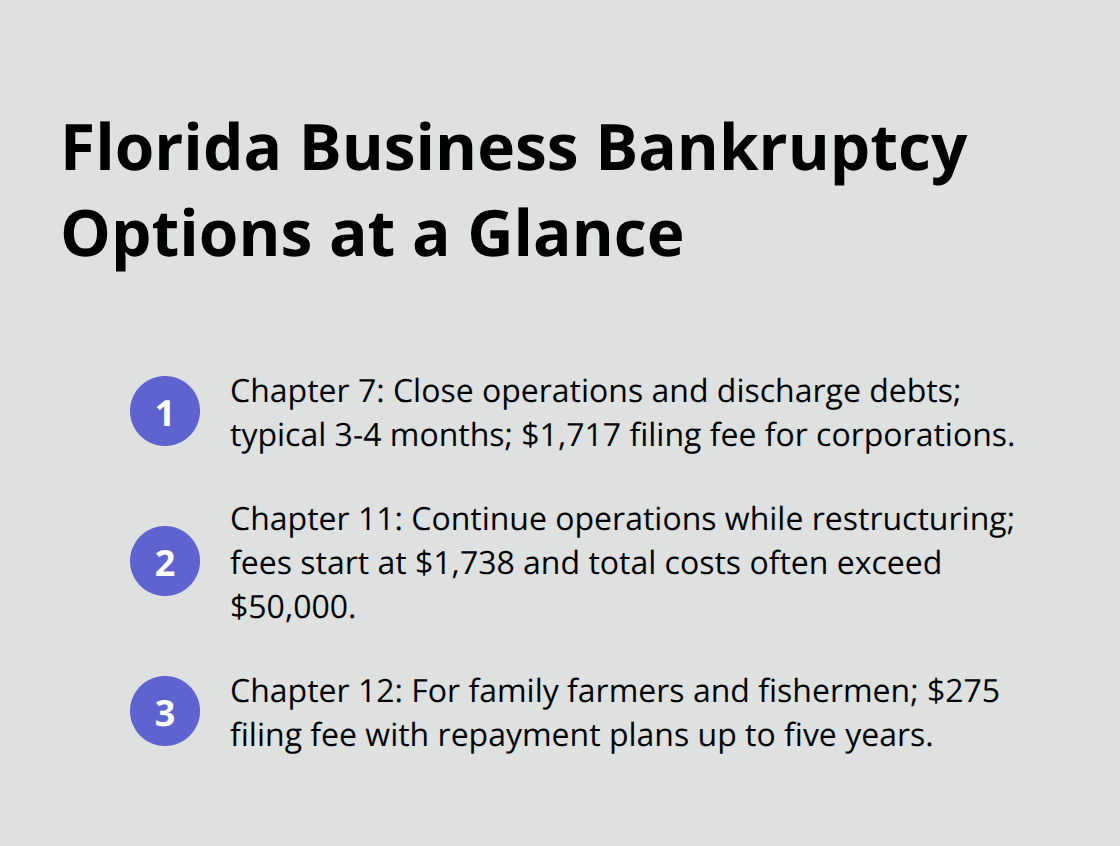
Chapter 7 works best for businesses ready to close operations and discharge debts completely. This process takes 3-4 months and costs $1,717 in filing fees for corporations. The trustee sells non-exempt business assets to pay creditors, but owners of corporations and LLCs avoid personal liability for business debts that remain after discharge.
Most Florida businesses choose Chapter 7 when continuation seems impossible or unprofitable. The automatic stay immediately stops creditor collection efforts, providing breathing room during the liquidation process.
Chapter 11 Reorganization Maintains Business Operations
Chapter 11 allows businesses to continue operations while they restructure debts under court supervision. Filing fees start at $1,738, but total costs often exceed $50,000 due to complex requirements and lengthy proceedings.
The Subchapter V option (available since 2019 for businesses with under $7.5 million in debt) streamlines the process and reduces costs significantly. Most Chapter 11 cases take 12-18 months to complete, during which the automatic stay protects against creditor collection actions.
Chapter 12 Serves Agricultural Operations
Family farmers and fishermen with regular income can file Chapter 12 bankruptcy, designed for seasonal income patterns. This option requires at least 50% of gross income from farming or fishing operations and debt limits of $4.4 million for farmers or $2.04 million for fishermen.
Chapter 12 offers more flexibility than Chapter 13 with repayment plans that extend up to five years. The filing fee is $275, making it the most affordable business bankruptcy option in Florida.
Once you select the appropriate chapter for your situation, proper preparation becomes essential for a successful filing.
What Documents Do You Need Before Filing Business Bankruptcy in Florida
Business bankruptcy filing requires precise documentation and financial preparation that most business owners underestimate. The U.S. Bankruptcy Court for the Middle District of Florida processes over 4,000 business bankruptcy cases annually, and inadequate preparation causes 23% of initial filings to face immediate dismissal or delay according to court records.
Financial Records Form Your Case Foundation
Your bankruptcy petition requires comprehensive financial documentation that spans the past two years. You must provide bank statements, tax returns, profit and loss statements, balance sheets, and accounts receivable records that are complete and accurate. The bankruptcy trustee will scrutinize transactions from the 90 days before you file for preferential payments to creditors, so detailed transaction records become vital.
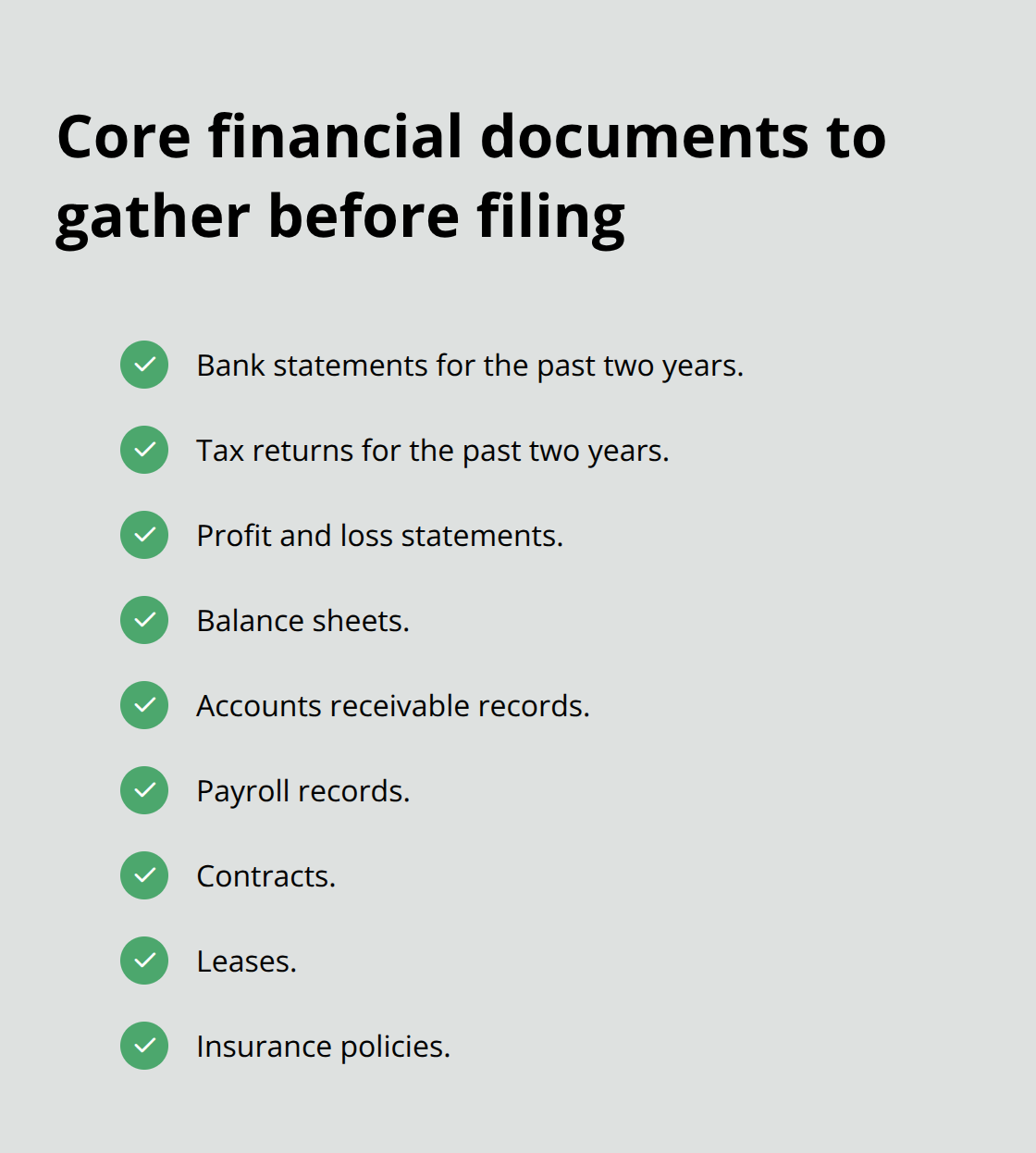
Florida businesses must also provide payroll records, contracts, leases, and insurance policies. Missing or incomplete financial records delay your case and increase legal costs significantly. You should organize these documents at least 60 days before you file to identify any gaps in your financial history.
Asset Valuation Determines Your Bankruptcy Strategy
Accurate asset and liability calculations directly impact which bankruptcy chapter serves your business best and how much creditors might recover. Real estate appraisals, equipment valuations, inventory assessments, and accounts receivable reports provide the court with essential information for case administration.
Florida law requires current market values (not book values) for all business assets. Professional appraisals cost between $300-$800 per asset category but prevent costly disputes later. You must calculate your total secured debt, unsecured debt, and priority claims separately because each category receives different treatment under bankruptcy law.
Additional Requirements for Larger Businesses
Businesses with assets that exceed $50,000 face additional documentation requirements that increase preparation time by several weeks. These companies must file detailed schedules of executory contracts, unexpired leases, and current income statements. The court also requires monthly operating reports throughout the bankruptcy process.
Once you complete your document preparation, the actual court process begins with specific procedural steps that Florida businesses must follow.
How Do You Navigate the Florida Court Filing Process
Electronic Filing Through CM/ECF System
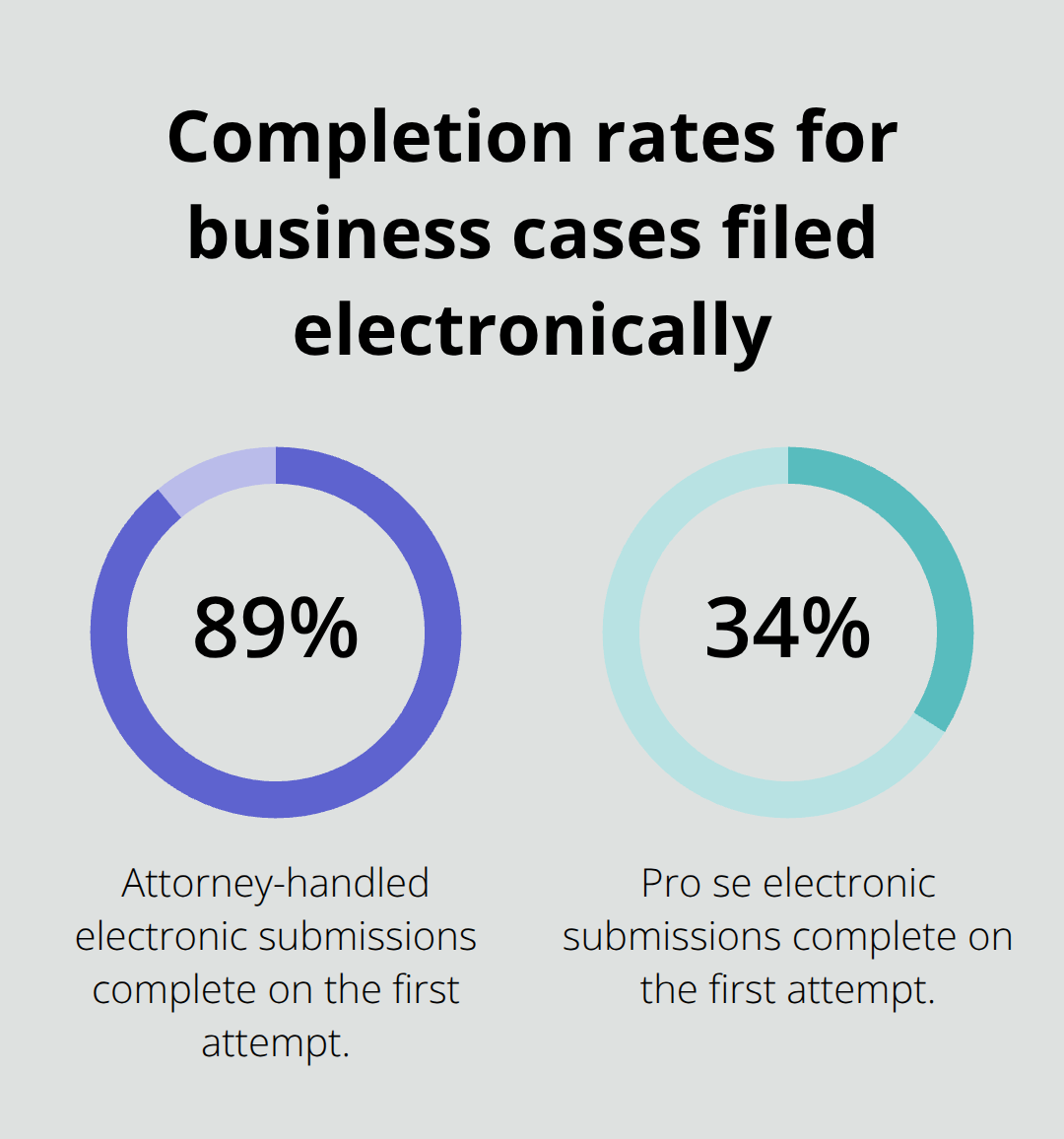
The Florida bankruptcy court system demands precise timing and documentation that many business owners handle incorrectly. You must file your petition electronically through the CM/ECF system, which processes over 65,000 bankruptcy cases annually across Florida’s three federal districts. The Middle District of Florida alone sees 89% of business cases completed within the first attempt when attorneys handle the electronic submission, compared to 34% success rates for pro se filers according to court statistics.
Initial Filing Requirements and Court Response
Your petition becomes official once you pay the required fees and submit all mandatory schedules within 14 days of your initial submission. The court assigns a case number and trustee within 24 hours, which triggers the automatic stay that immediately stops all creditor collection actions. This automatic protection provides immediate relief from collection calls, lawsuits, and wage garnishments while your case proceeds through the court system.
Meeting of Creditors Process
You must attend the meeting of creditors approximately 30-45 days after you file, where the trustee examines your financial records under oath and creditors can question your petition details. The trustee reviews your asset valuations, recent transactions, and compliance with bankruptcy requirements during this mandatory proceeding. Most meetings last 10-15 minutes for straightforward cases, but complex business situations can extend to several hours.
Trustee Administration After the Meeting
After this meeting, the trustee begins asset liquidation in Chapter 7 cases or oversees your reorganization plan in Chapter 11 proceedings. The trustee’s cooperation becomes essential for your case success, as they control the timeline and distribution of assets to creditors. You must provide any additional documentation the trustee requests and maintain open communication throughout the administration process.
Final Thoughts
Business owners who learn how to file bankruptcy for a business in Florida must prepare thoroughly and act strategically. The process requires precise documentation, proper timing, and adherence to federal bankruptcy requirements alongside Florida-specific procedures. Professional legal guidance proves invaluable when you face these complex requirements and want to avoid costly mistakes.
We at Harnage Law, PLLC help Florida businesses navigate the bankruptcy process from initial consultation through final discharge or reorganization completion. Our firm provides comprehensive legal representation that protects your interests and maximizes your chances of achieving the best possible outcome. We understand the financial challenges that Florida businesses face during periods of distress.
Business bankruptcy offers legitimate relief from overwhelming debt when you execute the process correctly. Many business owners discover that Chapter 7 bankruptcy provides the clean slate they need to rebuild their financial future. The discharge of qualifying business debts (when handled properly) opens new opportunities for financial recovery and future business ventures.