
Filing for Chapter 7 bankruptcy doesn’t automatically mean losing your home. Florida’s homestead exemption laws provide strong protection for homeowners facing financial hardship.
We at Harnage Law, PLLC see many clients successfully navigate how to file for bankruptcy and keep your house through proper planning. The key lies in understanding Florida’s unlimited homestead exemption and following the right steps during your case.
What Makes Florida’s Homestead Exemption So Powerful
Florida’s homestead exemption stands as one of the most protective laws in the United States for homeowners who file Chapter 7 bankruptcy. Unlike most states that cap home equity protection at modest amounts, Florida allows unlimited protection for your primary residence equity. This means whether your home has $50,000 or $5 million in equity, the exemption can protect it all from creditors during bankruptcy proceedings.
Property Size and Location Requirements
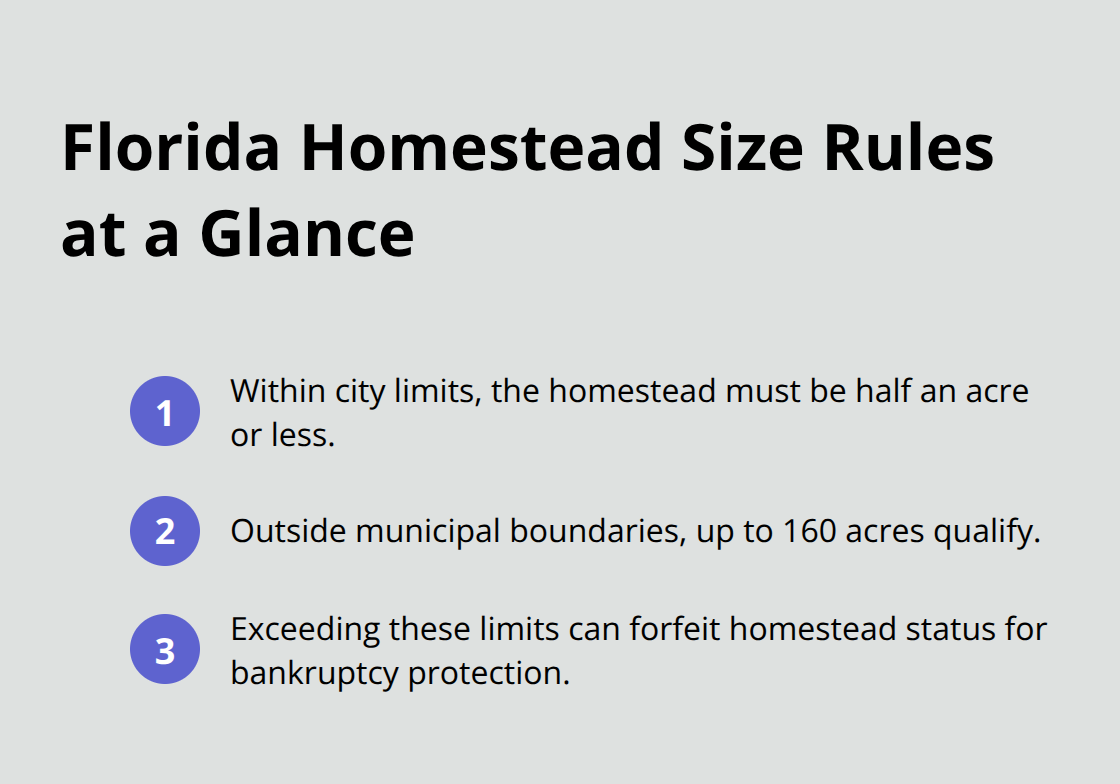
The unlimited protection applies only to properties that meet specific size limits. Within city limits, your homestead cannot exceed half an acre to qualify for full protection. Outside municipal boundaries, the limit extends to 160 acres according to Florida Statutes Section 222.01. Properties that exceed these boundaries lose homestead status entirely, which makes this size requirement non-negotiable for bankruptcy protection.
Ownership Duration Rules Matter
Florida requires ownership of your property for at least 1,215 days before you file bankruptcy to claim the unlimited exemption. Properties that you own for shorter periods face the federal cap of $170,350 in protected equity as of 2024. This 40-month ownership requirement prevents people from moves to Florida solely to exploit the generous homestead laws. The clock starts from your deed record date, not your move-in date.
Residency and Declaration Requirements
You must live in Florida for at least 730 days before you file to use state exemptions instead of federal ones. The property must serve as your primary residence, not a vacation home or investment property. You can file a homestead exemption with your county property appraiser to strengthen your claim, though it’s not legally required for bankruptcy protection. Most Florida counties process homestead declarations within 30 days, and the application typically costs under $50.
What Happens When You Don’t Meet Requirements
When you miss these residency requirements, federal exemptions force you into less favorable protection that caps homestead protection at much lower amounts. The federal homestead exemption protects only $27,900 per person ($55,800 for married couples) as of 2024. This dramatic difference shows why proper preparation matters before you file your Chapter 7 case in Florida courts.
Chapter 7 Bankruptcy and Home Protection Strategies
Chapter 7 bankruptcy creates an automatic stay that immediately stops all collection activities, including foreclosure proceedings on your Florida home. This protection gives you breathing room, but it lasts only 3-4 months while your case processes. Your mortgage lender cannot foreclose during this period, but you must continue payments to keep your home long-term.
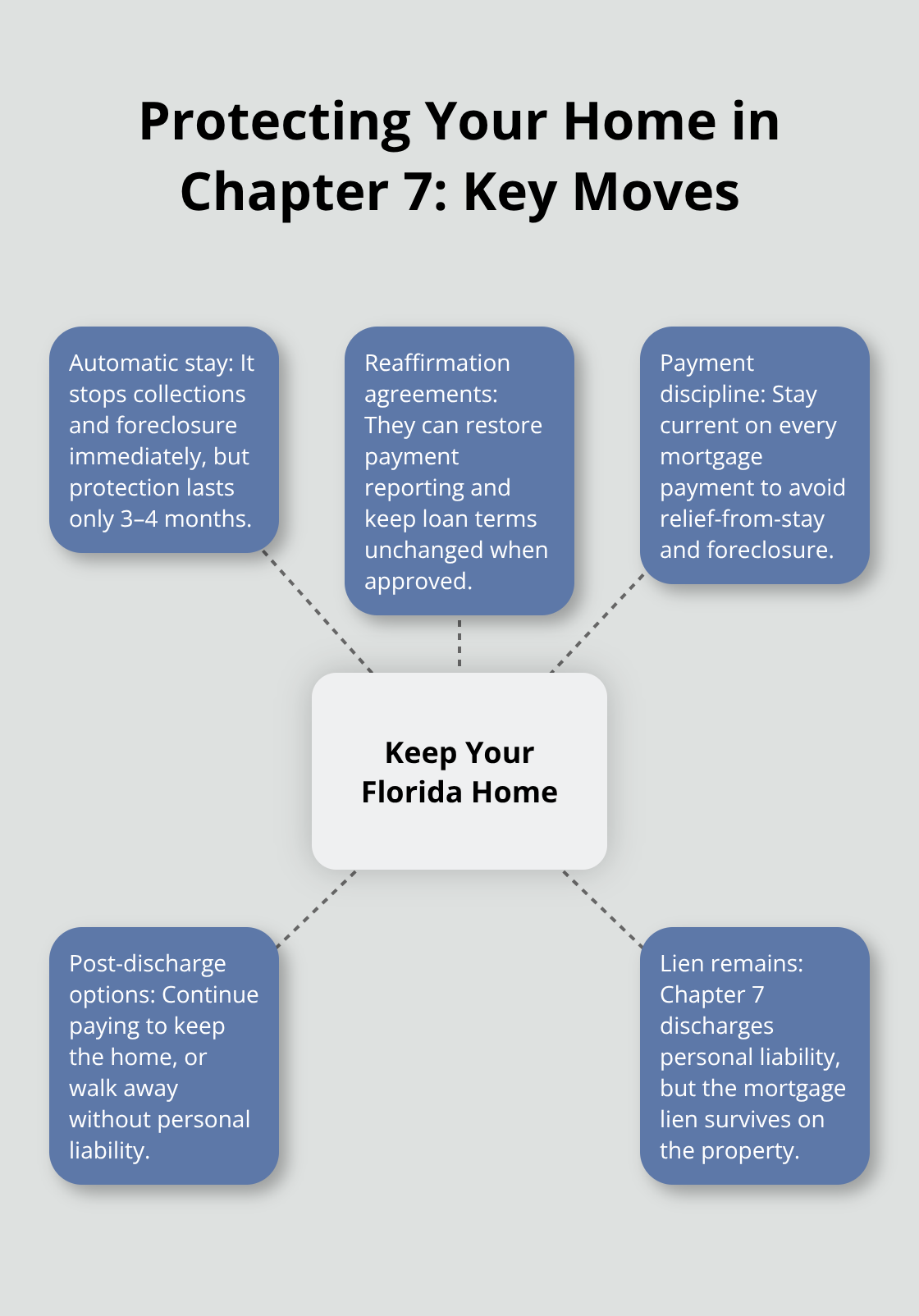
The bankruptcy court discharges your personal liability for the mortgage debt, but the lien on your property remains intact. This means the lender can still foreclose if you fall behind on payments after your case closes.
Reaffirmation Agreements Restore Your Payment History
Most mortgage lenders require reaffirmation agreements during Chapter 7 proceedings. These legal contracts reinstate your personal liability for the mortgage debt in exchange for unchanged loan terms. Without reaffirmation, lenders often refuse to report your on-time payments to credit bureaus, which hurts your ability to rebuild credit scores.
The reaffirmation hearing typically occurs 60 days after your 341 meeting of creditors. Federal courts approve over 95% of mortgage reaffirmations when borrowers demonstrate ability to make payments and the agreement serves their best interests.
Payment Requirements Throughout Your Case
You must stay current on mortgage payments throughout your entire Chapter 7 case to avoid loss of homestead protection. Late payments during bankruptcy proceedings give lenders grounds to request relief from the automatic stay, which allows foreclosure to resume immediately.
Most Chapter 7 cases in Florida close within 4 months of filing (though payment obligations continue without interruption). Courts expect mortgage payments within 30 days of the due date during bankruptcy. Missing even one payment can jeopardize your home protection, regardless of your homestead exemption status.
What Happens After Discharge
After your Chapter 7 discharge, you no longer owe the mortgage debt personally, but the lender’s lien remains on your property. This creates a unique situation where you can walk away from the home without owing money, or continue payments to keep it. Many homeowners choose to stay and pay because they want to keep their home and benefit from the equity protection Florida provides.
However, even small mistakes during this process can put your home at serious risk.
Common Mistakes That Put Your Home at Risk
Residency Requirements Trip Up New Florida Residents
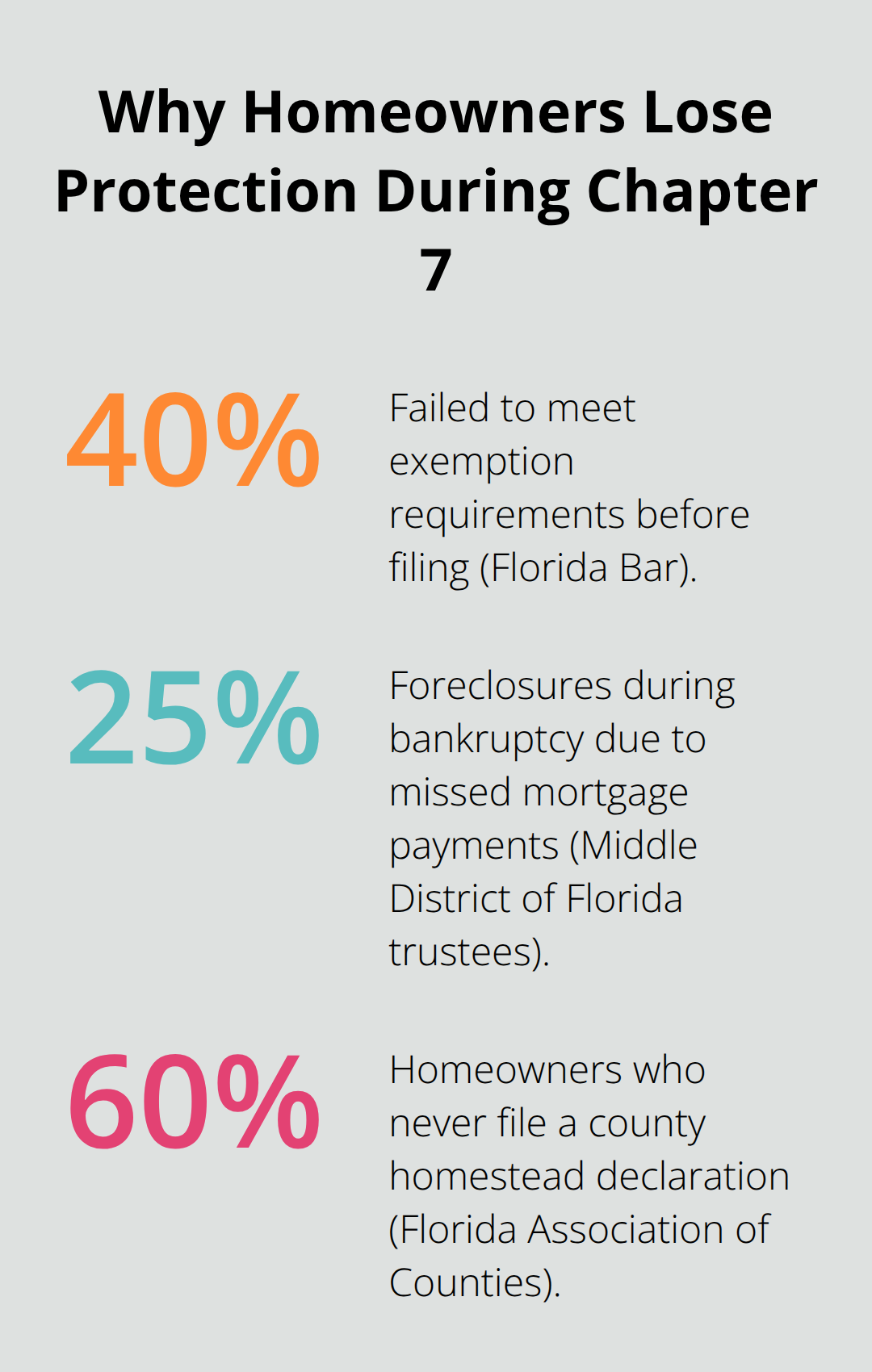
The 730-day residency requirement catches many Florida residents off guard when they file Chapter 7 bankruptcy. People who moved to Florida within two years of filing must use federal exemptions that protect only $27,900 in home equity per person instead of Florida’s unlimited protection. The Florida Bar reports that over 40% of bankruptcy filers who lose their homes failed to meet basic exemption requirements before filing.
The 1,215-day property ownership rule forces homeowners into the same federal cap when they miss this deadline. A $300,000 equity position becomes vulnerable to liquidation by the bankruptcy trustee. Courts strictly enforce these timeframes, and no exceptions exist for hardship cases.
Missed Payments Destroy Automatic Stay Protection
Chapter 7 trustees in the Middle District of Florida report that 25% of home foreclosures during bankruptcy occur because debtors missed mortgage payments during their case. The automatic stay stops foreclosure immediately when you file, but mortgage companies file successful motions for relief from stay within 30 days when payments fall behind.
Most Florida bankruptcy courts grant these motions automatically, which allows foreclosure to resume during your case. Your homestead exemption becomes worthless once the lender forecloses, regardless of your equity position. Courts expect mortgage payments within 30 days of each due date throughout your entire 4-month case period (with no grace periods allowed).
Documentation Failures Cost Homes
Florida counties require homestead declarations to strengthen your bankruptcy exemption claim, but 60% of homeowners never file these simple forms according to the Florida Association of Counties. Properties without proper homestead declarations face challenges from bankruptcy trustees who question primary residence status.
Investment properties and corporate-owned homes never qualify for homestead protection. Many business owners incorrectly assume their company-held residence receives exemption benefits. The property deed must show your name as owner, and utility bills must demonstrate continuous occupancy as your primary residence for the exemption to work.
Incorrect Property Valuations Create Problems
Homeowners often underestimate their property values on bankruptcy schedules, which triggers trustee investigations. The trustee orders professional appraisals when values appear too low compared to recent sales data. Properties that exceed exemption limits (due to incorrect valuations) face forced sales to pay creditors.
Overvaluation creates different problems but rarely results in home loss. Accurate market valuations protect your interests and prevent delays in your case processing.
Final Thoughts
Florida homeowners can protect their homes during Chapter 7 bankruptcy when they meet specific deadlines and requirements. You must live in Florida for at least 730 days before you file and own your property for 1,215 days to access unlimited homestead protection. Stay current on mortgage payments throughout your entire case, as one missed payment can trigger foreclosure proceedings despite the automatic stay.
File your homestead declaration with your county property appraiser to strengthen your exemption claim. Accurately value your property on bankruptcy schedules to avoid trustee challenges. Understanding how to file for bankruptcy and keep your house depends on following these requirements precisely.
Complex situations involving recent moves to Florida, corporate property ownership, or significant equity positions require professional guidance. We at Harnage Law, PLLC help Florida residents navigate Chapter 7 bankruptcy while protecting their homes through proper planning and documentation. Start by gathering your property deeds, mortgage statements, and residency documentation to prepare for a successful bankruptcy filing that preserves your most important asset.
