
Medical debt has become the primary reason Florida residents file for bankruptcy protection. Hospitals, collection agencies, and creditors pursue aggressive tactics that drain savings and threaten homes.
At Harnage Law, PLLC, we’ve seen how quickly medical bills spiral into financial ruin. Chapter 7 bankruptcy can stop this cycle and give you a fresh start.
Medical Debt Is Crushing Florida Families
The Scale of Medical Debt in Florida
Nearly one-third of working-age adults in the United States carry medical or dental debt, according to research from the Commonwealth Fund and the American Journal of Public Health. In Florida, this crisis hits harder because residents face some of the nation’s highest healthcare costs combined with stagnant wages and a large retiree population on fixed incomes. Medical debt now ranks as the single leading cause of bankruptcy filings across the country, and Florida follows this national trend closely.
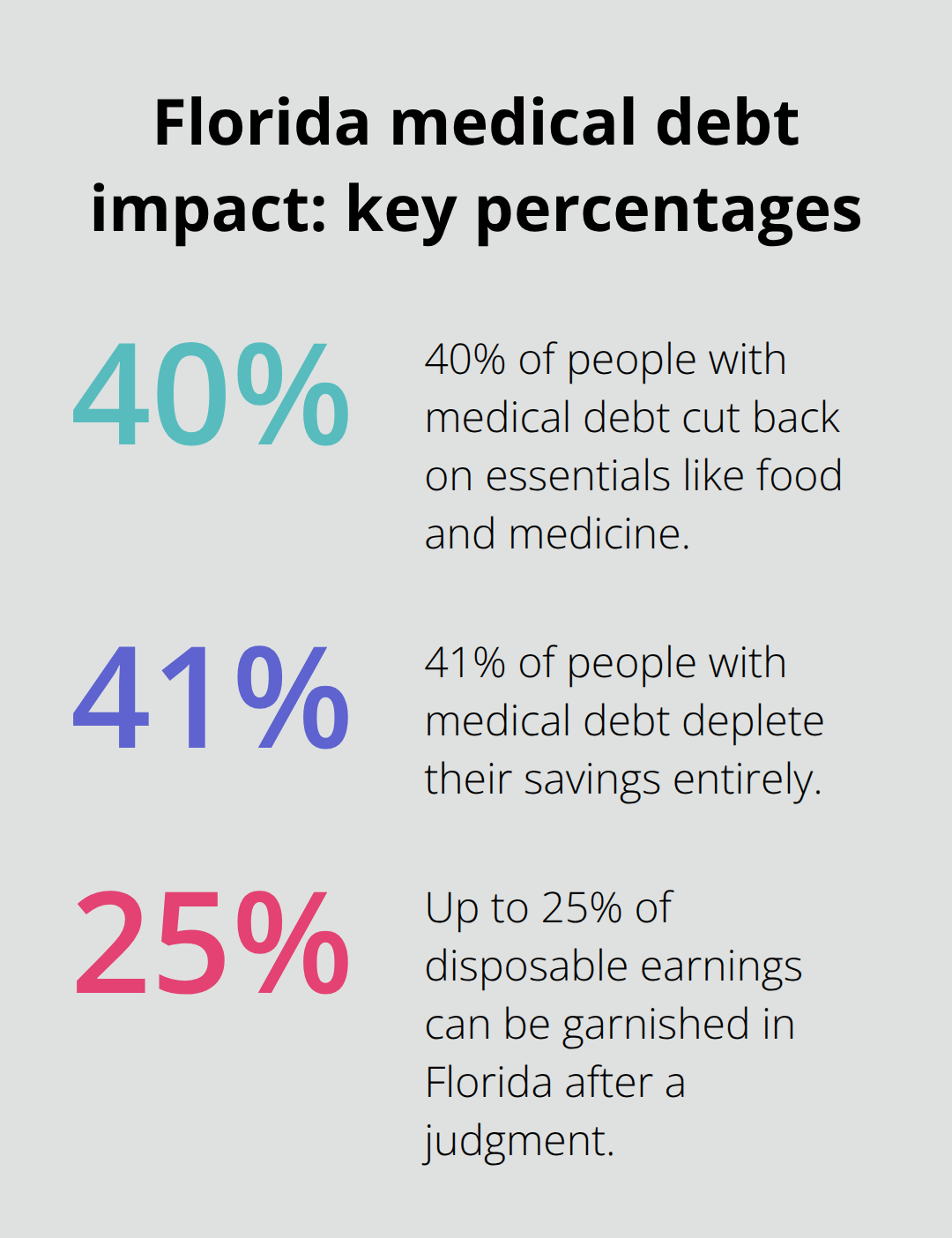
The Commonwealth Fund reports that about half of people in medical debt owe less than $2,000, yet even these smaller amounts devastate finances-40% cut back on essentials like food and medicine, and 41% deplete their savings entirely. For Florida families, a single emergency room visit costs $45,000 for the uninsured, while cancer treatment routines exceed $60,000 out-of-pocket. Retirees on fixed incomes often accumulate $30,000 or more in medical debt from chronic condition management alone.
Rising Healthcare Costs Outpace Wage Growth
Healthcare costs continue rising at rates far exceeding wage growth, meaning the gap between what people earn and what they owe widens every year. Florida’s unique pressures compound this problem: the state has a large elderly population with limited income growth, high numbers of uninsured and underinsured residents, and insurance coverage gaps that leave even insured patients exposed through high deductibles and cost-sharing requirements.
How Collectors Weaponize Medical Debt
Creditors and debt collectors know these numbers, and they act aggressively. The Commonwealth Fund found that large shares of medical debt get sold to third-party collectors who pursue aggressive tactics including wage garnishment and home liens. Hospitals can sue for unpaid bills, obtain judgments, and then garnish up to 25% of your disposable earnings-though Florida’s head-of-household exemption can shield up to 100% of wages if you claim it properly, a protection many residents don’t know exists.
Medical debt compounds with collection fees, court costs, and interest that accumulates rapidly, turning a $5,000 hospital bill into $12,000 within months. Families facing this spiral often lose assets, drain retirement accounts, and face foreclosure when collectors place liens on homes. The FDCPA limits some collector tactics, but it does not prevent lawsuits or wage garnishments on its own.
Why Immediate Action Matters
Without immediate legal intervention, the financial damage becomes irreversible. This reality makes understanding how Chapter 7 bankruptcy stops this cycle essential for Florida families drowning in medical bills.
How Medical Debt Spirals Into Financial Crisis
Collectors Deploy Aggressive Tactics Immediately
Once medical bills enter the collection system, Florida residents face a relentless financial assault. Collectors act immediately rather than waiting passively for payment. According to the Commonwealth Fund, large shares of medical debt get sold to third-party debt buyers who pursue aggressive tactics including wage garnishment and home liens.
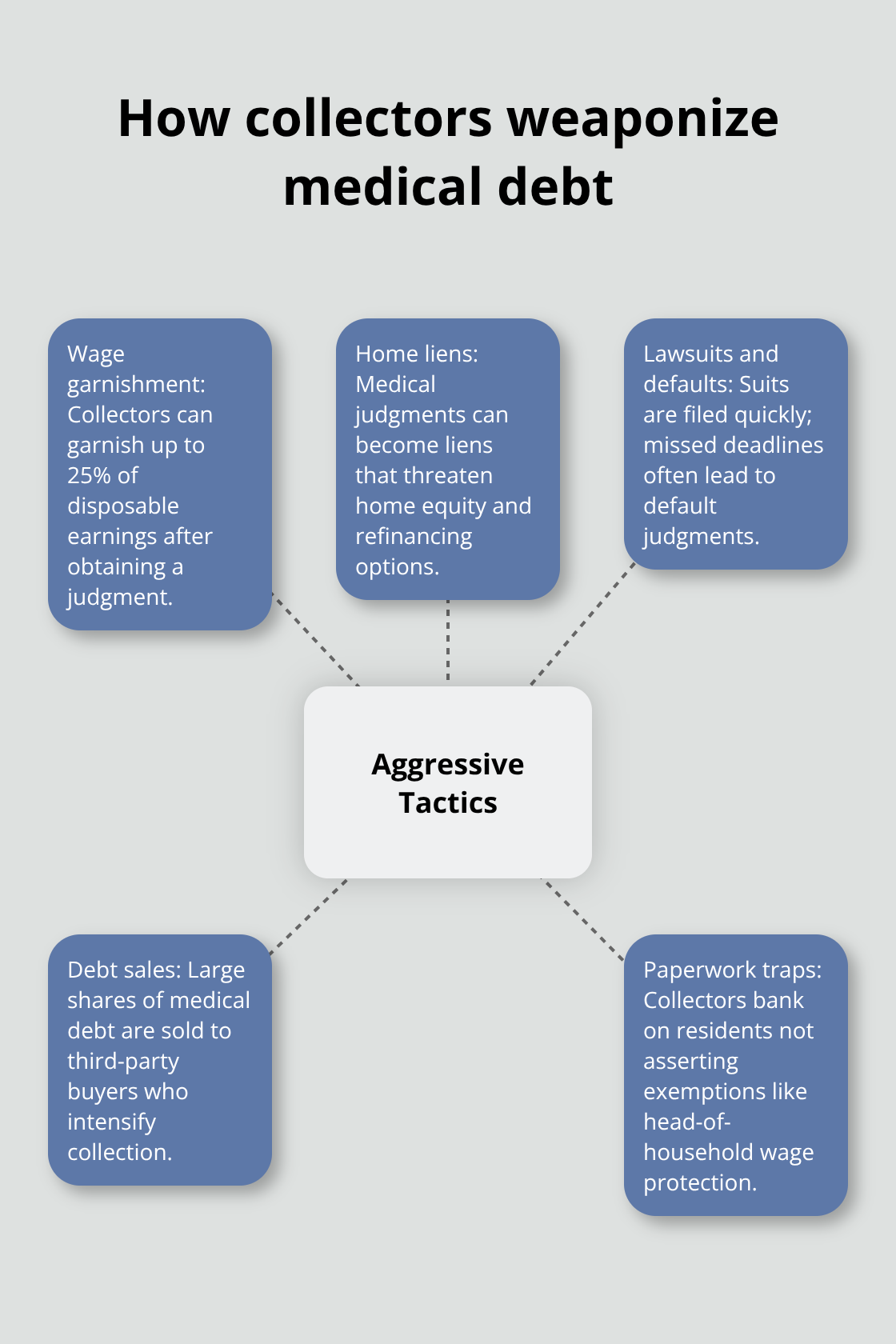
These collectors file lawsuits in Florida courts, obtain judgments, and then move to garnish your wages at rates up to 25% of your disposable earnings. While Florida’s head-of-household wage exemption can shield up to 100% of wages if claimed properly, most residents don’t know this protection exists, and collectors count on that ignorance.
Medical Bills Transform Into Multiplied Debt
A $5,000 emergency room bill transforms into $12,000 within months as collection fees, court costs, and compounding interest accumulate. Hospitals themselves pursue liens against your home, meaning a surgery that saves your life today threatens your home tomorrow. The FDCPA limits certain collector tactics, but it does not prevent lawsuits or wage garnishments-those remain entirely legal weapons in a collector’s arsenal. Without intervention, families drain retirement accounts, cut back on food and medicine, and watch their credit crumble while collectors tighten their grip.
The Cascading Financial Collapse
Medical debt doesn’t stand alone. It combines with other obligations, creating a perfect storm where one unpaid hospital bill triggers cascading financial failure. A collector’s judgment becomes a lien on your home, reducing your equity and limiting refinancing options. Wage garnishment reduces monthly income precisely when you need it most, forcing impossible choices between rent and medication. The Commonwealth Fund research shows that families carrying medical debt cut back on essentials at rates of 40% and deplete savings at rates of 41%-this isn’t theoretical hardship, it’s survival mode.
Fixed-Income Residents Face Mathematical Impossibility
For retirees on fixed incomes, a $30,000 medical debt accumulated through chronic condition management becomes mathematically impossible to repay. Florida’s large elderly population faces this crisis constantly, watching decades of careful financial planning evaporate in weeks. The longer you wait, the more aggressive collection efforts become, and the more assets slip away through liens and garnishments. This spiral demands immediate legal action to stop the bleeding and protect what remains. Chapter 7 bankruptcy offers the only mechanism that halts these collection tactics and provides genuine relief.
How Chapter 7 Bankruptcy Stops Medical Debt in Florida
The Automatic Stay Halts Collection Immediately
Filing for Chapter 7 bankruptcy triggers an automatic stay under 11 U.S.C. § 362 the moment your petition reaches the court. This stay stops collection activity instantly. Wage garnishments halt. Lawsuits pause. Collection calls end. Foreclosure proceedings freeze.
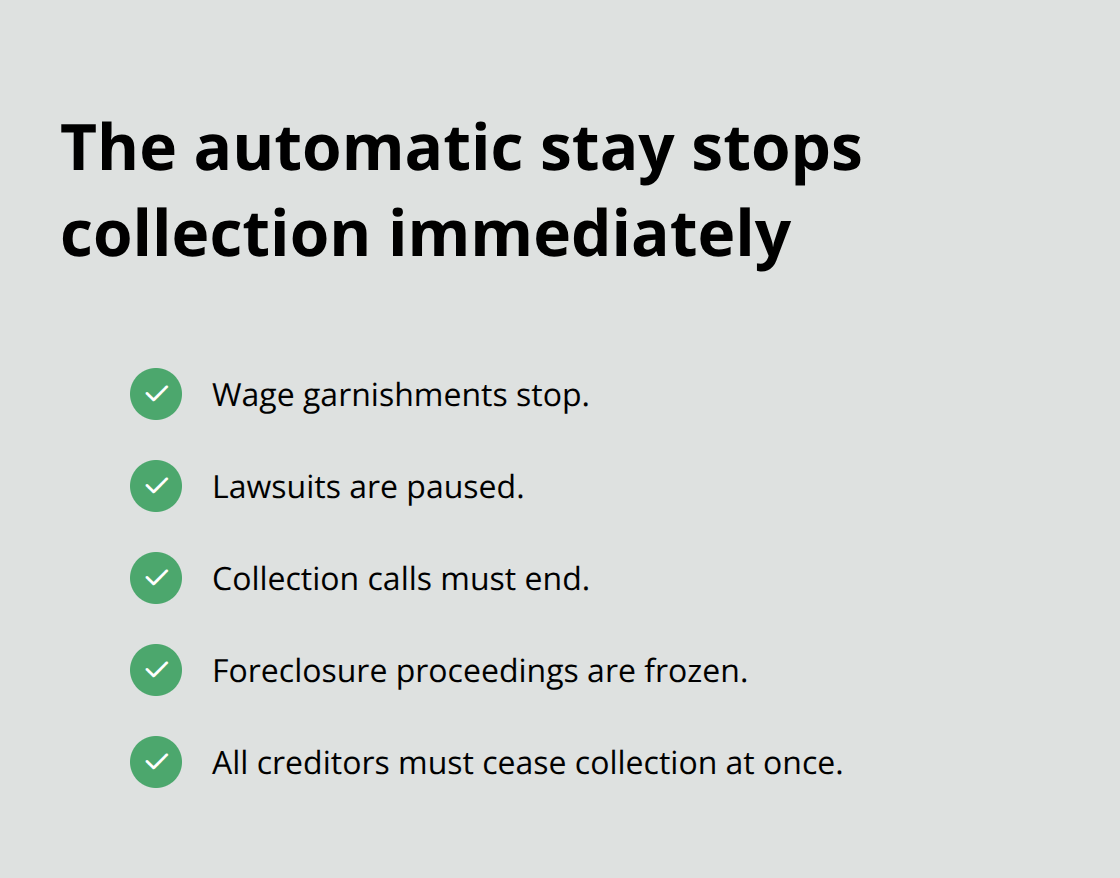
This legal barrier prevents creditors from taking further action against you while your case processes. For Florida residents facing wage garnishment at 25% of disposable earnings or home liens from medical judgments, the automatic stay provides genuine breathing room. The stay applies to all creditors simultaneously, so you don’t fight each collector individually.
Medical Debt Disappears Through Discharge
Chapter 7 bankruptcy serves as a potential lifeline by eliminating unsecured debts such as medical bills, meaning the underlying obligation vanishes entirely once the court grants your discharge. This happens within 60 to 90 days after your creditors meeting, and the discharge eliminates your personal liability for the medical bills listed in your bankruptcy schedules. If a hospital sued you and obtained a judgment before you filed, that judgment lien on your home can be avoided under 11 U.S.C. § 522(f) if it impairs an exemption you’re entitled to claim. Florida’s homestead exemption protects home equity in many cases, giving you a realistic path to keeping your residence despite medical debt collectors’ attempts to place liens against it.
Exemptions Protect Your Essential Assets
Chapter 7 protects essential assets through exemptions that Florida law provides. Your vehicle remains yours if its equity falls within the exemption limits, meaning you keep transportation for work and family obligations. Retirement accounts, Social Security benefits, and certain personal property receive protection under state and federal exemptions, allowing you to preserve the foundation of your financial recovery. The means test, calculated on Form B22A using six months of household income compared to Florida’s median income, determines your Chapter 7 eligibility. Ongoing medical expenses reduce your disposable income figure, strengthening your qualification. Documentation matters here-medical bills, treatment records, and pharmacy expenses show the court that your income cannot cover basic healthcare costs plus debt repayment.
Most Cases Result in Complete Discharge
More than 99% of Chapter 7 cases result in discharge when conditions are met, and many cases are no-asset cases where creditors receive no distribution yet you still obtain complete discharge of your medical debt. The filing fee totals $245 plus $75 administrative and $15 trustee surcharge, but these fees can be paid in installments or waived if your income qualifies as very low. This straightforward path to eliminating medical debt contrasts sharply with attempting to negotiate with collectors, who have no incentive to forgive bills and every incentive to maximize collection through garnishment and liens.
Final Thoughts
Medical debt in Florida demands immediate legal action because every day you wait, collectors tighten their grip through wage garnishment, liens, and lawsuits. The financial spiral accelerates rapidly, and passive waiting guarantees financial ruin. When you file Chapter 7 bankruptcy, the automatic stay halts collection activity instantly-wage garnishments stop, lawsuits freeze, and collection calls end.
Within 60 to 90 days, your discharge eliminates the medical debt entirely, meaning you no longer owe the hospital or collectors anything. More than 99% of Chapter 7 cases result in complete discharge, and many are no-asset cases where you still obtain full relief despite creditors receiving no distribution. Florida’s homestead exemption protects your home equity, exemptions shield your vehicle and retirement accounts, and the means test uses your actual medical expenses to strengthen your qualification for relief.
We at Harnage Law, PLLC help Florida residents stop creditor harassment, prevent wage garnishments, and halt lawsuits through Chapter 7 bankruptcy. Contact us today for a confidential consultation to discuss your situation and explore how Chapter 7 can give you the fresh financial start you deserve.