Payday loans promise quick cash but deliver financial devastation. Most borrowers end up trapped in a cycle of debt that spirals out of control within months.
At Harnage Law, PLLC, we’ve seen how payday loan debt forces people toward bankruptcy as their only viable option. Chapter 7 bankruptcy can stop the bleeding and give you a genuine fresh start.
Why Payday Loans Trap You in Endless Debt
The 400% APR Problem
Payday loans carry an average APR around 400%, making them exponentially more expensive than credit cards or personal loans. The real damage, however, happens through the rollover trap. When you can’t repay the full loan plus fees on payday, lenders encourage you to renew the loan by paying only the fees. Lisa Engelkins paid $1,254 in renewal fees alone to extend a $300 payday loan 35 times. Pamela Gomez paid $10,560 in interest on five $500 payday loans, with fees consuming her income instead of reducing what she owed. Arthur Jackson borrowed $200 and watched it grow to $300 while accumulating roughly $5,000 in interest through repeated rollovers.
How Rollovers Create Financial Prisons
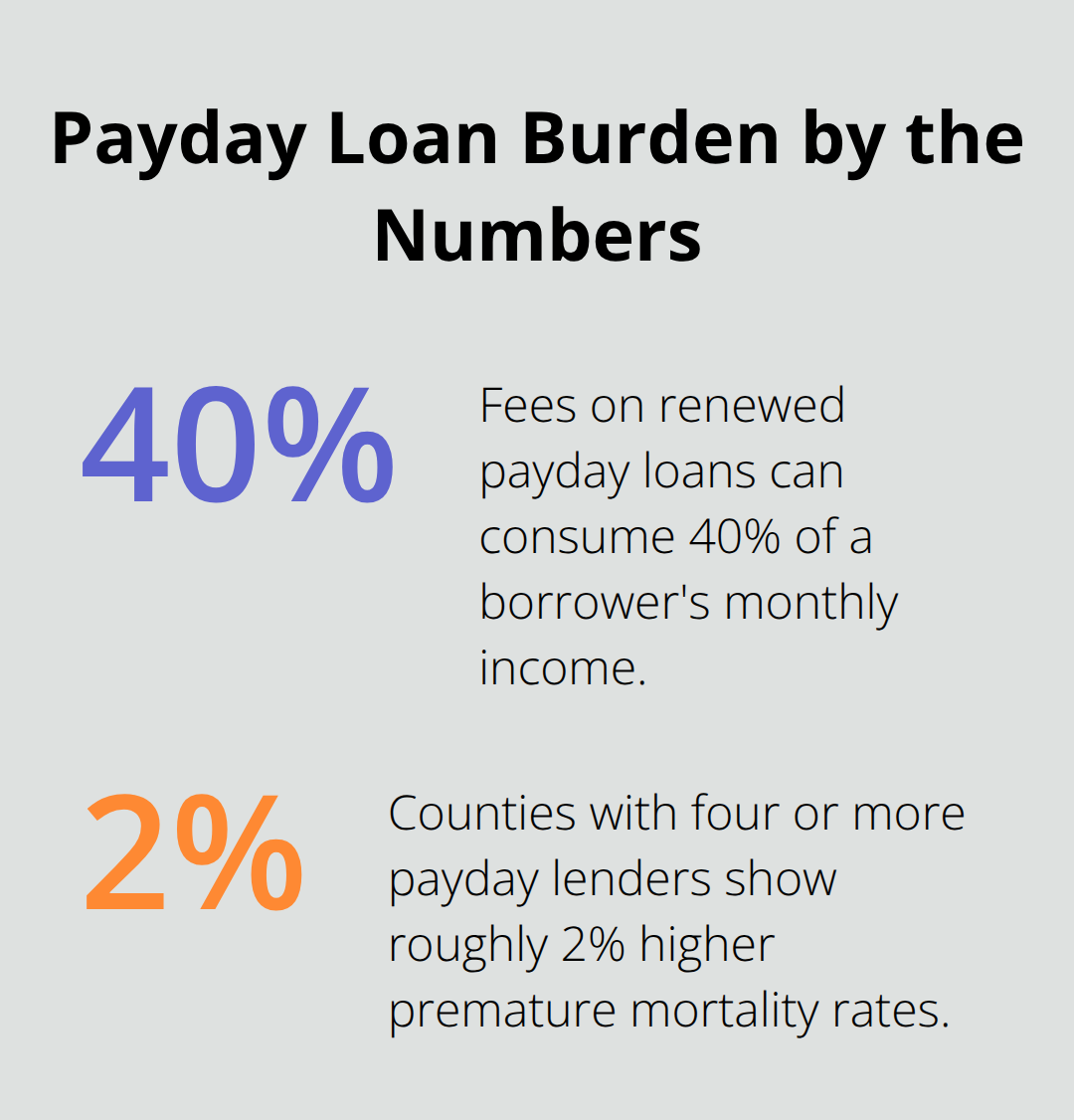
These cases reflect how payday lending operates. The average borrower renews loans more than 10 times, meaning what started as a two-week solution becomes a multi-month or multi-year financial prison. Most borrowers hold multiple payday loans simultaneously to survive. Wanda Thompson borrowed from nine different lenders at once. Whitney took loans from ten lenders. When you renew every two weeks across multiple lenders, fees can consume 40% or more of your monthly income-in some documented cases, families allocated roughly $800 per month to payday loan payments alone.
The Health and Financial Toll
This debt cycle destroys your credit score and makes it nearly impossible to access legitimate credit when you need it. The stress of constant collection calls, threats of wage garnishment, and the inability to pay rent or utilities creates the conditions that make bankruptcy not just an option but a necessity. Counties with four or more payday lenders show roughly 2% higher all-cause premature mortality rates compared to counties with no lenders, according to CDC data from 2000–2017. The financial and physical toll of payday debt is measurable and severe. This reality explains why Chapter 7 bankruptcy becomes the only realistic path forward for those trapped in the payday loan cycle.
How Chapter 7 Stops Payday Loan Collections
Payday Loans Become Unsecured Debts in Bankruptcy
Chapter 7 bankruptcy treats payday loans as unsecured debts, placing them at the lowest repayment priority under federal law. This classification means payday loan balances get discharged entirely in most cases, regardless of how many times you rolled over the loan or how much in fees you accumulated. The discharge covers the entire balance listed in your schedules, including principal, fees, and accumulated interest up to your filing date according to 11 U.S.C. § 362. If a payday lender obtained a judgment before you filed, that judgment becomes an unsecured claim and the underlying debt may still be discharged.
The Automatic Stay Halts All Collection Activity
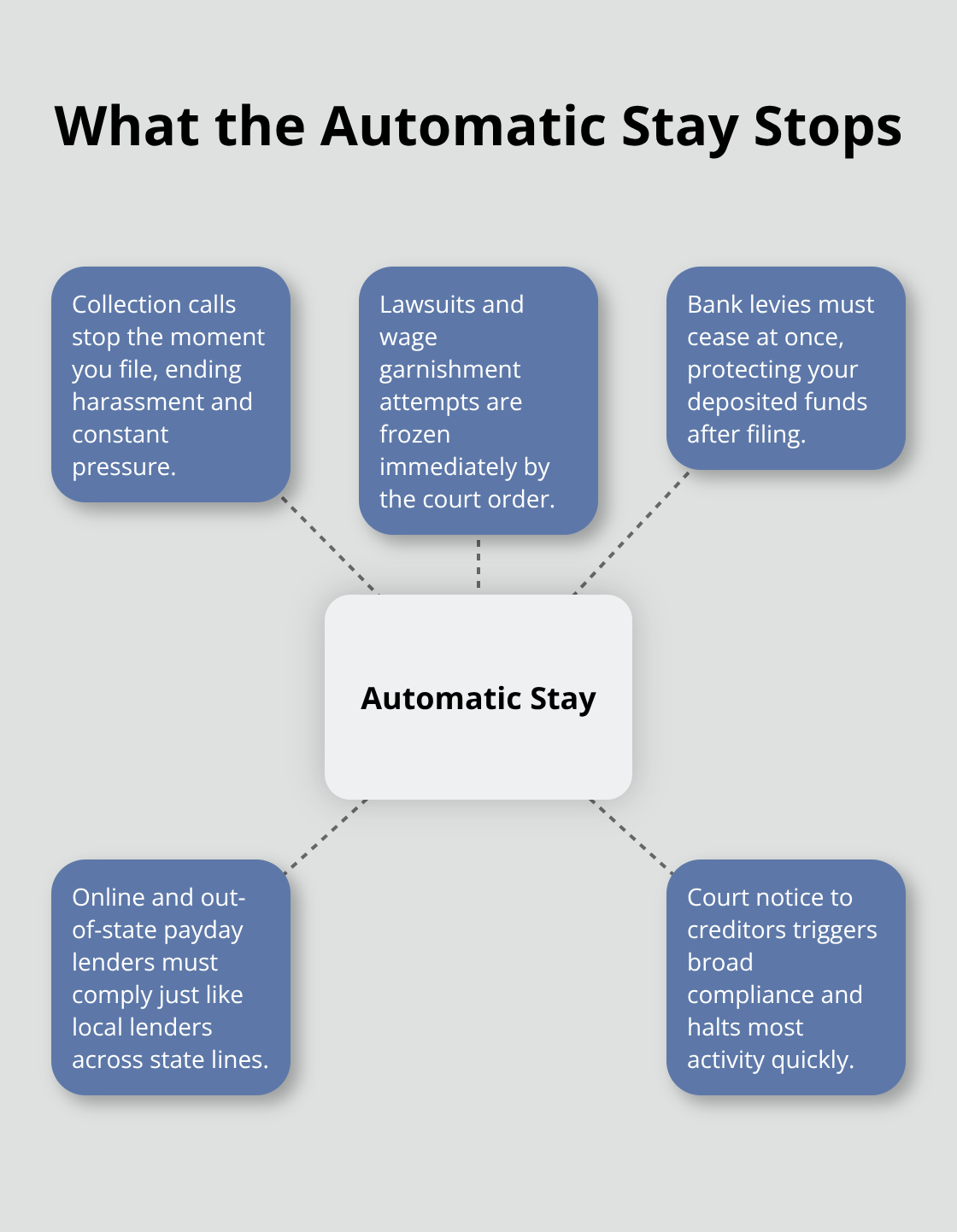
What makes Chapter 7 powerful is the automatic stay, which takes effect the moment you file. This stops payday lender calls, lawsuits, wage garnishment attempts, and bank levies immediately. Online and out-of-state payday lenders must comply with the automatic stay and discharge orders just like local lenders, so you cannot be pursued across state lines. Creditors receive official notice from the court, which stops most collection activity immediately.
Timeline and Eligibility for Chapter 7 Relief
Chapter 7 provides the quickest relief for payday loans, typically discharging qualifying debt within about 3 to 4 months. Many payday borrowers qualify for Chapter 7 because the means test uses income relative to Florida’s median income, and most people trapped in the payday cycle fall below that threshold. The filing fee is $338, though you can request a fee waiver using Official Bankruptcy Form 103B if you meet financial requirements based on poverty guidelines, or you can pay in installments.
Protecting Your Assets and Accounts During Filing
To protect yourself during the process, revoke any ACH authorizations you gave to payday lenders and consider opening a new bank account to prevent post-filing withdrawals, since post-filing withdrawals can violate the automatic stay. Document any collection attempts that occur after you file because this strengthens your position and can support sanctions against violating lenders. You must list every payday loan in your bankruptcy schedules; failure to do so jeopardizes discharge for that debt.
What Happens at the 341 Meeting
Pre-filing credit counseling from an approved agency is required before filing Chapter 7. Most payday lenders do not attend the 341 meeting of creditors, but they have the right to appear if they choose. The process moves forward straightforwardly once you file, and the court’s official notice to creditors stops most collection activity right away. Understanding these filing requirements and protections sets the stage for the specific steps you’ll take in Florida’s Chapter 7 process.
Filing for Chapter 7 in Florida
Understanding Florida’s Filing Requirements
Florida’s Chapter 7 filing process demands precision and timing. You’ll submit your petition, schedules, and supporting documents to the Middle District of Florida Bankruptcy Court, and the filing fee is $338 (though you can request a waiver through Official Bankruptcy Form 103B if your income falls below the poverty guidelines set by the U.S. government, or split payments across installments). Before filing, you must complete credit counseling from an agency approved by the U.S. Trustee, and this certificate becomes part of your petition package. At filing, you’ll submit your Voluntary Petition, complete Schedules A through J-2, your Statement of Financial Affairs, the Means Test calculation showing your current monthly income, copies of your last 60 days of pay statements, a legible photocopy of government-issued photo ID, and your Social Security numbers. The Creditor Matrix must list every payday lender’s name and address, and missing even one lender jeopardizes your discharge for that debt. Your petition requires original wet signatures, not digital ones.
How the Court Notifies Creditors
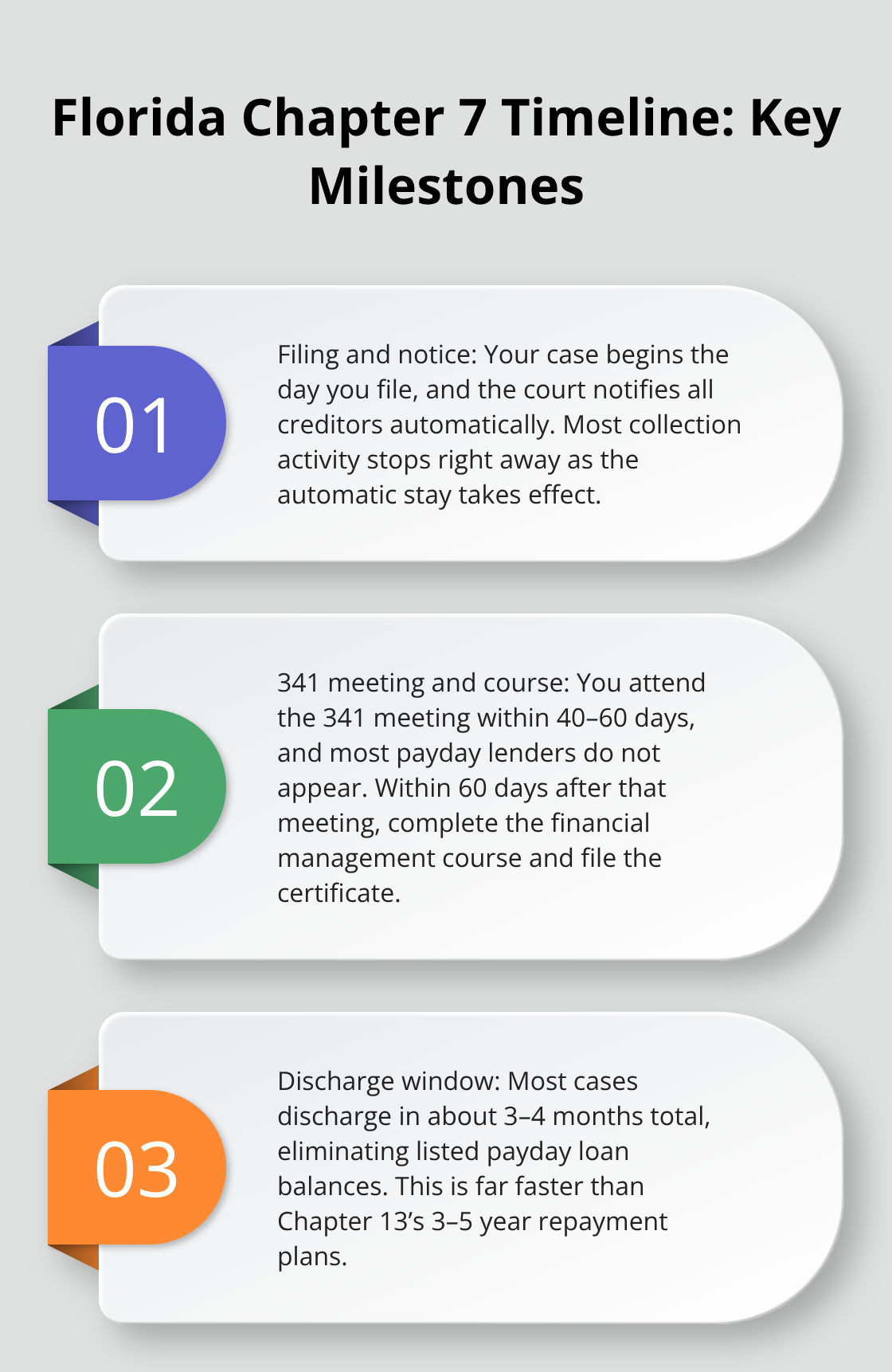
After you file, the court sends official notice to all creditors, and payday lenders must stop collection immediately upon receiving this notice, regardless of whether they’re based in Florida or operate online from another state. This automatic notification stops most collection activity right away without any additional action on your part.
Passing the Means Test for Chapter 7 Eligibility
The means test determines whether you qualify for Chapter 7, and this calculation compares your income against Florida’s median income for your household size. Most people trapped in payday loan cycles pass this test because they earn below the state median, making them eligible for Chapter 7 discharge rather than a forced repayment plan under Chapter 13. This qualification typically happens quickly once you submit your documentation.
Timeline From Filing to Discharge
You’ll attend the 341 meeting of creditors within 40 to 60 days of filing, though most payday lenders skip this meeting entirely. Within 60 days after the 341 meeting concludes, you must complete a financial management course and file the certificate, which is your final requirement before discharge. Chapter 7 typically discharges payday loans within 3 to 4 months total, making it substantially faster than Chapter 13’s 3 to 5-year repayment plans.
Protecting Your Accounts and Documenting Violations
Protect your bank accounts immediately by revoking any ACH authorizations you granted payday lenders and consider opening a new account at a different bank to prevent post-filing withdrawals, since lenders sometimes attempt to grab funds after you file, which violates the automatic stay and gives you grounds for sanctions. Document every collection call, email, or letter you receive after filing because this evidence supports your case if a lender violates the stay.
Final Thoughts
Payday loans don’t just damage your finances-they systematically destroy your ability to recover on your own. The cycle of rollovers, fees that exceed your original loan amount, and collection threats creates a situation where bankruptcy becomes the only realistic path forward. When you allocate hundreds of dollars monthly to fees alone while your principal never shrinks, traditional debt management fails, and the stress compounds your health, your credit, and your ability to afford basic necessities like rent and utilities.
Chapter 7 bankruptcy stops payday loan collections completely. The automatic stay halts collection calls, wage garnishment attempts, and bank levies the moment you file, and payday loans discharge as unsecured debts, meaning the entire balance-principal, fees, and accumulated interest-disappears in most cases within 3 to 4 months. You don’t need to negotiate with lenders or stretch payments across years like Chapter 13 requires, since the discharge is final and comprehensive, covering every payday loan you list in your schedules.
The path from payday loan trap to financial recovery moves faster than most people realize. Florida’s Chapter 7 process advances quickly once you file, the means test qualification remains straightforward for those earning below the state median, and the court’s official notice to creditors stops most collection activity immediately without additional effort on your part. Contact Harnage Law, PLLC to discuss your Chapter 7 options and learn how we can guide you through the bankruptcy process.