
Repossession moves fast, and your options narrow quickly once a lender takes action. Filing Chapter 7 bankruptcy can stop repossession through the automatic stay, giving you time to explore your choices.
At Harnage Law, PLLC, we help Florida residents understand whether Chapter 7 protects your vehicle or if another path works better for your situation.
How Repossession Works and Why Speed Matters
In Florida, a lender can repossess your car without a court hearing if you’re in default, and they can do it without warning. The creditor simply needs to avoid a breach of the peace, meaning they can’t use force or threats during the seizure. Once the vehicle is taken, the clock starts ticking toward an auction sale. Many repossessions happen within 30 to 60 days of default, though some lenders move faster. The moment your car sells at auction, your options shrink dramatically. If the sale price doesn’t cover what you owe, you’ll face a deficiency balance that the lender can pursue aggressively through wage garnishment or lawsuits.
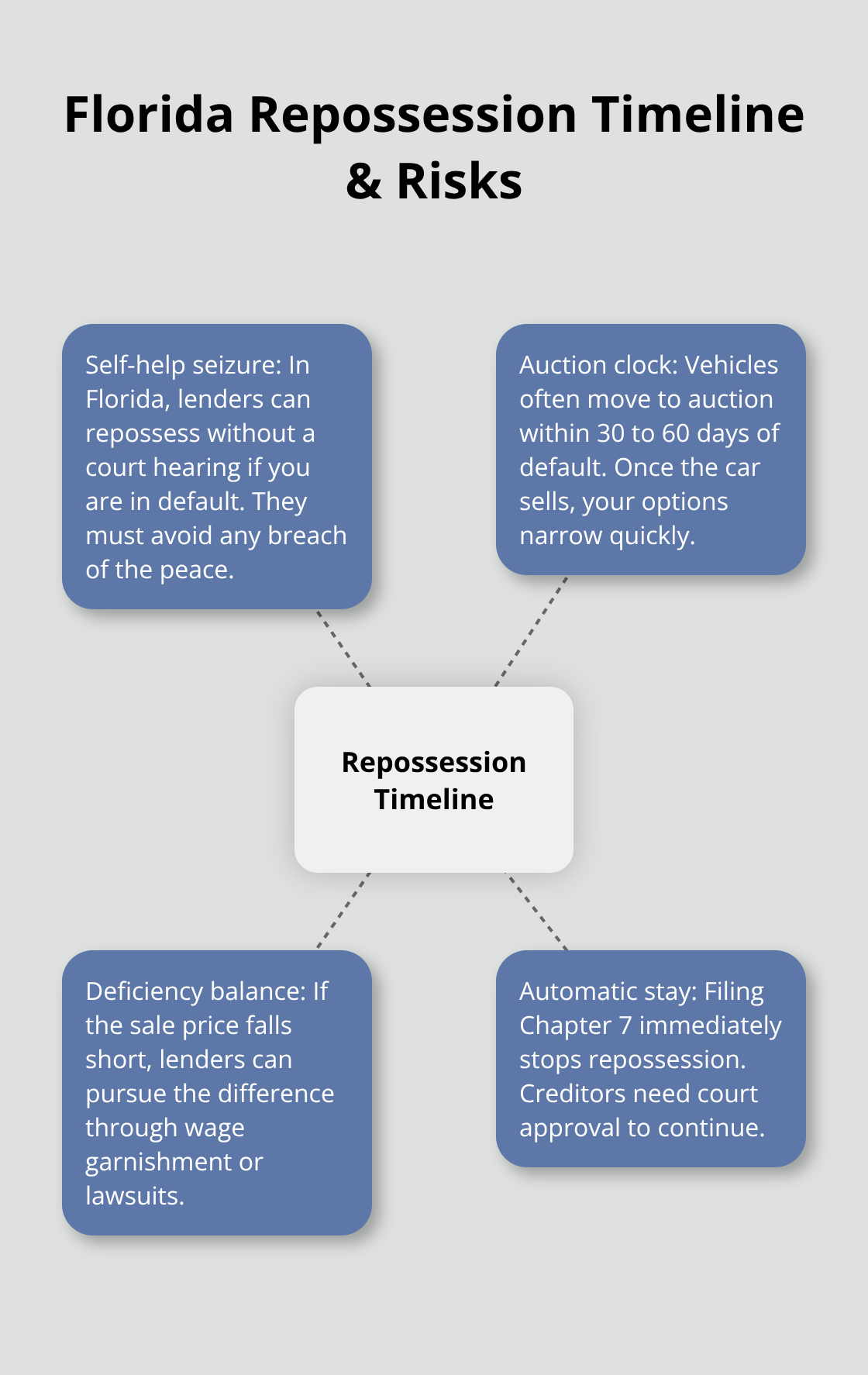
This is why filing Chapter 7 before repossession occurs gives you a significant advantage. The automatic stay takes effect the day you file your petition, and it immediately stops all collection actions, including repossession. Lenders must obtain court relief from the stay to continue, which creates a window for you to negotiate alternatives like reaffirmation or redemption.
What the Automatic Stay Actually Does
The automatic stay is not a permanent protection, but it is immediate and powerful. Once filed, your lender cannot repossess your vehicle without first convincing the bankruptcy court to lift the stay. This process takes time, and many creditors simply wait to see what happens in your bankruptcy case rather than fight for relief. If your car has already been repossessed but not yet sold, filing before the auction can allow you to recover it. However, the stay does not erase your debt or guarantee you’ll keep the car long-term. If you’re behind on payments, you’ll still need to catch up, reaffirm the loan, or accept surrender. The stay also doesn’t apply retroactively, so wage garnishments already in progress may continue, and money taken after filing must return to you if unresolved. This distinction matters: the stay gives you breathing room and leverage, not a free pass to skip car payments forever.
Your Options After Filing Chapter 7
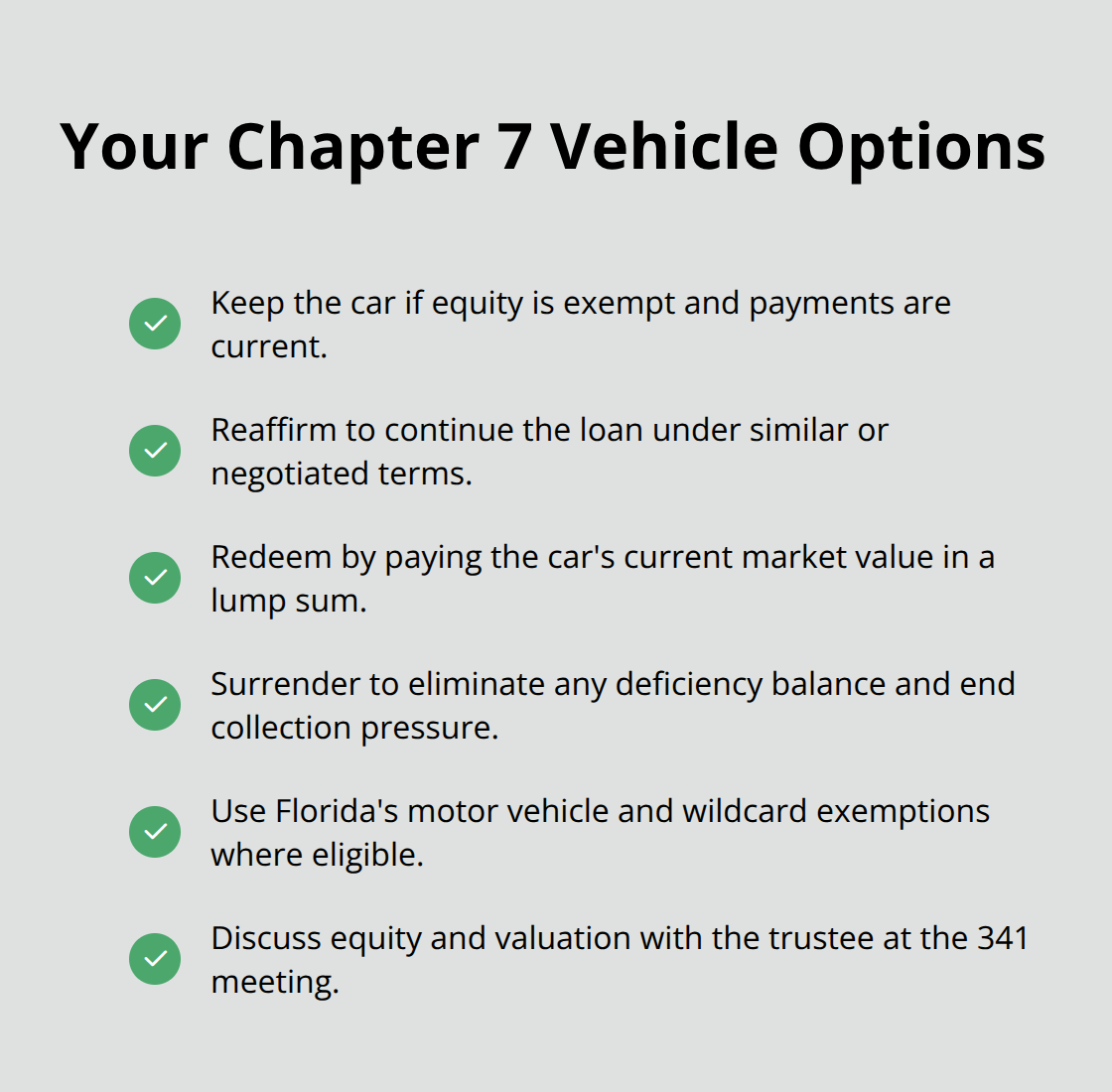
In Chapter 7, your vehicle is treated as a secured debt because the car itself serves as collateral. Florida law protects up to $1,000 of vehicle equity through the motor vehicle exemption, and you can use an additional $4,000 wildcard exemption if you’re not claiming a homestead. If your car’s equity falls within these limits and you’re current on payments, you can keep the vehicle without additional action. If you’re behind, reaffirmation lets you renew the loan under similar terms and stay current going forward. Redemption is another path: you pay the car’s current market value in a lump sum, potentially saving thousands if the vehicle is worth less than the loan balance. Surrender remains an option too, which eliminates the deficiency balance and removes collection pressure. The trustee assigned to your case will evaluate your car’s value and equity early in the process, typically within 30 days at the 341 meeting of creditors. This meeting gives you a chance to discuss your vehicle situation with your trustee and understand exactly what equity exists.
Moving Forward With Your Vehicle Decision
The path you choose depends on your car’s value, your ability to pay, and your long-term transportation needs. Some people benefit from reaffirmation if they want to keep the vehicle and can afford ongoing payments. Others find redemption attractive when the car’s market value is significantly lower than what they owe. Still others decide that surrender makes the most financial sense, especially if the vehicle is older or has high mileage. Your trustee will present these options clearly, and you’ll have time to think through which approach fits your situation. The next section compares Chapter 7 with Chapter 13 bankruptcy, which offers a different strategy for protecting your vehicle through a structured repayment plan.
Keeping Your Car Through Chapter 7
Reaffirming Your Auto Loan
Reaffirmation binds you back to your car loan after bankruptcy discharge, meaning you agree to keep paying the loan under the same or negotiated terms. This path works best if you need the vehicle for work, the car is reliable, and you can afford the monthly payment going forward. The court must approve your reaffirmation agreement, and your attorney can negotiate terms before submission-sometimes lenders will roll missed payments into the new balance or adjust the interest rate slightly to make the deal work.
The risk is real though: if you reaffirm and then miss payments later, the lender can repossess again without the automatic stay protecting you. Many people overlook that reaffirmation doesn’t erase the past debt; it renews your obligation to pay the full loan balance. This matters most when your car’s market value has dropped significantly below what you owe. If you owe $12,000 on a car worth $8,000, reaffirming locks you into paying that extra $4,000 even though the vehicle isn’t worth it.
Redeeming Your Vehicle
Redemption offers a completely different approach. Instead of continuing the loan, you pay the car’s current market value in one lump sum to the lender, and the vehicle becomes yours free and clear. A $12,000 loan on an $8,000 car means you pay $8,000 total and own it outright-a savings of $4,000 plus interest. The catch is finding that lump sum quickly, typically within 30 to 60 days of your 341 meeting.
Some people take personal loans from family, use savings, or work with lenders who finance the redemption amount separately. Redemption makes the most sense when your car has moderate mileage, is mechanically sound, and will last several more years of reliable service. If the vehicle is older or has over 100,000 miles, the redemption value drops low enough that this option becomes genuinely affordable for many filers.
Surrendering Your Vehicle
Surrendering your vehicle stops the deficiency balance dead-once the car sells at auction in bankruptcy, you owe nothing more on that loan. This path eliminates collection pressure entirely and frees up monthly cash flow immediately. The downside is obvious: you lose transportation and must find another vehicle.
However, surrender makes financial sense when the car is worth far less than you owe, when repair costs are climbing, or when you genuinely don’t need a vehicle right now. Some people use surrender strategically, knowing they’ll rebuild credit and purchase a reliable used car within a year or two at better terms than continuing an upside-down loan. Your choice between reaffirmation, redemption, and surrender depends on your car’s value, your ability to pay, and your long-term transportation needs. The next section compares Chapter 7 with Chapter 13 bankruptcy, which offers a different strategy for protecting your vehicle through a structured repayment plan.
Chapter 7 or Chapter 13: Which Stops Your Repossession
How Chapter 13 Protects Your Vehicle Through a Repayment Plan
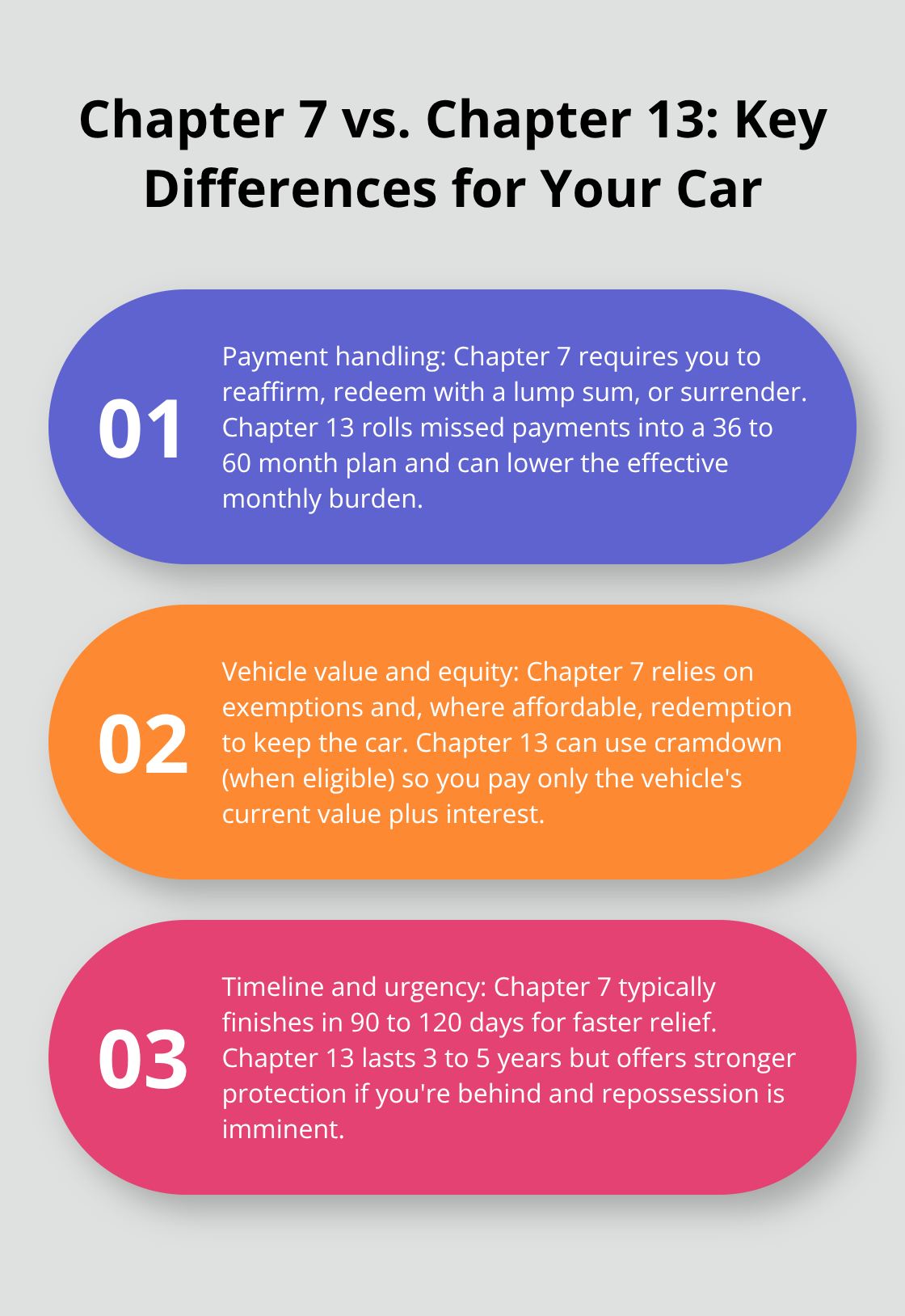
Chapter 13 bankruptcy offers what Chapter 7 cannot: a structured 3 to 5 year repayment plan that lets you catch up on missed car payments while keeping your vehicle. In Chapter 13, your auto loan becomes part of the overall plan, and the automatic stay blocks repossession immediately just as it does in Chapter 7. The real advantage emerges when you fall behind on payments. Chapter 7 requires you to either reaffirm the full loan balance, redeem the car with a lump sum, or surrender it. Chapter 13 handles arrears differently-missed payments roll into your repayment plan, spread across 36 to 60 months. If you owe $8,000 in back payments on a $300 monthly car note, Chapter 13 might lower your total monthly obligation by bundling that debt with other qualifying debts and applying a court-set interest rate, which typically runs lower than your original contract rate.
The Cramdown Advantage in Chapter 13
Chapter 13 includes cramdown protection: if you have owned your car for at least 2.5 years and the loan balance exceeds the vehicle’s current market value, you pay only what the car is worth rather than the full loan balance. A vehicle worth $6,000 with a $10,000 loan balance becomes a $6,000 obligation under cramdown, though you still pay interest on that reduced amount. This feature makes Chapter 13 powerful when your car has depreciated significantly below what you owe. The approach works especially well if you need the vehicle for work and cannot afford a lump-sum redemption or the full reaffirmed payment amount.
When Chapter 7 Delivers Better Results
Chapter 7 makes sense when your car has minimal equity, you stay current on payments, or you are willing to surrender the vehicle and move forward without it. If your $8,000 car has only $500 in equity and you keep up with payments, Chapter 7 protects that vehicle through Florida’s exemptions while discharging other unsecured debts that may have caused the financial pressure in the first place. Chapter 7 also works when redemption is genuinely affordable-older vehicles with 80,000 to 120,000 miles often redeem for $4,000 to $7,000, making this a realistic option if you have access to that capital.
Speed and Timeline Differences
The discharge timeline differs significantly between the two chapters: Chapter 7 typically concludes in 90 to 120 days, while Chapter 13 runs the full plan duration. If you need rapid debt relief and your vehicle situation is straightforward, Chapter 7 delivers faster results. However, if repossession is imminent, you fall significantly behind on payments, and you cannot access redemption funds, Chapter 13 becomes the stronger choice.
Evaluating Your Specific Situation
The decision ultimately depends on your car’s equity, how far behind you are, whether you have access to lump-sum cash, and how urgently you need the bankruptcy process to conclude. Your car’s value, your ability to pay, and your long-term transportation needs all factor into which chapter serves you better. An attorney can evaluate your specific situation and determine whether Chapter 7’s faster discharge or Chapter 13’s payment plan protection serves your vehicle and financial goals better.
Final Thoughts
Filing Chapter 7 while facing repossession stops creditor action immediately through the automatic stay, but speed determines whether you recover your vehicle or face a deficiency balance. If your lender hasn’t sold the car yet, file quickly to negotiate reaffirmation, redemption, or recovery before the auction happens. Once the sale concludes, Chapter 7 still protects you by discharging the remaining debt and preventing wage garnishment or lawsuits that would otherwise follow for years.
Your path forward depends on three realities: your car’s equity against Florida’s exemptions, your ability to afford ongoing payments or a lump-sum redemption, and whether you need the bankruptcy process to finish fast. Reaffirmation keeps the vehicle if you can handle monthly payments, redemption saves money when your car’s market value drops well below what you owe, and surrender eliminates collection pressure if you’re willing to lose transportation. Chapter 13 offers an alternative through its repayment plan and cramdown protection, which may preserve your car while spreading missed payments across several years.
We at Harnage Law, PLLC help Florida residents navigate this exact situation and guide you through the bankruptcy process, explain how the automatic stay protects you, and help you decide whether reaffirmation, redemption, or surrender makes sense for your circumstances. If repossession is looming or has already happened, contact us for a free consultation to discuss your options and file quickly if Chapter 7 is the right choice.