
Filing for Chapter 7 bankruptcy in Florida creates real consequences for your professional license. State licensing boards take financial distress seriously, and a chapter discharge doesn’t automatically protect your credentials.
At Harnage Law, PLLC, we’ve seen licensed professionals lose their ability to work because they didn’t understand these risks early. This guide walks you through what happens to your license, how to protect it, and the concrete steps to rebuild your career.
Which Professional Licenses Face Real Risk in Florida
Florida’s licensing boards treat bankruptcy filings as a red flag for financial responsibility, and certain professions face far stricter scrutiny than others. Healthcare professionals, attorneys, financial advisors, and real estate agents operate under the most demanding financial-responsibility standards. The Florida Department of Health requires bankruptcy filings against healthcare practitioners to be reported and publicly displayed in the practitioner’s profile within 30 days of receipt under Florida Statute 456.051. This means your bankruptcy becomes part of the public record that patients and employers can access. Contractors face equally harsh treatment-the Florida Construction Industry Licensing Board evaluates financial responsibility through credit reports and net-worth requirements, with bankruptcy directly affecting your ability to meet those thresholds under Florida Statute 489.115(7).
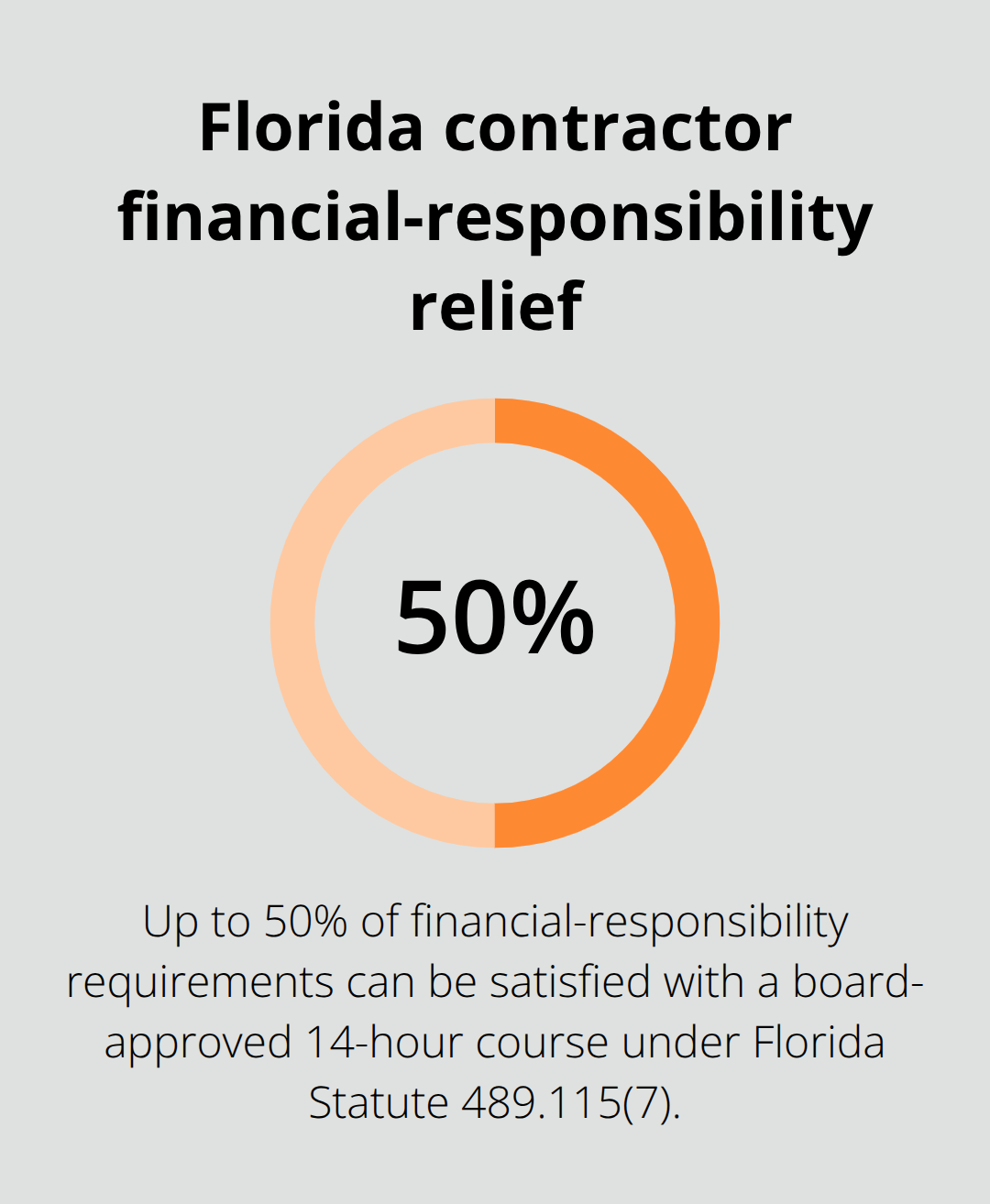
Up to 50% of financial-responsibility requirements can be satisfied through a board-approved 14-hour course, but bankruptcy still creates a significant burden you’ll need to overcome.
How Quickly Licensing Boards Act
Florida licensing boards move fast once they learn about your bankruptcy. The National Practitioner Data Bank cross-checks bankruptcy-related liability data during licensure reviews and ongoing monitoring, triggering further investigation if bankruptcy appears alongside malpractice claims or disciplinary history. For healthcare professionals, the Department must include bankruptcy information in your public profile within 30 days-meaning your financial troubles become visible to hospitals, clinics, and patients almost immediately. Contractors face automated tracking through the licensure status information system under Florida Statute 489.520, which flags financial delinquencies tied to bankruptcy.
Insurance Requirements Create Immediate Pressure
The real danger emerges when bankruptcy affects your ability to maintain required insurance. Workers’ compensation and general liability coverage become harder to obtain or renew after filing, and failure to maintain these policies directly triggers disciplinary action and license suspension under Florida Statute 456.048. If you hold a qualifying agent or financially responsible officer role, bankruptcy forces your company to replace you within specific timeframes or lose the ability to legally operate. Timeline matters enormously: if your license renewal approaches within months of filing, administrative complications can multiply because boards scrutinize applications more heavily when financial instability is current rather than historical.
Understanding these risks positions you to take protective action before your license becomes jeopardized. The disclosure requirements and legal protections available during Chapter 7 bankruptcy can make the difference between losing your credentials and preserving your professional standing.
How to Protect Your License During Bankruptcy
Disclose Everything to the Court
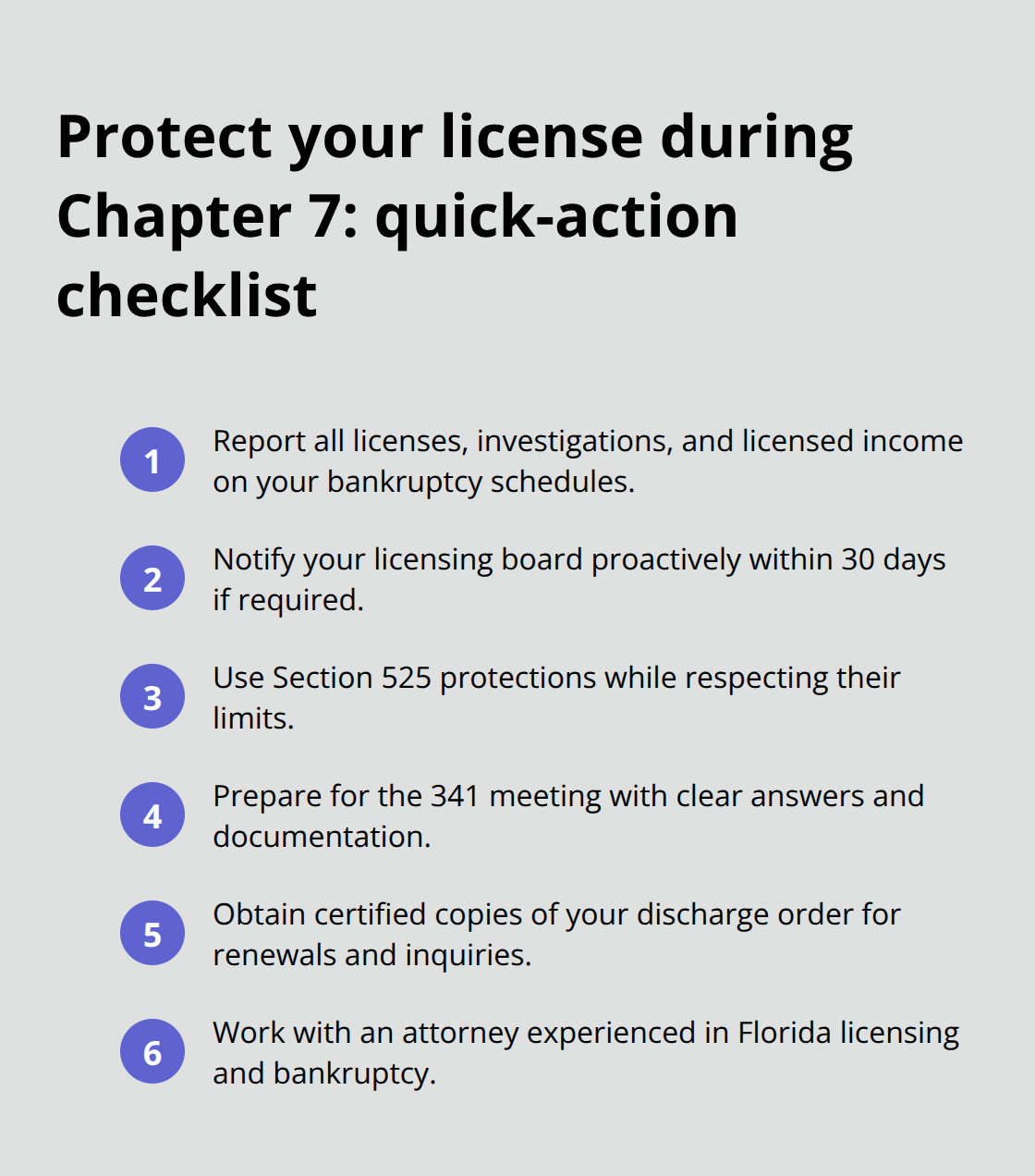
Disclosure stands as your strongest defensive move when filing Chapter 7 bankruptcy in Florida. You must report all professional licenses, certifications, licensing boards, ongoing investigations, and income from licensed work on Schedules A through J of your bankruptcy petition. The U.S. Trustee requires this level of transparency, and omitting or understating licensed income constitutes bankruptcy fraud-a federal crime that can result in case dismissal and criminal prosecution. Many professionals assume silence protects them, but the opposite holds true. When you disclose your licenses upfront, you demonstrate integrity to the court and prevent the licensing board from later discovering the bankruptcy through their own channels and viewing your silence as deceptive.
Notify Your Licensing Board Proactively
Some licensing boards, particularly those overseeing healthcare and financial services, actually respect proactive disclosure because it shows you’re taking the situation seriously rather than hiding it. If your board requires voluntary notification of bankruptcy-and several Florida boards do-submit that notification yourself within 30 days of filing rather than waiting for the board to find out independently. This approach shifts the narrative from financial failure to financial responsibility. You control the story when you initiate contact rather than react to board inquiries.
Understand Section 525 Protections and Their Limits
Federal law provides genuine protection that many professionals overlook. Section 525 of the U.S. Bankruptcy Code prohibits government units and licensing boards from denying, revoking, suspending, or refusing to renew a professional license solely because you filed for bankruptcy or had a discharged debt. The Supreme Court established in Perez v. Campbell that states cannot punish bankruptcy with license loss as a way to thwart the federal goal of a fresh start. However, this protection has critical limits: it covers bankruptcy-related actions only, not misconduct investigations, fraud allegations, or failure to maintain required insurance. Your bankruptcy attorney must understand both bankruptcy law and your specific licensing requirements because the protection is powerful but narrow.
Prepare for the 341 Meeting and Beyond
Schedule your consultation with an attorney experienced in Florida bankruptcy and professional licensing-someone who understands that your case involves more than just debt discharge. During your 341 meeting with the bankruptcy trustee roughly 20 to 40 days after filing, you’ll face questions about your professional income and whether your license faces risk for non-bankruptcy reasons. Prepare concrete answers about your financial circumstances, employment status, and any board actions unrelated to the bankruptcy itself. Obtain and keep multiple certified copies of your discharge order once you receive it around 60 to 90 days after the 341 meeting. Present these copies to your licensing board during renewal or when responding to inquiries, making the federal protection explicit and difficult for the board to overlook.
Move Forward with Confidence
These protective steps position you to navigate the licensing board’s review process without unnecessary complications. The next section addresses what happens after discharge-specifically, how to restore your license if the board initiates action and how to rebuild your professional standing in your field.
Restoring Your Professional Standing After Discharge
Document Your Financial Recovery
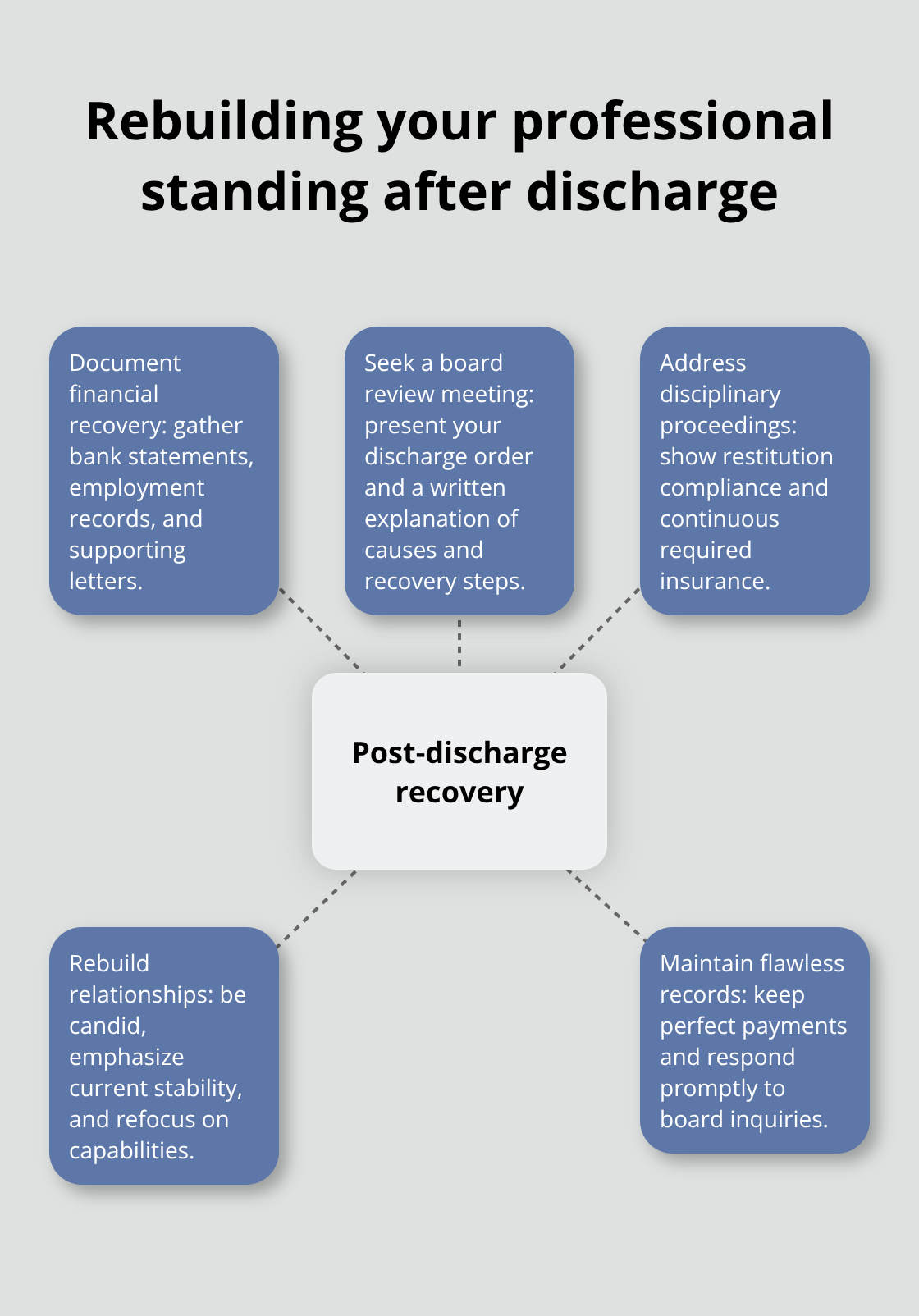
Your Chapter 7 discharge order arrives 60 to 90 days after your 341 meeting, but this document alone doesn’t automatically restore your professional standing. Florida licensing boards require affirmative action on your part to demonstrate that bankruptcy was a temporary financial setback, not a permanent character flaw. Start by gathering documentation that supports your financial recovery narrative. Collect bank statements showing deposits and savings growth over the months following discharge, employment records confirming steady income, and letters from employers or clients affirming your professional competence. If your bankruptcy stemmed from medical expenses, business failure, or circumstances beyond your control rather than reckless spending, compile evidence of those external factors.
Healthcare professionals should document continuing education completed during or after the bankruptcy process, showing commitment to professional standards. Contractors must obtain updated credit reports and calculate current net worth to demonstrate you now meet the financial-responsibility thresholds under Florida Statute 489.115(7). Request a board review meeting rather than waiting for renewal deadlines. Present your discharge order, updated financial documentation, and a written statement explaining the bankruptcy’s cause and your recovery steps. This proactive approach works because boards respect professionals who address the issue directly rather than hoping it disappears.
Address Board Disciplinary Proceedings
If the board initiates disciplinary proceedings, you’ll need documentation showing that you’ve satisfied any restitution obligations and maintained required insurance continuously since discharge. For healthcare professionals, verify that your public profile on the Florida Department of Health website reflects your current status. Some boards delay profile updates beyond the statutory 30-day requirement, so contact the department directly to confirm accuracy.
Rebuild Professional Relationships Strategically
Managing professional relationships after bankruptcy requires honest communication without oversharing. When clients, employers, or colleagues inquire about your financial situation, acknowledge the bankruptcy plainly and redirect focus to your current stability and professional capabilities. You’re not obligated to explain personal financial details to most employers or clients, but withholding information when directly asked damages credibility far more than honest disclosure does.
If you work in financial services or as an attorney, financial responsibility scrutiny cuts deeper because your role involves managing others’ money or legal affairs. In these fields, frame the bankruptcy as a learning experience that deepened your understanding of financial crisis and strengthened your commitment to ethical practice. Real estate agents and brokers face similar expectations. The Florida Real Estate Commission doesn’t automatically bar licensees for bankruptcy, but demonstrating financial recovery through updated financial statements and stable commission income matters significantly during renewal.
Maintain Flawless Financial Records
Build your recovery visibly by maintaining flawless payment records on all obligations, responding promptly to board inquiries, and documenting professional accomplishments after discharge. If you carry professional liability insurance, confirm that bankruptcy doesn’t affect your coverage or policy terms. Some carriers impose restrictions or higher premiums post-bankruptcy, and proactive communication with your insurer prevents coverage gaps that could jeopardize your license.
Within 12 months of discharge, your credit score typically begins recovering if you maintain perfect payment history. Many professionals see 50 to 100 point improvements within 18 months of discharge, which supports future licensing applications and employment opportunities.
Final Thoughts
Filing for Chapter 7 bankruptcy in Florida doesn’t automatically end your professional career, but it demands immediate action to protect your license. Federal law under Section 525 provides genuine protection against license denial based solely on bankruptcy, yet this protection only works if you understand its limits and document your compliance with board requirements. Your licensing board will scrutinize your financial responsibility, particularly if you work in healthcare, contracting, real estate, or financial services, since the Florida Department of Health reports healthcare bankruptcies within 30 days and contractors face automated tracking through licensure status systems.
The path forward requires concrete action after your chapter discharge arrives. Gather documentation showing your financial recovery, including bank statements and employment records that prove your bankruptcy stemmed from circumstances beyond your control. Request a board review meeting rather than waiting for renewal deadlines, presenting your discharge order and updated financial information directly to demonstrate that the bankruptcy was a temporary setback, not a permanent character issue.
Your credit score typically improves 50 to 100 points within 18 months of discharge if you maintain perfect payment history, which supports future licensing applications and employment opportunities. We at Harnage Law, PLLC understand that bankruptcy affects more than your finances-it impacts your professional identity and future earning potential. If you’re a licensed professional facing financial distress, contact Harnage Law, PLLC to discuss how bankruptcy protection works alongside your professional obligations and what steps protect your license during the process.