
Wage garnishment drains your paycheck before you ever see it. Florida creditors can take up to 25% of your disposable income, leaving families struggling to cover rent and groceries.
Chapter 7 bankruptcy offers immediate relief through the automatic stay, which stops garnishments the moment you file. We at Harnage Law, PLLC help Florida residents use this filing defense to reclaim their income and rebuild financial stability.
How Wage Garnishment Traps Florida Workers
The Garnishment Process in Florida
Wage garnishment happens through a straightforward legal process that leaves workers with shrinking paychecks. A creditor sues you in court, wins a judgment, and then files a writ of garnishment with your employer. Once your employer receives that writ, they must withhold money from your paycheck and send it to the creditor. Florida law allows creditors to take up to 25% of your disposable earnings-what remains after taxes and legally required deductions. A worker earning $2,000 monthly could lose $500 every payday to a single creditor. Most workers don’t realize garnishment has started until they see a smaller paycheck arrive.
Which Debts Lead to Garnishment
Unsecured debts trigger garnishment most often. Credit card balances, medical bills, and personal loans all expose you to wage withholding once a creditor obtains a court judgment. Secured debts tied to collateral can also lead to garnishment if you fall behind on payments. The process moves quickly-creditors file writs without warning, and your employer must comply immediately.
Why Garnishment Doesn’t Stop on Its Own
The worst part about garnishment in Florida is that it doesn’t stop on its own. Even after months of reduced paychecks, the garnishment continues unless you take action. Multiple creditors can file separate garnishment writs, potentially taking 50% or more of your income once combined. Many Florida workers face this exact situation-juggling multiple garnishments while struggling to afford housing, food, and transportation.
Some employers allow wage assignments, where you voluntarily agree to send part of your paycheck to creditors, but this still drains your income without solving the underlying debt problem. The garnishment stops only when you pay off the debt completely, negotiate a settlement, or file bankruptcy protection that triggers an automatic stay. This is why Chapter 7 bankruptcy provides such powerful relief for workers trapped in this cycle-and how the automatic stay works to stop garnishment immediately.
Chapter 7 Bankruptcy and the Automatic Stay
The Automatic Stay Stops Garnishment Immediately
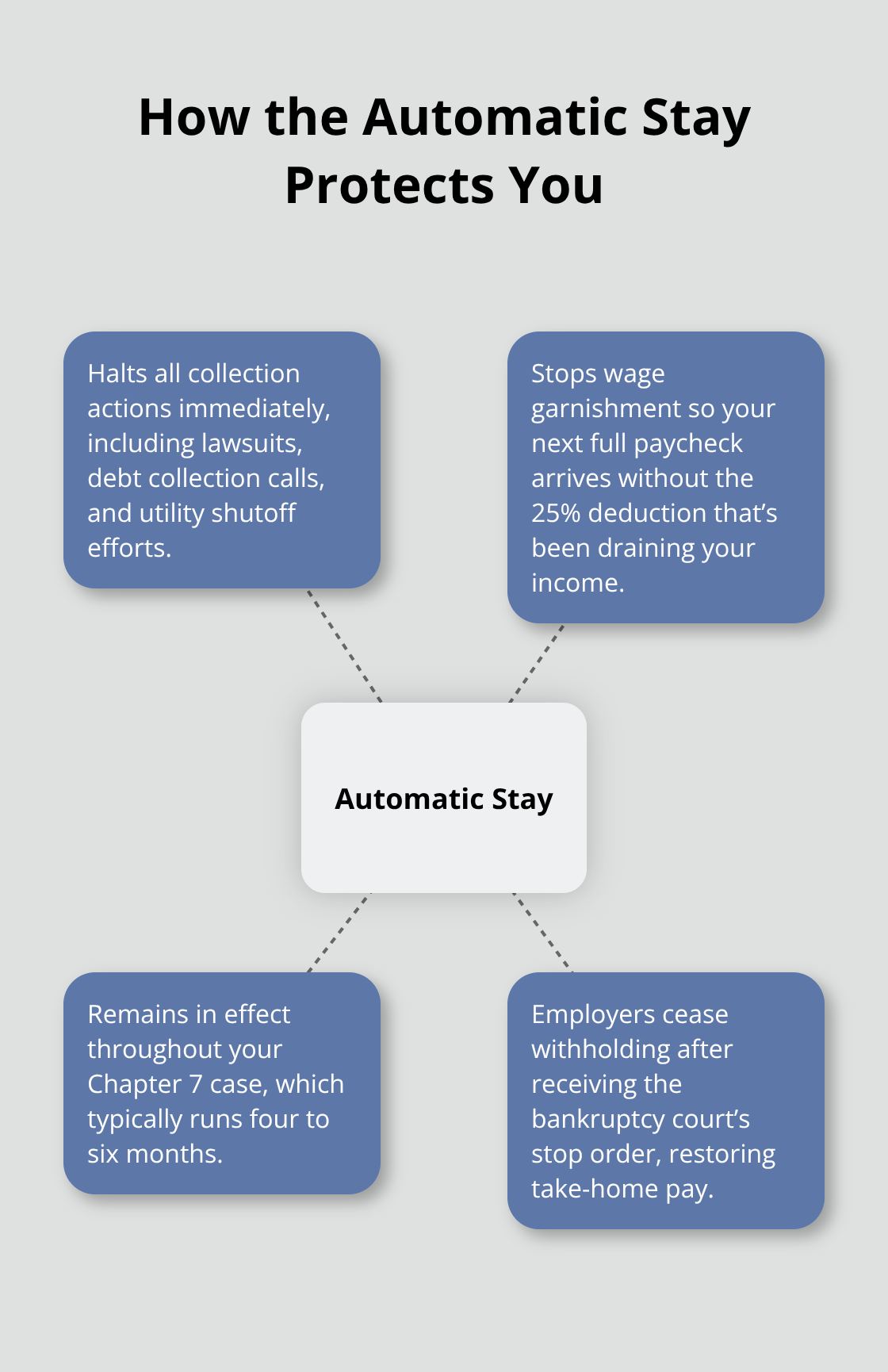
Filing Chapter 7 bankruptcy triggers an automatic stay that halts wage garnishment the moment your petition reaches the court. This is not a request or a negotiation-it is a federal court order that creditors must obey. Your employer stops withholding money from your paycheck within one to two weeks after receiving the stop order from the bankruptcy court. If a paycheck date falls the day after you file, your employer may still process that cycle’s garnishment, but any funds withheld must be returned to you.
What the Automatic Stay Covers
The automatic stay covers all collection actions, including lawsuits, debt collection calls, and utility disconnections. For workers trapped in wage garnishment, this immediate halt means your next full paycheck arrives without the 25% deduction that has been draining your income. The automatic stay protection remains in effect throughout your Chapter 7 case, which typically concludes within four to six months.
How Discharge Eliminates Future Garnishment
Once you receive your discharge, the debt that triggered the garnishment is eliminated permanently, and that creditor can never garnish your wages again for that specific debt. The discharged debt appears on your credit report as included in bankruptcy, not as an unpaid obligation. This distinction matters because future creditors see that you addressed the debt through the legal system rather than ignored it.
Multiple Garnishments and Complete Relief
If multiple creditors have garnished your wages, Chapter 7 discharges all eligible unsecured debts, stopping every garnishment tied to those debts simultaneously. The scope of protection extends beyond just stopping the current withholding-it prevents future garnishments for debts included in your discharge. This permanent relief separates Chapter 7 from temporary solutions like creditor negotiation or wage assignment agreements, which only postpone the problem and leave you vulnerable to continued collection efforts.
What Happens to Your Paycheck After Chapter 7
Reclaiming Your Income Immediately
The moment your Chapter 7 discharge becomes final, your paycheck transforms. Money that vanished into garnishment now stays in your account. A worker who lost $500 monthly to a single creditor suddenly has that income available again. This shift from financial drain to financial control happens within four to six months of filing, and it creates real opportunity to stabilize your household. The key is moving quickly to rebuild before old spending patterns resurface.
Tracking Spending and Building Your Budget
Start tracking every dollar for the first 90 days after discharge. Use a simple spreadsheet or an app like YNAB or EveryDollar to record income and expenses with precise categories. This data reveals where your money actually goes, not where you think it goes. Most people discover they spend 15 to 30 percent more on groceries, subscriptions, and discretionary items than they realize. Once you see this pattern, you can make informed decisions instead of guessing.
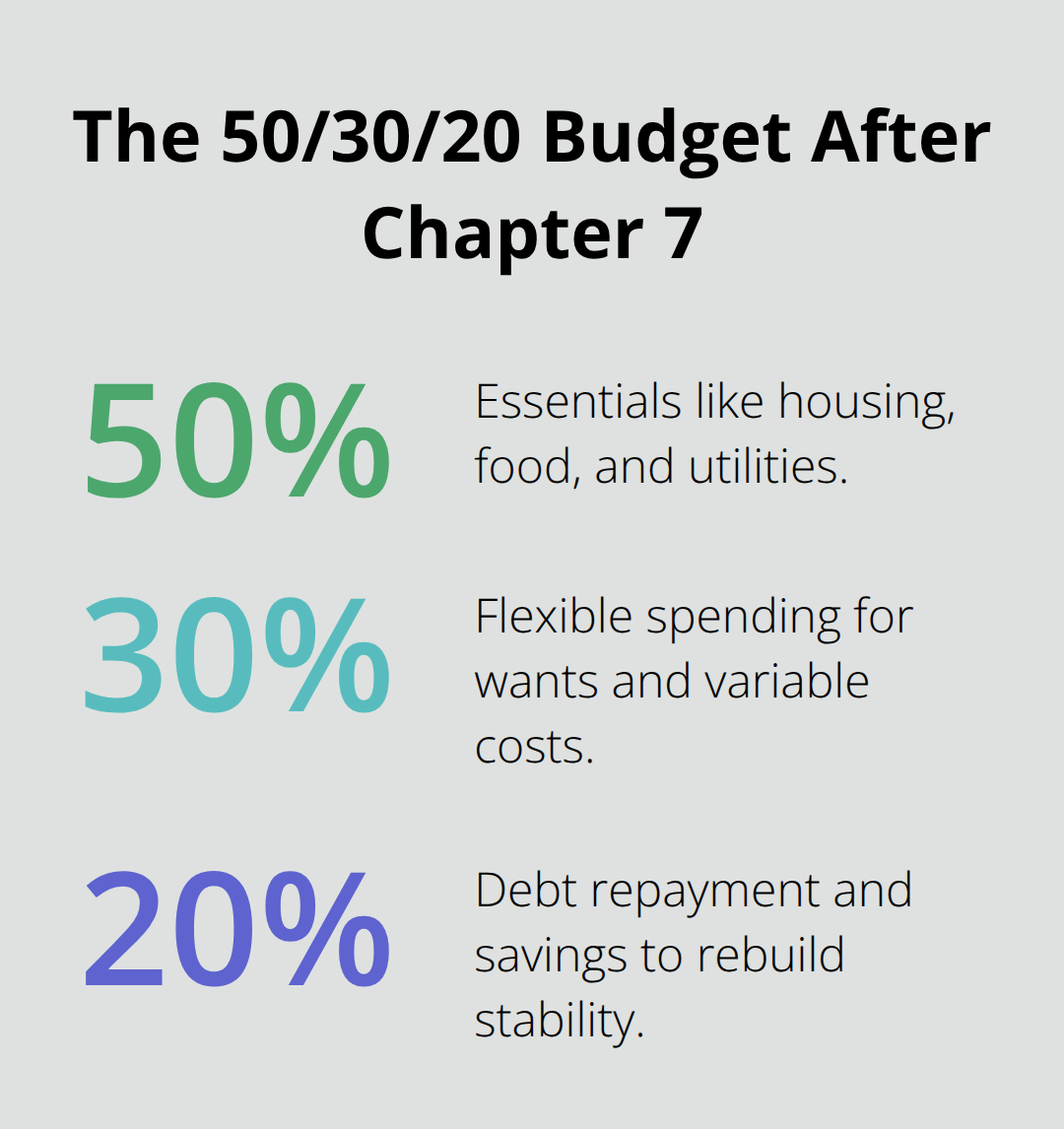
The Federal Reserve reports that households with written budgets save 20 percent more than those without, and the difference grows even larger for people recovering from debt crises like wage garnishment. Your budget should allocate roughly 50 percent to essential expenses like housing and food, 30 percent to flexible spending, and 20 percent to debt repayment and savings. If you have remaining unsecured debts not discharged in your Chapter 7 case, prioritize those payments to avoid future garnishment.
Build an emergency fund of at least $1,000 within the first three months after discharge. This prevents you from returning to credit cards or payday loans when unexpected costs arise. Many people skip this step and fall back into debt within eighteen months.
Rebuilding Credit After Discharge
Your credit report shows your Chapter 7 discharge for up to ten years, but this does not mean you cannot rebuild credit immediately. Start checking your credit report at AnnualCreditReport.com, the official government source, and dispute any errors. Creditors often report incorrect balances or late payment dates, and removing these errors can boost your score by 50 to 100 points.
Secured credit cards require a cash deposit (typically between $200 and $2,500) and report to credit bureaus just like regular cards. Use a secured card for small purchases like gas or groceries, then pay the balance in full monthly. After twelve to eighteen months of perfect payments, most issuers convert your account to a standard credit card and return your deposit. This method accelerates credit recovery far faster than waiting passively.
Your credit score typically climbs 100 to 200 points within two years of discharge if you maintain on-time payments and keep credit card balances below 30 percent of your limits. Experian data shows that people who file Chapter 7 reach credit scores of 650 or higher within three to four years, making mortgages and auto loans accessible again. Avoid opening multiple credit accounts at once, which triggers hard inquiries that damage your score temporarily. Instead, add one new account every six to nine months and focus on payment history above all else.
Final Thoughts
Chapter 7 bankruptcy stops wage garnishment permanently by discharging the underlying debt that creditors used to justify the withholding. Once your discharge becomes final, that creditor loses all legal right to garnish your wages for that specific debt. The automatic stay halts garnishment immediately when you file, and the discharge prevents it from ever resuming. This filing defense transforms your financial situation from constant drain to one where you control your income again.
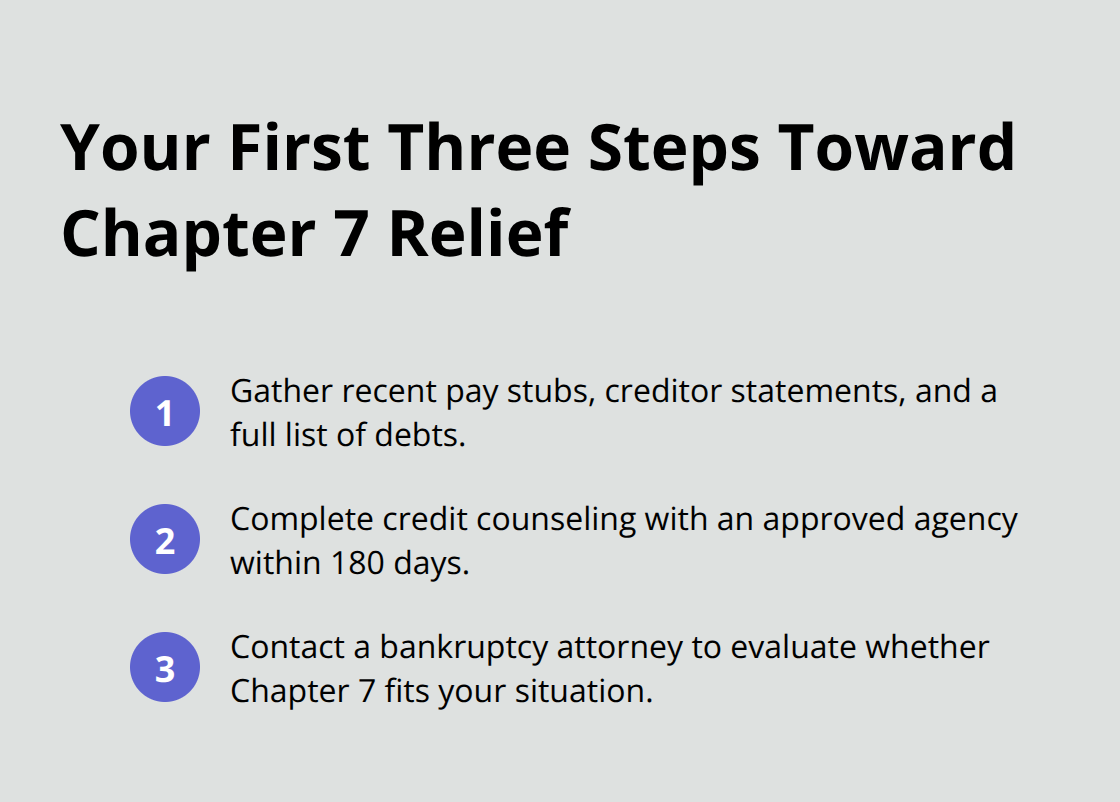
Florida residents facing wage theft through garnishment should take three concrete steps forward. Gather your recent pay stubs, creditor statements, and a list of all debts to understand the full scope of what you owe. Complete credit counseling from an approved agency (required within 180 days before filing) and contact a bankruptcy attorney who can evaluate whether Chapter 7 fits your situation.
Workers who file Chapter 7 typically regain between $300 and $800 monthly in income that was previously withheld, money that becomes available for rent, food, and building an emergency fund. Your credit score will recover within three to four years if you maintain on-time payments and keep credit card balances low. Contact Harnage Law, PLLC to discuss how Chapter 7 can provide the permanent relief you need.