
Multiple collection lawsuits can feel overwhelming, but a bankruptcy filing in Florida stops them all at once. The automatic stay halts creditor actions immediately, giving you breathing room.
We at Harnage Law, PLLC help clients understand how Chapter 7 eliminates these debts and protects your future.
What Happens When You File Chapter 7 in Florida
Filing Chapter 7 bankruptcy in Florida triggers an immediate legal shield called the automatic stay, which stops all collection lawsuits the moment your petition reaches the court. Under 11 U.S.C. § 362, creditors must halt collection actions, wage garnishments, and lawsuits within days of your filing. This is not a request or a suggestion-it is a federal court order that carries real penalties.
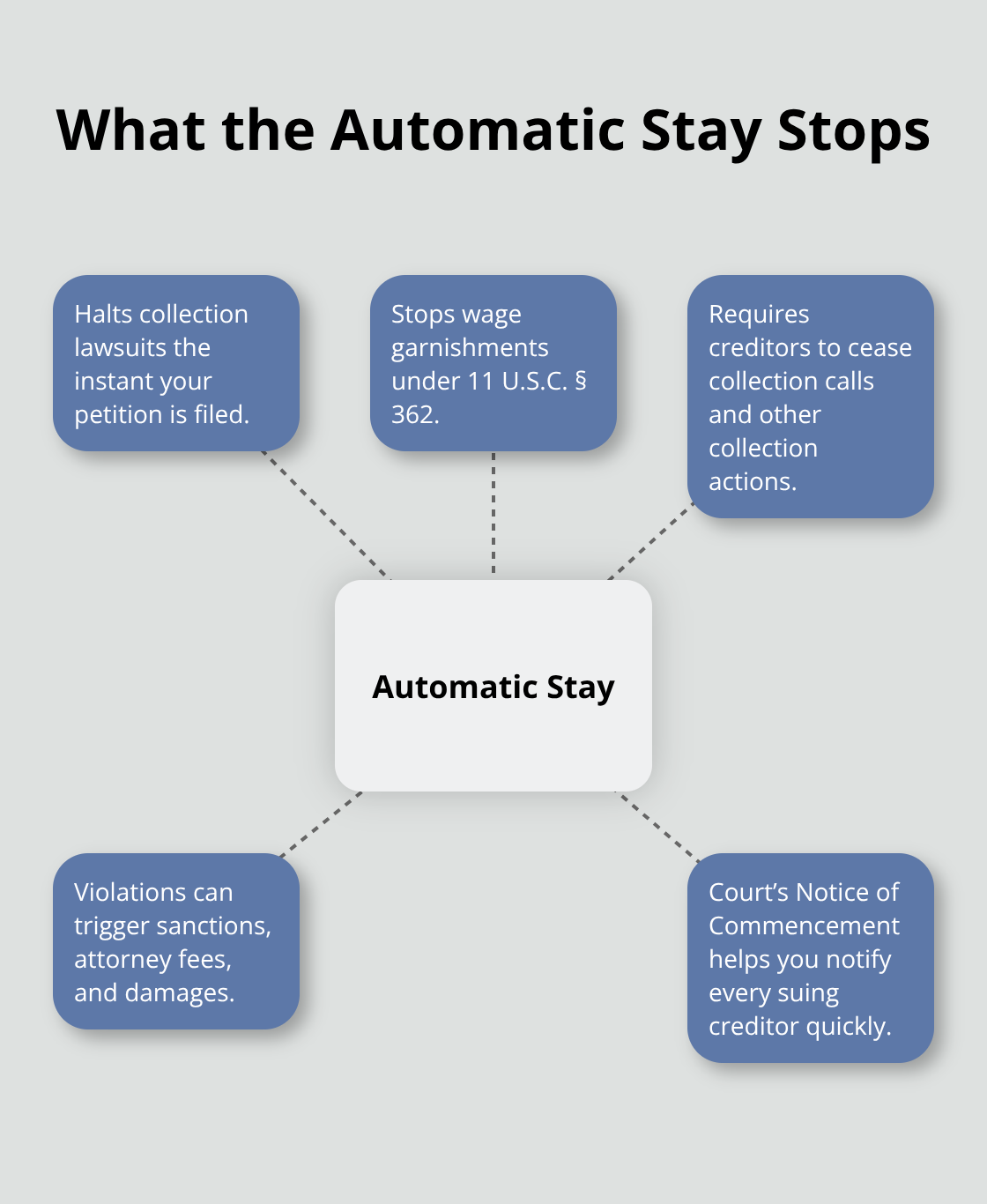
The Automatic Stay Stops Collection Actions Immediately
Creditors who violate the automatic stay face sanctions, including attorney fees and damages. When you file, the court issues a Notice of Commencement with your case number and filing details, which you should send immediately to every creditor suing you. Many creditors stop pursuing cases the moment they learn bankruptcy has been filed, but some push back. If a creditor continues calling, garnishing wages, or pursuing a lawsuit after receiving notice of your bankruptcy filing, you should contact your bankruptcy attorney right away. The automatic stay applies to most collection actions, though a handful of exceptions exist under 11 U.S.C. § 362(b)-such as certain family law proceedings or criminal matters-but these rarely affect typical debt collection cases.
Your Lawsuits Transfer Into Bankruptcy Court
Once you file Chapter 7 in Florida, active collection lawsuits do not disappear; they transfer into the bankruptcy process. Any pending collection case becomes part of your bankruptcy estate, and creditors must file a proof of claim by the deadline set by the court (typically 90 days after your 341 meeting of creditors). This consolidation is powerful because instead of fighting multiple lawsuits in multiple courts, all creditor claims are handled in one federal bankruptcy proceeding. The bankruptcy trustee appointed to your case reviews these claims and verifies them.
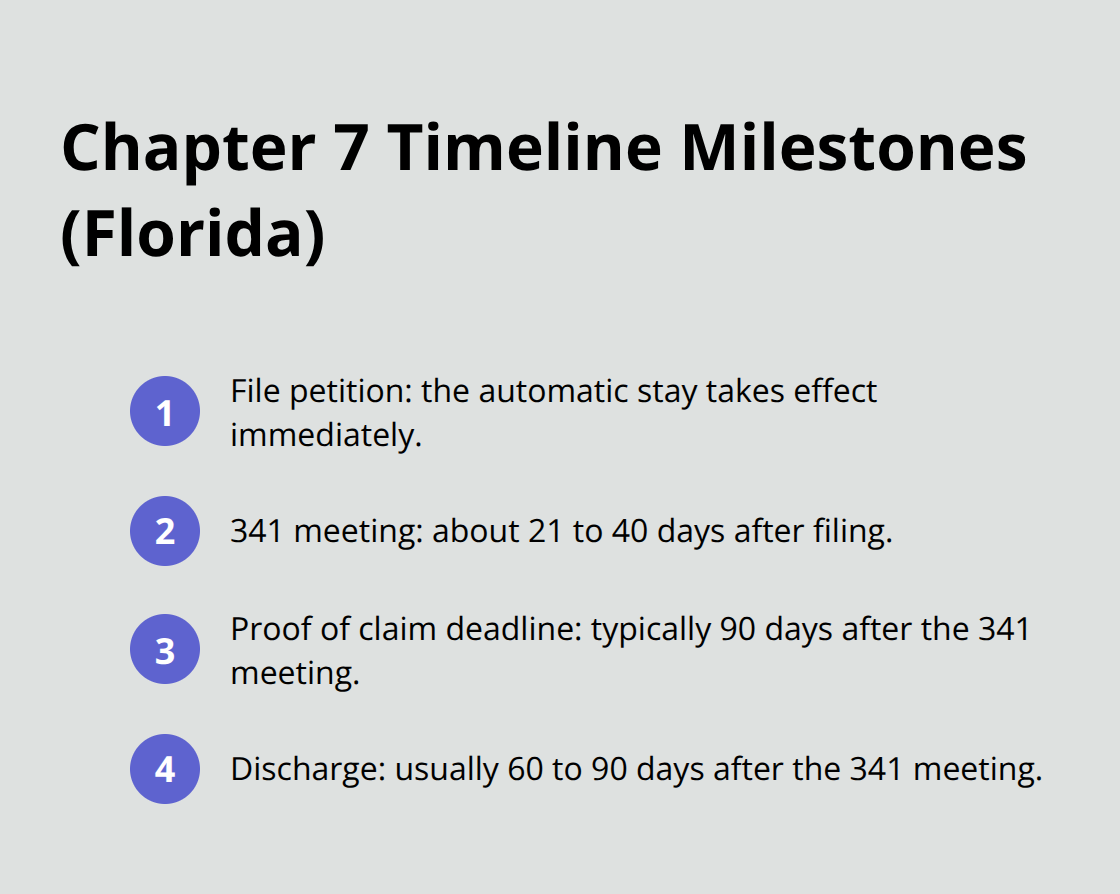
If a creditor fails to file a proof of claim by the deadline, they generally lose the right to collect on that debt entirely.
Creditors Must Stop All Collection Efforts
The moment the automatic stay takes effect, creditors must cease all collection activity. This means no more collection calls, no more lawsuits, no more wage garnishments, and no more threats. Florida law and federal bankruptcy law work together here. If you receive a collection call after filing, you have the right to notify the creditor in writing that you have filed bankruptcy and provide your case number. If they continue, you can file a motion for contempt of the automatic stay in bankruptcy court. Judges take these violations seriously. In practice, most creditors comply quickly because their attorneys know that violating the stay exposes them to liability. The U.S. Trustee, who oversees bankruptcy cases in Florida, also monitors for stay violations.
What Happens at Your 341 Meeting
Your 341 meeting, held about 21 to 40 days after filing, is where you answer questions under oath about your debts and assets. Creditors may attend and ask questions, but they cannot pursue collection during or after this meeting. The discharge you receive after Chapter 7 completion eliminates your personal liability on qualifying debts, which means creditors can no longer sue you on those debts at all. Once your discharge is entered, the collection lawsuits that once consumed your time and finances become legally unenforceable. Understanding how your debts are treated in bankruptcy-and which ones actually disappear-helps you prepare for what comes next in your financial recovery.
How Chapter 7 Discharges Eliminate Collection Lawsuits
Unsecured Debts Vanish Completely
When your Chapter 7 case closes and you receive a discharge order from the bankruptcy court, creditors lose all legal right to collect on the debts included in that discharge. This is not a temporary pause or a negotiated settlement-it is a permanent elimination of your personal liability. Under 11 U.S.C. § 727, most unsecured debts vanish completely, which means the collection lawsuits tied to those debts become unenforceable. Credit card debts, medical bills, and personal loans disappear when your discharge enters, typically 60 to 90 days after your 341 meeting.
Judgments Become Unenforceable
Judgments obtained against you before filing also get discharged, which means even if a creditor won a lawsuit and received a judgment in their favor, that judgment becomes unenforceable once your discharge enters. Many people believe judgments are permanent, but bankruptcy law treats them like any other unsecured debt. The creditor cannot use the judgment to garnish your wages, levy your bank account, or pursue other collection tactics after discharge.
Multiple Creditors Cannot Continue Pursuing You
If you faced five lawsuits and five judgments, all five disappear in a single Chapter 7 discharge (assuming they are unsecured debts). The timing matters significantly: your discharge typically arrives within months of filing, whereas defending multiple collection lawsuits outside bankruptcy could drag on for years and cost thousands in legal fees. If a creditor attempts to collect on a discharged debt after your case closes, they violate federal law and face sanctions.
What Happens When Creditors Violate the Discharge
The discharge order carries the full force of federal law behind it. Creditors who ignore the discharge and continue collection efforts expose themselves to liability for damages and attorney fees. Your bankruptcy attorney can file a motion to hold a creditor in contempt if they violate the discharge order. This legal protection remains in place indefinitely-the discharge does not expire or weaken over time.
Understanding which debts vanish and which obligations survive allows you to move forward without the constant threat of collection activity. The next section covers how to protect yourself from collection lawsuits before you file Chapter 7, ensuring you take the right steps from the moment you decide to pursue bankruptcy relief.
Build Your Bankruptcy Timeline Now
Collect Documentation Before You File
Start gathering documentation immediately, before you contact an attorney. The sooner you organize your lawsuit records and creditor information, the faster your bankruptcy attorney can file your petition and trigger the automatic stay. Courts in Florida’s four bankruptcy districts (Northern, Eastern, Central, and Southern) process filings based on when they arrive, so delays in gathering documents mean delays in stopping collection activity.
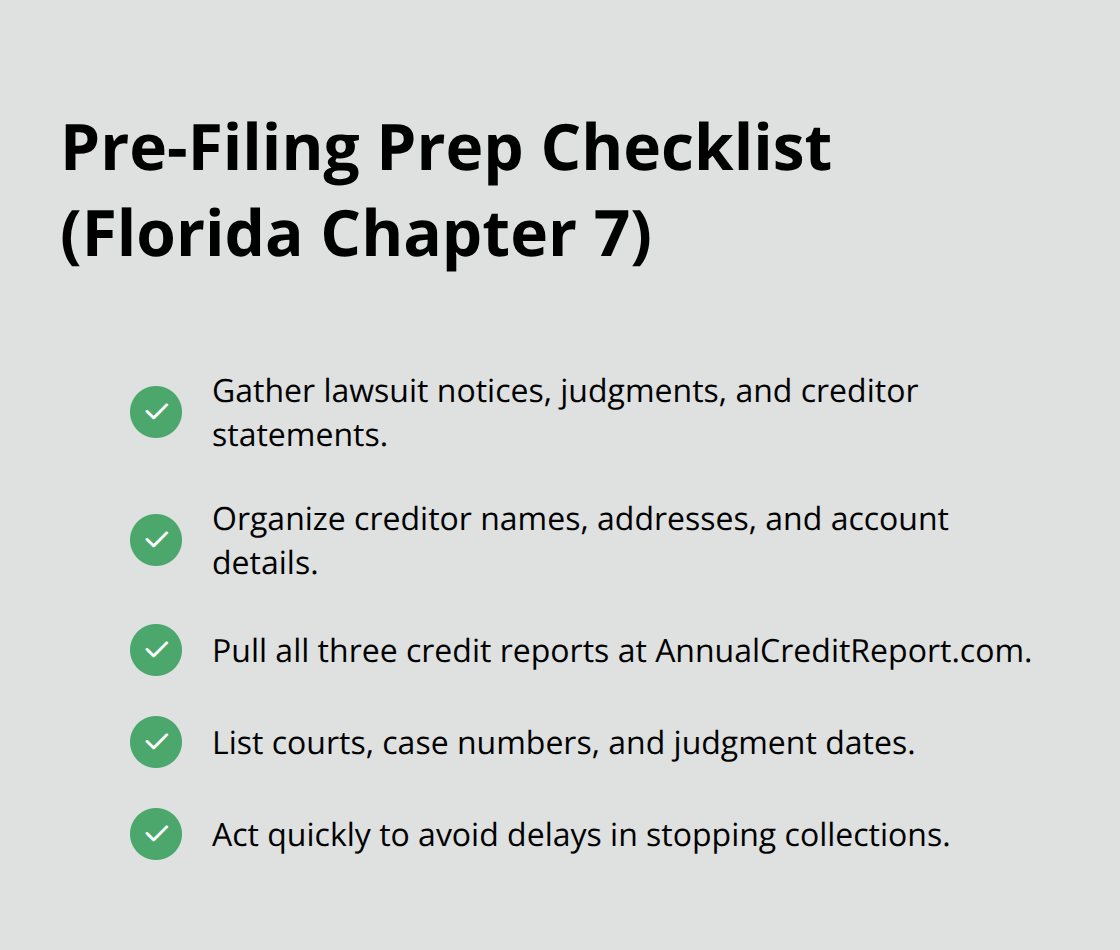
Pull every lawsuit notice, judgment document, and creditor statement you have received. Check your credit reports from all three bureaus through AnnualCreditReport.com, which the Federal Trade Commission maintains as the official source for free reports. Your credit report lists judgments, collection accounts, and creditor names with their addresses.
Identify All Lawsuits and Case Numbers
Write down the case numbers from any lawsuits filed against you, the court where each lawsuit sits, and the date each judgment was entered. This information becomes critical when your attorney files your bankruptcy petition because the court needs to know about all creditors and all claims against you. Florida courts require debtors to list every known creditor on their bankruptcy schedules under 11 U.S.C. § 521. If you miss a creditor or lawsuit, that creditor may not receive notice of your bankruptcy filing, which can complicate your discharge later.
Know Which Assets You Can Protect
Florida law protects certain income and property, but only if you claim the right exemptions in your bankruptcy filing. Florida’s homestead exemption protects unlimited home equity in your primary residence, and Florida allows you to protect a motor vehicle up to a certain value, along with household goods and personal items. However, these protections only work if you claim them correctly in your bankruptcy schedules. If you fail to list an exemption, you may lose protection for that asset. Before filing, identify which assets you own and which ones you want to protect.
Search for Judgment Liens on Your Property
If you have faced multiple lawsuits, creditors likely have judgments against you, and some may have filed liens against your property. A judgment lien can attach to your real estate or personal property in Florida, and you need to know which creditors have placed liens on your assets. Contact the county clerk’s office where you own property and request a lien search, or use online records if your county offers them. This step costs little to nothing and reveals exactly what creditors have done to your property. Once you understand your complete financial picture, you can work with an attorney to determine whether Chapter 7 is right for you or whether Chapter 13 makes more sense for your situation. The automatic stay will halt collection activity regardless, but knowing your assets, debts, and lawsuits upfront allows your attorney to maximize the protections available to you under Florida and federal law.
Final Thoughts
Filing Chapter 7 bankruptcy in Florida stops collection lawsuits permanently and provides the legal protection you need to move forward. The automatic stay halts all creditor actions the moment your petition reaches the court, and your discharge eliminates personal liability on qualifying debts within months. Once your discharge enters, creditors cannot pursue you further on those debts, and the collection lawsuits that once dominated your life become legally unenforceable.
The path forward requires action now. A bankruptcy filing removes the constant pressure of collection calls, wage garnishments, and court appearances by consolidating everything into one federal bankruptcy proceeding where the trustee and the court handle creditor claims systematically. Gathering your lawsuit documents, identifying all creditors, and understanding which assets you can protect under Florida law positions you to move forward with confidence.
We at Harnage Law, PLLC help individuals and families in Florida overcome financial challenges through Chapter 7 bankruptcy by stopping creditor harassment, preventing wage garnishments, and halting lawsuits. If collection lawsuits are overwhelming you, contact us to discuss how Chapter 7 can provide the relief you deserve.