
Bankruptcy can feel overwhelming when debt spirals out of control. The two most common paths forward are Chapter 7 and Chapter 13, but they work very differently.
At Harnage Law, PLLC, we help people understand what Chapter 7 and Chapter 13 bankruptcy actually mean for their financial future. This guide breaks down how each option works and which might fit your situation.
How Chapter 7 Works and Who Can File
Understanding the Chapter 7 Liquidation Process
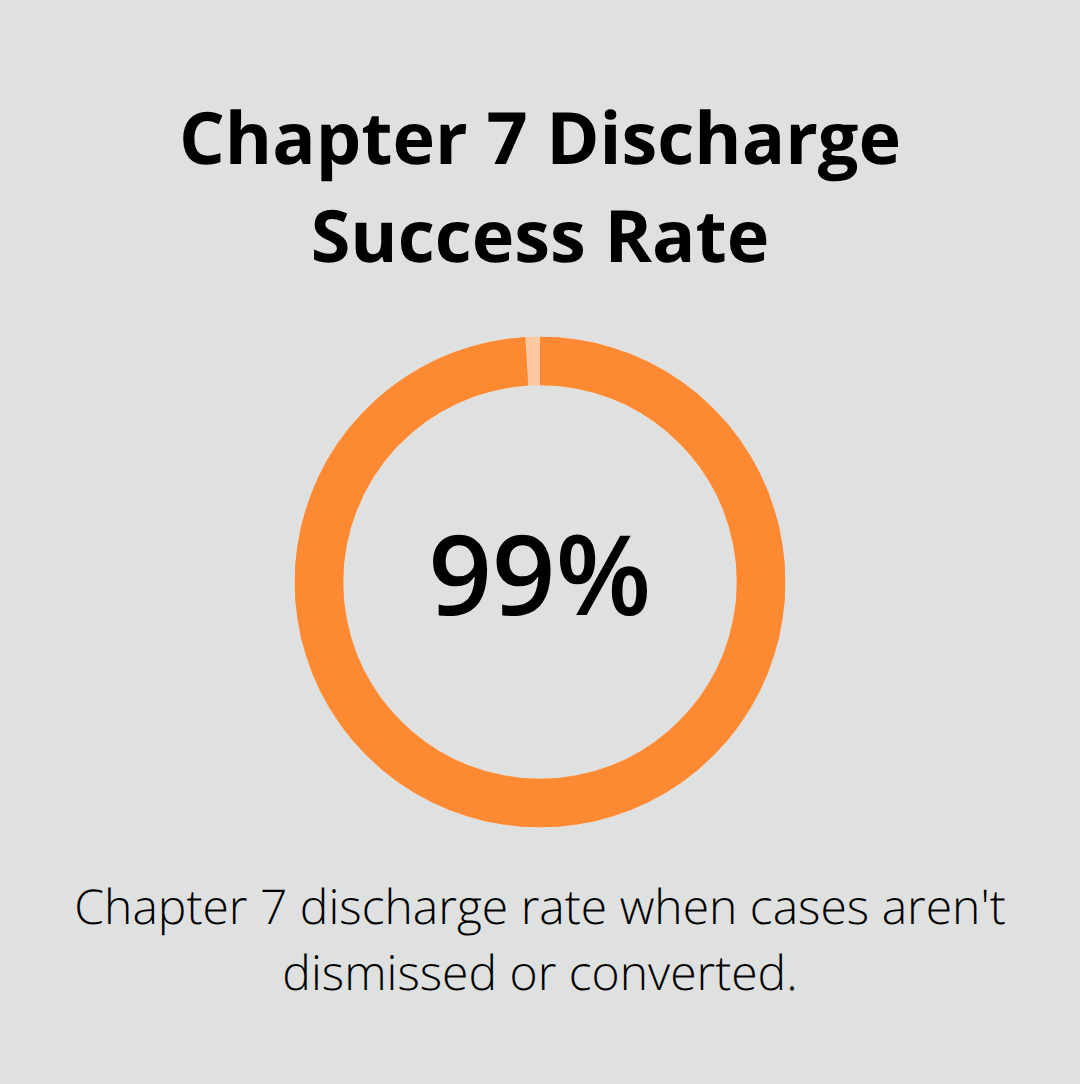
Chapter 7 bankruptcy is a liquidation process where a court-appointed trustee sells your nonexempt assets to pay creditors, and most remaining debts get wiped away. This isn’t a repayment plan-it’s a fresh start. The U.S. Courts data shows that over 99% of Chapter 7 cases result in discharge when not dismissed or converted, meaning debtors actually receive relief. The process moves quickly, typically wrapping up in four to six months from filing to discharge.
Meeting the Means Test Requirements
Not everyone qualifies for Chapter 7. The means test determines eligibility by comparing your current monthly income to the state median for your household size. If your income falls below Florida’s median, you can file Chapter 7 immediately. If it exceeds the median, the court calculates your disposable income after allowed expenses like transportation, food, and utilities. The current means test thresholds require comparing the greater of 25% of your nonpriority unsecured debt or $10,275 against $17,150 to determine if you pass.
What You Can Keep Under Florida Exemptions
Many people assume they’ll lose everything in Chapter 7, but Florida exemptions protect substantial assets. You can keep one vehicle with up to $5,000 in equity, your home if it meets size requirements (0.5 acre in municipalities or 160 acres elsewhere) and you’ve owned it at least 1,215 days, and retirement accounts up to $1,711,975 per person for cases filed between April 1, 2025 and March 31, 2028. Social Security, disability income, and workers’ compensation are protected. Most individual Chapter 7 cases are actually no-asset cases, meaning the trustee finds nothing to liquidate and creditors receive no distributions.
Debts That Survive Chapter 7
Not all debts disappear in Chapter 7. Child support and alimony obligations remain, along with most federal and state income taxes, student loans in most situations, willful injuries you caused, and criminal fines. Debts incurred after filing also stay with you. However, credit card debt, medical bills, personal loans, and utility bills typically discharge completely.
The Filing Process and Timeline
Before filing, you must complete credit counseling from an approved agency within 180 days of filing. The filing fee is $338, though you can request installment payments with a minimum initial payment of half the fee, or apply for a fee waiver using Official Bankruptcy Form 103B if you meet poverty guidelines. You’ll attend a meeting of creditors between 21 and 40 days after filing, where the trustee questions you under oath about your finances and assets. This meeting, called the 341 meeting, is mandatory. After this meeting and assuming no complications, discharge typically arrives within 60 to 90 days.
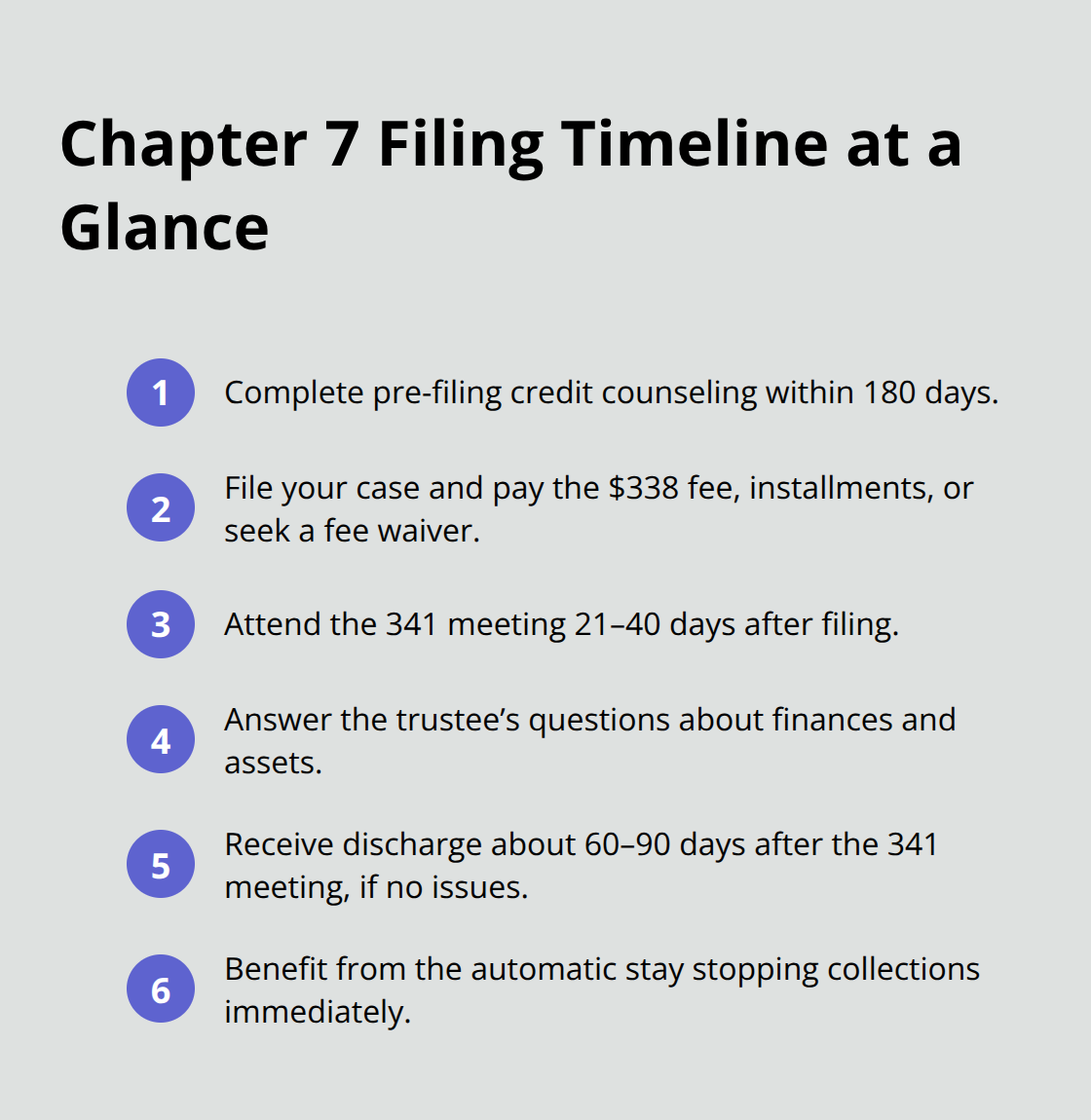
The automatic stay that begins the moment you file stops wage garnishments, lawsuits, and collection calls immediately-one of Chapter 7’s most powerful benefits for people facing aggressive creditors.
Understanding Chapter 7’s mechanics helps clarify whether this path fits your financial situation, but Chapter 13 offers a fundamentally different approach that may work better if you want to keep nonexempt assets or have income that exceeds the means test threshold.
What Is Chapter 13 Bankruptcy
How Chapter 13 Reorganizes Your Debts
Chapter 13 bankruptcy works entirely differently from Chapter 7 because it keeps your assets intact while you repay debts through a court-approved plan. Instead of liquidation, Chapter 13 reorganizes your finances into a structured repayment arrangement that typically lasts three to five years. This approach matters most when you have income to work with, want to save your home from foreclosure, or own nonexempt assets you refuse to surrender. The U.S. Courts data confirms that Chapter 13 allows debtors to retain property while satisfying creditors through installment payments, making it ideal for people with regular employment who face a means test problem in Chapter 7.
Creating and Approving Your Repayment Plan
You propose the repayment plan yourself with your attorney’s help, and the court must approve it. Most Chapter 13 debtors never pay back 100 percent of unsecured debts like credit cards or medical bills-many plans settle these obligations for a fraction of what you actually owe, with the remainder simply discharged after plan completion. The plan payment amount depends on your income, expenses, and how much nonexempt property value you need to protect. If you earn too much to qualify for Chapter 7, Chapter 13 becomes your legitimate path forward, and that higher income actually works in your favor because it allows you to afford monthly plan payments. The filing fee runs $338, identical to Chapter 7, but Chapter 13 attorney fees can be included in your plan and paid over time-a significant advantage over Chapter 7 where you typically cannot pay legal costs in installments.
Protecting Your Home and Vehicles
Your home receives special protection under Chapter 13 that Chapter 7 cannot offer. If you fall behind on mortgage payments, Chapter 13 lets you catch up through the plan while keeping your home, stopping foreclosure dead in its tracks. You can also use lien stripping to remove junior mortgages if your home’s value falls below the first mortgage balance-something impossible in Chapter 7. For vehicles, Chapter 13 allows cramdowns where you reduce a car loan balance to the vehicle’s actual market value, potentially saving thousands if you owe more than the car is worth. These tools make Chapter 13 powerful for protecting assets with substantial equity.
Understanding Your Plan Duration and Payments
The plan typically requires payments between three and five years depending on your income level and whether the court deems your case above or below the median income threshold for your household size. Higher-income filers generally face five-year plans while lower-income debtors might complete plans in three years. Chapter 13 requires careful calculation of disposable income and plan feasibility, which is why professional guidance matters tremendously when evaluating this option against Chapter 7’s simpler liquidation path. Understanding how Chapter 13 protects assets and restructures debt sets the stage for comparing these two bankruptcy types side by side.
How These Two Bankruptcy Types Actually Differ
Asset Protection: Liquidation vs. Retention
Chapter 7 and Chapter 13 solve debt problems in fundamentally opposite ways, and picking the wrong one costs you money, time, and potentially assets you could have saved. Chapter 7 liquidates nonexempt property to discharge debts in months, while Chapter 13 restructures debts into a payment plan that stretches three to five years.
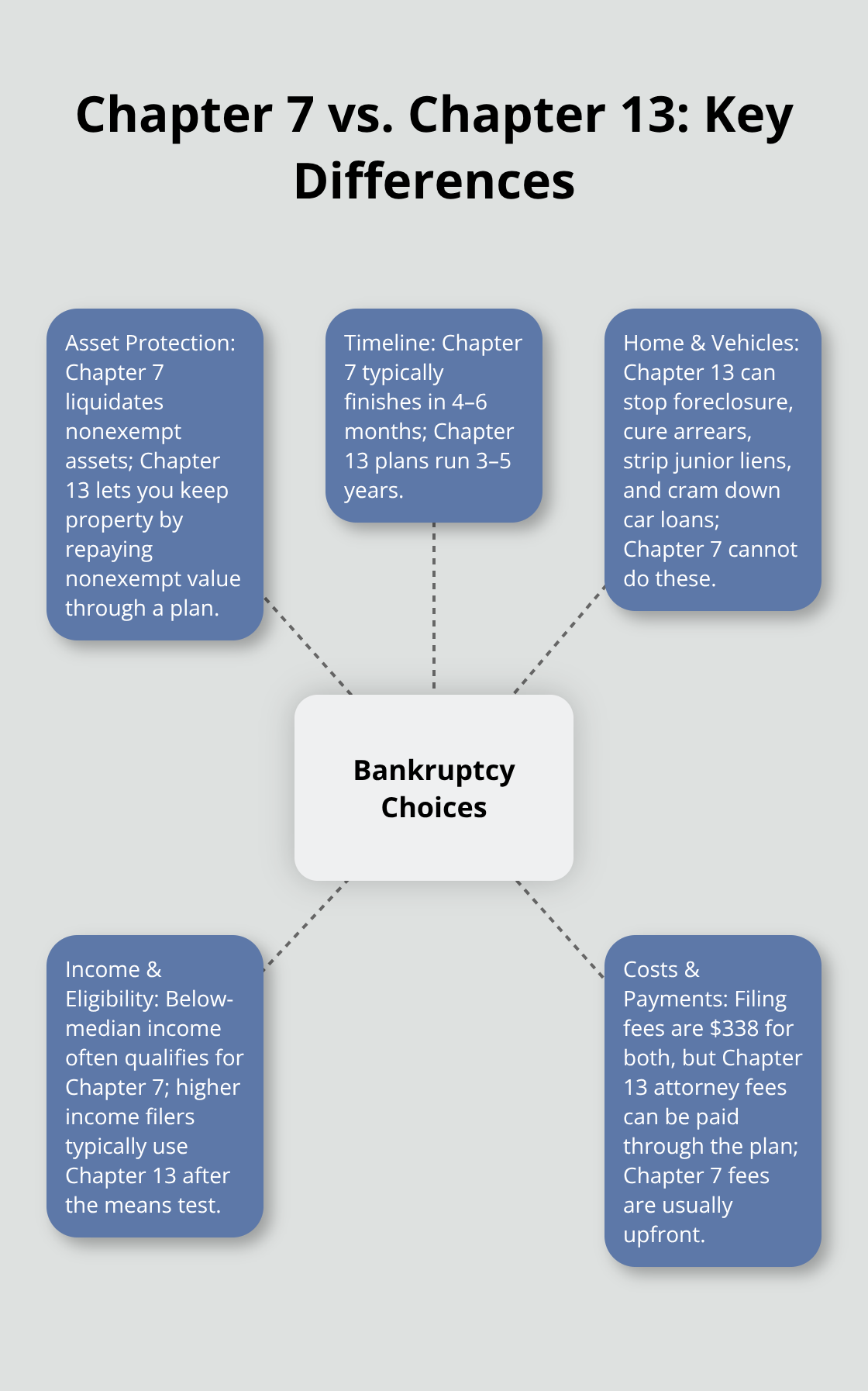
If you own a second vehicle worth $8,000 with no loan against it, Chapter 7 forces the trustee to sell it unless you can claim an exemption-Florida only protects $5,000 in vehicle equity. Chapter 13 lets you keep that vehicle by paying its nonexempt value through your repayment plan. If you own rental property, expensive jewelry, or collectibles beyond Florida’s exemptions, Chapter 13 preserves these assets while Chapter 7 forces sale.
Timeline and Discharge Speed
The U.S. Courts data shows that Chapter 7 cases complete in roughly four to six months with a 99% discharge rate when not dismissed or converted, whereas Chapter 13 requires you to stick with monthly payments for years. Chapter 7 wipes out credit card debt, medical bills, personal loans, and utility arrears completely-typically within four to six months. You walk away clean from these obligations. Chapter 13 rarely discharges unsecured debts in full; instead, you might pay 10 to 30 percent of what you owe through the plan, and the remainder gets discharged after successful completion. If you owe $50,000 in credit card debt and file Chapter 13, you might pay $15,000 over five years and have the remaining $35,000 erased, which sounds good until you realize you’re making monthly payments for sixty months instead of getting immediate relief.
Home and Foreclosure Protection
If you’re behind on your mortgage and face foreclosure within months, Chapter 7 offers the automatic stay but provides no mechanism to catch up on missed payments, so you’ll eventually lose the home anyway. Chapter 13 stops foreclosure immediately and allows you to cure arrears through the plan while keeping your house. You can also use lien stripping to remove junior mortgages if your home’s value falls below the first mortgage balance-something impossible in Chapter 7. For vehicles, Chapter 13 allows cramdowns where you reduce a car loan balance to the vehicle’s actual market value, potentially saving thousands if you owe more than the car is worth.
Income Requirements and Filing Eligibility
Income determines which chapter you can actually file. If you earn below Florida’s median household income, you qualify for Chapter 7 immediately. If you exceed the median, the means test calculates disposable income, and if that number is too high, Chapter 7 gets blocked and you must file Chapter 13 instead. This seemingly unfair rule actually works in your favor because your higher income means you can afford Chapter 13 payments that lower-income filers cannot make.
Cost and Payment Structure Differences
The filing fee is identical at $338 for both chapters according to U.S. Courts bankruptcy filing fees, but attorney costs diverge sharply. Chapter 7 attorneys typically require upfront payment ranging from $1,500 to $2,500 in Florida depending on case complexity and location, while Chapter 13 attorneys can include their fees in the repayment plan and get paid over time-a massive advantage if you lack cash reserves. The automatic stay applies equally in both chapters and stops wage garnishments, lawsuits, and collection calls the moment you file, but only Chapter 13 provides ongoing protection through the repayment plan-creditors cannot resume collection efforts while you make plan payments.
Final Thoughts
Choosing between Chapter 7 and Chapter 13 bankruptcy depends entirely on your income, assets, and financial goals. If you earn below Florida’s median household income and own mostly exempt property, Chapter 7 offers the fastest path to debt relief, typically discharging debts within four to six months. The automatic stay stops wage garnishments and collection calls immediately, giving you breathing room from creditors.
If you exceed the median income threshold, face foreclosure, or own nonexempt assets you want to keep, Chapter 13 becomes your realistic option. The ability to catch up on missed mortgage payments, use lien stripping on junior mortgages, or reduce car loans through cramdowns makes Chapter 13 powerful for protecting your home and vehicles. Neither option is inherently better-the right choice depends on whether you prioritize speed and debt discharge or asset protection and foreclosure prevention.
Understanding what Chapter 7 and Chapter 13 bankruptcy actually accomplish helps you recognize which path fits your situation. We at Harnage Law, PLLC help individuals and families navigate bankruptcy by providing personalized legal guidance, stopping creditor harassment, preventing wage garnishments, and protecting your assets. Contact us to discuss your specific situation and determine which option makes sense for your circumstances.
