Chapter 7 bankruptcy doesn’t have to be the end of your homeownership dreams. Many people successfully rebuild their finances and qualify for mortgages after discharge.
We at Harnage Law, PLLC know that buying a home after Chapter 7 bankruptcy is possible with the right strategy and timeline. This guide walks you through credit recovery, mortgage options, and concrete steps to get you into a home.
How Your Credit Score Bounces Back After Chapter 7
Your credit score takes a hit when you file Chapter 7 bankruptcy, but it doesn’t stay damaged forever. The impact fades faster than most people think, and you can accelerate recovery through deliberate actions. According to FHA guidelines, credit scores improve meaningfully within roughly two years after discharge, even though the bankruptcy itself remains on your credit report for about ten years. Lenders care more about your recent payment history than the age of your bankruptcy filing.
The First Two Years Matter Most
The first 24 months after discharge are critical. Your credit score typically rises fastest during this window because you remove the active bankruptcy from your current financial picture. If you had a score of 500 or lower at discharge, you can reach 600 to 650 within two years if you make every payment on time and keep new credit balances low. Secured credit cards accelerate this process significantly. These cards require a cash deposit (usually between 500 and 2,500 dollars) and report to all three credit bureaus. After 12 to 18 months of perfect payments, many issuers convert secured cards to unsecured accounts with higher limits. Capital One, Discover, and American Express all offer secured cards that report favorably to credit bureaus. Apply for a secured card within three to six months after discharge rather than waiting longer.
Payment History Drives Your Score Higher
Payment history accounts for 35 percent of your credit score, making it the single largest factor. Missing even one payment after bankruptcy destroys months of recovery work. Debt utilization represents 30 percent of your score and matters enormously.
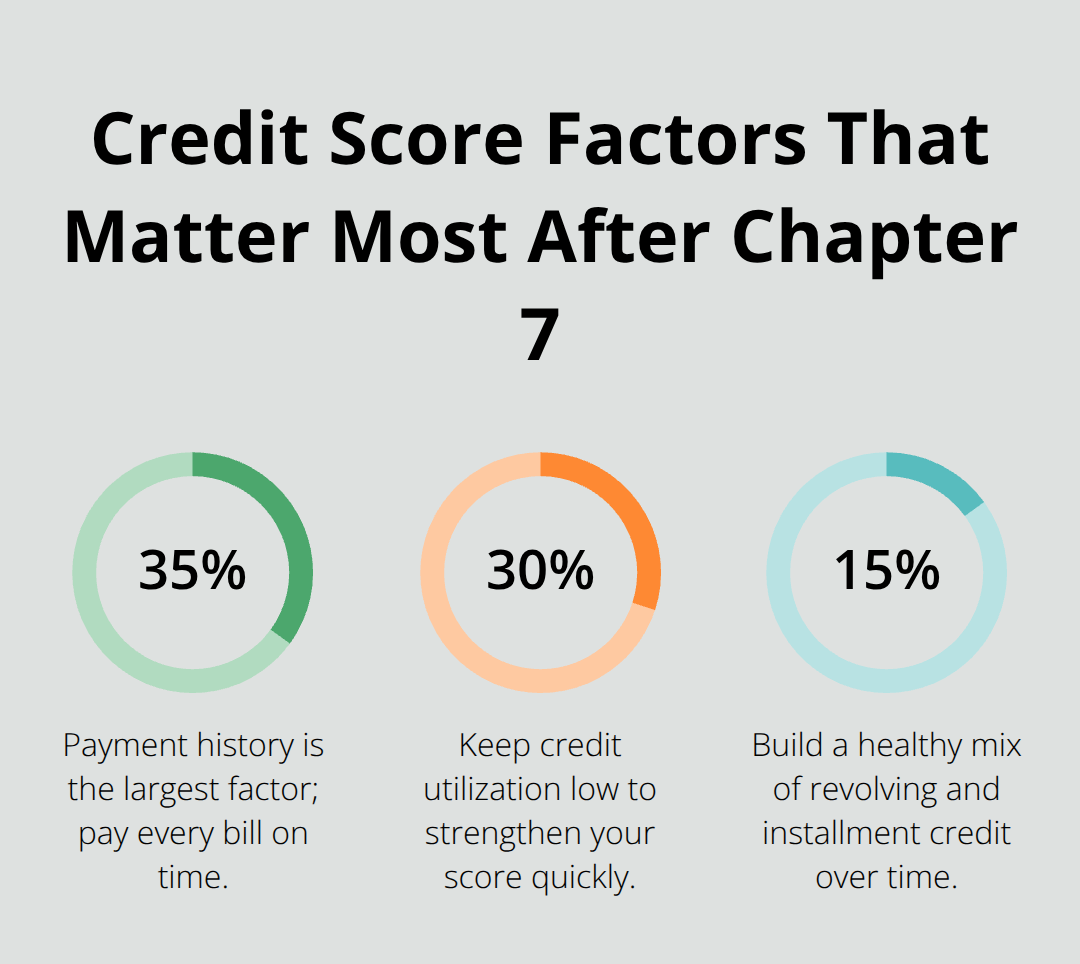
Keep credit card balances under 10 percent of your limits, not the commonly cited 30 percent threshold. If you have a 1,000 dollar limit, carry no more than 100 dollars in monthly charges. Credit mix comprises 15 percent of your score, so having both revolving credit (like cards) and installment credit (like an auto loan) strengthens your profile. The remaining 20 percent comes from credit age and new inquiries. Avoid opening multiple accounts within short timeframes because each inquiry temporarily lowers your score by a few points.
How Long Bankruptcy Affects Your Score
Your bankruptcy influences your score negatively for about seven years after discharge, with the effect diminishing substantially after year three. This timeline means that while the bankruptcy stays on your report for ten years, its impact on your actual score weakens significantly sooner. Lenders reviewing your application will see the bankruptcy notation, but they’ll focus heavily on what you’ve done since discharge. Strong payment history and low balances in the years following discharge matter far more than the bankruptcy event itself. This shift in lender focus creates a real opportunity for you to qualify for a mortgage sooner than you might expect.
Understanding how your credit recovers positions you to take advantage of mortgage programs designed for post-bankruptcy borrowers. FHA, VA, and conventional lenders all have specific waiting periods and credit score requirements that align with this recovery timeline.
Mortgage Programs That Work After Chapter 7
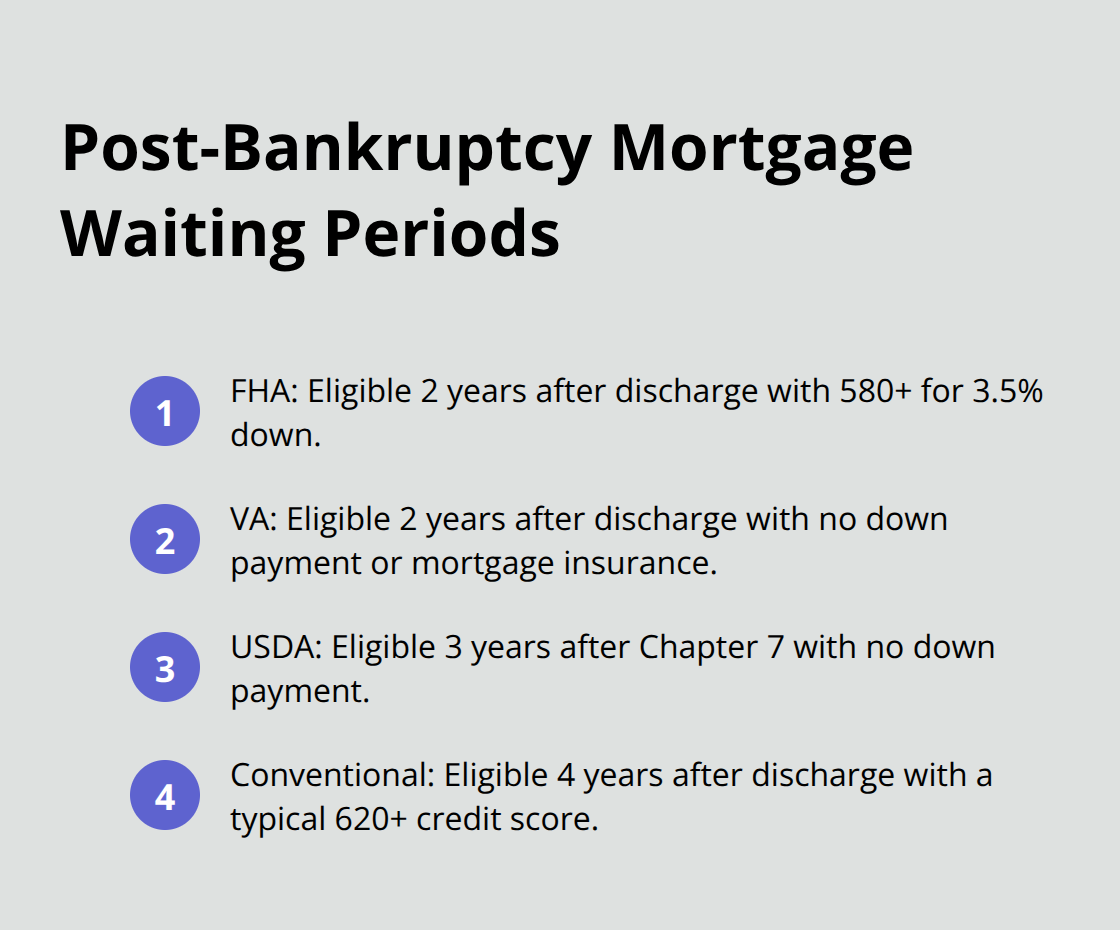
FHA loans stand out as the fastest path to homeownership after Chapter 7 discharge. You become eligible exactly two years from your discharge date, according to HUD FHA guidelines, and the waiting period does not extend further if you meet other qualifications. FHA requires a minimum credit score of 580 for the 3.5 percent down payment option, which aligns perfectly with the credit recovery timeline discussed earlier.
FHA Loans Offer Speed and Flexibility
You can qualify with scores as low as 500 in some cases, though lenders may require a larger down payment. The real advantage of FHA is flexibility on debt-to-income ratios. While conventional lenders typically cap your monthly debt payments at 43 percent of gross income, FHA allows up to 50 percent if you have compensating factors like stable employment or savings. This matters enormously after bankruptcy because Chapter 7 eliminates unsecured debts, immediately improving your debt-to-income ratio. If you earned 4,000 dollars monthly and carried 2,000 dollars in debt payments before bankruptcy, discharge removes those payments and suddenly you qualify for mortgages you couldn’t afford before. FHA also requires mortgage insurance, which adds roughly 0.55 percent annually to your loan balance, but this cost is worth paying for faster homeownership.
VA Loans Eliminate Down Payments and Insurance
VA loans offer an even better deal for eligible veterans and service members. You qualify two years after discharge with no required down payment and no mortgage insurance. VA loans typically require a minimum credit score around 620, slightly higher than FHA, but the elimination of mortgage insurance saves thousands over the loan term.
USDA and Conventional Loans Present Longer Timelines
USDA loans present a third option for rural and suburban buyers, requiring no down payment and allowing qualification one year after Chapter 13 discharge or three years after Chapter 7 discharge. Conventional loans from Fannie Mae and Freddie Mac demand the longest wait at four years after discharge and typically require a credit score of 620 or higher, making them the slowest route to homeownership.
Selecting the Right Program for Your Situation
The choice between these programs depends on your timeline, credit score, and down payment capacity. If you can wait two years and have modest credit recovery, FHA is your strongest move because the 3.5 percent down payment requirement is achievable for most people. If you are a veteran, VA loans eliminate the down payment entirely and save you mortgage insurance costs. If you own rural property or plan to buy outside major cities, investigate USDA options because their rates often run lower than FHA. Avoid conventional loans unless you have four years to wait or significant down payment savings, as they offer no advantage over government-backed programs after bankruptcy.
Taking Action With Lenders
Start conversations with lenders experienced in post-bankruptcy financing at least six months before your two-year anniversary. Many lenders apply overlays beyond official FHA guidelines, meaning they may require higher credit scores or longer waiting periods than regulations mandate. Shopping with multiple lenders reveals which ones have the most flexible overlays. Get pre-approved before you start house hunting because pre-approval demonstrates to sellers that you are a serious buyer with verified financing, which matters when competing against other offers in tight markets. Understanding which program fits your circumstances positions you to move forward with confidence toward the next critical step: preparing your finances and documentation for the mortgage application process.
Practical Steps to Prepare for Homeownership After Bankruptcy
Build Your Down Payment Fund Immediately
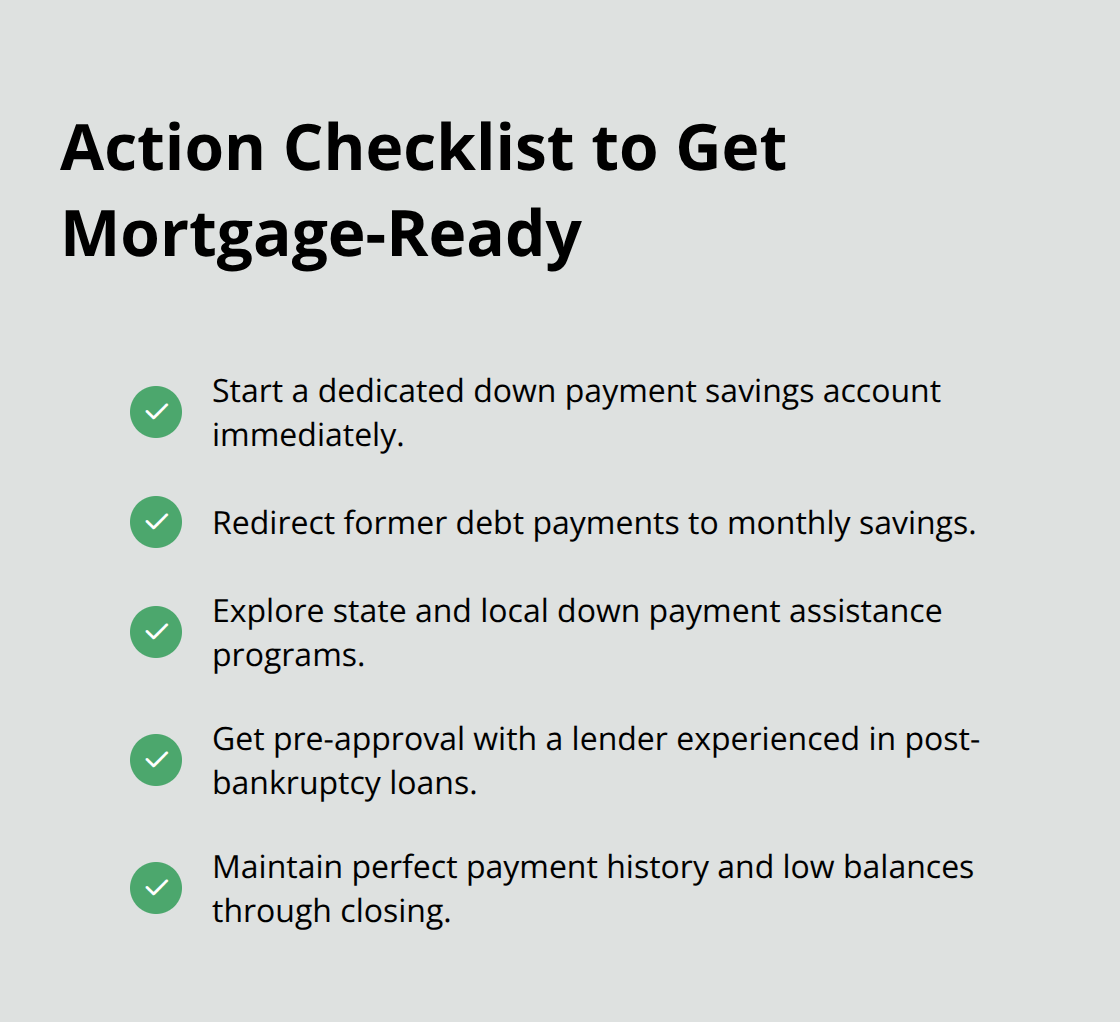
Start your down payment fund right after discharge. This creates a concrete financial goal and shows lenders that you save money deliberately. Most people underestimate how fast they accumulate funds when they redirect money previously spent on debt payments toward savings. If your Chapter 7 discharge eliminated 800 dollars in monthly debt obligations, moving even half of that into a dedicated savings account means 4,800 dollars saved within a year. FHA requires as little as 3.5 percent down, so on a 250,000 dollar home, you need only 8,750 dollars plus closing costs around 5,000 to 7,500 dollars. This total of roughly 14,000 to 16,000 dollars becomes achievable within 18 to 24 months for most households.
Access Down Payment Assistance Programs
Many states and local programs offer down payment assistance specifically for post-bankruptcy borrowers. Florida Housing Finance Corporation administers programs that can provide grants or favorable loans for down payments, reducing what you must save personally. Research your county’s offerings because some programs pair with FHA loans and cap income limits generously. Keep your down payment funds in a regular savings account rather than investments because lenders require proof that money has been in your account for at least two months before closing. Large deposits shortly before applying raise red flags about borrowed funds.
Obtain Pre-Approval From the Right Lender
Pre-approval separates serious buyers from casual shoppers in the eyes of sellers and gives you absolute clarity on what you can afford. Contact lenders experienced specifically in post-bankruptcy financing rather than your current bank. Lenders like Better.com and Guaranteed Rate understand post-bankruptcy overlays and move quickly through applications. Bring documentation showing your discharge date, recent pay stubs covering at least 30 days, two years of tax returns, and bank statements. The pre-approval process takes 3 to 5 business days when you provide complete documentation upfront.
Your pre-approval letter states the exact loan amount you qualify for, the interest rate locked temporarily, and the property type you can purchase. This letter becomes your negotiating power when you make an offer because sellers see verified financing rather than hopes. After pre-approval, maintain perfect payment habits and avoid opening new credit accounts or making large purchases because lenders typically re-verify credit and employment just before closing.
One missed payment or a new credit card can destroy financing that was approved weeks earlier.
Maintain Financial Discipline Through Closing
Keep all financial activity clean from pre-approval through closing. Lenders monitor your credit reports and bank accounts during this period, and unexpected changes can jeopardize your loan. Do not apply for new credit, co-sign loans, or make large purchases. Do not change jobs unless absolutely necessary, as employment stability matters to underwriters. Do not make large cash deposits that you cannot explain with documentation. These actions protect the financing you worked months to secure and move you closer to homeownership.
Final Thoughts
Buying a home after Chapter 7 bankruptcy follows a realistic timeline when you understand the waiting periods and take deliberate action. Two years from your discharge date, you become eligible for FHA financing with a credit score around 580, and during those two years your credit score recovers meaningfully through on-time payments and low credit card balances. Within 24 months, you can accumulate a down payment, obtain pre-approval, and position yourself to make an offer on a home that fits your budget.
The path forward requires three key actions: rebuild your credit immediately after discharge by securing a credit card and keeping balances minimal, start saving for your down payment right away since the money you previously spent on debt payments can now fund your homeownership goal, and connect with a lender experienced in post-bankruptcy financing at least six months before your two-year anniversary. Your timeline matters less than your consistency, and the bankruptcy stays on your credit report for ten years while its impact on your actual score and lender decisions fades substantially after three years. This means your strongest mortgage opportunities arrive between years two and five after discharge.
We at Harnage Law, PLLC understand that Chapter 7 bankruptcy serves as a tool for financial recovery, not a permanent barrier to homeownership. If you navigate bankruptcy and plan for homeownership, contact Harnage Law, PLLC to learn how we assist individuals and families in overcoming financial challenges and rebuilding their financial future.