
At Harnage Law, PLLC, we often see Florida residents struggling with post-bankruptcy discharge violations. These violations can derail your fresh start after filing for Chapter 7 bankruptcy.
Understanding your rights and recognizing when creditors overstep their bounds is vital. This blog post will guide you through common discharge violations and the legal remedies available to protect your financial future.
What Constitutes a Post-Bankruptcy Discharge Violation?
The Essence of Bankruptcy Discharge
A bankruptcy discharge represents a court order that permanently prohibits creditors from collecting debts included in the bankruptcy. This legal tool eliminates most unsecured debts, providing a clean slate for financial rebuilding.
Common Debts Discharged in Chapter 7
Chapter 7 bankruptcy typically eliminates several types of debts:
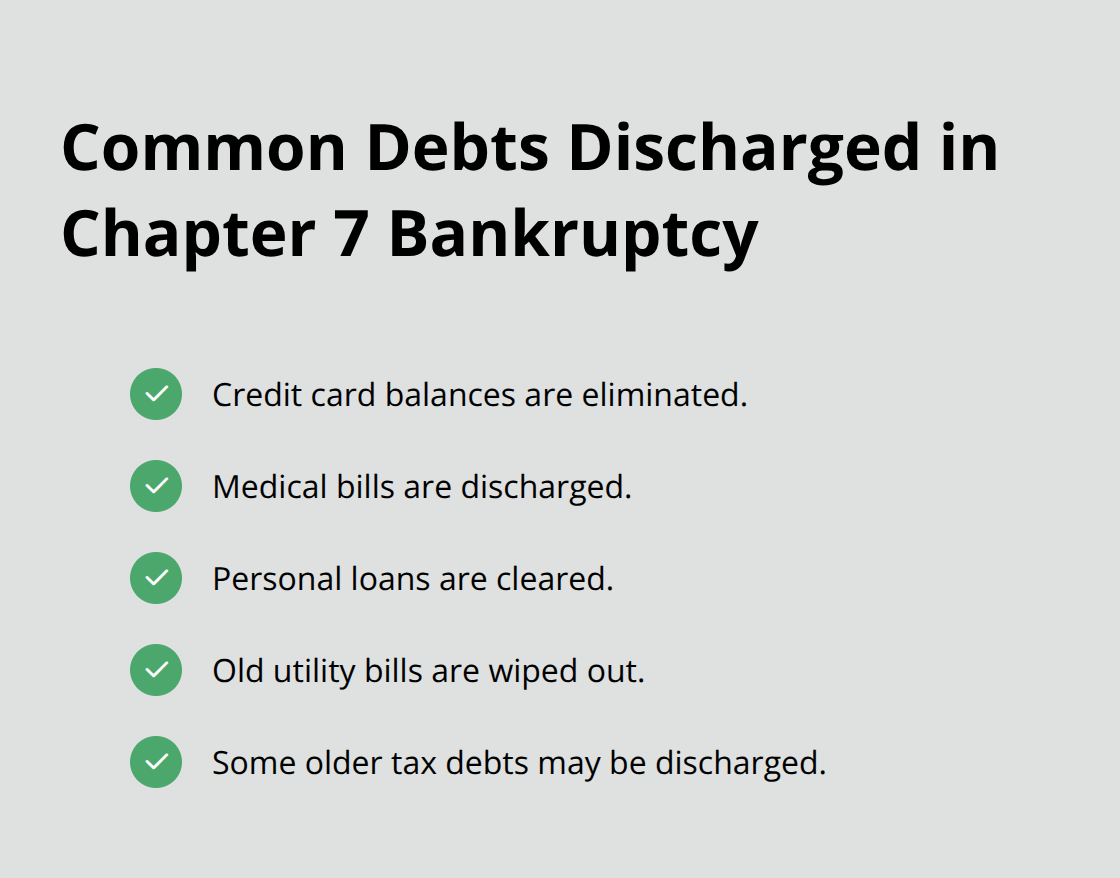
It’s worth noting that certain obligations (such as recent tax debts, student loans, and child support) usually remain non-dischargeable.
Creditor Actions That Violate Discharge Orders
Creditors breach the discharge order when they attempt to collect eliminated debts. These violations can take various forms:
- Sending collection letters or making phone calls
- Filing or continuing lawsuits
- Reporting discharged debts as active on credit reports
- Refusing to release liens on property
In Florida, some creditors have even tried to garnish wages for discharged debts (a clear violation of federal bankruptcy law).
Recognizing Violations in Florida
Florida residents should stay vigilant for post-bankruptcy discharge violations. These infractions can derail the fresh start provided by Chapter 7 bankruptcy. Understanding your rights and identifying when creditors overstep their bounds proves essential for protecting your financial future.
Legal Protections for Debtors
The law stands firmly on the side of debtors who have received a bankruptcy discharge. Creditors face serious consequences for ignoring this court order. If you experience any collection attempts on discharged debts, you should act promptly. Legal professionals (like those at Harnage Law, PLLC) can help you understand your rights and take appropriate action against violating creditors.
As we move forward, let’s explore the most common types of discharge violations that Florida residents encounter after their bankruptcy proceedings.
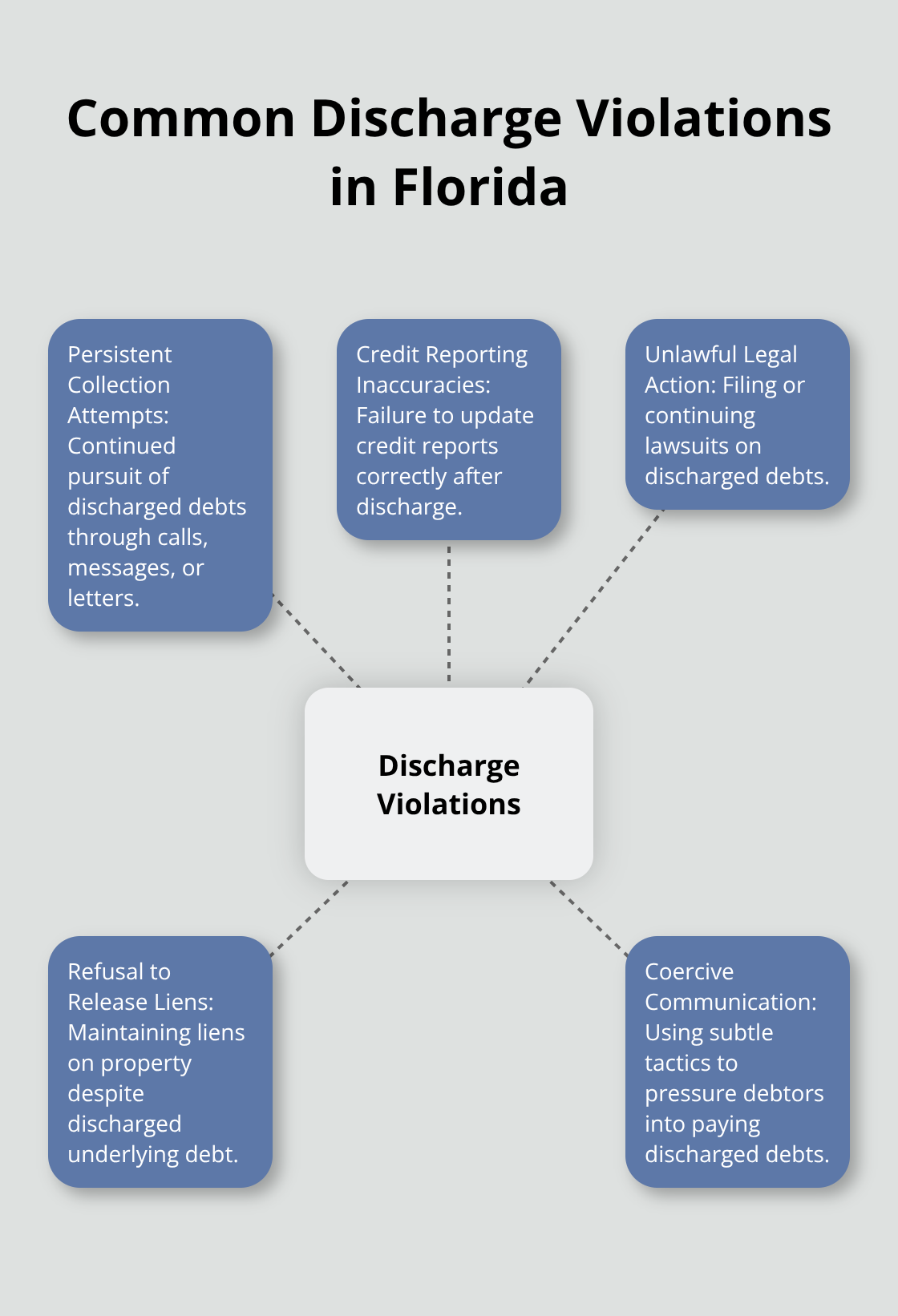
Common Types of Discharge Violations in Florida
Persistent Collection Attempts
After a bankruptcy discharge, some creditors in Florida continue to pursue discharged debts. This violation often takes the form of repeated phone calls, text messages, or collection letters demanding payment. In extreme cases, creditors have even appeared at a debtor’s home or workplace (a serious breach of privacy and legal boundaries).
Credit Reporting Inaccuracies
Creditors sometimes fail to update credit reports correctly after a bankruptcy discharge. The law requires discharged debts to be reported with a zero balance and marked as closed due to bankruptcy. However, this responsibility is often neglected, leaving negative marks on credit reports. These inaccuracies can impede a person’s ability to secure loans, housing, or employment (potentially derailing their financial recovery).
Unlawful Legal Action
One of the most severe violations occurs when creditors file or continue lawsuits on discharged debts. This action directly contradicts the court’s discharge order and can result in significant penalties for the creditor. For example, a major credit card company in Florida faced substantial fines for pursuing a lawsuit against a debtor for a $12,000 balance that had been discharged in Chapter 7 bankruptcy.
Refusal to Release Liens
Some creditors may refuse to release liens on property after a bankruptcy discharge. This can prevent debtors from selling or refinancing their assets, complicating their financial recovery. In Florida, we’ve seen cases where creditors have attempted to maintain liens on vehicles or personal property, despite the underlying debt being discharged.
Coercive Communication
Creditors might use subtle tactics to pressure debtors into paying discharged debts. This can include sending “informational” statements with payment options or making veiled threats about credit reporting. While these communications may seem innocuous, they often violate the spirit and letter of the discharge order.
If you encounter any of these violations after your bankruptcy discharge, you should act quickly. Document all creditor communications, including dates, times, and the nature of the contact. This evidence can prove invaluable if legal action becomes necessary to enforce your rights and hold creditors accountable. In the next section, we’ll explore the legal remedies available to Florida residents facing these discharge violations.
How Florida Residents Can Combat Discharge Violations
Filing a Motion for Contempt
When creditors disregard your bankruptcy discharge, you have the right to file a motion for contempt with the bankruptcy court. This legal action alerts the court that a creditor has violated its order. Florida judges often prioritize these motions, sometimes scheduling hearings within weeks of filing.
The process requires you to submit detailed documentation of the violation (including dates, times, and nature of creditor contact). Your attorney will present this evidence to the court, arguing that the creditor’s actions warrant sanctions.
Pursuing Financial Compensation
Successful motions for contempt can result in various forms of compensation. Courts may award actual damages to cover financial losses you’ve suffered due to the violation. This could include missed work time, legal fees, or even emotional distress in severe cases.
The court can also order the creditor to pay your attorney fees related to bringing the motion. This provision ensures that enforcing your rights doesn’t become a financial burden.
In extreme cases, Florida bankruptcy courts have awarded punitive damages. These additional penalties deter future violations and can be substantial. (For example, a Tampa court recently ordered a creditor to pay $50,000 in punitive damages for repeatedly contacting a debtor about a discharged debt.)
Documenting Creditor Communications
Thorough record-keeping is essential when you deal with potential discharge violations. We advise clients to:
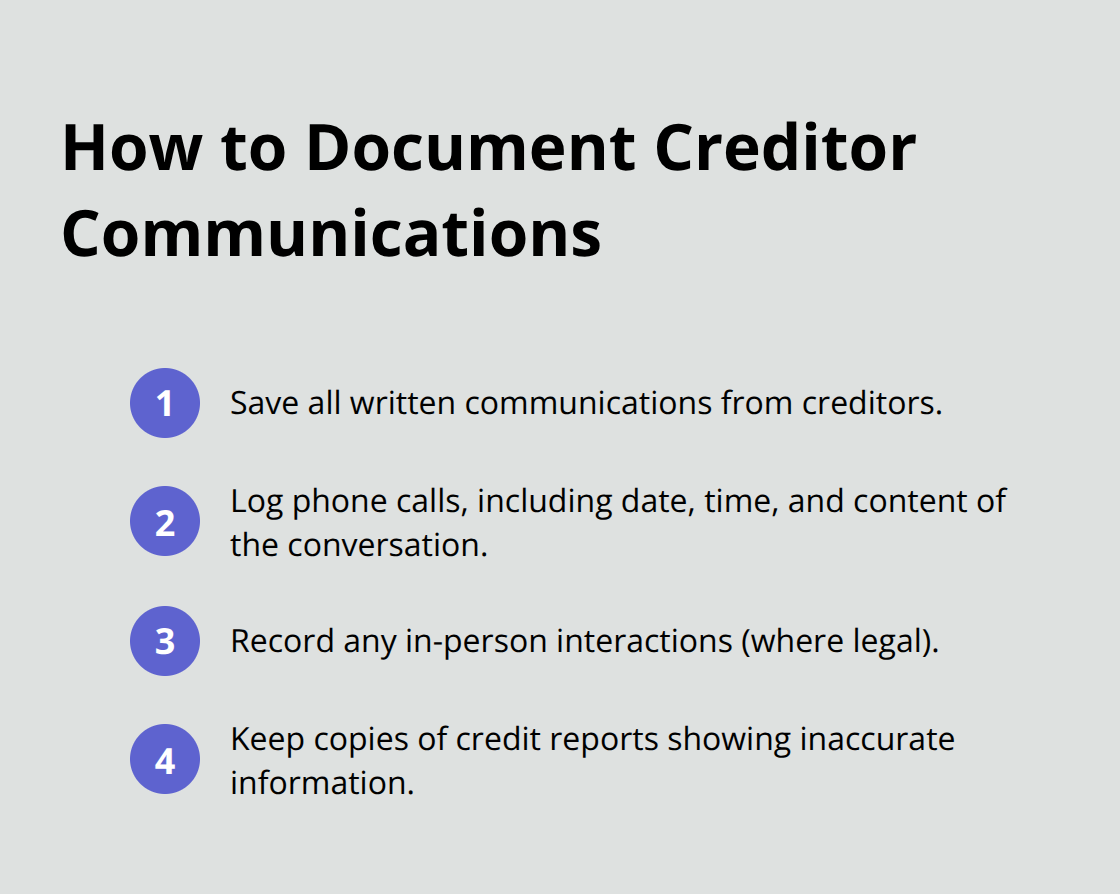
This documentation forms the foundation of any legal action against violating creditors. The more comprehensive your records, the stronger your case becomes.
Sending a Strongly Worded Letter
Creditors often back down quickly when confronted with clear evidence of their violations. In many cases, a strongly worded letter from an attorney (detailing the documented infractions) resolves the issue without court intervention.
Protecting Your Rights and Financial Future
Swift action against violations protects not just your own financial future, but also helps enforce the integrity of the bankruptcy system for all Florida residents. (If you face potential discharge violations, consult with a bankruptcy attorney to understand your options and take appropriate steps to safeguard your rights.)
Final Thoughts
Post-bankruptcy discharge violations can undermine the fresh start Chapter 7 bankruptcy provides. Florida residents who have completed bankruptcy must stay alert and know their rights to address creditor misconduct quickly. The bankruptcy discharge represents a powerful legal protection that creditors must respect, and you have the right to hold them accountable for violations.
We at Harnage Law, PLLC have helped many Florida residents navigate the complexities of post-bankruptcy discharge violations. Our team protects your rights and ensures your financial fresh start remains intact. Professional legal support can make a significant difference in resolving these issues effectively.
If you face potential violations or have questions about your rights after bankruptcy, contact the experienced team at Harnage Law, PLLC. We will safeguard your financial future and help you move forward with confidence (our commitment to your financial well-being drives everything we do).