At Harnage Law, PLLC, we often hear the question: “How much debt do you need to file bankruptcy in Florida?” The truth is, there’s no set minimum amount required to declare bankruptcy in the Sunshine State.
However, understanding the factors that influence bankruptcy decisions can help you make an informed choice about your financial future. This blog post will explore the key elements to consider when contemplating bankruptcy in Florida, including debt types, income levels, and financial hardship indicators.
What Is Chapter 7 Bankruptcy in Florida?
Understanding Liquidation Bankruptcy
Chapter 7 bankruptcy in Florida allows individuals to eliminate most of their unsecured debts. Often called “liquidation bankruptcy,” this process involves the sale of non-exempt assets to pay off creditors. However, most Chapter 7 cases in Florida are “no-asset” cases, which means debtors can keep all their property.
Eligibility for Chapter 7 in Florida
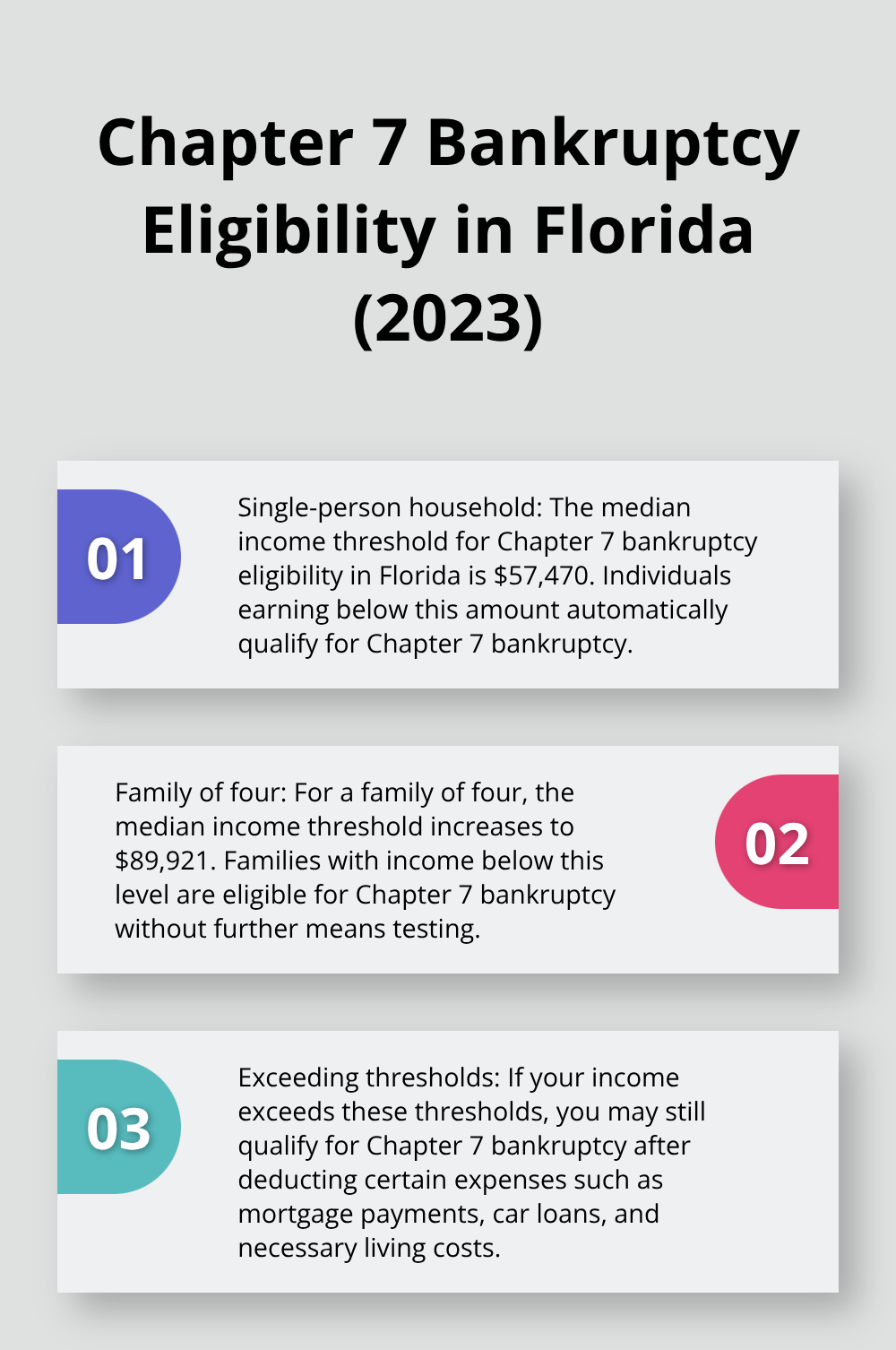
To file for Chapter 7 bankruptcy in Florida, you must pass the means test. This test compares your income to the median income in Florida for a household of your size. As of 2023, the median income for a single-person household in Florida is $57,470. If your income falls below this threshold, you automatically qualify for Chapter 7.
Exceeding the Median Income
If your income exceeds the median, you may still qualify after deducting certain expenses. These can include mortgage payments, car loans, and living expenses. The calculation can be complex, but a qualified bankruptcy attorney can help you determine your eligibility.
The Role of Debt in Bankruptcy Decisions
While Florida law doesn’t set a minimum debt requirement for bankruptcy filing, the amount and type of debt you have significantly influence the decision to file. Generally, if your unsecured debts (such as credit cards or medical bills) exceed your ability to pay them off within a reasonable time, bankruptcy might be a good option.
Evaluating Your Debt Situation
Consider this example: If you have $20,000 in credit card debt and it would take you over five years to pay it off, Chapter 7 bankruptcy could provide relief. On the other hand, if you only have $5,000 in debt that you could pay off in a year, bankruptcy might not be necessary.
The Importance of Professional Guidance
Bankruptcy should be a last resort. It’s a powerful tool for financial recovery, but it also has long-lasting consequences. A thorough review of your financial situation by a qualified bankruptcy attorney can help you make the best decision for your future.
As we move forward, let’s examine the specific factors that influence the decision to file for bankruptcy in Florida, including the types of debt considered and the financial hardship indicators that courts take into account.
What Factors Influence Bankruptcy Filing in Florida?
Types of Debt in Bankruptcy
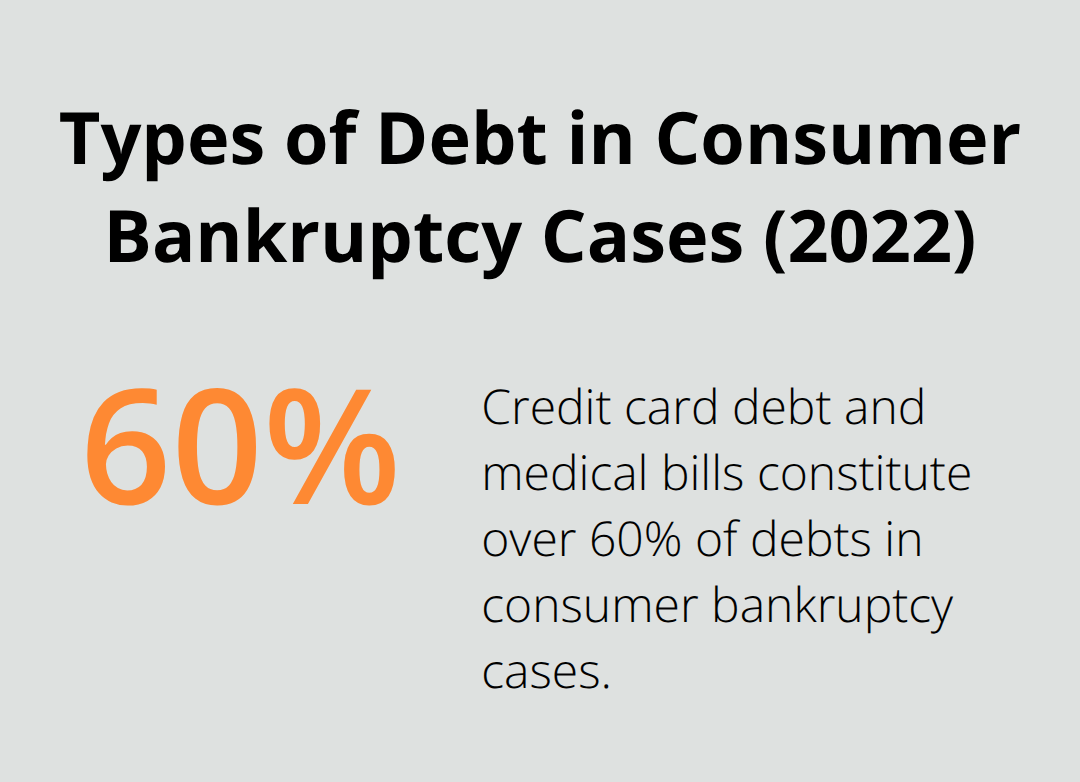
Bankruptcy law treats different debts uniquely. Unsecured debts (credit card balances, medical bills, and personal loans) are typically dischargeable in Chapter 7 bankruptcy. A 2022 American Bankruptcy Institute report reveals that credit card debt and medical bills constitute over 60% of debts in consumer bankruptcy cases.
Secured debts (mortgages and car loans) receive different treatment. While you may keep your home or car in bankruptcy, you must continue payments to retain these assets. Student loans, child support, and certain tax debts usually remain non-dischargeable, persisting even after bankruptcy.
Florida’s Means Test and Income Thresholds
The means test plays a pivotal role in determining Chapter 7 bankruptcy eligibility in Florida. As of 2023, individuals with annual income below $57,470 (for a single-person household) automatically qualify. This threshold increases to $89,921 for a family of four.
Exceeding these limits doesn’t disqualify you. You may still be eligible after deducting allowed expenses (mortgage payments, car loans, taxes, and necessary living costs). A thorough analysis of your financial situation will determine your eligibility.
Indicators of Financial Distress
Courts evaluate various signs of financial hardship in bankruptcy cases:
- Inability to make minimum debt payments
- Use of credit cards for basic necessities
- Receipt of collection calls or wage garnishment threats
- Consideration of payday loans or debt consolidation services
These indicators suggest it’s time to consult a bankruptcy attorney. Professional guidance will help you assess your situation and determine if bankruptcy offers the right solution.
Impact of Debt-to-Income Ratio
Your debt-to-income ratio (DTI) significantly influences bankruptcy decisions. This ratio compares your monthly debt payments to your gross monthly income. A high DTI (typically above 50%) often indicates financial strain and may support a bankruptcy filing.
For example, if your monthly income is $4,000 and your debt payments total $2,500, your DTI is 62.5% (2500 ÷ 4000 = 0.625). This high ratio suggests potential difficulty in managing debts without intervention.
Asset Evaluation in Bankruptcy
The value and nature of your assets also factor into bankruptcy considerations. Florida’s generous homestead exemption allows you to protect an unlimited amount of equity in your primary residence (subject to certain conditions). However, non-exempt assets might be liquidated in Chapter 7 to repay creditors.
Understanding these factors will help you make an informed decision about filing for bankruptcy in Florida. The next section will explore specific debt thresholds and scenarios where bankruptcy might (or might not) be the optimal choice.
How Much Debt Triggers Bankruptcy in Florida?
No Set Debt Threshold
Florida law does not specify a minimum debt amount required to file for bankruptcy. The decision to file depends on individual financial circumstances rather than a fixed dollar amount.
Average Debt Levels in Florida Bankruptcies
A 2022 American Bankruptcy Institute report revealed that Chapter 7 filers in Florida had an average unsecured debt of $78,000. This includes credit card balances, medical bills, and personal loans. Secured debts (mortgages and car loans) averaged around $125,000.
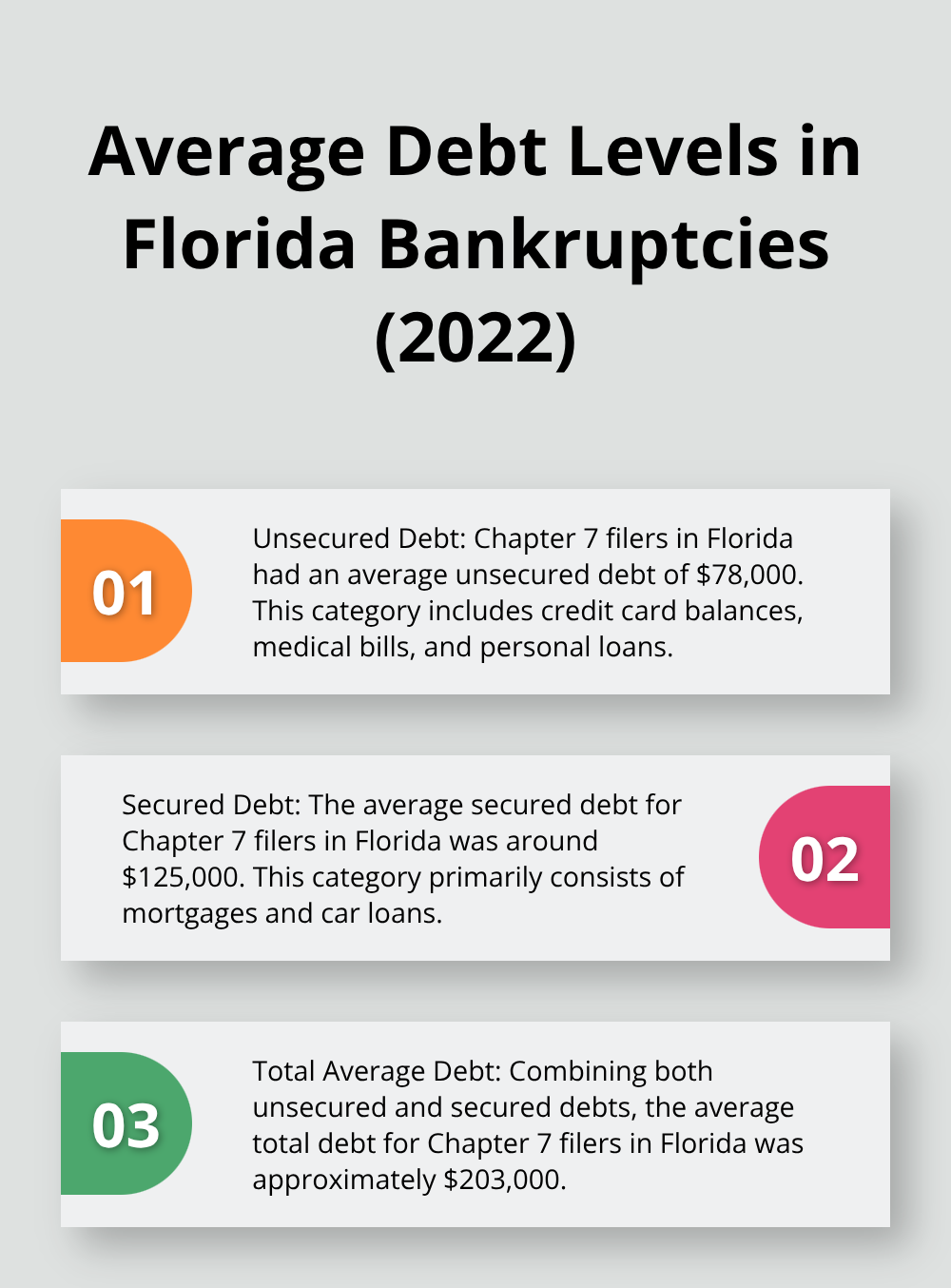
These figures serve as reference points, not requirements. Many Floridians file with less debt, while others manage higher amounts without resorting to bankruptcy. The ability to repay, not just the total owed, determines the need for bankruptcy.
When Bankruptcy Might Not Be the Best Option
Bankruptcy isn’t always the ideal solution, even for significant debt. If you can repay your debts within 3-5 years through budgeting or creditor negotiations, other options might work better. For example, if you owe $20,000 in credit card debt but can pay it off in two years, alternative debt relief strategies could prove more suitable.
Moreover, if most of your debts are non-dischargeable (such as recent taxes or student loans), Chapter 7 bankruptcy may not provide the relief you seek. In these cases, income-based repayment plans or tax resolution strategies could offer more benefits.
Evaluating Your Financial Situation
A thorough financial assessment should precede any bankruptcy decision. This assessment includes:
- Calculation of your debt-to-income ratio
- Analysis of your debt types (secured vs. unsecured)
- Evaluation of your current and future income potential
- Consideration of the impact on your assets (especially your home)
If your debt-to-income ratio exceeds 50% and you struggle to make minimum payments, bankruptcy might offer a viable solution. However, if you have significant equity in your home or other valuable assets, Chapter 7 could put these at risk.
The Importance of Professional Guidance
Bankruptcy represents a serious decision with long-term consequences. It can offer a fresh start, but it also impacts your credit for years to come. Consultation with a qualified bankruptcy lawyer provides personalized advice based on your unique financial situation. They can help you understand the implications of bankruptcy and explore all available options.
Final Thoughts
The amount of debt needed to file bankruptcy in Florida varies for each individual. Your financial situation, including debt-to-income ratio and ability to repay, determines if bankruptcy is the right choice. Alternative debt relief strategies might work better for some people, depending on their specific circumstances.
Professional guidance proves invaluable when considering bankruptcy. A qualified attorney can evaluate your financial situation and explain potential outcomes of filing. We at Harnage Law, PLLC specialize in guiding individuals through the Chapter 7 bankruptcy process in Florida.
Don’t let financial stress control your life. Take the first step towards regaining your financial freedom by consulting with a bankruptcy expert. Our experienced team can help you understand your options and make the best decision for your future.