Financial struggles can be overwhelming, leaving many Floridians wondering when should I file for bankruptcy. At Harnage Law, PLLC, we understand the weight of this decision and its potential impact on your future.
Timing is critical when considering bankruptcy, as filing too early or too late can have significant consequences. This guide will help you recognize the signs that it might be time to explore bankruptcy options in Florida and understand the factors to consider before taking this important step.
Red Flags for Bankruptcy in Florida
Financial distress often sneaks up on individuals, but certain indicators suggest it’s time to consider bankruptcy. In Florida, where living costs continue to climb, many residents struggle to meet their financial obligations.
The Credit Card Debt Trap
Credit card debt plagues many Floridians. A 2023 WalletHub study reveals that the average credit card debt in Florida stands at $8,643 per household. When you only manage minimum payments or use one card to pay off another, your debt has likely become unmanageable.
Imminent Home Loss
Florida’s foreclosure rate exceeds the national average. ATTOM Data Solutions reported that in the first quarter of 2023, 1 in every 2,170 housing units in Florida faced a foreclosure filing. If you consistently fall behind on mortgage payments and risk foreclosure, bankruptcy might offer a lifeline to save your home.
Basic Needs Become Unaffordable
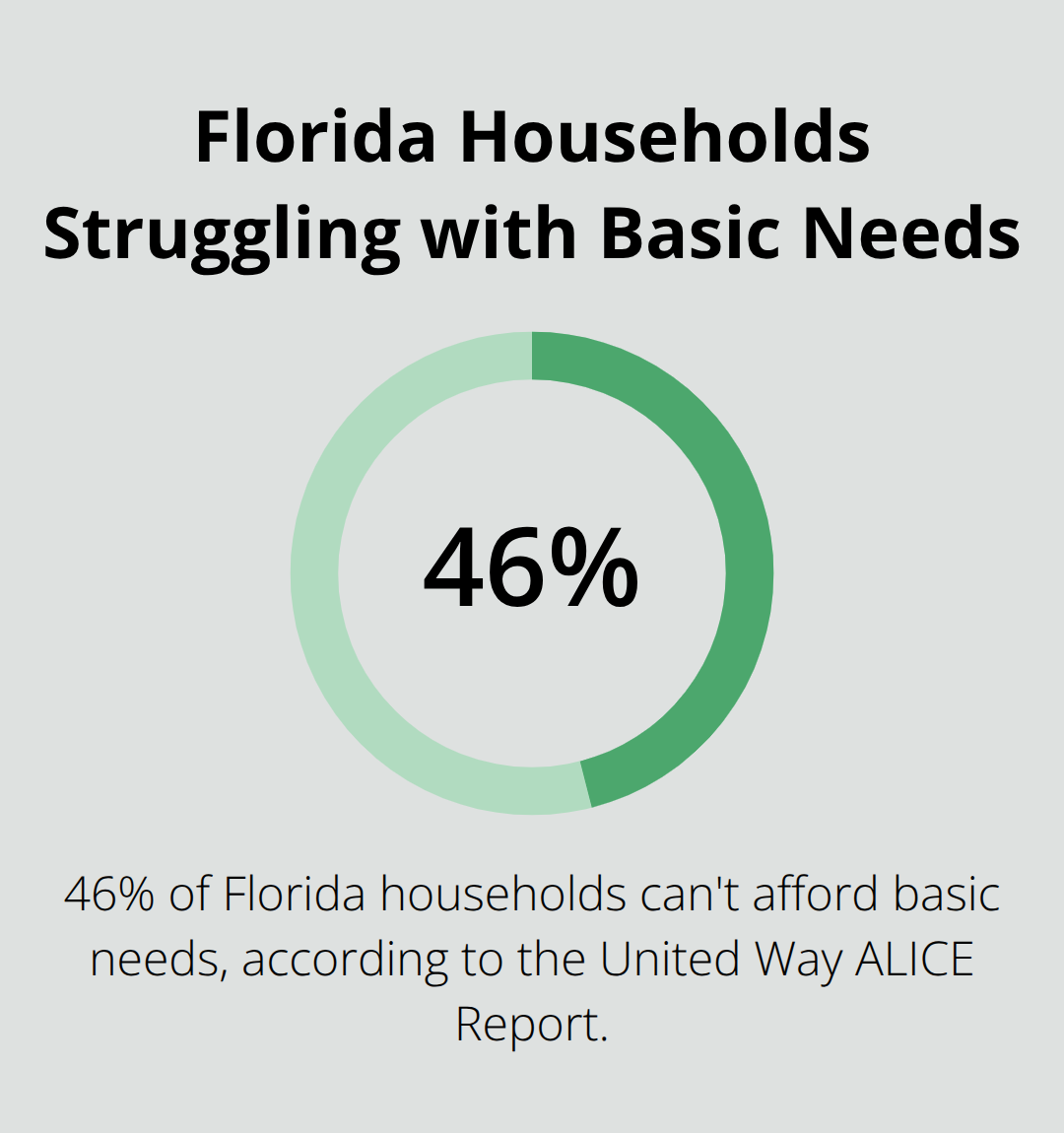
When you struggle to afford necessities like food, utilities, or healthcare, it signals a serious problem. The United Way ALICE Report indicates that 46% of Florida households can’t afford basic needs. If you must choose between paying bills and buying groceries, it’s time to reassess your financial situation.
Persistent Debt Collector Harassment
Incessant calls from debt collectors can drain you emotionally. While the Fair Debt Collection Practices Act protects consumers from harassment, multiple daily calls indicate overwhelming debt. This persistent contact often impacts mental health and quality of life (as we’ve observed with many clients).
Inability to Save for Emergencies
If you can’t set aside any money for unexpected expenses or emergencies, it points to financial instability. The Federal Reserve reports that 39% of Americans would struggle to cover a $400 emergency expense. This lack of financial cushion leaves you vulnerable to further debt accumulation.
These red flags don’t automatically mean bankruptcy is your only option, but they warrant serious consideration of your financial alternatives. The next section will explore the critical timing factors in filing for bankruptcy in Florida.
When Should You File for Bankruptcy in Florida
Timing your bankruptcy filing in Florida can significantly impact its effectiveness. Let’s explore the critical factors to consider when deciding when to file.
The Danger of Waiting Too Long
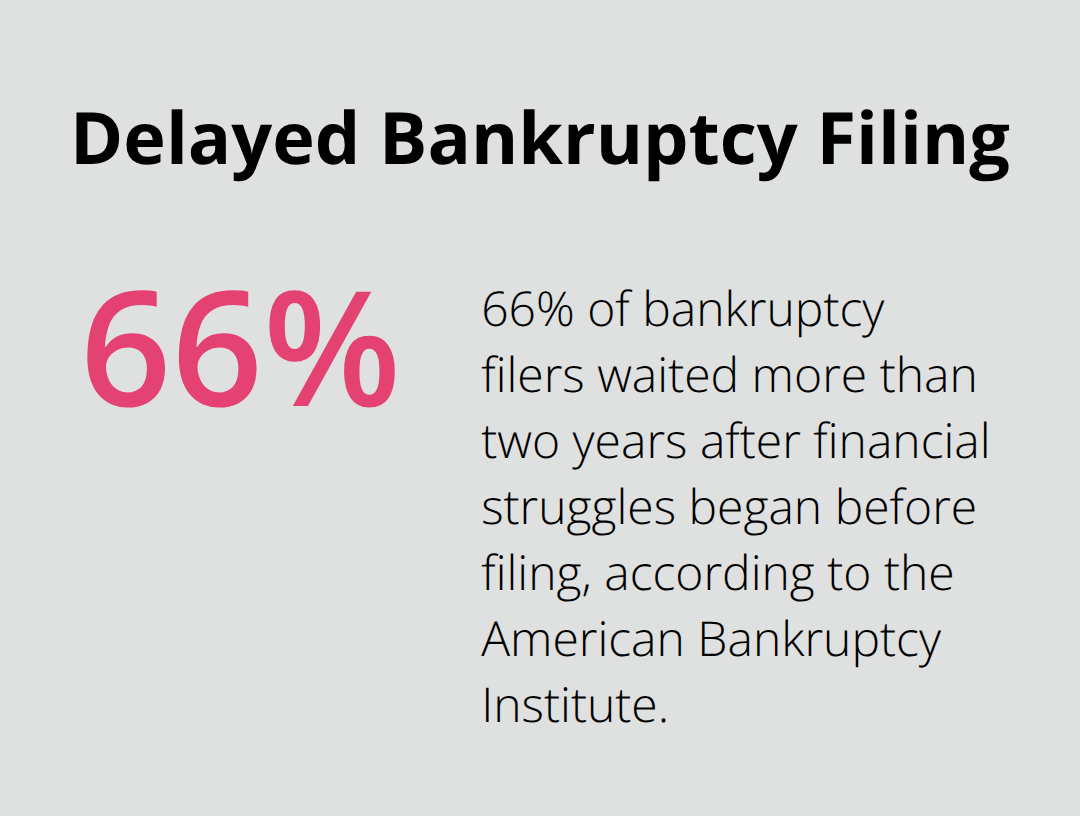
Many Floridians postpone filing for bankruptcy, hoping their financial situation will improve. However, this delay can prove costly. A study by the American Bankruptcy Institute found that 66% of bankruptcy filers waited more than two years after they began struggling financially before filing. This delay often results in depleted savings, increased debt, and potentially lost assets.
Upcoming Financial Events Matter
Your financial calendar plays a crucial role in bankruptcy timing. For instance, if you expect a large tax refund, it might be wise to wait until you receive and spend it on necessities before filing. Similarly, if you anticipate a significant increase in income, filing before this occurs could be beneficial. The U.S. Bankruptcy Court for the Southern District of Florida reported that in 2022, 17% of Chapter 7 cases were dismissed due to income changes that occurred shortly after filing.
Current Income and Asset Evaluation
Your current financial snapshot is vital in determining bankruptcy eligibility. In Florida, the median income for a single-person household is $59,227 as of 2023. If your income falls below this threshold, you’re more likely to qualify for Chapter 7 bankruptcy. Additionally, Florida’s generous homestead exemption allows you to protect an unlimited amount of equity in your primary residence, making it essential to time your filing to maximize this benefit.
Credit Score Considerations
While bankruptcy will impact your credit score, the timing can affect how quickly you recover. According to FICO, a person with a good credit score (700+) might see their score drop by 100-200 points after filing for bankruptcy. However, if your score is already low due to missed payments, the impact might be less severe. Many clients who file before their credit score plummets often recover more quickly post-bankruptcy.
Seasonal Considerations
Florida’s economy has seasonal fluctuations (particularly in tourism-dependent areas), which can affect income and job stability. Filing during a traditionally slower season might provide a more accurate picture of your financial situation. This timing could potentially improve your chances of qualifying for Chapter 7 bankruptcy.
As you weigh these factors, it’s important to consider alternatives to bankruptcy. The next section will explore other options that might help you address your financial challenges without filing for bankruptcy in Florida.
Exploring Alternatives to Bankruptcy in Florida
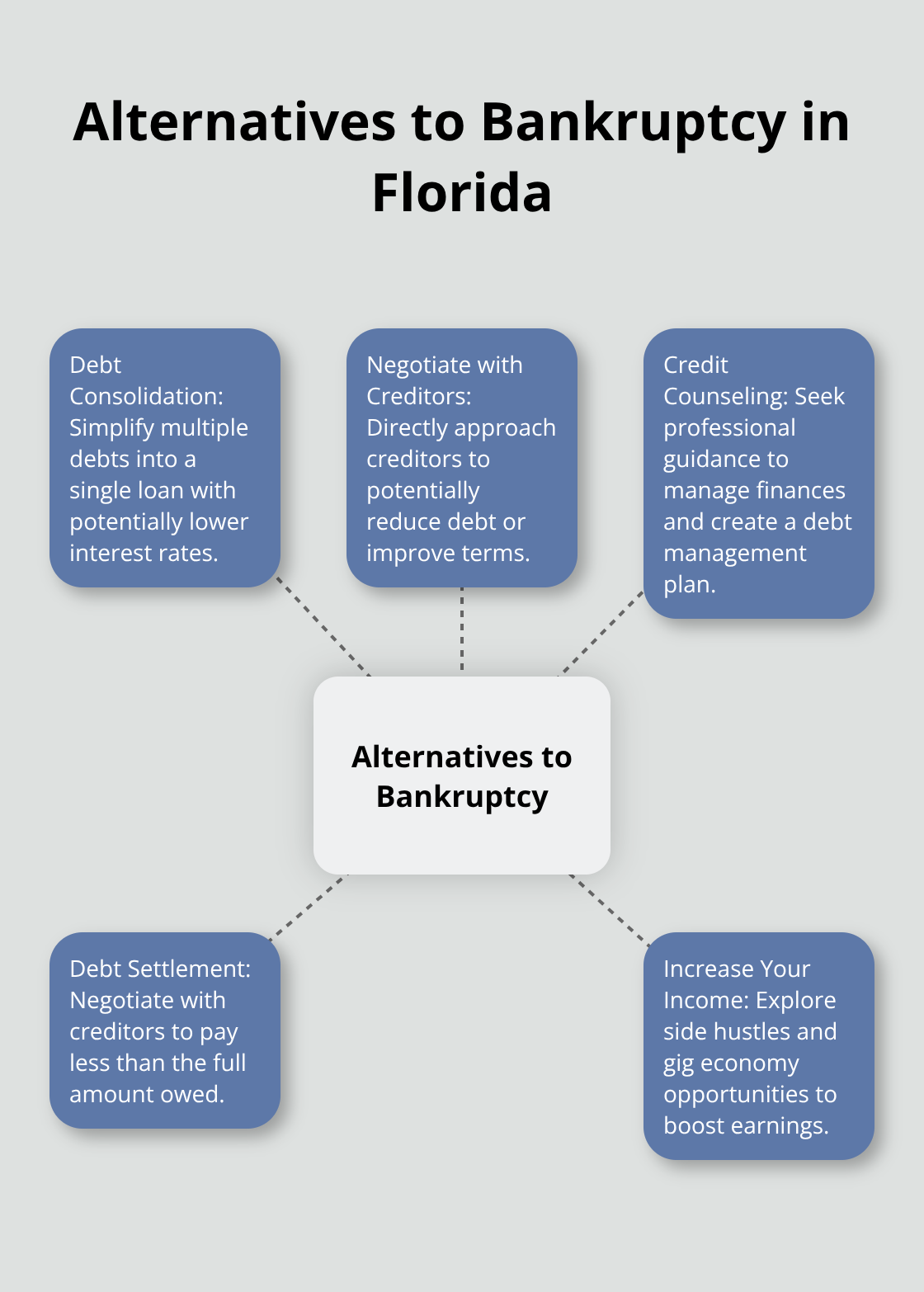
Before you file for bankruptcy in Florida, consider other options that might help you regain financial stability. Bankruptcy can provide relief, but it’s not always the best solution for everyone.
Debt Consolidation: Simplify Your Payments
Debt consolidation can effectively manage multiple debts. In Florida, the average credit card debt is $8,643 per household. A single loan to consolidate these debts can potentially lower your interest rate and simplify your payment schedule. Personal loans for debt consolidation in Florida typically offer interest rates between 6% and 36% (which could be significantly lower than credit card rates).
Negotiate with Creditors: Take a Direct Approach
Many creditors prefer to negotiate rather than risk receiving nothing through bankruptcy. A study by the National Foundation for Credit Counseling found that 68% of people who attempted to negotiate with their creditors succeeded in reducing their debt. When you negotiate, prepare a clear picture of your finances and a realistic proposal. Some creditors might agree to lower interest rates, waive fees, or even reduce the principal amount owed.
Credit Counseling: Get Professional Guidance
Credit counseling services provide valuable insights into managing your finances. Florida offers numerous non-profit credit counseling agencies with free or low-cost services. These agencies help you create a budget, understand your debt situation, and potentially set up a debt management plan. The National Foundation for Credit Counseling reports that 64% of their clients pay off their debt within five years of starting a debt management plan.
Debt Settlement: Negotiate for Less
Debt settlement involves negotiating with creditors to pay less than what you owe. This option can be risky and may impact your credit score, but it can also provide significant debt relief. According to a report by the American Fair Credit Council, consumers who completed debt settlement programs saw an average of 50% reduction in their enrolled debt.
Increase Your Income: Explore Side Hustles
Florida’s gig economy offers numerous opportunities to boost your income. From ride-sharing to freelance work, these side hustles can provide extra cash to tackle your debt. A survey by Bankrate found that 45% of Americans have a side hustle, with an average monthly income of $1,122 from these extra jobs.
Final Thoughts
The decision to file for bankruptcy in Florida requires careful consideration of your financial situation and available alternatives. Timing plays a crucial role in the effectiveness of your bankruptcy filing. Your unique circumstances, debt severity, and future financial prospects all influence when you should file for bankruptcy.
Professional legal advice becomes essential when navigating this complex decision. At Harnage Law, PLLC, we provide personalized guidance to help you through the bankruptcy process. Our team offers legal assistance from evaluating eligibility to protecting assets and stopping creditor harassment.
Bankruptcy marks the start of a new financial chapter, not the end of your journey. With proper support, you can overcome financial challenges and build a more stable future. Our goal focuses on helping you achieve a fresh financial start and rebuild your life after bankruptcy.