
Filing for Chapter 7 bankruptcy in Florida is overwhelming, and finding the right local Florida bankruptcy attorney makes all the difference. The wrong choice can cost you thousands in fees or leave your rights unprotected.
We at Harnage Law, PLLC know that most people don’t know where to start when searching for legal help. This guide walks you through finding a trustworthy attorney, understanding what happens during Chapter 7, and spotting red flags that protect you from poor representation.
Finding the Right Local Florida Bankruptcy Attorney
Check Online Reviews and Bar Credentials
Start your search by checking online reviews on Google, Avvo, and Martindale-Hubbell. These platforms show real client feedback and ratings that reveal how attorneys handle cases and communicate with clients. On Avvo, look for attorneys with scores of 8.0 or higher, which indicates consistent positive client experiences. Martindale-Hubbell AV Preeminent ratings signal that peers recognize the attorney’s legal ability and ethical standards.
Read recent reviews carefully-not just the star count-to see if clients mention specific strengths like responsiveness, clear explanations of the Chapter 7 process, or realistic expectations about outcomes. Avoid any attorney with multiple complaints about hidden fees or pressure tactics. The Florida Bar maintains a public disciplinary database where you can verify that your potential attorney holds a valid license in Florida and check their disciplinary history. Search the attorney’s name on The Florida Bar website to confirm licensure and review any disciplinary records. Any history of fraud, fee disputes, or ethics violations should disqualify them immediately. This step takes five minutes but protects you from predatory practitioners.
Evaluate Chapter 7 Experience Through Consultations
Schedule free consultations with at least three attorneys before deciding. During these meetings, ask directly how many Chapter 7 cases they filed in the past year and request specific numbers. An attorney handling 50+ Chapter 7 filings annually understands the process deeply; someone handling five cases per year may lack practical experience. Ask about their timeline from filing to discharge and whether they handle your specific situation-such as defending against foreclosure if that applies.
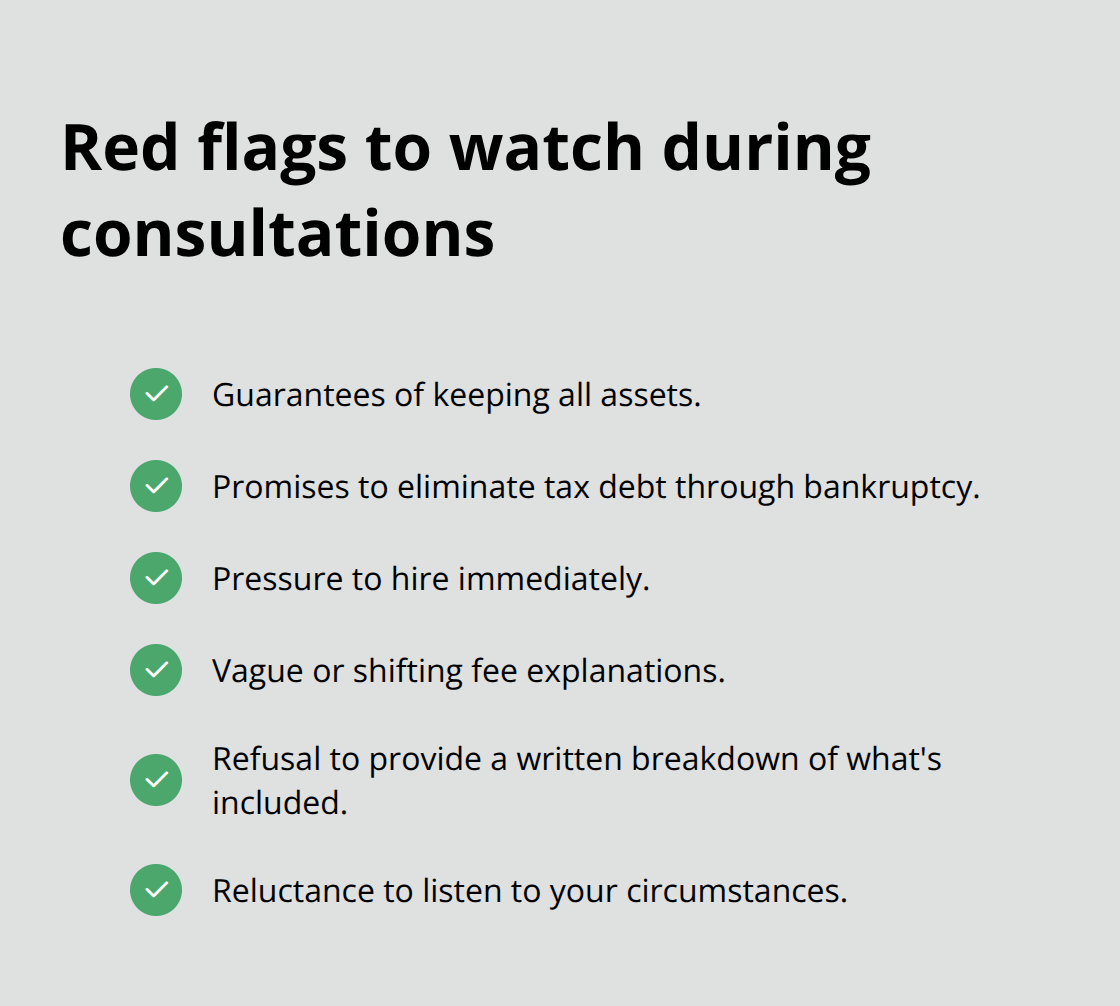
Pay attention to whether they listen to your circumstances or immediately push you toward filing. Red flags include guarantees of keeping all assets, promises to eliminate tax debt through bankruptcy, or pressure to hire them on the spot. Transparent attorneys explain fees upfront, typically ranging from $1,000 to $3,500 for Chapter 7 cases in Florida, and break down what’s included.
Identify Warning Signs in Attorney Behavior
Attorneys who make unrealistic promises about outcomes lack credibility. Those who pressure you to file without reviewing your full financial picture (pay stubs, tax returns, bank statements, asset titles) operate recklessly. Poor communication-delayed responses to calls or vague explanations of fees-signals that you won’t receive the attention your case deserves.
The U.S. Trustee website lists approved credit counseling agencies in your area, which many attorneys can coordinate for you. An attorney who handles this coordination smoothly demonstrates operational competence. When you meet with potential counsel, notice whether they ask detailed questions about your debts, assets, income, and dependents. This thorough approach indicates they will prepare your case properly and protect your rights throughout the Chapter 7 process.
What Happens After You File Chapter 7 in Florida
The Automatic Stay Stops Creditor Collection Immediately
The moment you file Chapter 7 bankruptcy in Florida, federal law triggers an automatic stay that halts all creditor collection activity instantly. Creditors must stop calling, sending letters, initiating lawsuits, and pursuing wage garnishments the second your petition reaches the court. This protection applies to credit card companies, medical debt collectors, and personal loan creditors, though it does not stop child support or alimony obligations. The automatic stay gives you breathing room to reorganize your finances without constant harassment.
Your Trustee Assignment and Meeting Timeline
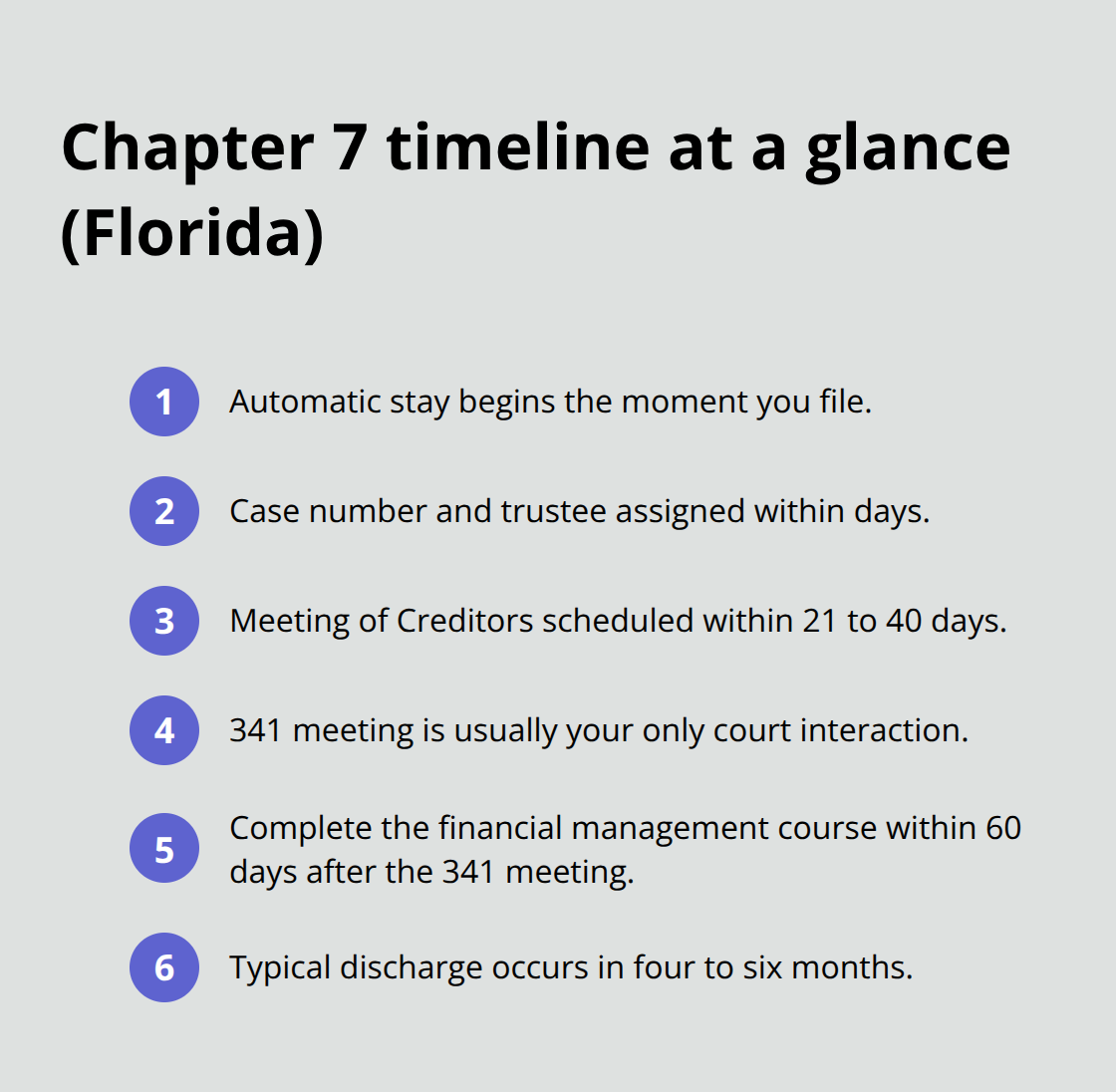
You’ll receive a case number and trustee assignment within days of filing, and the court schedules your Meeting of Creditors within 21 to 40 days. This meeting, also called the 341 meeting after the relevant bankruptcy code section, is where the trustee assigned to your case reviews your financial documents and asks questions under oath. Most Chapter 7 cases involve no judge appearance; the trustee meeting is your primary court interaction.
What the Trustee Examines and How to Prepare
The trustee’s role is to examine your assets and determine whether anything can be liquidated to pay creditors. In many cases, your personal property and home remain protected under Florida’s generous exemption laws, meaning the trustee finds nothing to sell. You must bring original documents to the meeting, including pay stubs from the past 60 days, tax returns, bank statements, and proof of asset ownership. Bring government-issued photo identification as well. The trustee typically asks straightforward questions about your income, debts, assets, and recent financial transactions. Proper preparation helps you answer confidently and accurately under oath.
The Path to Discharge and Debt Elimination
From filing to discharge, the typical Chapter 7 timeline runs four to six months. After your 341 meeting, you must complete a personal financial management course within 60 days to receive your discharge. The discharge is the final order that eliminates your qualifying debts permanently, meaning creditors cannot pursue collection afterward. Some debts, including student loans, recent taxes, and child support, survive bankruptcy and remain your obligation. Once discharged, you can rebuild credit and move forward without the weight of discharged obligations. Understanding which debts disappear and which remain is critical as you prepare for what comes next in your financial recovery.
Red Flags That Disqualify a Florida Bankruptcy Attorney
Attorneys Who Guarantee Specific Outcomes Lack Credibility
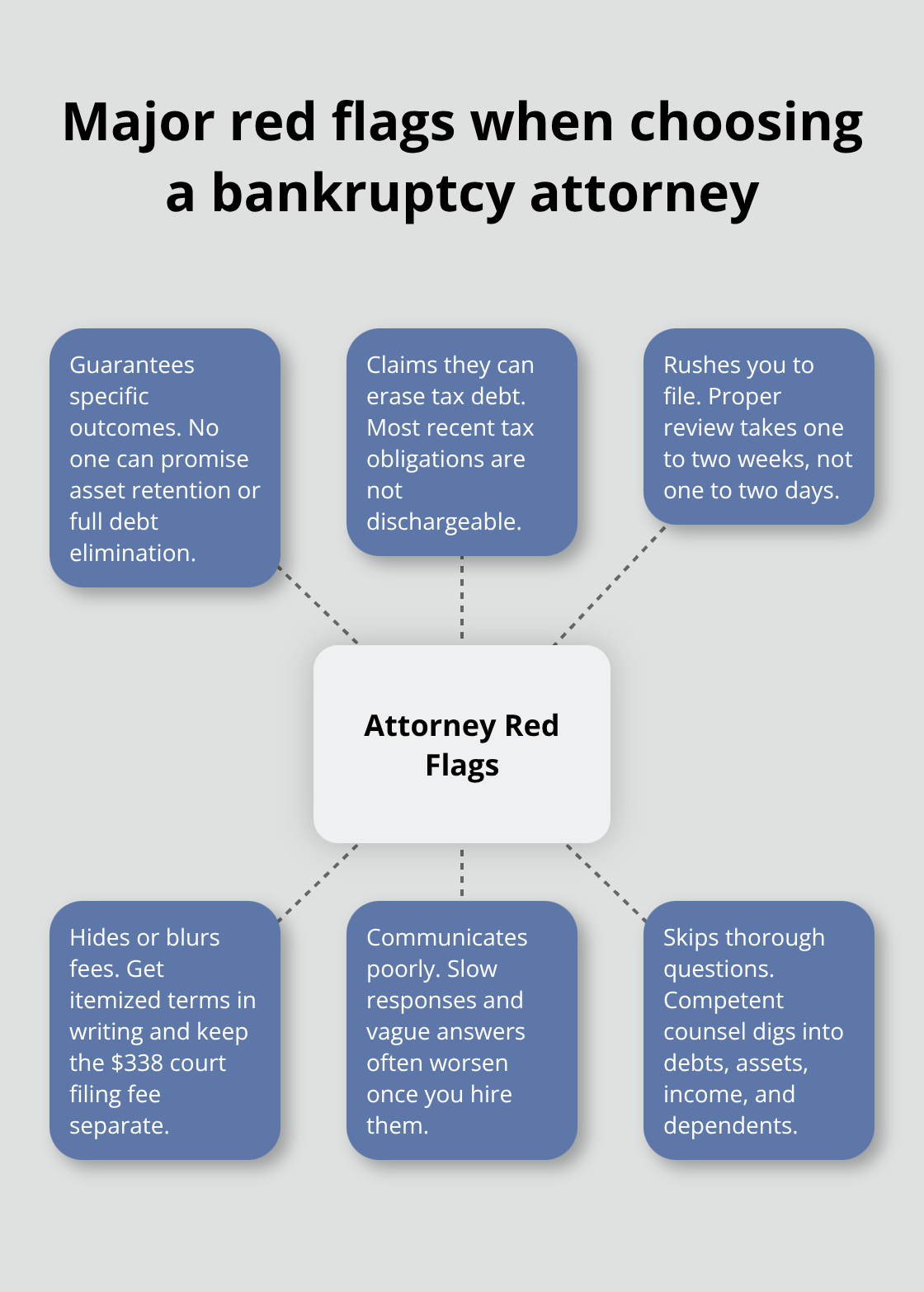
Attorneys who guarantee specific outcomes in Chapter 7 bankruptcy operate either incompetently or unethically. Federal bankruptcy law contains too many variables for anyone to promise you’ll keep your home, eliminate all debts, or walk away with specific assets intact. If an attorney tells you they can guarantee keeping your car or house, walk away immediately. The only honest answer is that outcomes depend on your individual circumstances, Florida’s exemption laws, the trustee’s findings, and which debts qualify for discharge.
Guarantees signal either incompetence or intentional deception, both of which will damage your case. Attorneys who promise to eliminate tax debt through Chapter 7 are also misleading you; most recent tax obligations survive bankruptcy and remain your legal responsibility. These false promises reveal that the attorney prioritizes your money over your actual financial recovery.
Pressure to File Without Thorough Financial Review
Legitimate attorneys request and review your pay stubs from the past 60 days, tax returns for the previous two years, bank statements, proof of asset ownership, car titles, and a complete list of creditors before recommending filing. This process typically takes one to two weeks, not one to two days. If an attorney pushes you to sign documents and pay fees before gathering this information, they cut corners that will create problems during your 341 meeting or result in improper filings rejected by the court.
The U.S. Trustee’s office reported that cases with incomplete financial documentation face delays averaging 30 to 60 days. You should feel no rush; Chapter 7 filing deadlines rarely exist except in foreclosure situations, and even then, proper preparation matters more than speed. An attorney who respects your case will invest time upfront to protect your rights throughout the process.
Vague or Hidden Fee Structures Indicate Poor Practices
Transparent attorneys explain their fee structure upfront, typically ranging from $1,000 to $3,500 for Chapter 7 cases in Florida, and itemize what’s included-such as document preparation, court filing fees, 341 meeting preparation, and post-discharge guidance. Vague fee discussions, hidden charges revealed only after you hire them, or refusal to put fees in writing indicate poor business practices that extend to how they handle your case.
Request a written fee agreement before signing anything, and verify that the $338 court filing fee is separate from attorney fees. Attorneys who hide costs or refuse to itemize services will likely hide other problems in your case as well. Clear fee communication reflects an attorney’s commitment to transparency and client protection.
Poor Communication Patterns Predict Worse Service Later
Poor communication patterns during your initial consultation predict worse communication during your case. If an attorney takes days to return your call, gives vague answers to straightforward questions, or becomes defensive when you ask about their experience with Chapter 7 cases, these behaviors won’t improve after you hire them. You need an attorney who responds promptly, explains processes clearly, and welcomes your questions without irritation.
During consultations, notice whether they ask detailed questions about your household situation, dependents, income sources, and specific debts. Thorough questioning indicates they will prepare your case properly and anticipate problems before they arise. An attorney who listens carefully to your circumstances will protect your interests far better than one who treats your case as routine.
Final Thoughts
Finding the right local Florida bankruptcy attorney requires you to balance experience, transparency, and genuine communication. The strongest candidates demonstrate deep Chapter 7 knowledge through specific case numbers, clear fee structures, and willingness to review your complete financial picture before recommending filing. They listen to your circumstances, ask detailed questions about your household and debts, and explain realistic outcomes based on Florida’s exemption laws and federal bankruptcy code.
Local representation matters because your attorney must understand Florida’s specific exemption protections, the preferences of your assigned trustee, and the procedural requirements of your bankruptcy court. A local Florida bankruptcy attorney familiar with your region’s court practices navigates the 341 meeting more effectively and anticipates problems before they arise. They coordinate your credit counseling requirement, prepare you for trustee questioning, and guide you through the four-to-six-month timeline to discharge without unnecessary delays.
After selecting your attorney, provide all requested documents promptly and ask questions whenever something remains unclear. Bring original pay stubs, tax returns, bank statements, and asset documentation to your 341 meeting, and answer the trustee’s questions honestly and directly. Contact us at Harnage Law, PLLC to discuss your situation and explore whether Chapter 7 bankruptcy offers the fresh financial start you need.