
Chapter 7 bankruptcy in Florida moves faster than many people expect, but the timeline depends on several factors unique to your situation. Understanding each stage helps you prepare mentally and financially for what’s ahead.
At Harnage Law, PLLC, we’ve guided hundreds of Floridians through this process and know exactly what to watch for. This guide breaks down the chapter 7 timeline Florida residents face, from filing day to discharge.
How Long Does Chapter 7 Take in Florida
Average Timeline from Filing to Discharge
Most Chapter 7 bankruptcies in Florida reach discharge between 90 and 120 days from filing, though cases can extend to 180 days depending on circumstances. The U.S. Trustee’s office oversees the timeline, and federal rules keep the process moving predictably. Day one starts when you file your petition in federal court in your district. Within 14 days, you must submit your complete financial schedules, list of creditors, and certificate of credit counseling. Between days 20 and 40, the 341 meeting of creditors occurs, which is your mandatory appearance before the trustee.
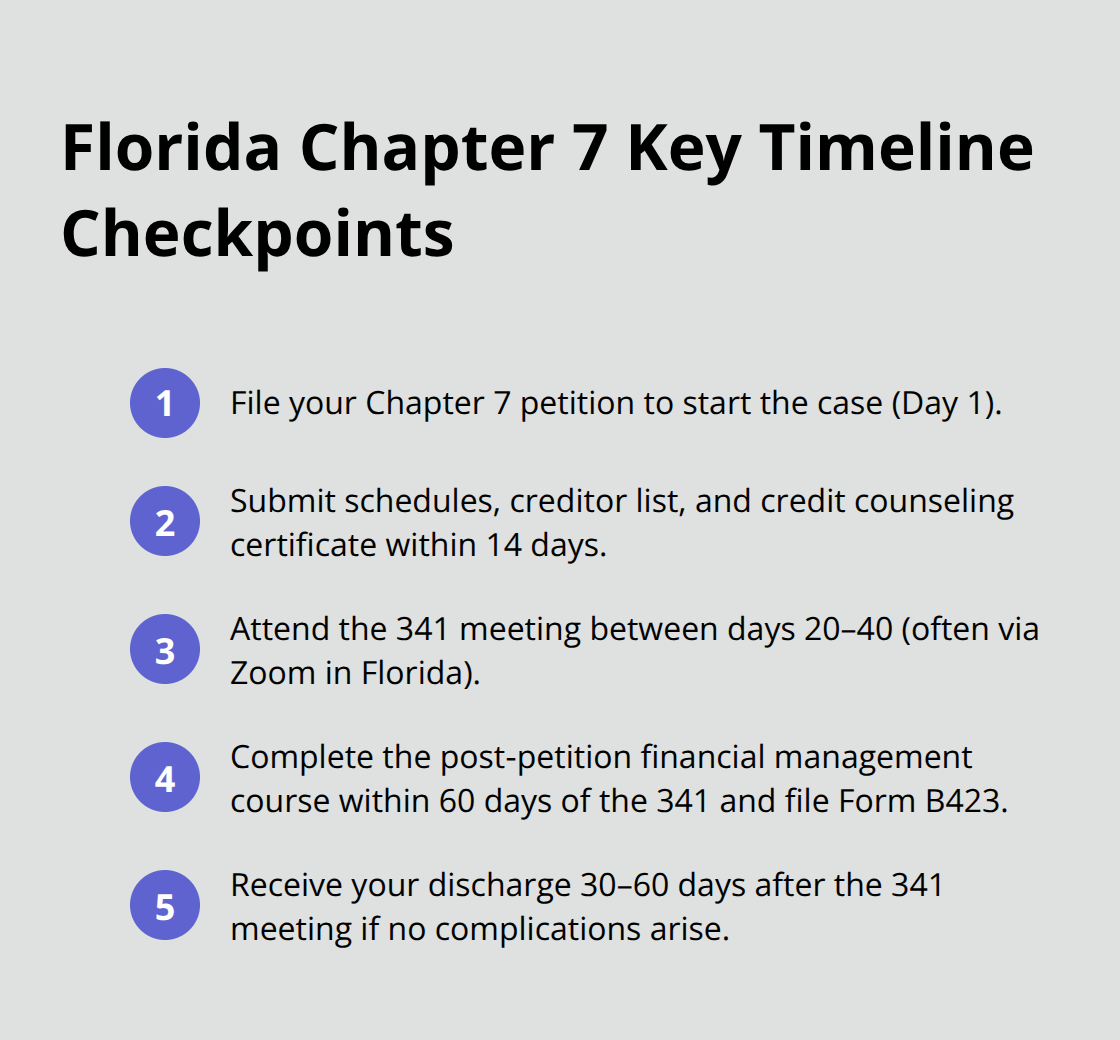
This meeting is not a court hearing and no judge is present; the trustee simply reviews your finances under oath and creditors can ask questions if they attend.
The 341 Meeting and Required Documentation
Most 341 meetings in Florida now happen virtually via Zoom, and you must send required documents to the trustee at least 14 days beforehand, including government-issued photo ID, recent pay stubs, and bank statements covering the filing date. Within 60 days of your 341 meeting, you must complete post-petition financial management training and file Form B423 with the court. The discharge order typically arrives 30 to 60 days after the 341 meeting, assuming no complications arise.
How Florida Courts Handle Chapter 7 Cases
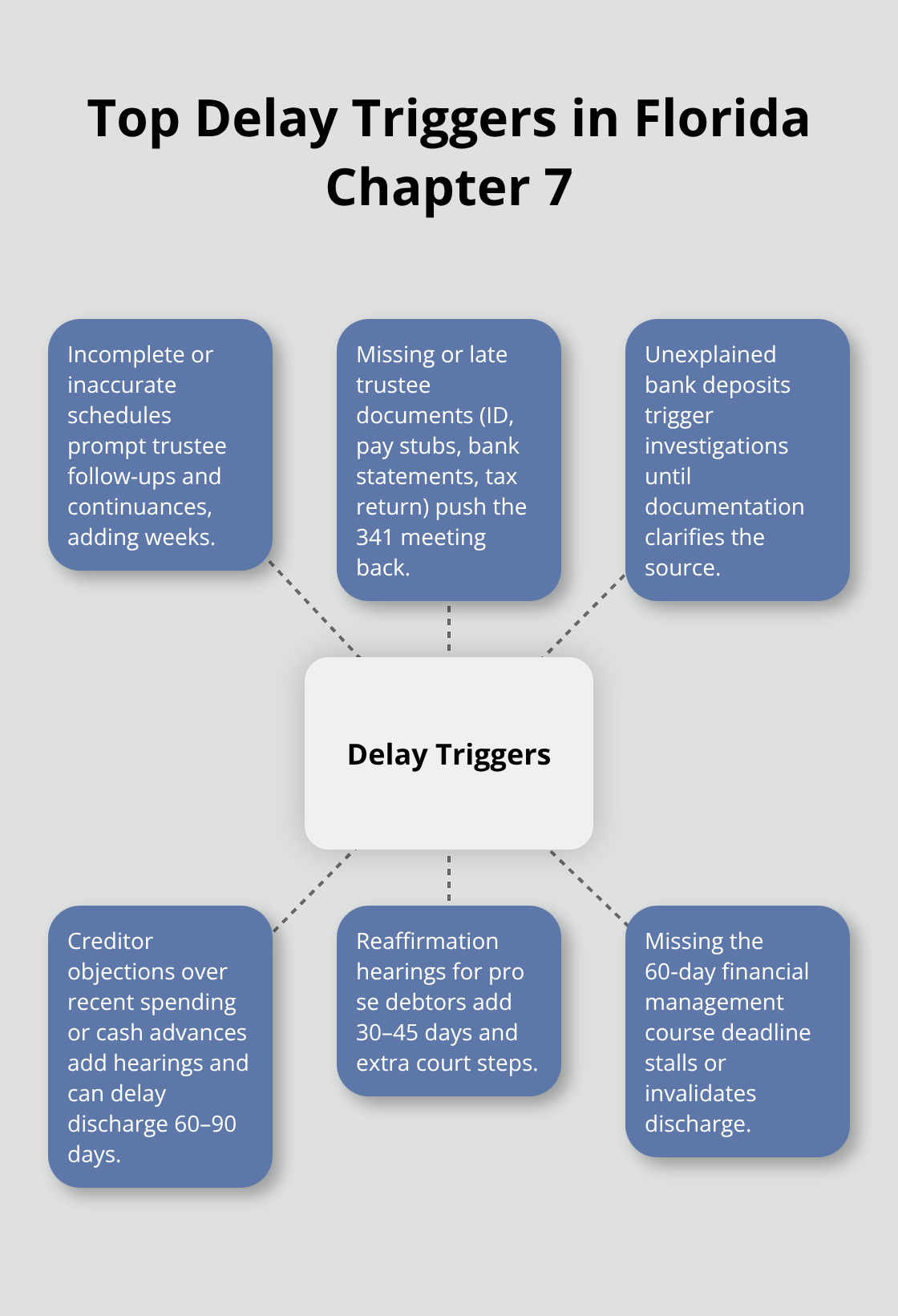
Florida courts handle Chapter 7 cases efficiently because the Southern District of Florida, Middle District of Florida, and Northern District of Florida all follow consistent federal rules and the U.S. Trustee’s procedures. Incomplete documentation creates the biggest delay risk; if you miss deadlines for filing schedules or miss your 341 meeting, the court can dismiss your case entirely. Creditor objections rarely occur in straightforward cases where you have few assets and no reaffirmation agreements, but they add weeks if they happen. If you need to reaffirm a debt to keep property like a vehicle, the process adds complexity; unrepresented debtors require a judge’s approval at a reaffirmation hearing, while represented debtors sometimes avoid court.
Preparing to Avoid Delays
Gather six months of income documentation, organize all bank statements before filing, and confirm your credit counseling certificate comes from an agency on the U.S. Department of Justice approved list to prevent filing delays. These steps position you to move through the process without unnecessary setbacks. Those who are significantly behind on debts may benefit from taking legal action sooner rather than later, as Chapter 7 can stop creditor harassment. Your next critical milestone arrives when you prepare for the 341 meeting itself-understanding what the trustee expects and what documents you need will determine whether this meeting moves quickly or stalls your case.
What Happens at Each Critical Checkpoint
Filing Day and the Automatic Stay
Filing day marks the official start of your Chapter 7 case, and the next 14 days demand your full attention. You must submit your complete petition, schedules of assets and liabilities, list of creditors, statement of financial affairs, and certificate of credit counseling to the federal court. The filing fee totals $338, though you can request installment payments if approved by the court. Missing this 14-day deadline results in immediate dismissal, so mark it on your calendar and set reminders. The court issues an automatic stay that stops wage garnishments, foreclosure notices, and creditor calls within hours of filing. This breathing room is real and immediate, not theoretical. The U.S. Trustee’s office receives your filing and appoints a Chapter 7 trustee to oversee your case. Within days, you receive official notice with your 341 meeting date, trustee contact information, and all remaining deadlines.
Preparing Documents for the Trustee
The trustee requests specific documents well before your meeting, including government-issued photo ID, recent pay stubs, bank statements covering your filing date, and your most recent federal tax return. Send these documents securely to the trustee at least 14 days before the 341 meeting to avoid delays. Many filers underestimate how thorough the trustee review is. The trustee examines every bank statement transaction, questions unexplained deposits, and reviews your income against Florida median thresholds for your household size. If your income exceeded the Florida median before filing, the trustee verifies you passed the means test. If you own property with equity, the trustee evaluates whether it qualifies as exempt under Florida law and whether liquidating it would benefit creditors.
The 341 Meeting and What Follows
Your 341 meeting typically occurs 20 to 40 days after filing, and most Florida meetings now happen via Zoom. Attend from a quiet location with strong internet, bring your photo ID, and answer the trustee’s questions directly and honestly. Creditors rarely attend, but when they do, they ask about your debts and whether you intend to reaffirm loans on vehicles or other secured property. After the 341 meeting concludes, you must complete post-petition financial management training within 60 days and file Form B423 with the court. This course differs from pre-filing credit counseling and takes about two hours; most providers offer online, phone, or in-person options. Failure to complete this course delays your discharge indefinitely.
Discharge and Debt Elimination
The discharge order arrives 30 to 60 days after you satisfy all requirements, and it legally eliminates qualifying unsecured debts like credit cards, medical bills, and personal loans. Student loans, child support, alimony, recent taxes, and restitution obligations survive discharge and remain your responsibility. Once discharge is granted, creditors cannot pursue collection actions on discharged debts, and your credit report reflects the bankruptcy as resolved rather than ongoing. Understanding which debts disappear and which remain helps you plan your financial recovery, and your next step involves learning how to rebuild credit and navigate life after discharge.
What Causes Most Florida Chapter 7 Cases to Stall
Documentation Errors and Filing Mistakes
Documentation errors represent the single largest cause of delays in Florida Chapter 7 cases, and incomplete schedules trigger dismissals faster than any other filing mistake. The court demands exact information about every asset, liability, income source, and monthly expense within 14 days of filing. If you list a vehicle but fail to disclose its actual value, the trustee flags this discrepancy and requests corrections, which extends your timeline by weeks. If bank statements show large deposits you cannot explain, the trustee investigates whether those funds represent taxable income or borrowed money, delaying your 341 meeting until documentation clarifies the source.
The U.S. Trustee’s office enforces these requirements strictly because incomplete petitions indicate either carelessness or intentional misrepresentation, neither of which the court tolerates.
Creditor Objections and Fraud Concerns
Creditor objections occur less frequently than documentation problems but carry serious consequences when they arise. A creditor may object to your discharge if they believe you fraudulently incurred debt immediately before filing, and this objection forces a separate hearing that postpones your discharge by 60 to 90 days. Red flags that trigger creditor scrutiny include recent luxury purchases, large cash withdrawals, or sudden debt accumulation in the months before filing. The trustee reviews your financial history for these patterns and alerts creditors if suspicious activity appears in your petition.
Reaffirmation Agreements and Court Hearings
Reaffirmation agreements, where you choose to keep paying a debt like a vehicle loan instead of discharging it, add complexity if you lack attorney representation. Unrepresented debtors must attend a reaffirmation hearing where a judge determines whether keeping the debt serves your best interest, and this hearing alone delays discharge by 30 to 45 days. Represented debtors sometimes avoid court hearings through negotiation with creditors before the 341 meeting occurs.
How Attorney Representation Accelerates Your Case
Federal court records show that unrepresented filers experience case dismissals at roughly three times the rate of represented filers. An attorney verifies documentation accuracy before filing, manages trustee communication directly, and anticipates creditor objections by reviewing your petition for red flags. Organizing your six months of income documentation before contacting an attorney prevents filing delays that would otherwise push your case back by weeks.
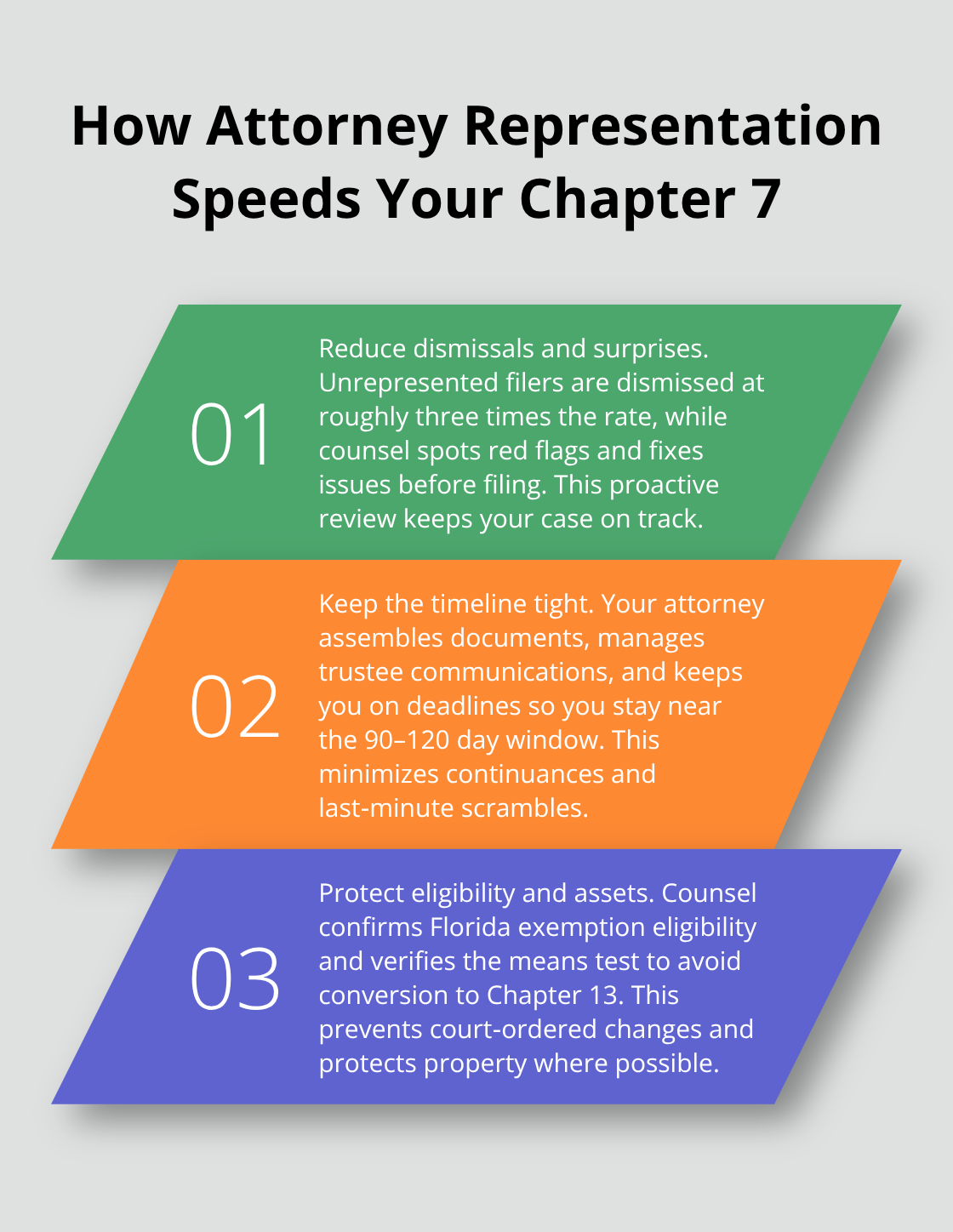
If you own property, an attorney determines Florida exemption eligibility upfront so the trustee encounters no surprises during asset evaluation. An attorney also reviews your means test calculations to confirm you qualify for Chapter 7 rather than Chapter 13, avoiding the scenario where the court converts your case after you’ve already filed. These proactive measures compress your timeline from the typical 90 to 120 days down to the faster end of that range, and they protect you from the dismissals and delays that plague unrepresented filers. Missing the 60-day financial management training deadline invalidates your discharge even if every other requirement is satisfied, making it the most common preventable mistake filers encounter.
Final Thoughts
Your Chapter 7 timeline in Florida spans roughly 90 to 120 days from filing to discharge, but this timeline only holds if you avoid the documentation errors and missed deadlines that derail unrepresented filers. The process moves predictably when you understand each checkpoint: filing day, the 14-day document submission window, the 341 meeting between days 20 and 40, the 60-day financial management training requirement, and finally the discharge order. Missing any single deadline extends your case by weeks or triggers dismissal entirely, which is why preparation before filing matters more than speed during the process.
Unrepresented filers face dismissal rates three times higher than those with representation, and they encounter delays from documentation errors, creditor objections, and reaffirmation complications that could have been prevented. An attorney verifies your means test calculations upfront, confirms your exemption eligibility, and catches filing errors before the court rejects your petition. This proactive approach compresses your Chapter 7 timeline Florida residents experience and protects you from preventable mistakes that extend cases by months.
We at Harnage Law, PLLC help Florida residents move through Chapter 7 bankruptcy with clarity and confidence, guiding you through every step from pre-filing preparation through discharge while stopping creditor harassment and preventing wage garnishments. If you’re ready to understand your specific timeline and whether Chapter 7 fits your situation, contact us to discuss your case. The sooner you take action, the sooner you can move forward.