Florida homeowners facing financial hardship often wonder: if I file bankruptcy what happens to my house? The answer depends largely on Florida’s powerful homestead exemption laws.
We at Harnage Law, PLLC see clients protect their homes through Chapter 7 bankruptcy regularly. Florida offers some of the strongest home protection laws in the United States, allowing many homeowners to keep their primary residence even during bankruptcy proceedings.
How Does Florida’s Homestead Exemption Protect Your Home
Unlimited Protection for Long-Term Residents
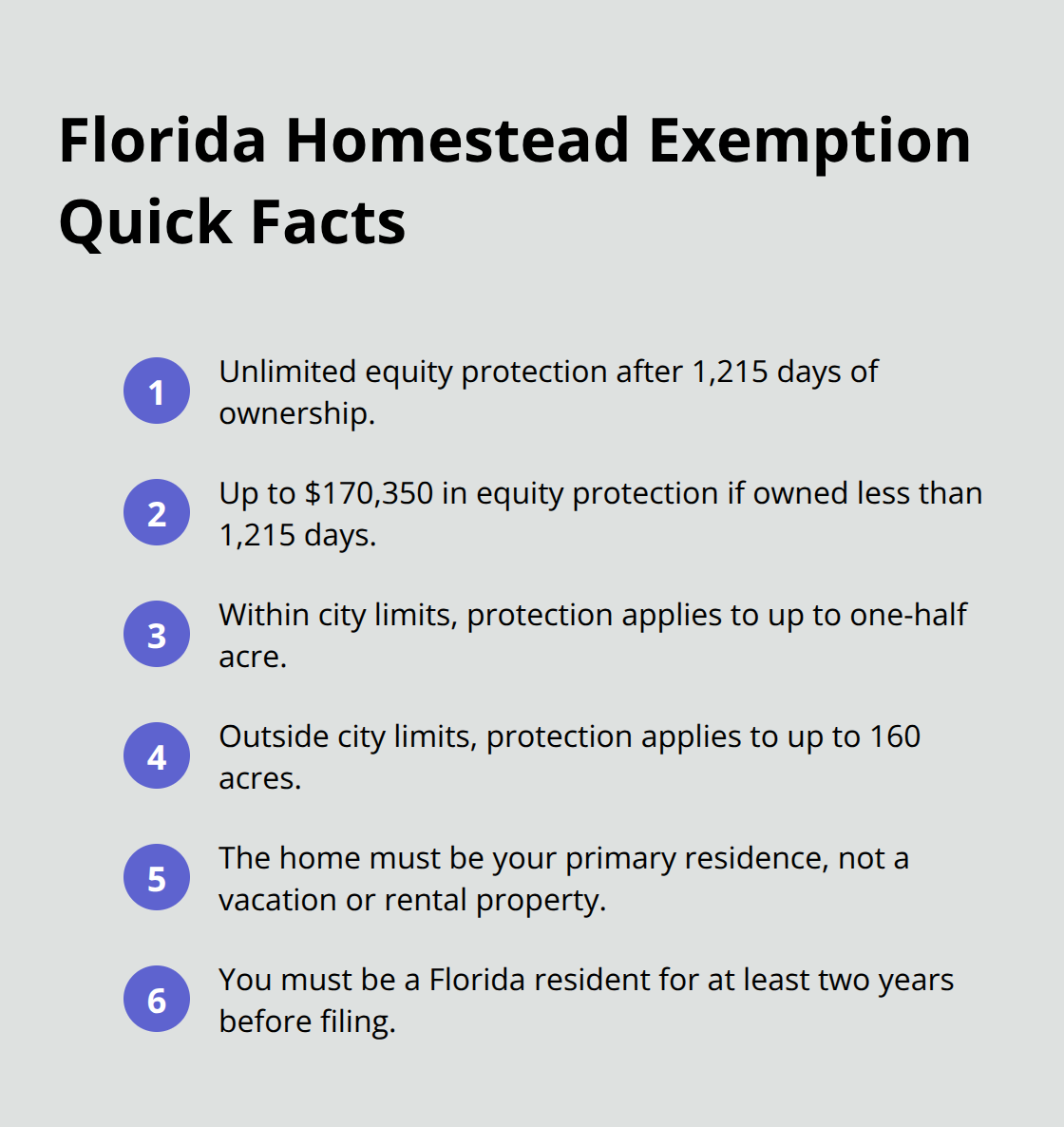
Florida’s homestead exemption stands as the most generous home protection law in America. Homeowners who have owned their primary residence for at least 1,215 days receive unlimited equity protection during Chapter 7 bankruptcy. This means your home’s value could be $500,000, $1 million, or even higher, and creditors cannot touch it.
The 1,215-day requirement equals approximately 3.3 years of continuous ownership. Even if you own your home for less than this period, Florida still protects up to $170,350 in home equity (which exceeds most other states’ protection levels).
Size Restrictions and Primary Residence Rules
Your protected property cannot exceed specific size limits to qualify for homestead protection. Within city limits, the exemption covers up to half an acre of land. Outside municipal boundaries, you can protect up to 160 acres of rural property.
The home must serve as your primary residence, not a vacation property or rental investment. You must also be a Florida resident for at least two years before you file bankruptcy to claim these state exemptions. Properties that exceed these acreage limits lose their homestead protection, which makes the excess land vulnerable to creditors during bankruptcy proceedings.
What Happens When You Don’t Qualify
Homeowners who fail to meet the 1,215-day ownership requirement or acreage limits face different outcomes. Chapter 13 bankruptcy often provides better protection for these situations and allows you to keep your home while you pay creditors through a structured repayment plan.
Some homeowners with excessive equity beyond the $170,350 limit might consider Chapter 13 instead of Chapter 7 to avoid the loss of their home. The key lies in your understanding of these requirements before you file and your choice of the right bankruptcy chapter for your specific situation.
However, homestead protection alone doesn’t guarantee you’ll keep your home. The automatic stay and mortgage reaffirmation process play equally important roles in your home’s protection during Chapter 7 bankruptcy.
What Protection Does Chapter 7 Provide for Florida Homeowners
Immediate Foreclosure Protection Through Automatic Stay
The moment you file Chapter 7 bankruptcy, federal law creates an automatic stay that immediately halts all creditor collection activities, including foreclosure proceedings. This protection stops sheriff sales, eviction notices, and creditor phone calls within 24 hours of your filing.
The automatic stay gives you breathing room to address your mortgage situation without the immediate threat of home loss. However, this protection has limits. Mortgage lenders can request relief from the automatic stay if you fall significantly behind on payments or fail to maintain property insurance.
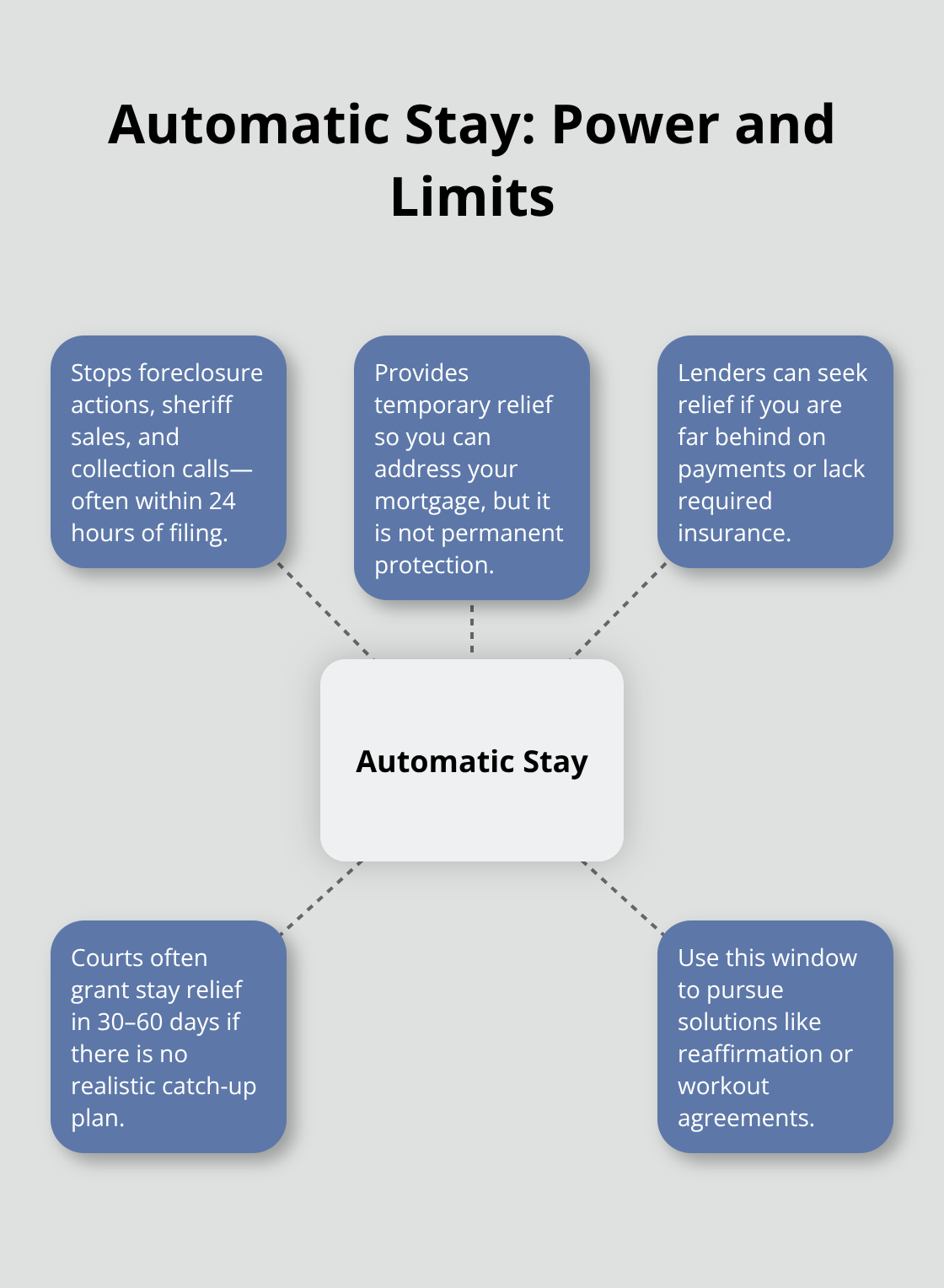
Most courts grant these motions within 30 to 60 days if homeowners cannot demonstrate a realistic plan to catch up on missed payments. The stay provides temporary relief, not permanent protection from foreclosure.
Mortgage Reaffirmation and Payment Continuation
Reaffirmation agreements allow you to keep your home when you legally agree to remain responsible for your mortgage debt after bankruptcy discharge. This process requires court approval and a hearing where the judge determines if the agreement serves your best interests.
You must be current on mortgage payments or have a written agreement with your lender to cure any default. The reaffirmation agreement restarts your personal liability for the mortgage debt (which means the lender can pursue you personally if you default later).
Without reaffirmation, you can still keep your home when you continue payments, but the lender cannot pursue you personally for any deficiency if foreclosure occurs later. This option provides more flexibility but less certainty about your long-term home ownership.
When Homestead Protection Fails
Homestead exemption cannot save your home if you stop making mortgage payments. Foreclosure remains possible even with unlimited equity protection because your mortgage represents a secured debt that survives bankruptcy discharge.
Properties with excessive non-homestead equity face trustee liquidation in Chapter 7 cases. If your home equity exceeds exemption limits and you own the property for less than 1,215 days, the bankruptcy trustee can force a sale to pay creditors.
Homeowners who commit bankruptcy fraud or fail to properly claim exemptions risk the loss of their homestead protection entirely. These situations highlight why proper planning and legal guidance matter when you navigate Chapter 7 bankruptcy with significant home equity.
The protection Chapter 7 provides sets the foundation for your financial recovery, but your actions after bankruptcy discharge determine your long-term success as a Florida homeowner.
How Do You Rebuild Your Financial Life After Chapter 7 in Florida
Credit Recovery Timeline and Strategic Actions
Your credit score typically drops 130 to 200 points immediately after Chapter 7 discharge, but Florida homeowners who keep their homes gain a significant advantage in recovery. Continue to make mortgage payments on time because this becomes your strongest positive credit factor. Your mortgage history appears on credit reports throughout the bankruptcy recovery period and demonstrates your ability to handle major financial obligations responsibly.
Add a secured credit card within 60 days of discharge, and start with a $500 to $1,000 deposit. Capital One and Discover offer secured cards to recent bankruptcy filers, and these cards convert to unsecured accounts after 12 months of timely payments. Your credit score should improve 50 to 80 points within the first year when you maintain consistent payment patterns on your mortgage and new credit accounts.
Refinance Strategy and Timeline
Wait exactly two years after your Chapter 7 discharge before you apply for conventional mortgage refinance. FHA loans become available 24 months post-discharge, while conventional loans through Fannie Mae require a two-year wait period. VA loans for eligible veterans have the shortest wait period at just two years with acceptable credit scores above 620.
Your home equity position determines refinance success more than your bankruptcy history. Florida home values increased 6.8% in 2023 according to Zillow data, which means many homeowners who kept their homes through bankruptcy now have substantial equity for refinance. Prepare for interest rates 1 to 2 percentage points higher than prime rates when you attempt your first refinance.
Property Management After Discharge
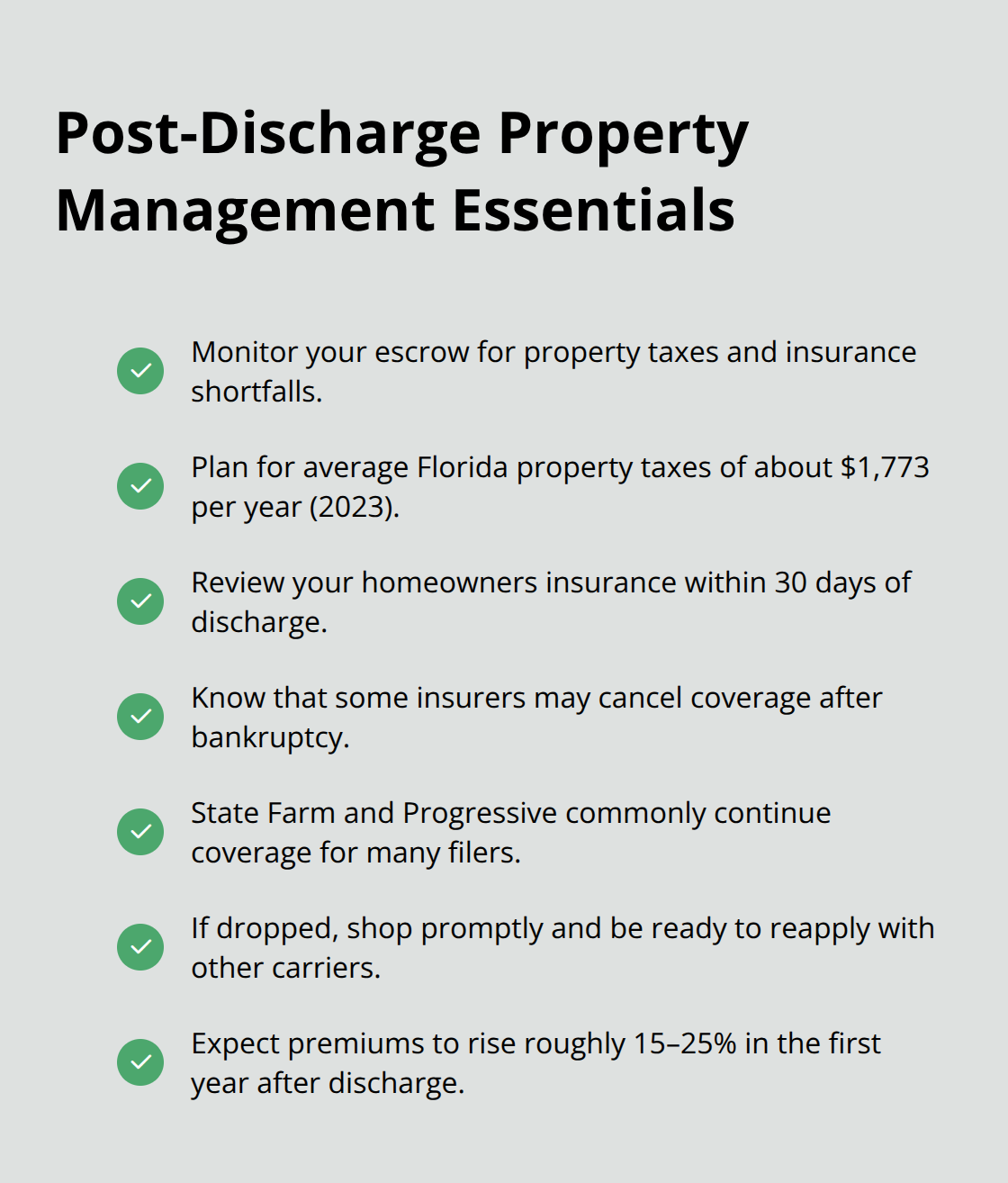
Property taxes and homeowners insurance require immediate attention after bankruptcy discharge. Your mortgage servicer continues to collect these payments through escrow, but you become personally liable for any shortfalls. Florida property taxes averaged $1,773 annually in 2023 (significantly below the national average of $3,096), which helps keep your costs manageable during recovery.
Review your homeowners insurance policy within 30 days of discharge because some insurers cancel policies for bankruptcy filers. State Farm and Progressive typically continue coverage, while other companies may require new applications. You must shop for insurance when your current carrier drops you, but expect premiums to increase 15 to 25% during the first year after bankruptcy.
Final Thoughts
Florida’s homestead exemption provides unmatched protection for homeowners who navigate Chapter 7 bankruptcy. The unlimited equity protection for properties owned over 1,215 days, combined with substantial protection for newer homeowners, makes Florida one of the most homeowner-friendly bankruptcy jurisdictions in America. Success requires strategic planning before you file, current mortgage payments, and proper understanding of your property’s exemption status.
The automatic stay provides immediate foreclosure relief while reaffirmation agreements offer long-term mortgage security. Your path forward involves consistent mortgage payments, strategic credit rebuilding, and proper property management. Most Florida homeowners who wonder “if I file bankruptcy what happens to my house” find they can keep their homes while they eliminate overwhelming debt.
We at Harnage Law, PLLC guide clients through every step of the Chapter 7 process, helping protect assets while we provide fresh financial starts. Professional legal guidance becomes essential when you face complex equity situations, timing concerns, or mortgage default issues that could jeopardize your home ownership during bankruptcy proceedings.