Chapter 7 bankruptcy in Florida wipes out most of your debts, but it also impacts your credit score significantly. The good news is that a fresh start after bankruptcy is absolutely possible with the right strategy and commitment.
We at Harnage Law, PLLC have helped countless Floridians navigate life after discharge and rebuild their financial foundation. This guide walks you through the concrete steps to restore your credit, stabilize your finances, and move forward with confidence.
Understanding Your Credit After Chapter 7 Bankruptcy in Florida
Chapter 7 bankruptcy in Florida wipes out most of your debts, but it also impacts your credit score significantly. The good news is that a fresh start after bankruptcy is absolutely possible with the right strategy and commitment.
How Your Credit Score Changes After Chapter 7 Discharge
Chapter 7 bankruptcy hits your credit score hard in the immediate aftermath. According to The Balance, expect a drop of roughly 160 to 240 points, though the exact hit depends on your pre-bankruptcy score and overall credit history. If you filed with a higher credit score before bankruptcy, the damage tends to be more severe because lenders view the fall from a greater height as riskier. The silver lining is that this initial damage matters far less than you think. Credit scoring models place significantly more weight on the past 24 months of your payment history, which means your recent behavior after discharge carries more influence than the bankruptcy itself. Start making on-time payments immediately after discharge, and you can begin climbing back within months, not years.
The Real Timeline for Rebuilding in Florida
Your credit won’t recover overnight, but recovery happens faster than most people assume. Many people see meaningful improvements within about 12 months after discharge if they follow a disciplined payment plan. Within roughly two years of consistent on-time payments, you may qualify for a car loan or mortgage, even though Chapter 7 stays on your credit report for up to 10 years. This is the critical insight: lenders focus on what you’ve done recently, not what happened years ago. Start immediately by pulling your credit reports from all three bureaus and verifying that discharged debts show zero balances. Dispute any errors you find, because inaccuracies slow your recovery. Set up automatic payments for every bill to eliminate the risk of missed payments, which would derail your progress faster than anything else.
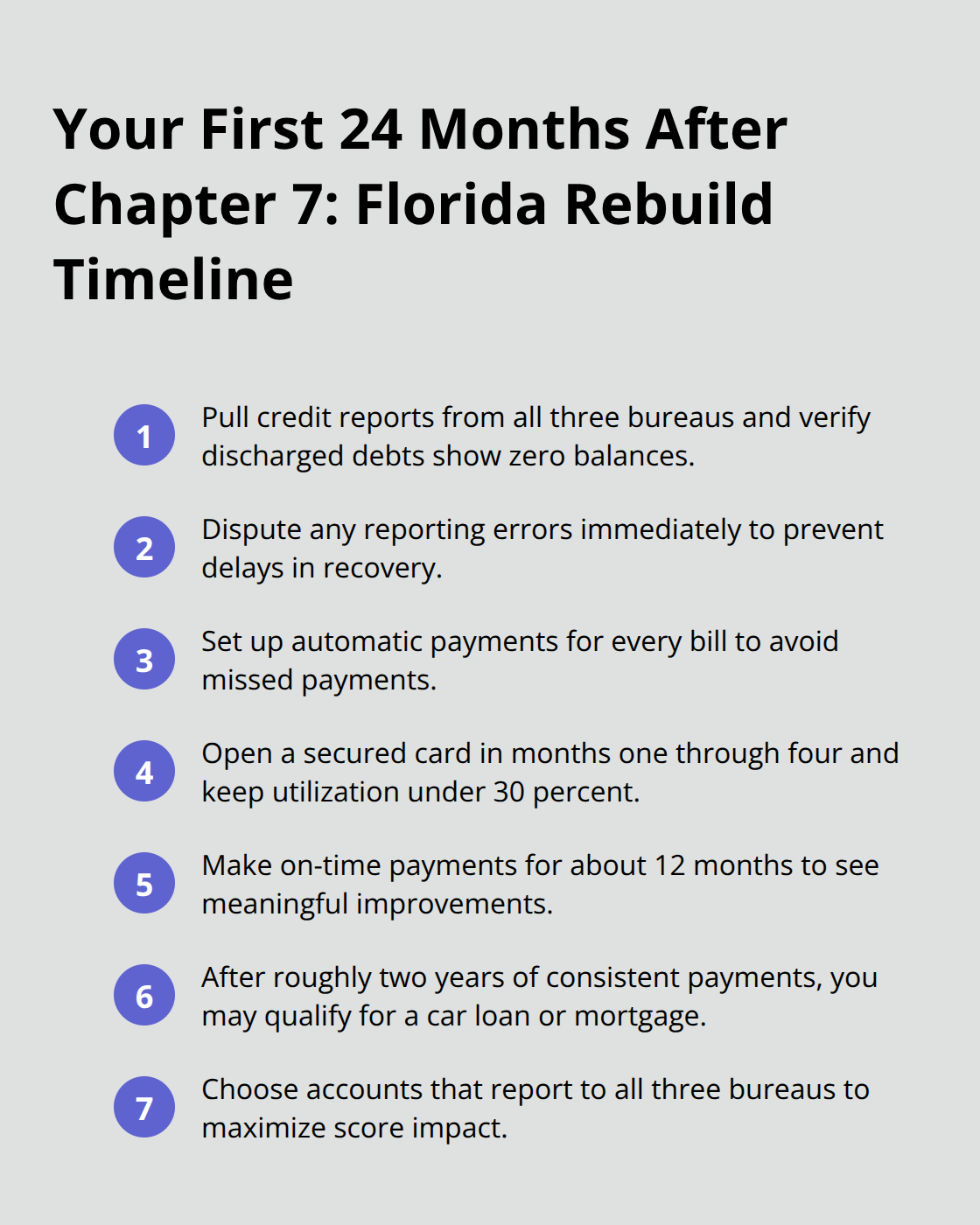
A secured credit card with a cash deposit works as your best tool during months one through four after discharge. Choose one that reports to all three major bureaus and keep your balance under 30 percent of your limit. This combination of accurate reporting and low utilization signals responsibility to lenders watching your file.
What Lenders Actually Evaluate After Your Discharge
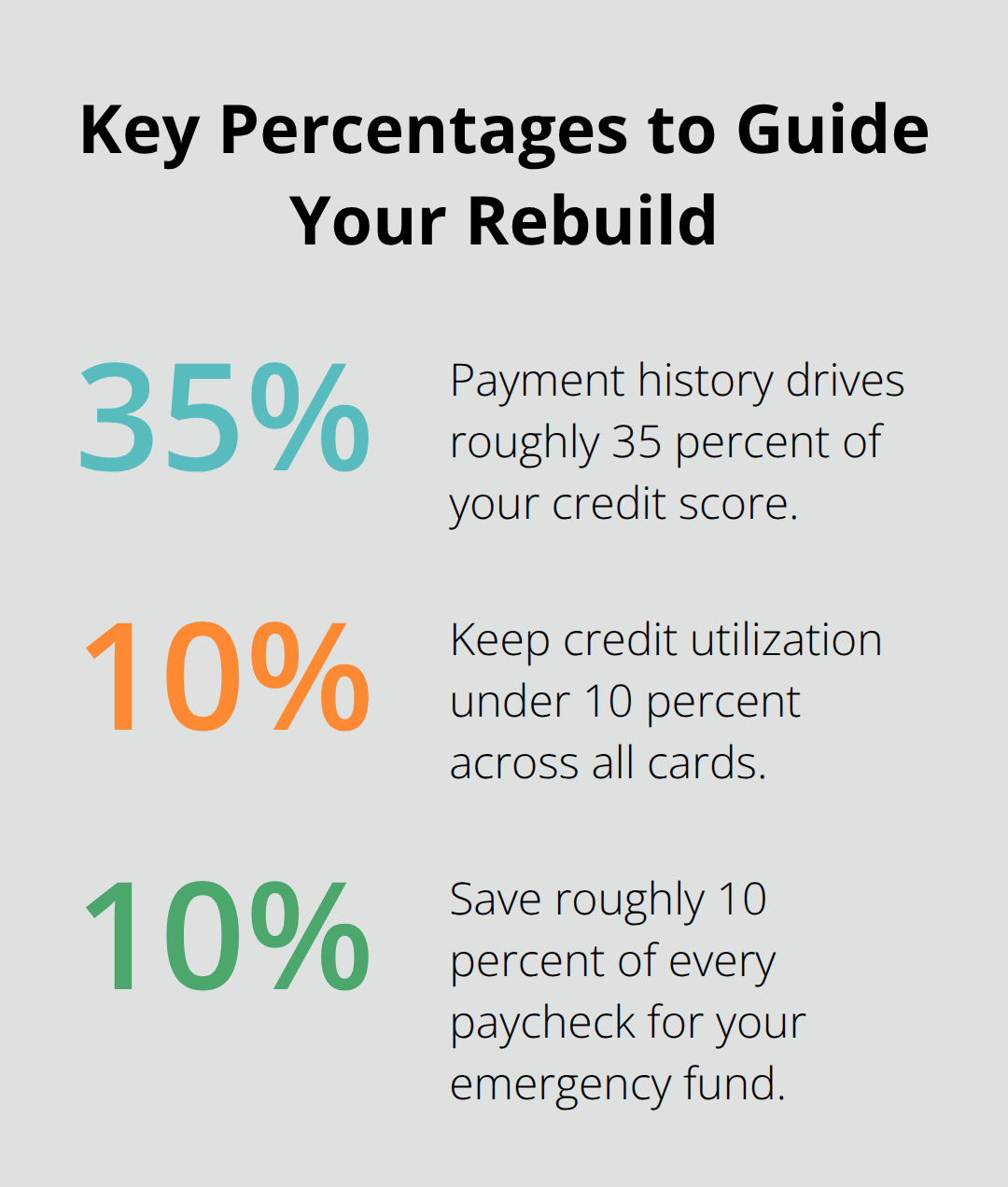
Creditors don’t care about your bankruptcy once discharge is final. They care about your job stability, current income, and most importantly, your payment behavior on any new accounts you open post-discharge. A single late payment in the first year after discharge can erase months of rebuilding work. Lenders scrutinize whether you’ve learned from your financial crisis or whether you’re headed toward the same problems again. This means your budget matters as much as your credit score. Live on a budget that accounts for fixed expenses, variable expenses, and irregular costs (like car repairs or medical bills). Try to save roughly 10 percent of every paycheck and build an emergency fund from day one, because a financial shock without savings will push you right back toward debt. After about one year of responsible secured card use and on-time payments on all other obligations, you may qualify for an unsecured credit card with better terms. Keep credit utilization below 10 percent across all your accounts to maximize your score growth. With a $1,000 limit, this means keeping your balance under $100 even though you have access to more credit. This discipline demonstrates that you understand the difference between available credit and credit you should actually use. Your next step involves taking concrete action to monitor your credit reports and catch errors that could slow your recovery.
Practical Steps to Rebuild Your Credit in Florida
Secured Credit Cards and Credit-Builder Loans
Secured credit cards and credit-builder loans serve as your two most practical tools for rebuilding after discharge, and the choice between them depends on your immediate financial situation. A secured credit card requires a cash deposit that becomes your credit limit, typically ranging from $200 to $2,500 (according to NerdWallet). You hand over the cash, receive a card tied to that deposit, and use it like any other card while the issuer reports your activity to all three major bureaus. This works because it removes the lender’s risk-they already have your money if you default. Before you apply, verify that the issuer reports to Equifax, Experian, and TransUnion. If they don’t report to all three, you waste the opportunity. Try for cards with zero or minimal annual fees, as many post-bankruptcy card offers come loaded with unnecessary charges that eat into your rebuilding efforts. A credit-builder loan operates differently: you borrow a small amount (usually $500 to $1,000) that the lender holds in a savings account while you make monthly payments. Once you pay off the loan, you gain access to the money. This approach works particularly well if you lack cash for a deposit or want to force yourself into a savings habit simultaneously. Both tools take roughly three to four months to show meaningful impact on your credit score, so patience matters more than speed.
Payment History as Your Foundation
Your payment history accounts for roughly 35 percent of your credit score, which means a single missed payment erases months of progress. Set up automatic payments for every obligation immediately after discharge-utilities, rent, insurance, phone bills, and your new secured card or credit-builder loan. Automation eliminates the human error that derails most people’s rebuilding efforts.
Within the first two months after discharge, pull your credit reports from annualcreditreport.com and verify that all discharged debts show zero balances and closed status. Inaccuracies are surprisingly common, and they directly slow your recovery. If you find errors, contact your lender first, then file free disputes with each bureau where the error appears. Equifax offers free monthly credit scores through their Core Credit program, which lets you track progress without paying for monitoring services.
Keeping Credit Utilization Low
After you secure your accounts and verify your reports, focus intensely on keeping credit utilization under 10 percent across all cards. This means if your secured card has a $1,000 limit, keep your balance under $100 even though you could charge more. The gap between your available credit and actual balance signals to lenders that you understand restraint. Many people make the mistake of viewing a higher credit limit as permission to spend more; it’s actually the opposite. Your goal is to demonstrate that you’ve learned the difference between what you can borrow and what you should borrow, and that lesson takes consistent action over months, not weeks. This discipline on your secured card creates the foundation you need to qualify for better credit products and lower interest rates. As your credit score climbs and your payment history strengthens, lenders will begin to view you differently-not as a bankruptcy filer, but as someone who has proven their ability to manage credit responsibly. Your next step involves taking concrete action to monitor your credit reports and catch errors that could slow your recovery, while also preparing for the larger financial decisions that come with a stabilized credit profile.
Life After Chapter 7 Bankruptcy in Florida
Rebuilding Your Financial Foundation
Life after Chapter 7 discharge demands a fundamental shift in how you approach money. The bankruptcy filing itself is behind you, but your financial habits determine whether you stay stable or slide backward into debt. According to Debt.org, the most successful people after bankruptcy treat their first year post-discharge like a financial reset button rather than a return to old patterns.
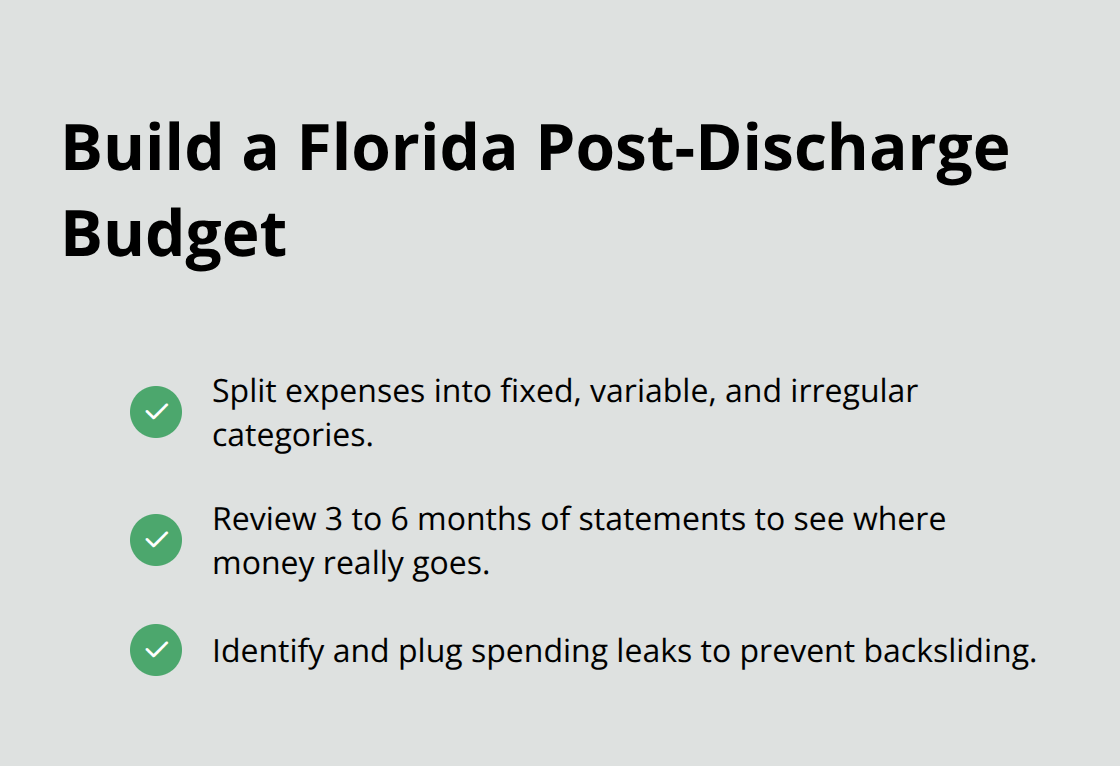
Start with a budget that splits your expenses into three categories: fixed costs like rent and insurance that stay the same each month, variable costs like groceries and gas that fluctuate, and irregular expenses like car maintenance or medical bills that pop up unpredictably. Review three to six months of your bank and credit card statements to identify where your money actually goes, not where you think it goes. Most people discover spending leaks in categories they never noticed before, and those leaks are often the reason they landed in bankruptcy in the first place.
Creating Your Emergency Fund
Once you map your actual spending, set a target to save roughly 10 percent of every paycheck according to Debt.org guidance. Direct this money into a separate savings account automatically so you never see it in your checking account and never face the temptation to spend it. This emergency fund becomes your financial airbag when unexpected costs arrive, preventing you from reaching for credit cards or loans when life throws surprises your way. Without this buffer, even small emergencies like a $500 car repair or unexpected medical bill can trigger the debt spiral that led to bankruptcy originally.
Avoiding Predatory Lending Traps
The biggest mistake people make after discharge is treating debt as something that happened to them rather than something they created through spending decisions. Payday loans and high-risk lenders will aggressively pursue you after bankruptcy because they know you’re desperate and credit-constrained, but these predatory products trap you in cycles that make bankruptcy look like a minor inconvenience. Avoid them completely, no matter how attractive the quick cash sounds.
Instead, stay disciplined with your secured credit card and credit-builder loan, keeping balances deliberately low and paying everything on time without exception. After about two years of consistent on-time payments and responsible credit use, you’ll qualify for conventional mortgages, car loans, and unsecured credit cards at rates that actually make sense.
Maximizing Your Long-Term Financial Goals
The difference between a 7 percent interest rate and a 4.5 percent interest rate on a 30-year mortgage is roughly $100 per month and tens of thousands of dollars over the loan’s life, according to Investopedia. That difference comes from proving through your post-bankruptcy behavior that you’ve genuinely changed your relationship with money. Long-term goals like homeownership or major purchases become realistic again when you demonstrate through action that bankruptcy was a wake-up call, not a temporary inconvenience you’re ignoring. Your commitment to budgeting, emergency savings, and on-time payments over the next two years determines whether your fresh start becomes a permanent reset or just a pause before the next financial crisis.
Final Thoughts
Your fresh start after bankruptcy in Florida begins the moment you commit to the concrete steps outlined in this guide. Pull your credit reports, set up automatic payments, open a secured credit card, and build your emergency fund. These actions compound over months and years, transforming your financial life from unstable to solid, and within two years of on-time payments and responsible credit use, you’ll qualify for mortgages, car loans, and better credit terms that would have seemed impossible on discharge day.
The financial habits you build now determine whether bankruptcy becomes a turning point or just a temporary pause. Every on-time payment strengthens your position, every dollar saved for emergencies reduces your vulnerability to the next crisis, and every month you keep credit utilization below 10 percent proves to lenders that you’ve genuinely changed your relationship with money. This isn’t about perfection; it’s about direction and moving forward, not backward.
If you’re considering Chapter 7 bankruptcy or have questions about your options, reach out to us at Harnage Law, PLLC to learn how we can support your financial recovery and help you achieve your fresh start after bankruptcy. Visit our firm to schedule a consultation and take the first step toward rebuilding your financial future in Florida.