Filing for Chapter 7 bankruptcy in Florida involves specific steps and deadlines that can feel overwhelming without proper guidance. We at Harnage Law, PLLC understand the financial stress you’re facing, and this guide walks you through each phase of the process.
From assessing your debts to attending your creditor meeting, you’ll know exactly what to expect and when.
Step 1: Assess Your Financial Situation Before Filing
Collect every financial document from the past six months: bank statements, pay stubs, credit card bills, loan statements, and mortgage or rent payment records. The means test that determines your Chapter 7 eligibility relies on your average monthly income over the six months before filing, so accuracy matters here. List all debts on your petition, including credit cards, medical bills, personal loans, and any judgments against you. Florida law distinguishes between dischargeable debts like credit card balances and non-dischargeable debts like child support and most student loans, so understanding which debts you can eliminate guides your decision to file. Knowing what you owe prevents surprises during your 341 meeting of creditors.
Inventory your assets carefully because Florida exemptions protect significant property that you get to keep. Florida’s homestead exemption shields unlimited equity in your primary residence if you’ve lived there at least 1,215 days before filing, making it one of the strongest asset protections in the nation. Gather vehicle titles, retirement account statements, and documentation of any personal property to determine what qualifies for exemption under Florida law. The Chapter 7 filing fee is $338 plus counseling costs, so understanding your total financial picture helps you plan for these expenses or request a fee waiver if your income falls below 150 percent of the federal poverty level. This foundation prepares you to move forward with confidence into the next critical step: determining whether you actually qualify for Chapter 7 under Florida’s means test requirements.
Step 2: Determine Your Chapter 7 Eligibility
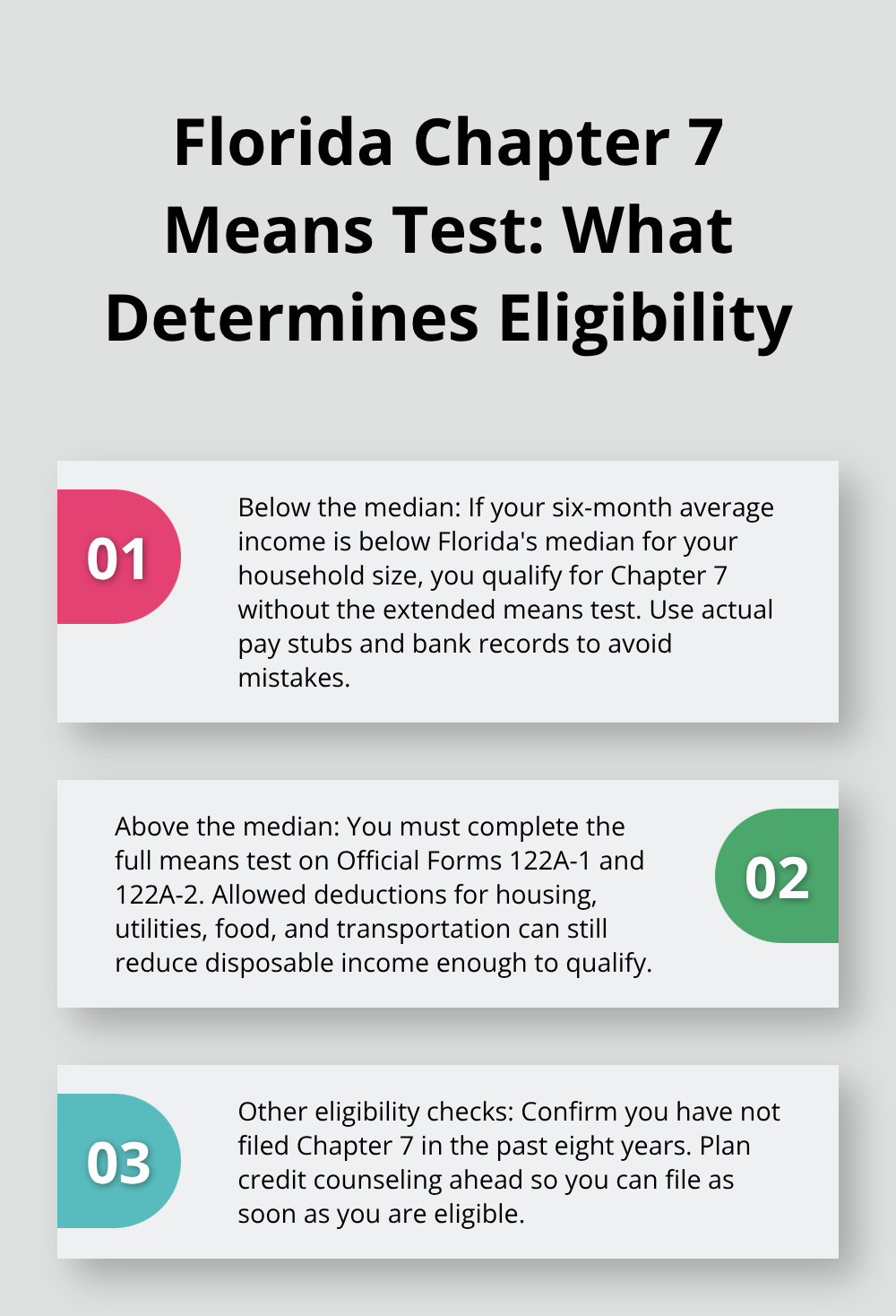
The means test is the primary gatekeeper for Chapter 7 filing in Florida, and it compares your average monthly income from the six months before filing against Florida’s median income for your household size. According to the U.S. Trustee Program, Florida’s median income thresholds as of 2025 are roughly $58,000 for a single filer, $73,000 for two people, $85,000 for three people, and $98,000 for four people. If your current monthly income falls below the median for your household size, you automatically qualify for Chapter 7 without further means testing. Calculate your six-month average by adding your gross income from the previous six months and dividing by six; this figure drives the entire eligibility determination.
Most people underestimate this calculation, so pull actual pay stubs and bank statements rather than guessing at your income.
If your income exceeds Florida’s median, you must complete the full means test using Official Forms 122A-1 and 122A-2 to determine whether you have enough disposable income to disqualify you from Chapter 7. The means test subtracts allowed living expenses from your income, and if the calculation shows you could repay a meaningful portion of your debts through a Chapter 13 plan, the court may deny your Chapter 7 petition. Florida residents often qualify despite above-median income because allowed deductions for housing, utilities, food, and transportation can substantially reduce disposable income. Additionally, verify that you have not filed a Chapter 7 bankruptcy within the past eight years, as filing too soon triggers an automatic dismissal under federal law. Once you confirm your eligibility, the next step requires you to complete mandatory credit counseling before you can submit your petition to the court.
Step 3: Complete Credit Counseling Before Filing
Credit counseling is mandatory before you file your Chapter 7 petition in Florida, and the U.S. Trustee Program maintains a list of approved agencies you must use. You have 180 days before filing to complete this requirement, so timing matters if you’re planning to file soon. Search the U.S. Trustee Program website for approved credit counseling agencies in your Florida district-Northern, Middle, or Southern-to find providers near you. Most agencies offer counseling sessions by phone or video, which eliminates travel time and lets you complete the requirement from home within a few hours. The cost typically ranges from $50 to $100 depending on the agency, and some offer sliding-scale fees if your income qualifies.
The counseling session covers budgeting basics, debt management strategies, and alternatives to bankruptcy so you understand the full picture before filing. When you complete the session, you receive a certificate of credit counseling that you must file with your bankruptcy petition-without this certificate, the court will reject your filing outright. Keep a copy of your certificate and any course materials for your records, and note the agency’s name and case number on the certificate because you’ll need this information when preparing your bankruptcy forms. The certificate remains valid for 180 days after issuance, so plan your filing date accordingly to avoid expiration.
Once you have your credit counseling certificate in hand, you’re ready to move into the next phase: preparing your bankruptcy petition and schedules with all the financial information the court requires.
Step 4: Prepare Your Bankruptcy Petition and Schedules
Your bankruptcy petition consists of Official Forms that the Florida bankruptcy court requires, and accuracy on these forms directly determines whether the court accepts or rejects your filing. Start by gathering your Statement of Your Current Monthly Income using Form 122A-1, which requires your gross income from the past six months broken down by source-wages, self-employment, rental income, and any other money coming in. The SD Florida Clerk’s Instructions specify that you must also complete Schedules A through J, which list your assets, liabilities, income, and expenses in precise detail. Missing or incomplete schedules trigger automatic rejection, so do not skip any section or leave fields blank without explanation. Most filers who represent themselves pro se file incomplete petitions that the court dismisses, costing them time and requiring them to refile with corrected documents.
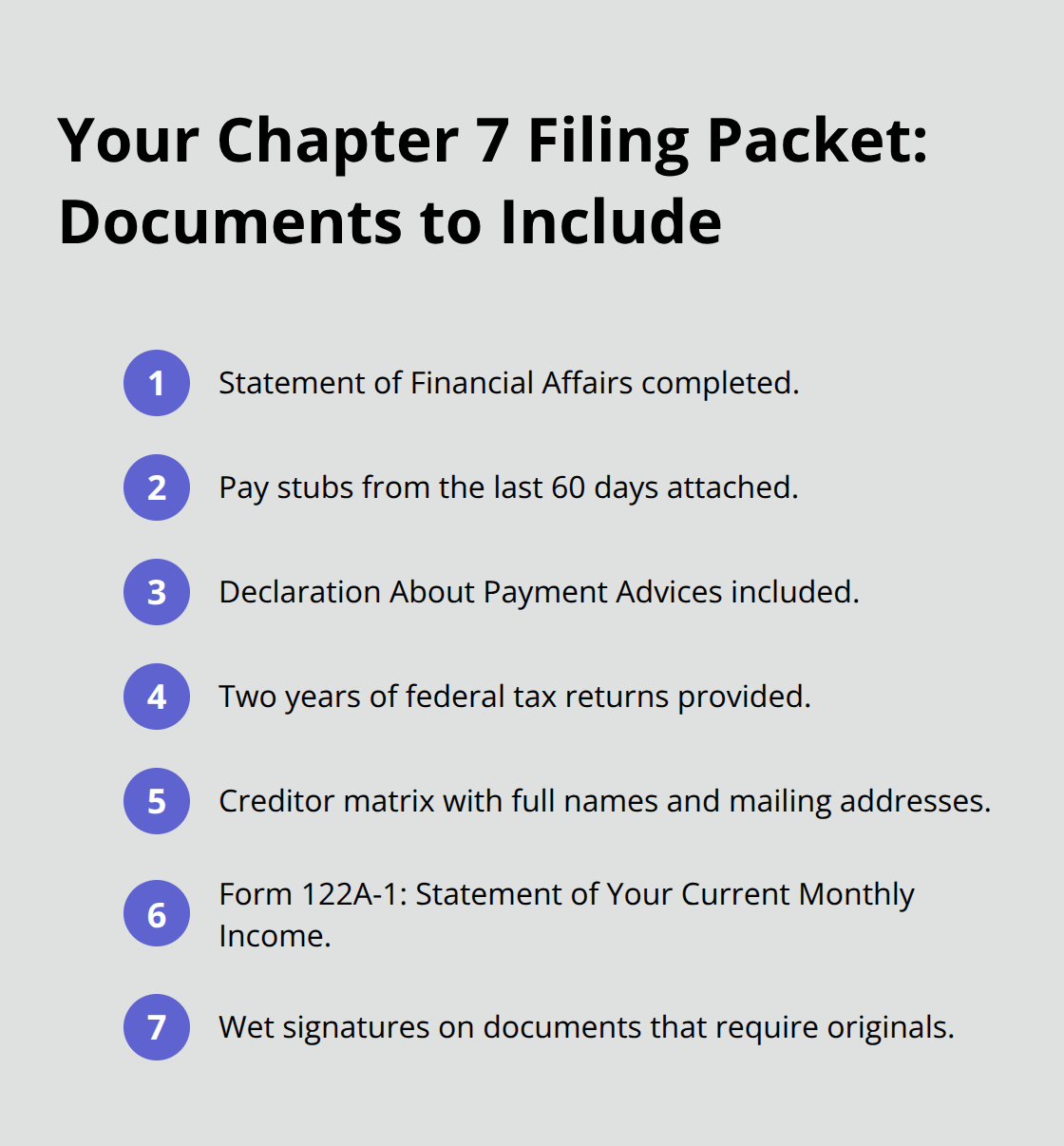
Your creditor matrix requires the name and address of every creditor you owe money to, and the court uses this list to notify creditors of your filing. Organize creditors by category-credit cards, medical providers, personal loans, vehicle lenders-to avoid duplicates and ensure complete disclosure. You must also prepare your Statement of Financial Affairs, which documents all property transfers, large payments, and financial transactions from the past several years so the trustee can identify potential fraudulent conveyances or transfers that benefit creditors unfairly. Include copies of your pay stubs from the last 60 days, your Declaration About Payment Advices, and two years of tax returns to substantiate your income figures. The forms require original wet signatures on certain documents, not scanned copies, so plan to sign paperwork in front of a notary or attorney rather than relying entirely on electronic filing.
With all forms completed and signed, you move forward to the next step: submitting your petition to the Florida bankruptcy court and paying the required filing fees.
Step 5: Submit Your Petition and Activate Bankruptcy Protection
The filing fee for Chapter 7 in Florida totals $428, which includes the $338 petition fee, a $75 miscellaneous administrative fee, and a $15 trustee surcharge according to the SD Florida Clerk’s Instructions. If you cannot afford this upfront, you can request a fee waiver by filing Official Bankruptcy Form 103B if your income falls below 150 percent of the federal poverty level, or you can pay the filing fee in installments with a minimum initial payment of half the total fee. Submit your completed petition electronically through the court’s filing system along with all schedules, your credit counseling certificate, pay stubs from the last 60 days, and your Declaration About Payment Advices. The court rejects your filing immediately if you omit required documents like the Statement of Financial Affairs or fail to include wet signatures on documents that require them under Administrative Order 2020-07. Once the court accepts your petition, you receive a case number within hours, and the automatic stay takes effect instantly, stopping wage garnishments, creditor lawsuits, collection calls, and foreclosure proceedings.
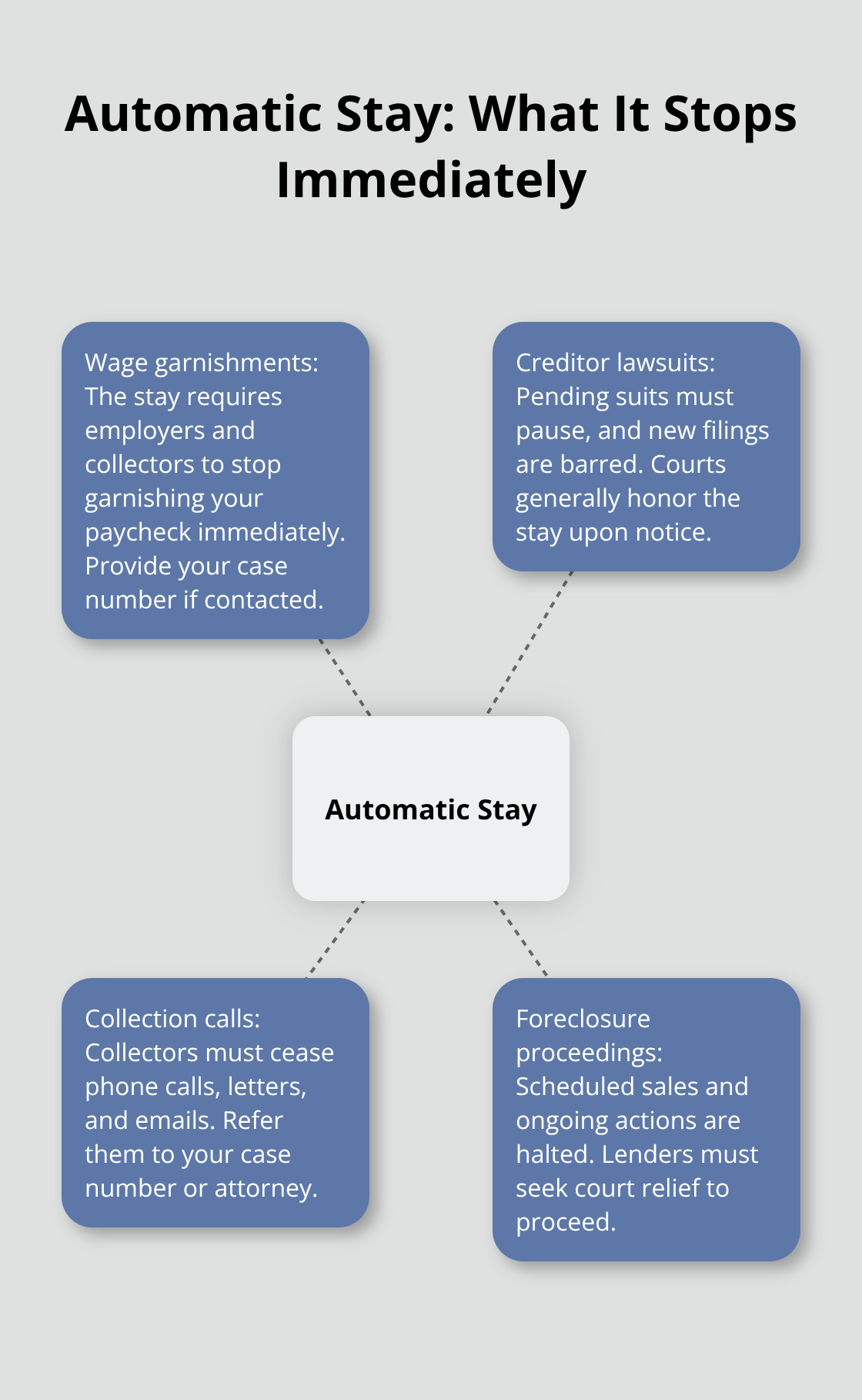
The automatic stay is one of the most powerful protections bankruptcy offers, and it applies to nearly all creditors immediately upon filing without requiring court approval. The court automatically notifies all creditors listed on your creditor matrix through the clerk’s office, so you do not need to contact them yourself or worry about continued collection efforts. Most creditors receive formal notice within two weeks and must cease collection activities or face contempt of court charges. Direct creditor calls to your case number and inform them of the automatic stay, or provide contact information for your attorney if you hired one. The trustee assigned to your case contacts you separately to schedule your 341 meeting, which typically occurs between 21 and 40 days after filing, marking the next critical phase in your bankruptcy journey.
Step 6: Face the 341 Meeting with Confidence
The 341 meeting of creditors occurs 21 to 40 days after you file your Chapter 7 petition, and despite its intimidating name, it’s a straightforward administrative proceeding where the trustee verifies information from your petition. The trustee confirms your debts, assets, and income match what you disclosed on your forms-not to interrogate you or surprise you with accusations. Bring a government-issued photo ID and documentation showing the last four digits of your Social Security number, as the clerk requires these before the meeting starts. Most meetings last 5 to 15 minutes, and the trustee asks standard questions about whether you transferred property, concealed assets, or made large payments to insiders in the months before filing. You’ll answer under oath, so truthfulness matters, but the questions follow predictable patterns that you can prepare for in advance by reviewing your petition and financial documents one more time.
Creditors rarely attend these meetings-the trustee handles nearly all 341 meetings without creditor participation unless you owe significant secured debt like a mortgage or car loan. Prepare short, direct answers rather than lengthy explanations, and if you don’t understand a question, ask the trustee to clarify instead of guessing. Some Florida bankruptcy districts allow telephonic attendance if you request it in advance, eliminating travel to the courthouse for out-of-area filers. Dress professionally, arrive 15 minutes early, and bring copies of your most recent pay stubs and bank statements in case the trustee requests them on the spot. After the 341 meeting concludes, the trustee evaluates your case for any non-exempt assets to liquidate, and you move toward the final requirement before discharge: completing your financial management course.
Step 7: Complete Your Financial Management Course
The financial management course is a mandatory requirement you must complete after your 341 meeting to receive your Chapter 7 discharge, and the U.S. Trustee Program maintains a list of approved providers. You have 60 days after the first date set for your 341 meeting to file your course completion certificate with the court, so timing matters if you want to avoid delays in receiving your discharge order. Enroll in the course immediately after your meeting concludes rather than waiting until the deadline approaches, because course availability varies by provider and some fill up quickly during peak bankruptcy filing seasons. The course typically costs between $50 and $150 depending on the provider, and most agencies offer online completion within two to four hours, allowing you to finish from home without scheduling conflicts. Unlike credit counseling, which focuses on debt management alternatives, the financial management course teaches practical budgeting skills, credit rebuilding strategies, and long-term financial planning so you avoid returning to debt after discharge.
The course covers actionable topics like creating a realistic monthly budget, understanding credit scores and how bankruptcy impacts yours, and building an emergency fund to prevent future financial crises. Your credit score typically drops 160 to 220 points after a Chapter 7 filing according to credit industry data, but completing financial management education signals to future lenders that you’re taking steps to rebuild responsibly. Once you finish the course, you’ll receive your certificate of completion, which you must file with the court through the bankruptcy clerk’s office to finalize your discharge. File this certificate promptly because courts won’t grant your discharge order until this document is on file, potentially delaying your fresh start by weeks or months if you procrastinate. The court receives your certificate and confirms you’ve met all requirements, then your discharge order arrives within days, officially eliminating your qualifying debts and marking the transition to the final phase of your bankruptcy journey.
Final Thoughts on Your Chapter 7 Filing Florida Journey
Your discharge order arrives within four to six months after filing, marking the official end of your Chapter 7 case and eliminating qualifying debts permanently. Once the court grants your discharge, creditors cannot pursue collection efforts, file lawsuits, or garnish wages for those discharged debts ever again. Certain debts survive discharge, including child support, alimony, most student loans, tax liens, and criminal restitution orders, so review your discharge papers carefully to understand which obligations remain your responsibility.
Rebuilding your credit after Chapter 7 filing Florida begins immediately, even before your discharge arrives. Your credit score typically drops 160 to 220 points initially, but scores recover steadily over time with responsible financial behavior (secured credit cards designed for rebuilding allow you to deposit cash as collateral and build positive payment history within 12 to 24 months). Create a realistic monthly budget using the financial management strategies you learned in your post-filing course, and establish an emergency fund with three to six months of essential expenses to prevent returning to debt when unexpected costs arise.
Contact us at Harnage Law, PLLC to discuss how we can help you achieve financial stability and protect your assets throughout the bankruptcy process. We guide clients through every phase of Chapter 7 bankruptcy, from initial assessment through discharge and beyond. Your fresh start begins with the right guidance.